Side-by-Side IQ Profile: A Deeper Look
The Cosmic Pet Pet IQ Lab's framework offers a granular view of each breed's cognitive architecture, moving beyond general perceptions to specific aptitudes. While both breeds rank closely on Coren's scale (ACD #10, ESS #13), their individual dimension scores reveal distinct mental landscapes.
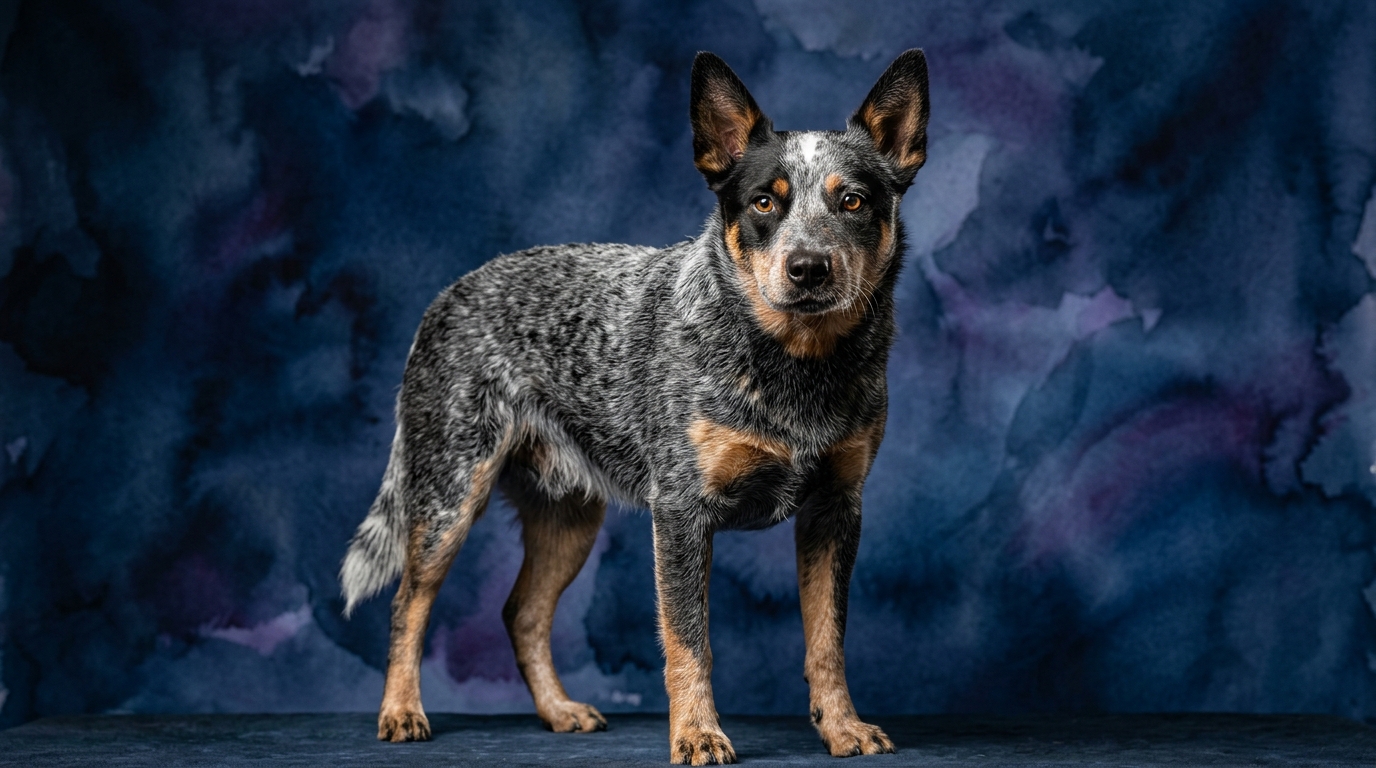
For the **Australian Cattle Dog (ACD)**, a breed forged in the demanding Australian outback, their profile reflects an independent, resourceful worker. They score 5/5 in Problem Solving, indicating an exceptional capacity to independently devise solutions to complex environmental challenges. Their Training Speed is also 5/5, meaning they grasp new commands and routines with remarkable rapidity, driven by a focused eagerness to work. Social Intelligence stands at 3/5; their social acumen prioritizes understanding a working partner over complex group dynamics, often preferring deep, purposeful bonds with few individuals. Instinctive Drive is a perfect 5/5, manifesting as a profound impulse to herd, chase, and control, underscoring a tireless work ethic and need for purposeful activity. Finally, their Memory is 5/5, signifying exceptional recall of learned behaviors, routes, and past interactions, crucial for retaining complex commands and navigating vast territories.
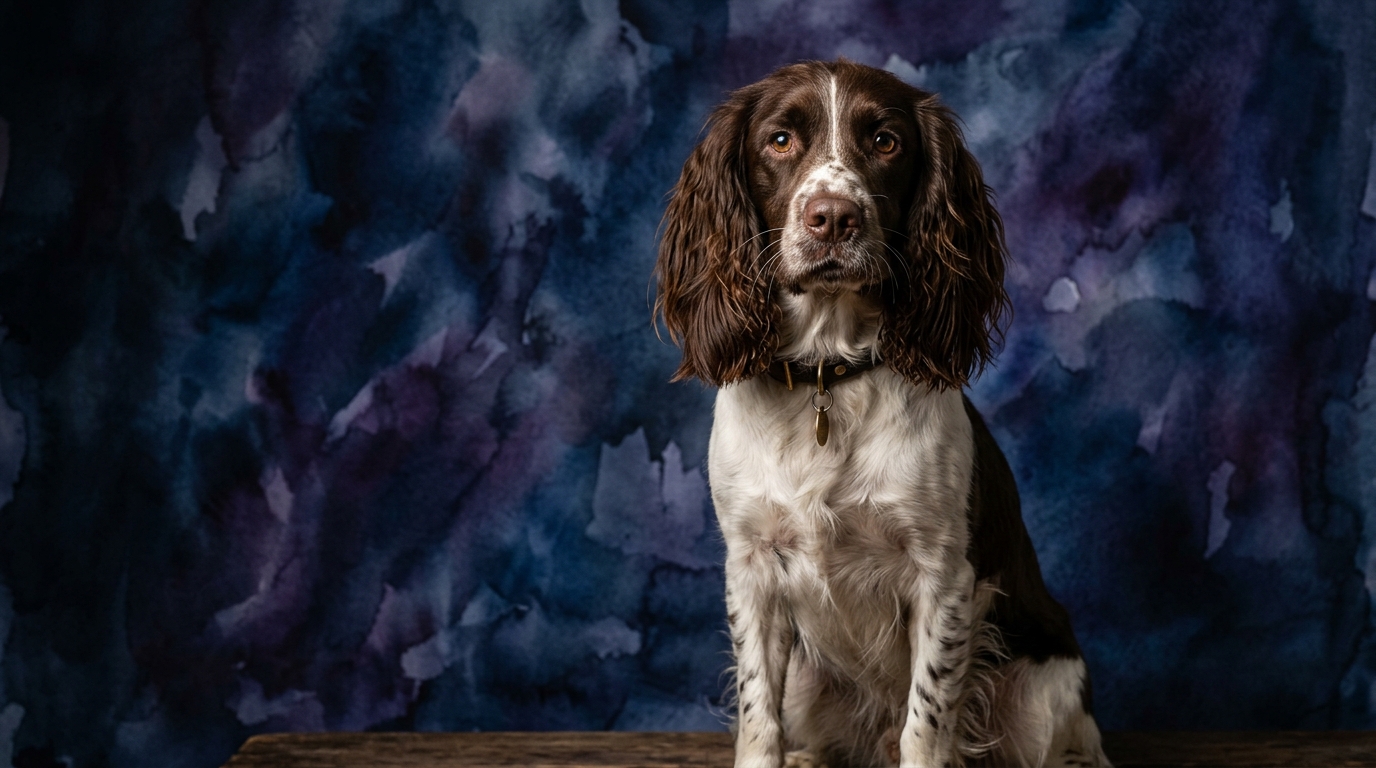
The **English Springer Spaniel (ESS)**, refined for cooperative hunting, exhibits a profile geared towards partnership and field efficiency. Their Problem Solving is rated 4/5; they demonstrate strong capabilities in practical challenges, especially scent work and retrieving, often relying on learned patterns rather than spontaneous innovation. Training Speed matches the ACD at 5/5, as they pick up new instructions rapidly, eager to please handlers and engage in cooperative tasks. Social Intelligence is higher at 4/5; a disposition for collaborative work and family integration means they exhibit superior social awareness, adept at reading human cues and interacting harmoniously. Instinctive Drive is also 5/5, translating their powerful urge to hunt, flush, and retrieve into energetic pursuit of game or toys and a strong desire to be useful. Their Memory is 4/5, possessing robust recall for commands, scent trails, and routines essential for field work, though perhaps less encyclopedic than the ACD.
Where the Australian Cattle Dog Wins Cognitively
The Australian Cattle Dog's perfect 5/5 score in Problem Solving is a significant differentiator. Their historical role demanded autonomous decision-making in unpredictable environments, often without direct human oversight, such as navigating challenging terrain to move stubborn livestock. This manifests as a dog capable of independently assessing situations, like an open gate or a complex puzzle, and strategically devising a solution. They are less inclined to wait for human cues, preferring to experiment and innovate until a goal is achieved, showcasing an intrinsic drive for cognitive engagement and mastery over their environment. This isn't just about learning tricks; it’s about applying abstract reasoning to novel situations.
Furthermore, their 5/5 Memory score means they retain information with remarkable tenacity. This extends beyond basic commands to complex task sequences, vast spatial layouts, and intricate social interactions, providing a deep mental library crucial for their independent reasoning and consistent performance. An ACD will remember a specific route through a field months later or recall a nuanced command given only a few times, making them exceptionally consistent once a behavior is learned and less prone to forgetting intricate routines. Their memory serves as a robust foundation for their impressive independent problem-solving abilities.
Where the English Springer Spaniel Wins Cognitively
The English Springer Spaniel's 4/5 in Social Intelligence provides a distinct cognitive advantage, particularly for companion roles and integration into diverse social environments. Bred for close partnership with hunters, often in teams, they possess a refined ability to interpret human body language, tone, and intent, making them exceptionally attuned companions. This social acumen fosters a strong desire for cooperative interaction, allowing them to anticipate their handler's next move and adapt their behavior harmoniously within social units, including multi-pet households or busy family gatherings. They thrive on positive social feedback and are highly motivated by communal engagement.
Their capacity for seamless integration into diverse social settings, often displaying a more outwardly friendly and approachable demeanor, is a direct cognitive benefit for modern family life. While the ACD excels at independent thought, the ESS shines in collaborative intelligence, making them generally more comfortable and graceful in varied social situations, whether meeting new people or dogs. This makes them highly adaptable to different family structures and public environments, prioritizing harmonious interaction and connection.
Which is Easier to Train and Why
Both breeds share a 5/5 Training Speed, indicating a rapid ability to learn new commands. However, the *ease* of training can differ significantly based on their broader cognitive profiles and innate motivations. Australian Cattle Dogs learn commands quickly, but their high problem-solving (5/5) and instinctive drive (5/5), combined with a lower social intelligence (3/5), mean they often require a trainer adept at channeling their intense focus and independent spirit. They might "learn" to outsmart handlers if tasks aren't consistently challenging or engaging, potentially inventing their own jobs if bored. Their training demands clear structure, consistency, and mentally stimulating tasks, thriving in advanced obedience or complex dog sports where their independent thought can be directed.
In contrast, English Springer Spaniels, with their 5/5 Training Speed and higher Social Intelligence (4/5), are generally perceived as "easier" to train for the average owner. Their eagerness to please and strong desire for cooperative interaction make them highly motivated by positive reinforcement and the opportunity to work alongside their human. They are less prone to independent "freelancing," instead focusing on performing requested actions to gain social approval and rewards. While their powerful instinctive drive is present, it is often more readily directed into guided tasks like fetch or scent games, making them highly responsive to guidance and a natural partner in the training process.
Which Suits Active Owners vs. Relaxed Owners
Neither of these breeds is ideal for a truly "relaxed" owner who prefers minimal engagement beyond basic walks; both demand significant interaction. The Australian Cattle Dog is unequivocally for highly active owners who can provide rigorous physical exercise alongside profound mental stimulation. Their 5/5 Instinctive Drive and 5/5 Problem Solving demand continuous, challenging outlets for their working instincts, through activities like herding, advanced agility, flyball, or complex puzzle work. A relaxed owner will quickly face issues with an ACD's boredom, leading to destructive behaviors or excessive herding of family members, as their cognitive and physical engines are always running. They require a demanding "job" to be fulfilled, thriving on having a purpose.
While still requiring significant activity, the English Springer Spaniel might be a more adaptable fit for an active owner who isn't seeking a dog needing a complex daily "job" in the same vein as an ACD. Their 5/5 Instinctive Drive often translates into enthusiastic bursts of activity followed by a willingness to settle, especially when their social needs are met. Their higher social intelligence means they are often content with structured play, long walks, and being a central part of family life, without the same intense, independent problem-solving demands of the ACD. They are a better choice for an active family who enjoys shared outdoor pursuits and appreciates a dog that wants to be involved in all aspects of life, rather than one that constantly seeks to invent its own challenges.
The Verdict
Opt for an Australian Cattle Dog if you are an experienced, highly active individual or family seeking a relentless cognitive partner for demanding sports, complex problem-solving tasks, or genuine working roles. You must be prepared to provide consistent, stimulating mental and physical challenges to satisfy their profound need for purpose and independent thought.
Select an English Springer Spaniel if you desire a highly social, cooperative, and energetic companion who thrives on shared outdoor adventures and being an integral part of family life. They are ideal for active owners who enjoy engaging in structured play, scent work, and training, appreciating a dog that is eager to please and connect.
🧠 Find Your Pet's IQ Score
Our Pet IQ Lab assessment covers 25+ tests across 5 cognitive dimensions — personalized to your breed.
Take the Full IQ Test →Frequently Asked Questions
Do Australian Cattle Dogs get along with other pets?
Australian Cattle Dogs have a strong herding instinct and a lower social intelligence rating (3/5), which means they can be particular about other pets. While proper socialization from a young age can help, their drive to control movement might lead them to 'herd' other animals, requiring careful management and supervision, especially with smaller, faster pets.
How much exercise does an English Springer Spaniel need daily?
English Springer Spaniels possess a high instinctive drive (5/5) and require substantial daily exercise, typically an hour or two of vigorous activity. This can include long walks, runs, fetching, swimming, or engaging in dog sports like agility or obedience, ensuring both their physical and mental stimulation needs are met to prevent boredom.
Are these breeds suitable for apartment living?
Neither breed is ideally suited for apartment living due to their high energy and instinctive drives. The Australian Cattle Dog's need for extensive mental and physical work, coupled with their independent problem-solving, makes a spacious environment with a job crucial. The English Springer Spaniel, while more adaptable socially, still requires significant outdoor space and activity to prevent boredom and destructive behaviors, thriving in homes with yards and access to open areas.