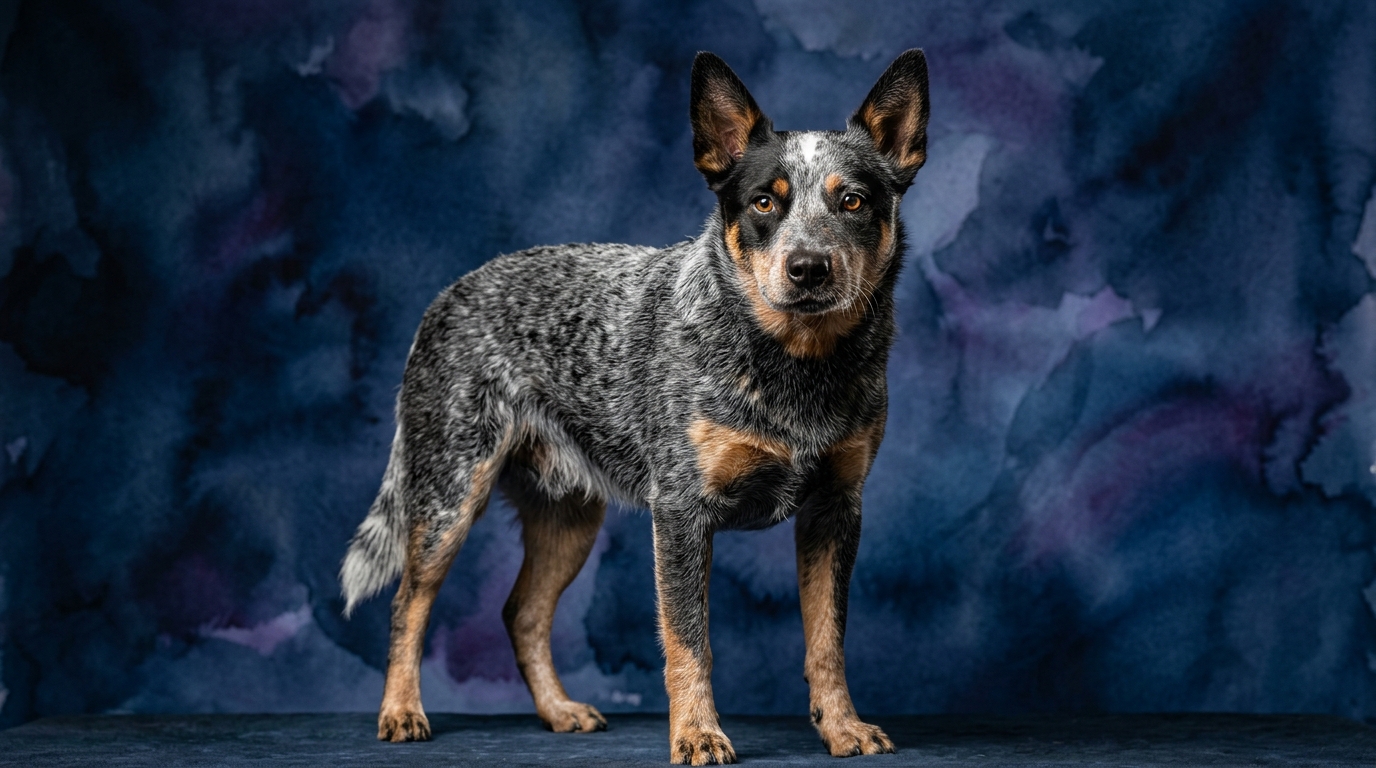
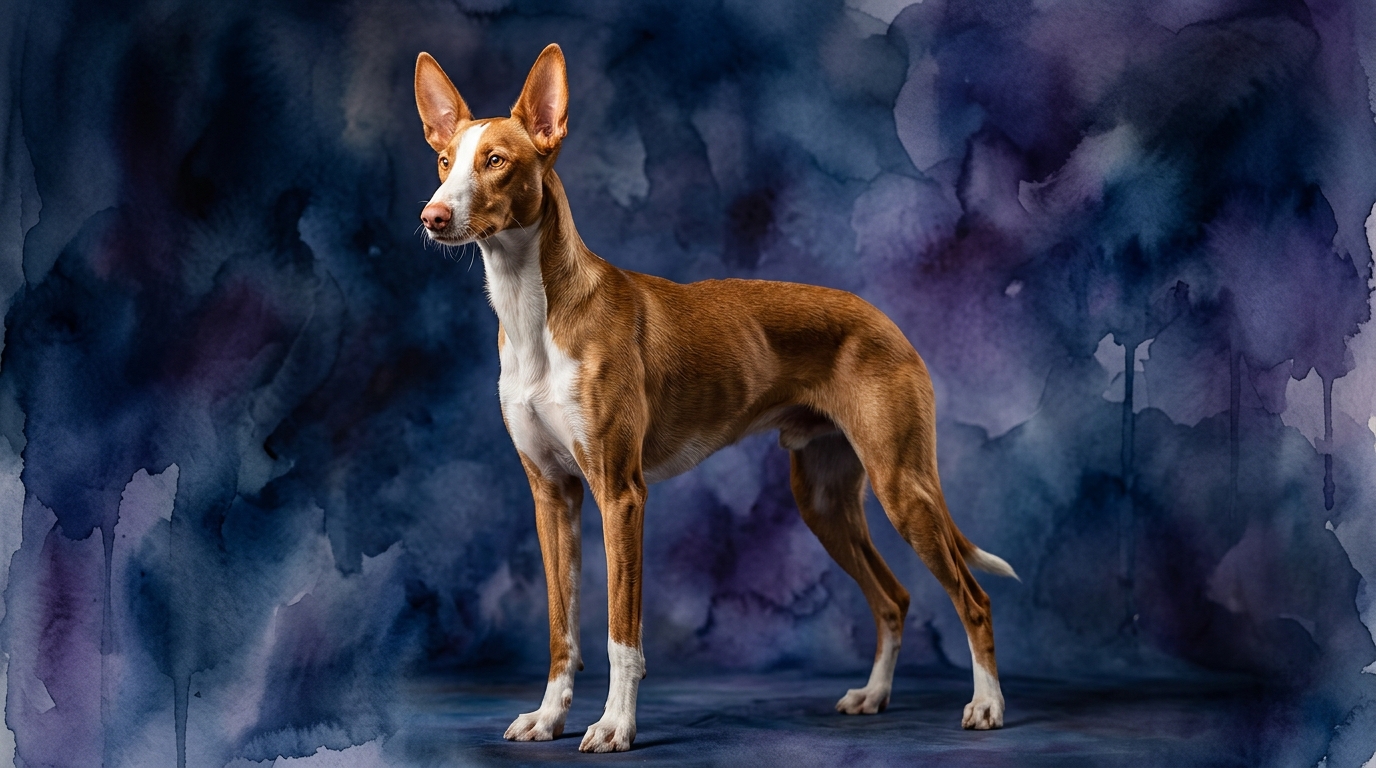
A Side-by-Side Look at Cognitive Profiles
While general intelligence rankings like Coren's (Australian Cattle Dog #10, Ibizan Hound #53) offer a broad overview, a deeper understanding emerges from examining specific cognitive dimensions. The Cosmic Pet Pet IQ Lab's granular assessment, covering problem solving, training speed, social intelligence, instinctive drive, and memory, provides a nuanced picture of what makes each breed tick.
The Australian Cattle Dog's profile is marked by exceptional cognitive prowess: Problem Solving 5/5, Training Speed 5/5, Social Intelligence 3/5, Instinctive Drive 5/5, and Memory 5/5. A 5/5 in Problem Solving indicates they excel at navigating complex environments, adapting strategies, and figuring out novel tasks without constant human intervention, reflecting their heritage managing livestock. Their 5/5 Training Speed means they absorb commands and routines with remarkable rapidity, often requiring fewer repetitions than other breeds. Social Intelligence at 3/5 suggests they are capable of understanding human cues and forming strong bonds but might not be as overtly people-focused as some breeds, preferring a working partnership. An Instinctive Drive of 5/5 points to their profound intrinsic motivation to work and fulfill their breed's purpose, constantly seeking engagement. Lastly, 5/5 Memory signifies they retain learned information, complex sequences, and spatial awareness exceptionally well.
In contrast, the Ibizan Hound presents a more balanced, yet specialized, cognitive profile: Problem Solving 3/5, Training Speed 3/5, Social Intelligence 3/5, Instinctive Drive 3/5, and Memory 3/5. A 3/5 in Problem Solving suggests they can solve straightforward challenges but might struggle with highly abstract or multi-step puzzles without clear guidance, focusing instead on practical, immediate solutions relevant to their hunting background. Their 3/5 Training Speed indicates they learn at an average pace, requiring consistent, positive reinforcement and potentially more repetition compared to an ACD. Social Intelligence at 3/5, similar to the ACD, shows an ability to connect but often with a more independent streak, valuing their own space. Instinctive Drive at 3/5 means they possess a natural drive, primarily for the hunt, but it's not as pervasive or constantly seeking an outlet as an ACD's work drive. Finally, 3/5 Memory implies they recall routines and commands adequately but might not retain complex sequences or past events with the same detail as a higher-scoring breed, focusing on what is immediately relevant to their environment.
Where the Australian Cattle Dog's Cognition Excels
The Australian Cattle Dog's cognitive strengths are profoundly rooted in their herding heritage, particularly their 5/5 Problem Solving ability. This isn't merely about learning tricks; it's about dynamic, real-time decision-making in complex and ever-changing environments. They are adept at anticipating livestock movements, navigating obstacles, and adapting their strategies on the fly to control a herd, often requiring independent judgment far from a handler. This translates into an exceptional capacity for figuring out solutions to novel challenges, whether it's opening child-proof gates or devising a strategy to retrieve a hidden toy.
Coupled with their 5/5 Training Speed and 5/5 Memory, Australian Cattle Dogs are truly remarkable learners. Their capacity for rapid acquisition of commands means they pick up new concepts with astonishing quickness, making them prime candidates for advanced obedience, agility, and intricate task work. Their robust recall ensures they retain specific instructions and complex routines even after long periods, allowing them to build an extensive repertoire of learned behaviors. This high cognitive capacity, fueled by their 5/5 Instinctive Drive to work and engage, makes them exceptionally suitable for roles requiring constant mental activity and a deep understanding of their environment and tasks.
The Unique Cognitive Strengths of the Ibizan Hound
While the Ibizan Hound's scores might appear lower across the board compared to the ACD, their cognitive profile is perfectly optimized for their specialized sighthound purpose. Their 3/5 Problem Solving isn't a deficiency but a reflection of a different kind of intelligence; it's less about human-devised puzzles and more about independent, sensory-driven pursuit. They excel at identifying prey at a distance, strategizing a chase path across varied terrain, and making rapid decisions based on visual and auditory cues, often operating with remarkable autonomy from human direction. This requires a unique form of cognitive processing: rapid visual analysis, immediate physical response, and intuitive understanding of their hunting environment.
Their 3/5 Social Intelligence, combined with their instinctive drive for the chase, means they respond best to training that leverages their natural inclinations and builds a trusting, respectful partnership rather than relying on constant instruction. While their 3/5 Memory might not be geared towards rote memorization of many complex commands, it is perfectly sufficient for remembering successful hunting grounds, effective chase strategies, and the routines of their human companions. The Ibizan Hound's cognitive 'wins' lie in their specialized sensory processing, their ability to make independent, context-specific decisions in high-stakes situations, and their elegant efficiency in executing their original function.
Training Dynamics: A Tale of Two Approaches
Training an Australian Cattle Dog is typically a rewarding experience due to their 5/5 Training Speed and 5/5 Instinctive Drive. They are highly biddable and eager students who thrive on structured training, quickly grasping new concepts and finding profound satisfaction in a job well done. Their strong memory helps them retain complex sequences, making them exceptionally suitable for advanced dog sports, competitive obedience, or service roles. Behaviorally, ACDs often seek guidance and look to their handler for direction, making them highly receptive to command-based learning and eager to collaborate on tasks, which makes them feel like a true working partner.
The Ibizan Hound, with its 3/5 Training Speed and 3/5 Instinctive Drive, presents a different, though equally engaging, training challenge. They are not 'difficult' but require a trainer who understands their independent nature and sighthound heritage. They respond best to positive reinforcement, short, engaging sessions, and training that feels like a game or leverages their chase drive. Their sighthound heritage means they can be easily distracted by visual stimuli, and their independence can make them less inclined to perform repetitive tasks purely for human approval. Behaviorally, Ibizan Hounds might evaluate if a command is 'worth it' or if there's something more interesting to pursue, requiring motivation tailored to their intrinsic drives rather than blind obedience.
Matching Cognitive Profiles to Lifestyles
Owners seeking a canine partner for demanding intellectual and physical activities will find the Australian Cattle Dog's cognitive profile a perfect match. Their 5/5 Problem Solving, Training Speed, Instinctive Drive, and Memory mean they require constant mental engagement, far beyond just physical exercise. They thrive in environments where they have a 'job' – whether it's herding, agility, obedience, complex enrichment puzzles, or even a demanding hiking companion. An ACD needs an owner who can consistently channel their intense focus and work ethic into productive outlets, otherwise, their considerable cognitive power can be directed towards less desirable behaviors.
The Ibizan Hound, while athletic, suits owners who appreciate a more independent and self-directed companion. Their cognitive strengths are best expressed in bursts of focused activity, followed by periods of calm observation. They need ample opportunities to run and express their sighthound instincts in secure areas, but they are not constantly seeking a 'job' in the same way an ACD is. Owners should be prepared for a dog that might not always be striving for human approval, valuing their own space and making independent decisions, making them a fit for those who enjoy a more relaxed, yet still active and discerning, partnership.
The Verdict
Opt for the Australian Cattle Dog if you desire a highly engaged, collaborative canine partner eager for complex tasks, advanced training, and constant mental stimulation in a structured environment.
Select the Ibizan Hound if you appreciate an independent, visually-driven companion who excels in short bursts of intense activity and enjoys a more self-directed, yet affectionate, partnership.
🧠 Find Your Pet's IQ Score
Our Pet IQ Lab assessment covers 25+ tests across 5 cognitive dimensions — personalized to your breed.
Take the Full IQ Test →Frequently Asked Questions
Are Australian Cattle Dogs good for first-time dog owners?
Their intense cognitive demands and high drive mean Australian Cattle Dogs are generally better suited for experienced owners who understand how to channel their energy and problem-solving abilities productively. They require consistent training and mental engagement to prevent boredom and potential destructive behaviors, making them a significant commitment for a novice owner.
Do Ibizan Hounds require a lot of exercise despite their lower 'drive' score?
Yes, Ibizan Hounds are sighthounds built for speed and endurance, so they do require significant daily exercise, especially opportunities for off-leash running in a secure area. Their 3/5 instinctive drive is primarily directed towards the chase, meaning they need outlets for this natural behavior, even if they aren't constantly seeking a 'job' like a herding dog.
How does 'Social Intelligence' at 3/5 impact interaction with both breeds?
A 3/5 Social Intelligence score for both breeds suggests they are capable of forming strong bonds and understanding human cues, but they may not be as overtly demonstrative or people-focused as breeds with higher scores. ACDs tend to be devoted to their primary handler but can be reserved with strangers, while Ibizan Hounds are generally affectionate with their family but maintain an independent demeanor, often choosing when and how to interact.