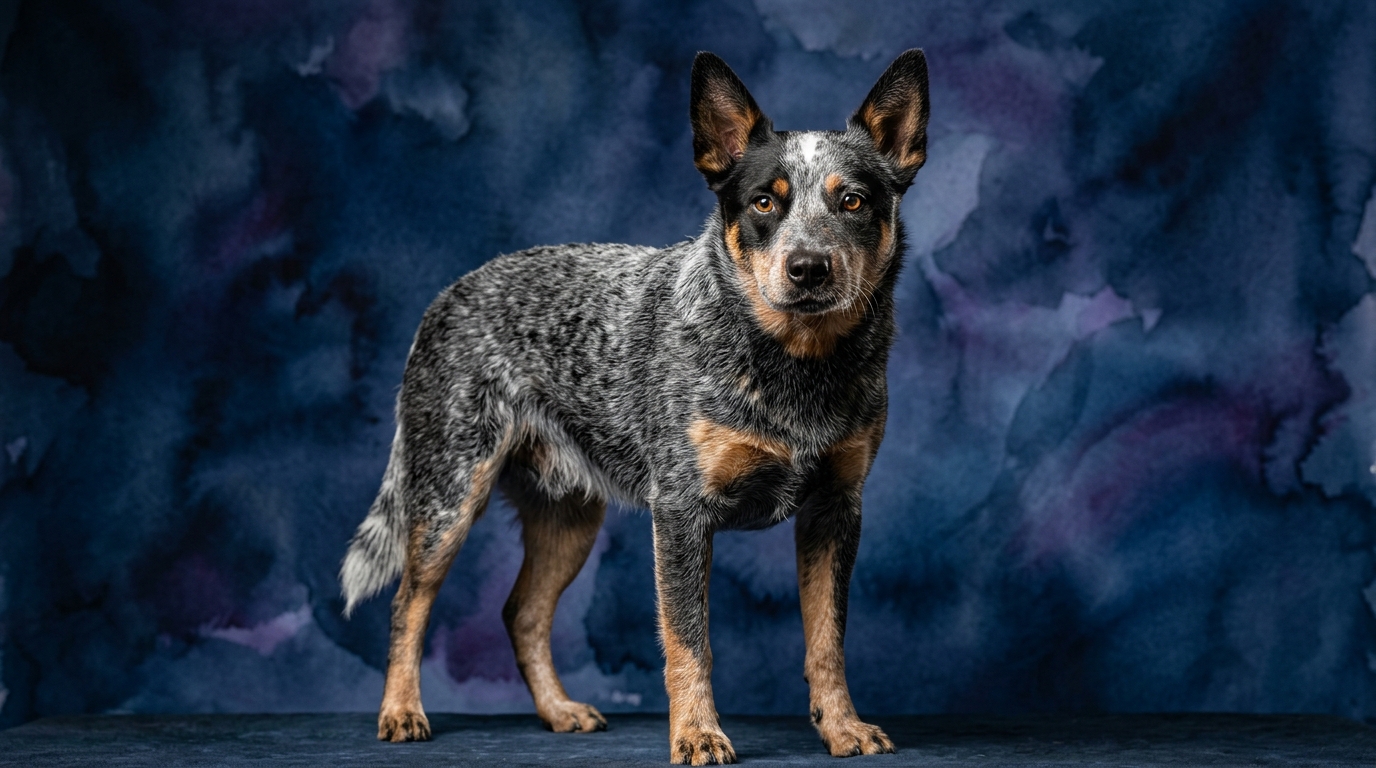
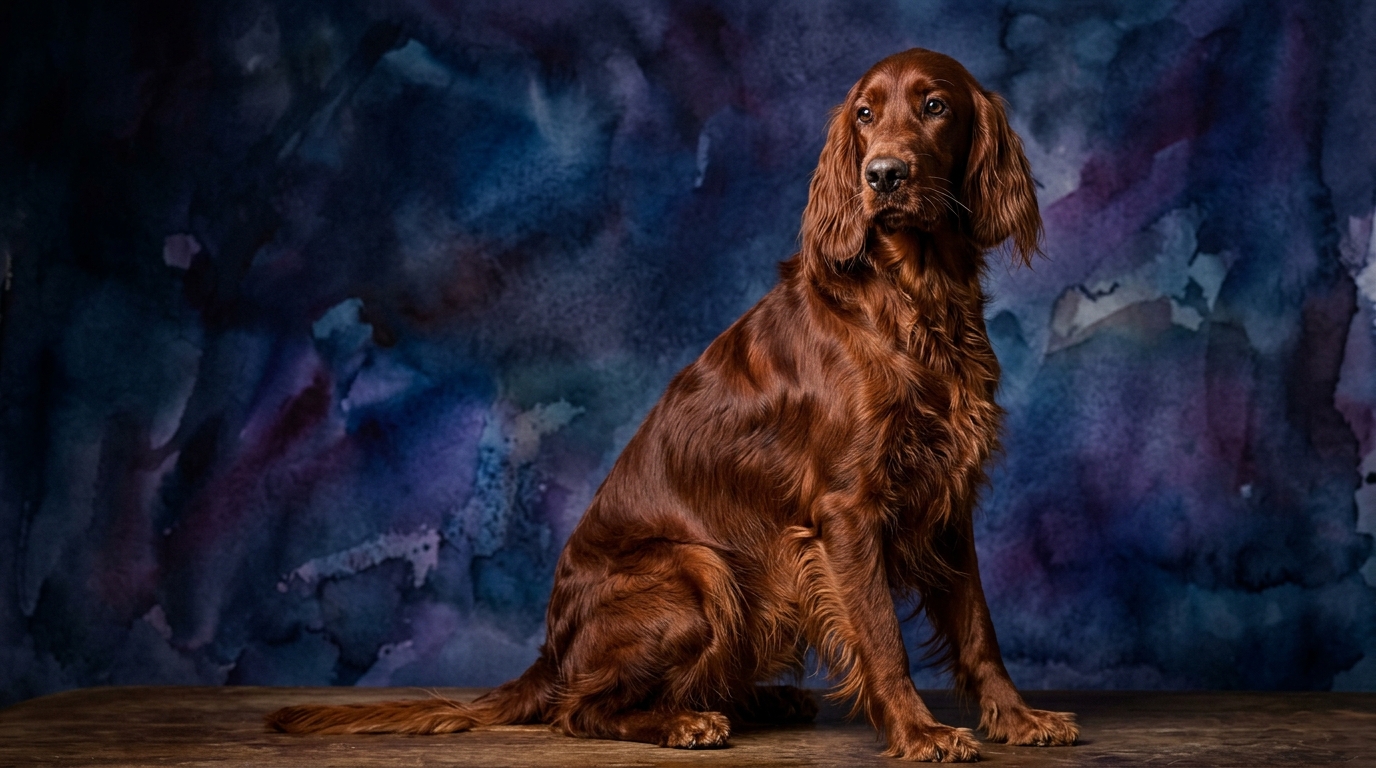
Side-by-Side Cognitive Profiles
The Australian Cattle Dog, with a Coren rank of #10, exhibits a formidable cognitive profile shaped by its demanding herding heritage. Their problem-solving capacity scores a perfect 5 out of 5, reflecting an exceptional ability to independently strategize and adapt to complex environmental challenges. Training speed is equally impressive at 5 out of 5, indicating rapid command acquisition and robust retention, while their memory also stands at 5 out of 5, crucial for recalling intricate routines and handler signals. Their instinctive drive, rated 5 out of 5, underscores a relentless pursuit of purpose, though their social intelligence is a moderate 3 out of 5, suggesting a more independent nature.
In contrast, the Irish Setter, holding a Coren rank of #35, presents a different yet capable cognitive blueprint, embodying its sporting role. Their problem-solving ability is a solid 4 out of 5, demonstrating competence in practical situations, though perhaps with less independent ingenuity than the ACD. Training speed is also strong at 4 out of 5, meaning they learn efficiently, albeit potentially with more enthusiasm and less immediate focus. Their memory is rated 4 out of 5, proving reliable for familiar cues, and their social intelligence matches the ACD at 3 out of 5, indicating amiable but not overly nuanced social engagement. The Irish Setter's instinctive drive, at 3 out of 5, signifies a strong desire for scenting and retrieving, but it is less intense and all-consuming than the ACD's herding imperative.
Where the Australian Cattle Dog Excels Cognitively
The Australian Cattle Dog's cognitive strengths are deeply rooted in its heritage as a drover of cattle across vast, challenging terrains. Their perfect 5/5 score in problem-solving means they are not merely responsive to commands but are proactive strategists, adept at evaluating situations and devising solutions independently. This manifests in their ability to outmaneuver stubborn livestock, navigate complex obstacles, or even figure out how to open latches, showcasing a profound aptitude for abstract thought and practical application.
Complementing this is their 5/5 training speed and memory, which allows them to absorb and retain complex sequences of commands with remarkable efficiency. An ACD can master intricate multi-step tasks that require chaining behaviors, remembering specific cues, and adapting to changing conditions, making them exceptional candidates for advanced obedience, agility, and competitive dog sports where rapid learning and sustained recall are paramount. This cognitive agility allows them to quickly understand new rules and apply them consistently.
The ACD's intense 5/5 instinctive drive isn't just about physical energy; it's a profound cognitive engine. This drive compels them to seek purpose, to organize, and to control their environment, whether that's through herding, playing structured games, or engaging in demanding mental puzzles. This unwavering focus and persistence, a hallmark of their work ethic, means they approach tasks with a tenacity and cognitive engagement that few breeds can match, driving them to complete objectives with unwavering dedication.
Where the Irish Setter Shines Cognitively
While the Irish Setter may not boast the same top-tier scores in all cognitive dimensions as the Australian Cattle Dog, their unique profile highlights strengths suited for different forms of engagement. Their 4/5 problem-solving ability, combined with their enthusiastic disposition, means they excel in contexts where solutions are achieved through joyful participation and collaboration with their human companions. They are adept at learning the rules of complex games or scent work, often thriving on the social reward of shared activity rather than purely independent strategizing.
The Irish Setter's 3/5 instinctive drive, though lower than the ACD's, is a significant cognitive asset in its own right, leading to a more balanced and adaptable temperament for companion life. Their drive is focused on the pursuit of game birds, making them exceptional at scent discrimination and retrieving tasks, where their keen senses and persistence come into play. This drive is strong enough to motivate them for extended periods of outdoor activity but less overwhelming than the ACD's, allowing for greater flexibility in daily routine without constant, intense mental "work."
The Irish Setter’s blend of 4/5 training speed, 4/5 memory, and 3/5 social intelligence creates a dog that is highly trainable and eager to please within a loving family context. They grasp commands effectively and remember them well, particularly when training is made fun and engaging. Their cognitive strength lies in their ability to form strong, affectionate bonds and channel their intelligence into activities that involve their human family, making them superb partners for owners who appreciate a dog that is both capable and overtly companionable.
Trainability: A Tale of Two Temperaments
When considering ease of training, the Australian Cattle Dog’s 5/5 training speed suggests rapid learning, which is true; they pick up new commands with impressive swiftness. However, this speed is paired with a 5/5 problem-solving capacity and 5/5 instinctive drive that can make them challenging for inexperienced owners. An ACD requires an owner who can consistently provide clear, firm, and engaging direction, channeling their immense cognitive energy into productive outlets. Without this, their independent problem-solving can manifest as devising their own, often disruptive, activities if under-stimulated or bored. They are not simply compliant; they are partners who expect to be mentally engaged.
The Irish Setter, with a 4/5 training speed, is also a proficient learner, but their approach to training differs significantly. They are generally eager to please and respond beautifully to positive reinforcement, making them quite amenable to training for owners who employ patience and fun. While they possess a strong 3/5 instinctive drive for scenting and retrieving, it is typically less intense and all-consuming than the ACD's herding impulse. This means they are less likely to "invent" complex jobs for themselves if not constantly occupied, though their playful nature can sometimes lead to delightful distractions during training sessions, requiring a consistent, engaging approach to maintain focus. For a novice owner, the Irish Setter might feel "easier" to manage because their drive is less demanding of constant cognitive redirection, even if their learning speed is slightly slower.
Matching Cognitive Needs to Lifestyles
For active owners seeking a true cognitive partner, the Australian Cattle Dog is an ideal match. Their 5/5 problem-solving and 5/5 instinctive drive mean they thrive on continuous mental and physical challenges. Owners must be prepared to integrate structured "work" into their daily routine, whether it’s advanced obedience, herding, agility, or long, mentally stimulating hikes that involve problem-solving tasks. A relaxed owner will quickly find an ACD creating its own "jobs," often leading to unwanted behaviors stemming from unfulfilled cognitive and physical needs. These dogs require an owner as dedicated to mental engagement as they are.
The Irish Setter also requires an active owner, but their cognitive needs align with a different type of activity. Their 3/5 instinctive drive and 4/5 problem-solving means they excel in activities like long walks, trail running, scent work, and retrieving games, which satisfy their sporting instincts without demanding the same intense, independent strategic thinking as an ACD. They thrive with owners who enjoy outdoor adventures and engaging, playful interaction. While they appreciate activity, their cognitive profile allows for more "off" switch moments, making them potentially more adaptable to a home environment that, while active, isn't constantly structured around high-level working tasks. A truly relaxed owner might find both breeds challenging, but the Setter offers a slightly less demanding cognitive commitment on a day-to-day basis.
The Verdict
Opt for the Australian Cattle Dog if you are an experienced, active owner seeking an independent, highly driven working partner capable of complex problem-solving and intense mental engagement, and are prepared to provide structured, consistent training.
Select the Irish Setter if you are an active owner desiring a playful, affectionate companion with good trainability for outdoor adventures, who appreciates engaging family interaction and can manage a spirited dog with positive reinforcement.
🧠 Find Your Pet's IQ Score
Our Pet IQ Lab assessment covers 25+ tests across 5 cognitive dimensions — personalized to your breed.
Take the Full IQ Test →Frequently Asked Questions
Do Australian Cattle Dogs make good family pets?
Yes, but they require significant commitment. Their high problem-solving and instinctive drive mean they need substantial mental and physical stimulation daily to prevent boredom and destructive behaviors, thriving best in active families dedicated to consistent training and engaging activities.
Are Irish Setters difficult to train?
Irish Setters are not inherently difficult to train, possessing good training speed and memory. However, their playful nature and strong scent drive can lead to distractions, necessitating patient, consistent, and fun training sessions with positive reinforcement to maintain their focus.
Which breed is more affectionate, the Australian Cattle Dog or the Irish Setter?
While both breeds form strong bonds with their families, Irish Setters are generally more overtly affectionate and people-oriented, often seeking close companionship and physical closeness. Australian Cattle Dogs tend to be more reserved and independent in their expressions of affection, valuing partnership in work more than constant cuddles.