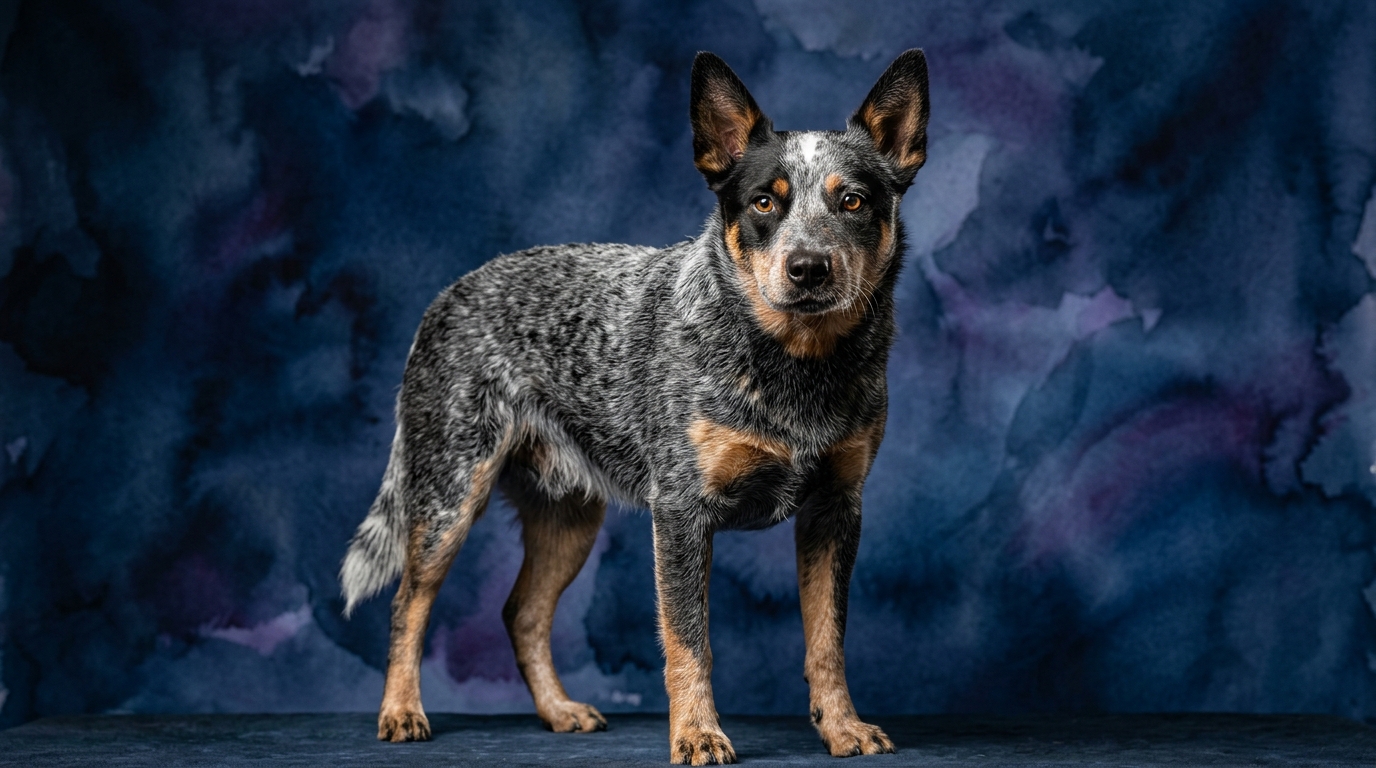
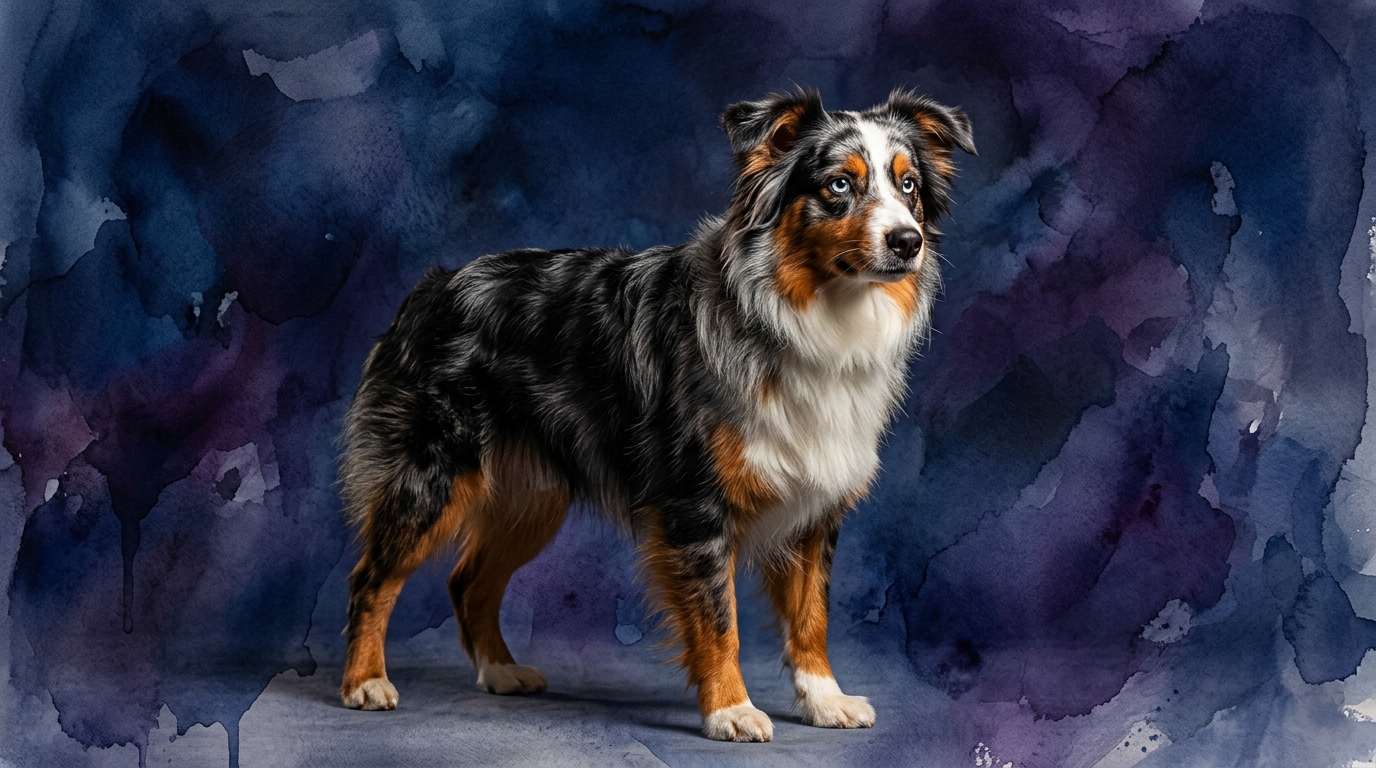
Side-by-Side Cognitive Profiles: ACD vs. MAS
The Cosmic Pet Pet IQ Lab provides a unique framework for understanding canine intelligence across five key dimensions. For the Australian Cattle Dog, often recognized for its profound working capacity, we see a profile marked by exceptional problem-solving (5/5), rapid training speed (5/5), a powerful instinctive drive (5/5), and an impressive memory (5/5), balanced by a moderate social intelligence (3/5). This breed, ranked #10 by Coren, demonstrates a mind built for complex, independent work.
In contrast, the Miniature American Shepherd presents a more balanced, albeit less extreme, cognitive profile. With moderate scores across the board—problem-solving (3/5), training speed (3/5), social intelligence (3/5), instinctive drive (3/5), and memory (3/5)—this breed, while not Coren-ranked, showcases a capable and adaptable mind. These scores suggest a dog that is engaged and trainable, but perhaps less intensely driven or independently inclined than its Australian counterpart.
Let's break down each dimension. Problem-solving for the ACD means they are adept at navigating complex situations, often finding their own solutions to challenges, which is invaluable in herding but can also translate to outsmarting owners. For the MAS, a 3/5 indicates they can solve problems with some guidance, demonstrating practical intelligence without the same level of independent ingenuity. Training speed for the ACD is remarkable; they grasp new commands and routines with astonishing swiftness, requiring minimal repetitions. The MAS, at 3/5, learns at a steady pace, needing more consistent reinforcement but still proving highly receptive to instruction.
Social intelligence for both breeds stands at 3/5, suggesting they are generally reserved with strangers and primarily focused on their immediate family or handler, rather than being overtly gregarious. This isn't a deficit, but rather a preference for a close-knit social circle. The ACD's instinctive drive at 5/5 is a defining characteristic, embodying a relentless desire to work, move, and control, often manifesting as intense herding behaviors. The MAS's 3/5 instinctive drive means they possess herding instincts, but typically with less intensity, making them more adaptable to non-working homes. Finally, memory at 5/5 for the ACD ensures they retain a vast repertoire of commands, experiences, and routines over long periods. The MAS, with a 3/5 memory, still retains information effectively, but perhaps not with the same depth or long-term recall as the ACD.
Where the Australian Cattle Dog Excels Cognitively
The Australian Cattle Dog's cognitive strengths are deeply rooted in its heritage as an independent drover of livestock across vast, challenging terrains. Their 5/5 problem-solving ability means they don't just follow instructions; they actively analyze situations and devise strategies, often anticipating movements or finding alternative solutions when obstacles arise. This manifests in their capacity to learn intricate multi-step tasks, like sorting specific livestock or navigating complex agility courses with minimal human intervention once the patterns are established.
Coupled with their 5/5 training speed, ACDs absorb new commands and concepts with astonishing efficiency. A new cue might be solidified in just a handful of repetitions, making them exceptional candidates for advanced obedience, competitive dog sports, or complex working roles. This rapid acquisition of knowledge is further supported by their 5/5 memory, allowing them to retain a vast lexicon of commands, remember past experiences, and recall learned behaviors even after long periods. This combination of traits creates a dog that is not only quick to learn but also profoundly capable of applying and adapting that learning independently in diverse environments.
Where the Miniature American Shepherd's Cognition Shines
While the Miniature American Shepherd's cognitive scores are not as high as the ACD's, their balanced 3/5 ratings across all dimensions present distinct advantages, particularly for owners seeking a capable yet less intensely demanding canine companion. Their moderate problem-solving (3/5) means they are intelligent enough to learn new tasks and adapt to routines, but are less prone to the independent, sometimes boundary-testing, ingenuity of a 5/5 problem-solver. This can translate to a dog that is more inclined to look to its owner for direction rather than constantly inventing its own activities.
The MAS's 3/5 instinctive drive, while still present, is typically more manageable than the ACD's relentless 5/5. This means their herding impulses are less likely to become obsessive or disruptive in a home environment if not constantly channeled into work. They enjoy engaging in activities and learning, but the pressure to provide constant, high-intensity mental and physical outlets is generally lower. This moderate drive allows them to integrate more smoothly into family life, making them excellent companions for owners who enjoy canine activities but don't require a full-time working partner. Their balanced cognitive profile fosters a responsive and engaged temperament that is eager to participate without the same level of internal pressure or intensity.
Training Dynamics: Which is Easier and Why?
Determining which breed is 'easier' to train is nuanced, as it depends heavily on the owner's experience and expectations. The Australian Cattle Dog, with its 5/5 training speed, learns commands at an almost unparalleled rate. They pick up on cues quickly, often with very few repetitions. However, this rapid learning is paired with 5/5 problem-solving and instinctive drive, meaning they are not just learning *what* to do, but also constantly assessing *why* and *how* to apply their knowledge. This can lead to them becoming bored easily with repetitive drills or using their intelligence to 'outsmart' a handler who isn't consistently engaging or firm with boundaries. Their independent nature means they require a highly consistent, experienced, and confident owner who can channel their intense drive and focus their problem-solving skills constructively, otherwise, they might take charge.
The Miniature American Shepherd, with its 3/5 training speed, will generally require more repetitions and patience to solidify new commands. However, their moderate problem-solving and instinctive drive (both 3/5) mean they are often more amenable to guidance and less likely to challenge boundaries with the same intensity as an ACD. They are typically eager to please their owners and, while still possessing a strong work ethic, tend to be more pliable. For a first-time dog owner or someone seeking a responsive companion without the intense mental management required by an ACD, the MAS might present a less demanding training journey, even if the learning process takes a bit longer. Their behavioral differences stem from their internal motivation: an ACD is driven to work and solve, an MAS is driven to participate and connect.
Suitability for Active vs. Relaxed Owners
The Australian Cattle Dog is unequivocally suited for highly active owners who thrive on providing consistent, intense mental and physical stimulation. Their 5/5 instinctive drive and problem-solving capabilities demand daily outlets that go beyond simple walks. These dogs excel in roles requiring complex tasks, extensive exercise, and opportunities to use their natural herding instincts, whether that's through actual stock work, advanced agility, flyball, or long-distance running. An owner who can dedicate significant time to training, dog sports, or outdoor adventures will find an unparalleled partner in an ACD. Without appropriate engagement, their immense cognitive capacity and drive can lead to destructive behaviors, excessive barking, or neurotic tendencies born from under-stimulation.
The Miniature American Shepherd, while still an active breed with herding roots, offers a more adaptable lifestyle fit. Their 3/5 scores across the board mean they appreciate and thrive on activity, dog sports, and mental challenges, but often don't require the same relentless intensity as an ACD. They are well-suited for active owners who enjoy daily walks, hikes, weekend dog park visits, and participation in activities like obedience, rally, or novice agility. They can also adapt to slightly more relaxed periods, provided they still receive consistent mental engagement and exercise. For an owner who enjoys an active lifestyle but isn't seeking a full-time working partnership, the MAS provides a wonderful balance of engagement and adaptability, making them a good fit for families or individuals who want a capable companion without the extreme demands.
The Verdict
Choose the Australian Cattle Dog if you are an experienced, highly active owner prepared to consistently engage a profoundly intelligent and driven working dog with complex tasks and extensive exercise. Their exceptional problem-solving and rapid learning require a dedicated handler ready for a true partnership.
Opt for the Miniature American Shepherd if you seek an active, versatile companion with a balanced cognitive profile, offering a good blend of trainability and moderate drive without the extreme intensity of an ACD. They are an excellent fit for active families or individuals who enjoy dog sports but appreciate a dog that can also settle.
🧠 Find Your Pet's IQ Score
Our Pet IQ Lab assessment covers 25+ tests across 5 cognitive dimensions — personalized to your breed.
Take the Full IQ Test →Frequently Asked Questions
Do Australian Cattle Dogs or Miniature American Shepherds make better family pets?
Both breeds can be excellent family pets, but their suitability depends on the family's lifestyle. Australian Cattle Dogs thrive in active families committed to providing extensive mental and physical outlets, often preferring older, respectful children due to their herding instincts. Miniature American Shepherds, with their more moderate drive and generally amiable nature, often adapt more readily to various family dynamics, including those with younger children, provided they receive consistent exercise and training.
Which breed is more prone to behavioral issues if not adequately stimulated?
The Australian Cattle Dog, with its 5/5 problem-solving and instinctive drive, is significantly more prone to developing behavioral issues like excessive barking, destructive chewing, or obsessive herding of people/pets if not adequately stimulated. Their powerful minds and bodies demand constant engagement. While Miniature American Shepherds also require stimulation, their moderate drive (3/5) means they are generally less likely to exhibit such extreme behaviors if their needs are occasionally unmet.
Can a Miniature American Shepherd perform complex working tasks like an Australian Cattle Dog?
While Miniature American Shepherds are capable and intelligent, their 3/5 problem-solving and instinctive drive mean they typically do not possess the same innate capacity for independent, complex working tasks as an Australian Cattle Dog (5/5). They can excel in many dog sports and learn intricate routines, but the ACD's profound ability to adapt and strategize independently in demanding working scenarios is generally unmatched.