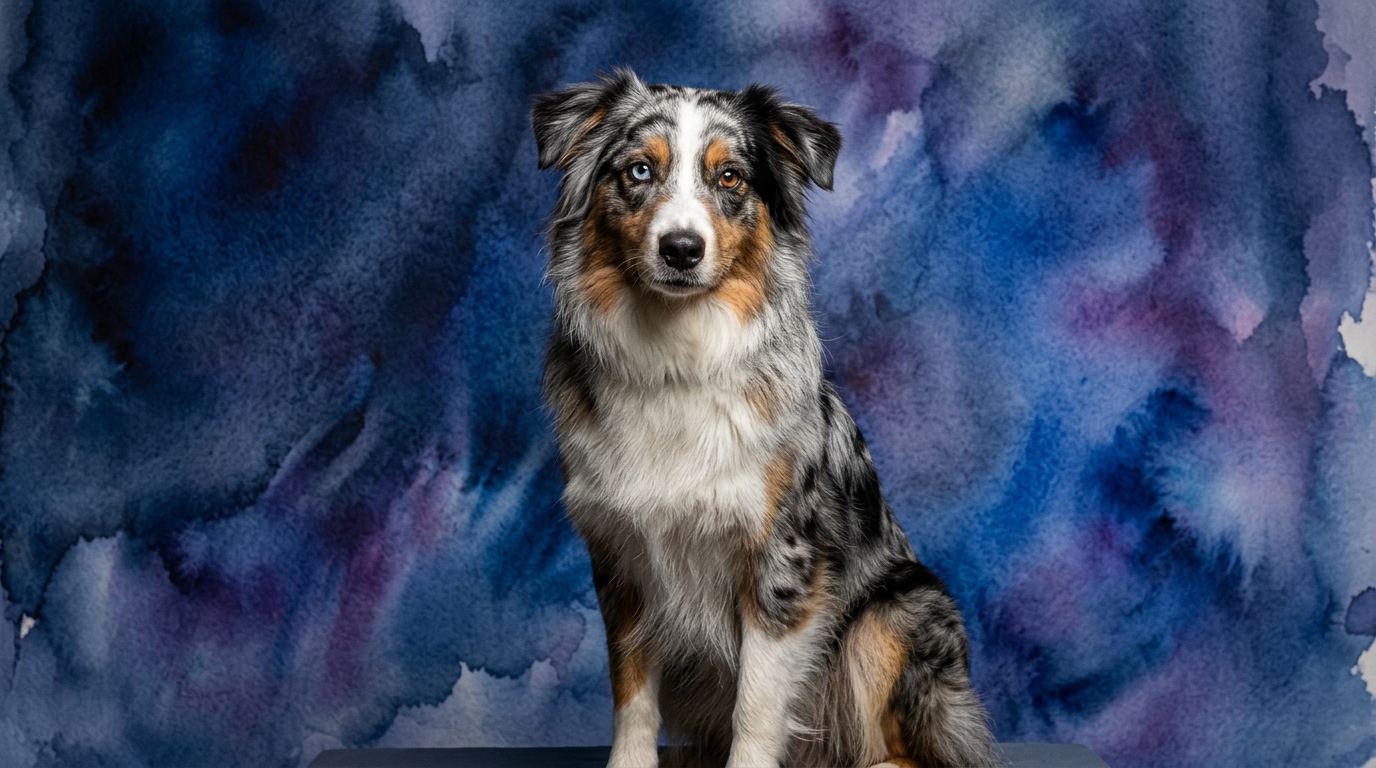

Side-by-Side IQ Profiles: Australian Shepherd vs. Brussels Griffon
The Cosmic Pet Pet IQ Lab provides a framework for understanding the unique cognitive strengths of different breeds. For the Australian Shepherd, a Herding group dog, their profile reflects a heritage built on complex tasks and independent thought. Their Problem Solving is rated 5/5, indicating an exceptional capacity for navigating intricate scenarios and devising solutions. Training Speed also stands at 5/5, showcasing their rapid learning acquisition. Social Intelligence is a robust 4/5, suggesting strong perceptive abilities regarding human cues, though they can be reserved with strangers. Instinctive Drive, at 5/5, highlights a powerful internal motivation for purposeful activity. Finally, their Memory is a perfect 5/5, reflecting excellent retention of commands, routines, and experiences.
In contrast, the Brussels Griffon, a member of the Toy group, presents a profile optimized for companionship. Their Problem Solving is rated 3/5, meaning they can handle basic puzzles but are less inclined towards multi-layered cognitive challenges. Training Speed is 3/5, indicating a moderate learning pace that requires consistent, patient instruction. Social Intelligence is also 3/5; while deeply bonded with their chosen family, they may exhibit selectivity or aloofness with unfamiliar individuals. Instinctive Drive registers at 3/5, suggesting a moderate internal impetus, often directed towards interaction rather than complex tasks. Their Memory is rated 3/5, sufficient for daily routines and familiar commands, but not for vast repertoires of intricate sequences.
Where the Australian Shepherd Excels Cognitively
The Australian Shepherd's cognitive strengths are evident across nearly all IQ dimensions, particularly in Problem Solving, Training Speed, Instinctive Drive, and Memory, all rated 5/5. Their 5/5 Problem Solving isn't merely about completing a puzzle toy; it reflects an inherited capacity for strategic thinking in dynamic environments. Imagine a herding dog needing to anticipate livestock movements, read subtle shifts in terrain, and make split-second decisions to guide a flock. This translates into a dog adept at understanding complex cause-and-effect relationships, quickly adapting to new training challenges, and even figuring out how to open child-proof latches.
Their 5/5 Training Speed and Memory work in tandem, allowing them to absorb and retain vast numbers of commands and intricate sequences with remarkable efficiency. An Australian Shepherd can master advanced obedience routines, complex agility courses, or even learn to differentiate between dozens of toys by name. This rapid acquisition and enduring recall are fueled by their 5/5 Instinctive Drive – a profound internal desire for purpose and engagement. This drive means they don't just learn; they *want* to learn and apply their mental faculties, making them exceptionally rewarding partners for advanced training and dog sports.
Where the Brussels Griffon Shines Cognitively
While the Brussels Griffon's numerical scores are moderate, their cognitive profile is perfectly suited to their role as a devoted companion, highlighting unique strengths. Their 3/5 Social Intelligence, for example, often manifests as a highly discerning ability to form deep, nuanced bonds with their primary human caregivers. They may not be universally outgoing, but their focused social acumen allows them to read the subtle emotional cues of their chosen family with remarkable accuracy, fostering a profound sense of connection and loyalty. This isn't a deficiency; it's an optimization for intimate companionship.
Furthermore, their moderate Problem Solving (3/5) and Training Speed (3/5) translate into a cognitive makeup that is generally less demanding for owners seeking a pet rather than a working partner. They are capable of learning essential commands and house rules, but their mental energy isn't constantly seeking complex challenges. This means they are often content with focused interaction and less intensive mental exercise, making them excellent companions for those who appreciate their charming, sometimes quirky personalities without requiring a constant intellectual sparring partner. Their 3/5 Instinctive Drive means they possess enough internal motivation to engage but are not perpetually seeking a 'job,' which can be a significant cognitive 'win' for a relaxed household.
Ease of Training: A Tale of Two Temperaments
When it comes to ease of training, the Australian Shepherd and Brussels Griffon present distinctly different experiences, directly linked to their IQ profiles. The Australian Shepherd, with its 5/5 Training Speed and Memory, combined with a powerful 5/5 Instinctive Drive, is generally a dream to train for those prepared to channel their mental energy. They grasp new commands quickly, retain them for extended periods, and possess a strong desire to please and engage in purposeful activity. Their herding background means they are attuned to human direction and thrive on having a 'job,' making them highly responsive to consistent, positive reinforcement methods. Complex multi-step tasks, advanced obedience, and even intricate trick training come naturally to them because they actively seek mental stimulation.
The Brussels Griffon, with a 3/5 Training Speed and Memory, requires a more patient and consistent approach. They are certainly capable of learning, but they won't pick up commands with the same lightning speed as an Aussie. Repetition is key, and training sessions need to be kept engaging and positive, often utilizing high-value treats or their strong desire for human affection as motivators. Their moderate instinctive drive means they don't possess the same inherent urge to work or perform complex tasks; their motivation is more centered around companionship and comfort. This can sometimes be perceived as stubbornness, but it's more accurately a reflection of their cognitive optimization for a different life purpose. Owners must understand that while they can be trained, it will likely be a slower, more deliberate process focused on foundational behaviors rather than intricate routines.
Matching Canine Minds to Human Lifestyles
The cognitive profiles of these two breeds offer clear guidance for matching them with appropriate owner lifestyles. The Australian Shepherd is unequivocally suited for active owners who relish providing consistent mental and physical challenges. An owner who enjoys dog sports like agility, obedience, flyball, or even disc dog will find an exceptional partner in an Australian Shepherd. Their high Problem Solving, Training Speed, and Instinctive Drive mean they thrive when given complex tasks to master and ample opportunities to use their minds. Without sufficient mental engagement, an Aussie can become bored, potentially leading to behaviors like excessive barking, destructive chewing, or attempting to 'herd' family members or other pets. They need an owner dedicated to daily mental work beyond just physical exercise.
Conversely, the Brussels Griffon is an ideal match for more relaxed owners who prioritize companionship and focused interaction. Their moderate IQ scores mean they are content with a less demanding mental regimen. While they still benefit from short, engaging training sessions and puzzle toys, their primary cognitive need is often met through close interaction with their human family. They enjoy being involved in daily activities, sitting on laps, and engaging in gentle play. An owner who values a devoted, charming presence and is prepared to offer consistent affection and moderate physical activity will find the Brussels Griffon's cognitive makeup perfectly aligned with their desire for a comfortable, companion-centric lifestyle. They are not dogs that require constant 'jobs' to feel fulfilled.
The Verdict
Choose an Australian Shepherd if you seek a dynamic, intellectually engaged partner for dog sports, advanced training, and a life filled with purposeful activity and mental challenges.
Opt for a Brussels Griffon if you desire a devoted, charming companion whose cognitive needs align with focused human interaction, a more relaxed pace, and a strong emphasis on affectionate bonding.
🧠 Find Your Pet's IQ Score
Our Pet IQ Lab assessment covers 25+ tests across 5 cognitive dimensions — personalized to your breed.
Take the Full IQ Test →Frequently Asked Questions
Do Australian Shepherds get bored easily?
Yes, their high problem-solving and instinctive drive mean they require consistent mental stimulation to prevent boredom and potential destructive behaviors. Owners must provide engaging activities and training daily.
Are Brussels Griffons good for first-time dog owners?
Their moderate training speed and lower instinctive drive can make them a manageable choice for first-time owners, provided patience and consistency are applied to training, focusing on positive reinforcement and clear communication.
How much mental exercise does an Australian Shepherd need daily?
An Australian Shepherd typically benefits from at least 30-60 minutes of dedicated mental work daily, such as puzzle toys, training sessions, or engaging in dog sports, in addition to their physical exercise requirements.