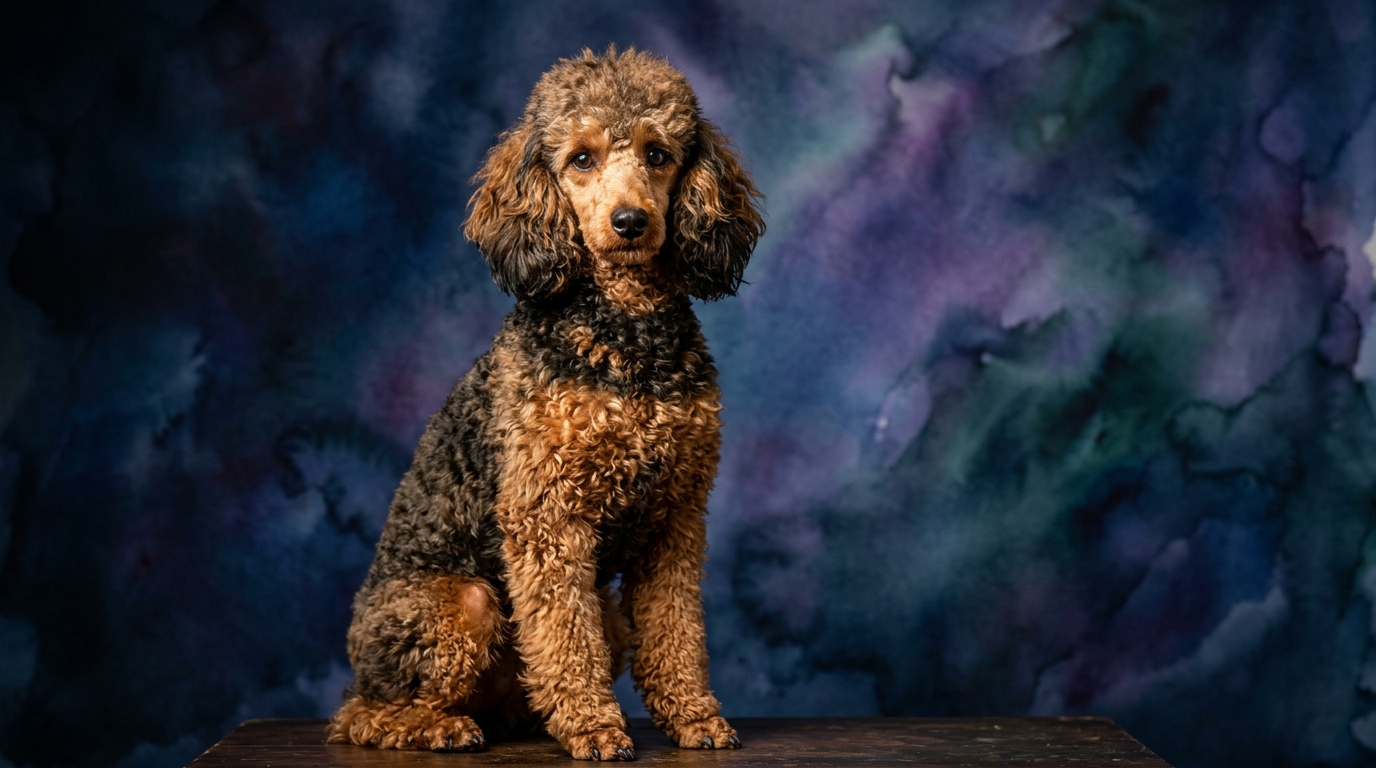
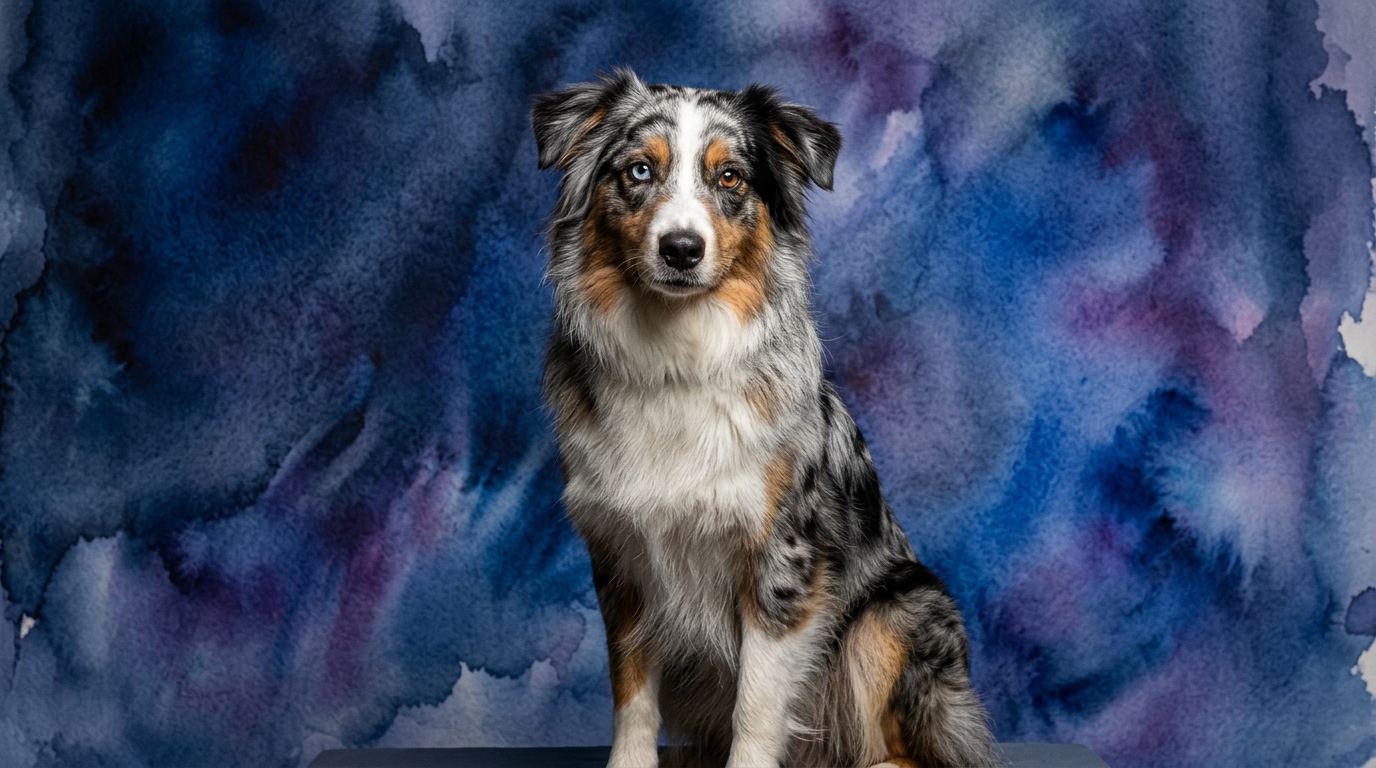
Side-by-Side Cognitive Profiles
At The Cosmic Pet Pet IQ Lab, we delve into the nuanced cognitive landscape of each breed, evaluating five core dimensions of intelligence. For the Standard Poodle, a breed recognized by Stanley Coren as the second most capable dog in understanding new commands, their profile highlights a remarkable mental agility. Their problem-solving capacity registers a perfect 5/5, indicating an exceptional ability to analyze situations and devise solutions, whether it's figuring out a complex puzzle toy or understanding household routines. Training speed also achieves a 5/5, reflecting their rapid grasp of new commands and eagerness to comply. Social intelligence is paramount for the Poodle, scoring 5/5, demonstrating a profound understanding of human emotions and social dynamics. Their instinctive drive measures 4/5, suggesting a moderate internal motivation for tasks, often channeled into retrieving or engaging in play rather than intense working roles. Finally, their memory is rated 5/5, allowing them to retain a vast repertoire of learned behaviors and experiences over extended periods.
The Australian Shepherd, while not included in Coren's specific ranking, presents an equally impressive, though distinct, cognitive profile rooted in their herding heritage. Their problem-solving ability also scores a perfect 5/5, showcasing a resourceful and strategic mind, particularly adept at navigating complex environments or managing groups. Training speed matches the Poodle at 5/5, indicating a quick learning curve and a strong desire for mental engagement. Social intelligence, while robust, is rated 4/5 for the Australian Shepherd; they form deep bonds and understand human intentions, but their focus can often be more task-oriented than overtly attuned to subtle social nuances. Crucially, their instinctive drive registers a maximum 5/5, reflecting an intense, inherent motivation for work, movement, and control. Their memory, like the Poodle's, is a perfect 5/5, enabling them to recall intricate sequences, commands, and spatial information with precision.
Where the Standard Poodle Excels Cognitively
The Standard Poodle's cognitive strengths shine particularly bright in areas demanding refined social understanding and adaptable problem-solving. Their 5/5 social intelligence is a key differentiator, enabling them to interpret human moods, subtle gestures, and vocal inflections with remarkable accuracy. This makes them exceptionally responsive companions, often anticipating their owner's needs or reacting appropriately to emotional shifts within a household. Their problem-solving, while equally strong at 5/5, often manifests in a more abstract or companion-centric manner; they might excel at figuring out how to get a favorite toy from a tricky spot, learning complex multi-step indoor games, or even understanding the sequence of events leading to a walk.
Furthermore, the Poodle's moderate instinctive drive (4/5) allows their extensive problem-solving skills to be applied broadly across various domestic and recreational contexts, rather than being primarily channeled into a specific working task. This adaptability, combined with their rapid training speed and excellent memory, makes them adept at navigating diverse social situations and learning a wide array of non-specialized commands, making them highly versatile in a family setting. Their Coren ranking further underscores their consistent ability to follow human directives and generalize learned behaviors.
Where the Australian Shepherd Excels Cognitively
The Australian Shepherd's cognitive prowess truly stands out in contexts demanding intense focus, strategic application of instincts, and robust physical engagement. Their maximum 5/5 instinctive drive is the engine behind their mental capabilities, fueling a tireless work ethic and an unparalleled focus on tasks involving movement, control, and spatial awareness. This drive isn't just about energy; it's a cognitive imperative that shapes their problem-solving (5/5). An Aussie will strategically plan the shortest path through an agility course, anticipate the movement of sheep, or devise methods to retrieve a thrown disc, demonstrating a proactive and goal-oriented approach to challenges.
While their social intelligence is a commendable 4/5, it's often geared towards forming a highly effective working partnership with their handler. They possess an exceptional ability to understand and execute complex sequences of commands, remembering intricate patterns and routes due to their 5/5 memory. This combination of intense drive, strategic problem-solving, and superior memory makes them formidable competitors in dog sports like agility, flyball, and herding trials, where their cognitive strengths are fully leveraged in real-time, dynamic environments. Their intelligence is deeply practical and action-oriented, designed for purposeful engagement.
Which Breed is Easier to Train and Why
Both Standard Poodles and Australian Shepherds boast a 5/5 training speed, indicating they learn new commands quickly. However, the 'ease' of training them can differ significantly based on the owner's approach and the dog's individual temperament. The Standard Poodle's high social intelligence (5/5) and moderate instinctive drive (4/5) often make them exceptionally eager to please and responsive to positive reinforcement. They typically seek to understand and comply with human directives, making them highly receptive to training in a wide range of disciplines, from basic obedience to complex trick training. Their lower inherent drive means fewer distractions from innate urges, allowing them to focus intently on the handler's instruction.
The Australian Shepherd, while equally quick to learn, presents a different training dynamic due to their maximum 5/5 instinctive drive. This powerful internal motivation means they thrive on having a 'job' and require consistent, engaging, and challenging training to prevent them from becoming bored or finding their own 'work,' which might manifest as herding children, nipping heels, or excessive barking. Their training needs to be stimulating and tap into their natural herding and problem-solving abilities. While they learn commands rapidly, maintaining their focus and channeling their intense drive requires a dedicated and experienced handler who can provide structure, mental challenges, and ample physical outlets. Without sufficient engagement, their intelligence can lead to mischievous or disruptive behaviors.
Matching Breed Intelligence to Owner Lifestyles
For owners with an active lifestyle, the Australian Shepherd emerges as an ideal partner. Their 5/5 instinctive drive demands consistent physical and mental engagement, making them thrive in environments where they can participate in dog sports like agility, flyball, or herding, accompany owners on long hikes, runs, or biking adventures, and engage in extensive outdoor play. Their strategic problem-solving and excellent memory make them excel in competitive activities that require both physical prowess and intricate mental coordination. An Aussie needs an owner who is committed to providing daily outlets for their boundless energy and cognitive needs, turning their potent instincts into productive activities.
Owners seeking a companion with a slightly more relaxed, yet still engaging, approach to activity might find the Standard Poodle a more suitable fit. While also active and enjoying regular exercise, their 4/5 instinctive drive and 5/5 social intelligence mean they are often content with daily walks, games of fetch, learning new tricks, and being an integral part of family activities. Their problem-solving can be satisfied with puzzle toys, advanced obedience, or even just observing and interacting with their human family. 'Relaxed' here does not imply sedentary, but rather a dog whose fulfillment comes more from companionship and varied enrichment rather than a singular, high-intensity working purpose, making them adaptable to a broader range of companion-centric lifestyles.
The Verdict
Choose the Standard Poodle if you prioritize a deeply socially attuned companion who excels at understanding subtle human cues, thrives on companionship, and is adaptable to various environments without requiring a specific 'job' to fulfill.
Opt for the Australian Shepherd if you seek a dynamic, driven partner for dog sports, outdoor adventures, or a working role, and are prepared to provide consistent mental and physical challenges for a dog with powerful instincts.
🧠 Find Your Pet's IQ Score
Our Pet IQ Lab assessment covers 25+ tests across 5 cognitive dimensions — personalized to your breed.
Take the Full IQ Test →Frequently Asked Questions
Do Standard Poodles or Australian Shepherds make better family pets?
Both can be excellent family pets, but their suitability depends on the family's lifestyle. Standard Poodles often integrate smoothly due to their high social intelligence and adaptability, enjoying being central to family life. Australian Shepherds thrive in active families that can channel their energy and provide consistent engagement, preventing them from developing unwanted herding behaviors towards children.
Are there significant differences in their need for mental stimulation?
Both breeds possess significant cognitive capacities and require mental stimulation. The Australian Shepherd, with its 5/5 instinctive drive, demands structured tasks, puzzle toys, and training to prevent boredom-driven behaviors. The Standard Poodle, also with 5/5 problem-solving, enjoys similar challenges but might be more content with learning complex tricks or engaging in interactive play focused on companionship rather than a specific working role.
How do their grooming needs compare?
Their grooming needs are quite different. The Standard Poodle has a single, curly, non-shedding coat that requires regular professional grooming every 4-6 weeks to prevent matting and maintain skin health. The Australian Shepherd has a double coat that sheds moderately and requires regular brushing (2-3 times a week, more during shedding seasons) to manage loose hair and prevent tangles, but typically less frequent professional grooming.