The Cognitive Blueprint: Side-by-Side IQ Profiles
The Cosmic Pet IQ Lab evaluates canine cognition across five critical dimensions, providing a granular view of a breed's mental architecture. For both the Border Collie and the Australian Shepherd, the scores are remarkably high, underscoring their profound capacity for learning and adaptation.
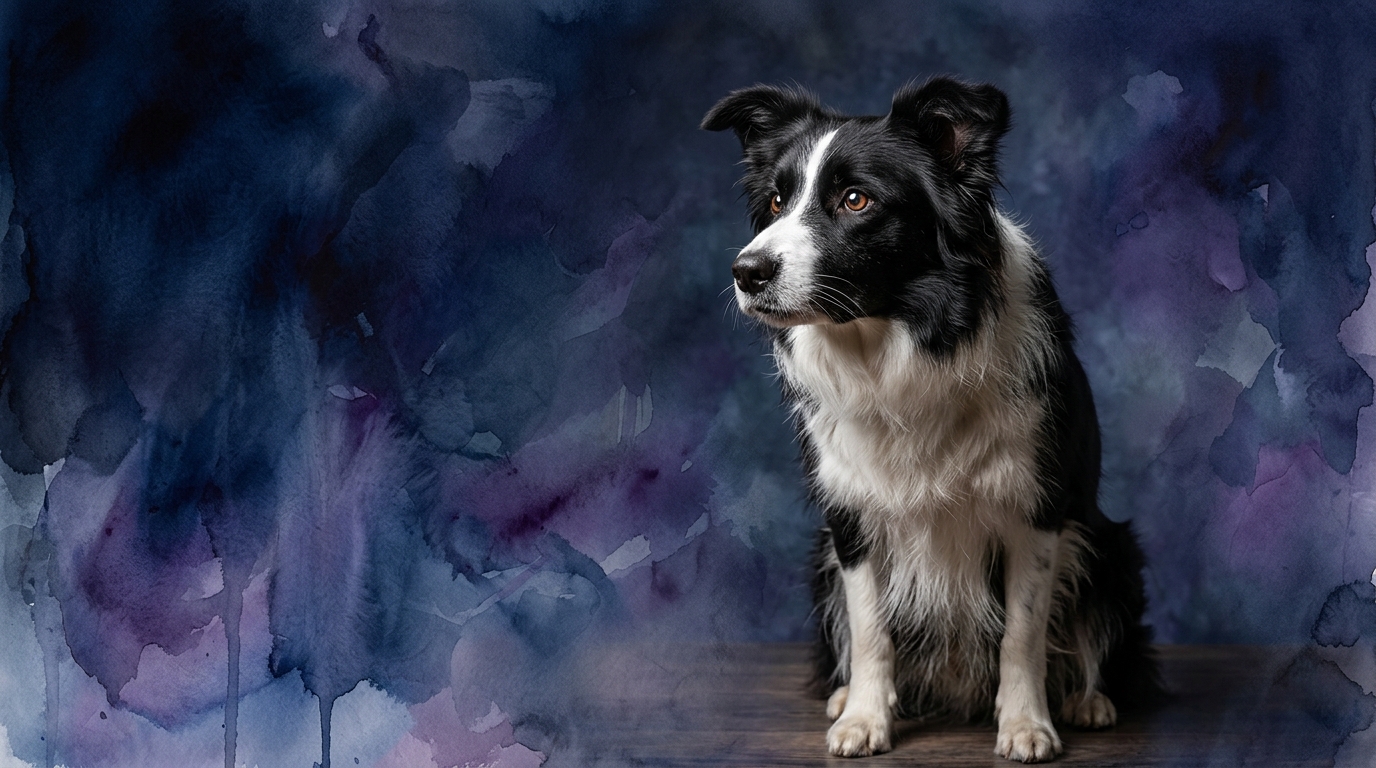
The Border Collie, often cited for its supreme trainability and focus, garners a Coren rank of #1, positioning it at the very top of canine cognitive rankings. Its Problem Solving is rated 5/5, indicating an exceptional ability to analyze novel situations and devise effective solutions, often through strategic trial-and-error or by anticipating outcomes. Training Speed also stands at 5/5, reflecting their rapid acquisition of complex command sequences and abstract concepts. Social Intelligence is marked at 4/5, demonstrating a keen awareness of handler cues and environmental shifts, though sometimes with a primary focus on a single human. Instinctive Drive is 5/5, manifesting as an intense, almost obsessive, herding instinct, characterized by the famous 'eye.' Memory registers at a perfect 5/5, allowing them to recall vast repertoires of commands and intricate routines over extended periods.
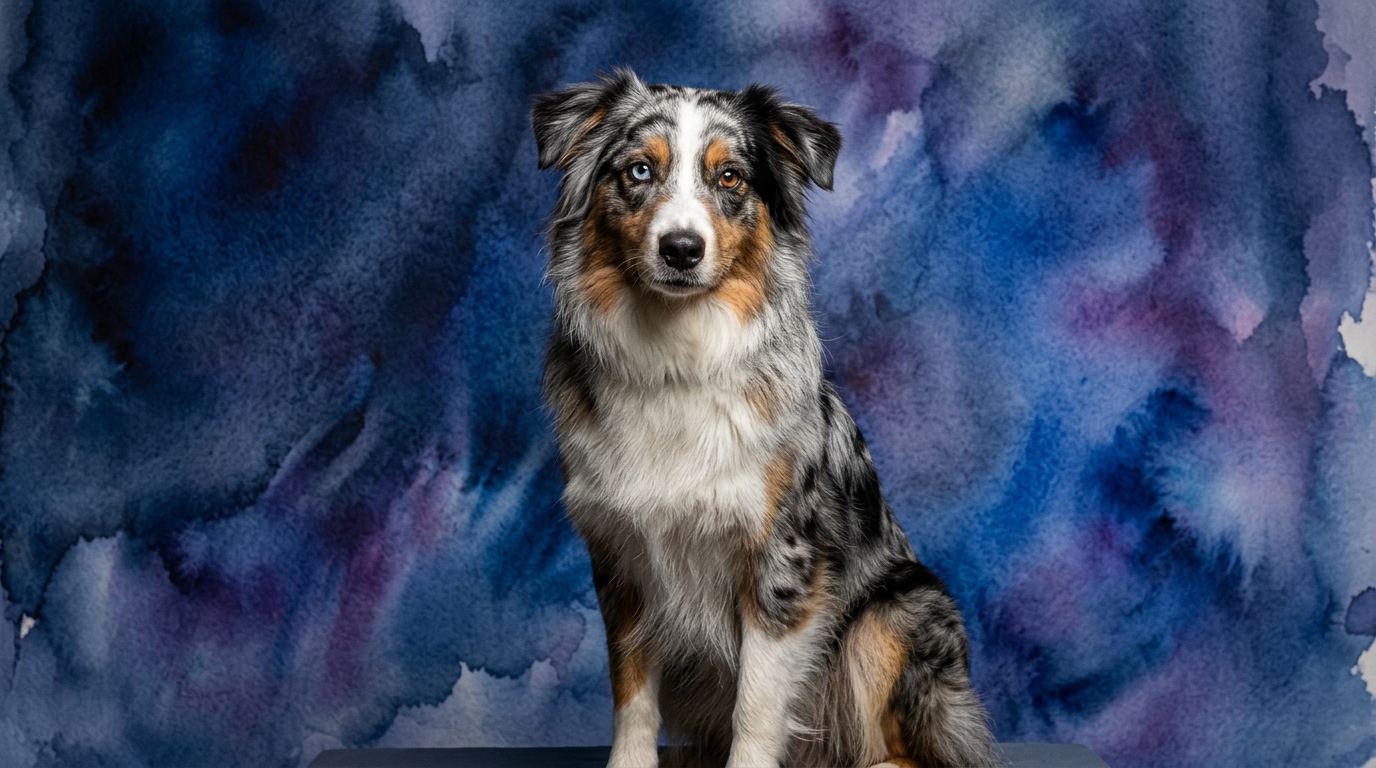
The Australian Shepherd, while not specifically Coren-ranked, showcases an equally impressive internal IQ profile. Its Problem Solving is also rated 5/5, demonstrating an innate talent for navigating complex environments and figuring out how to achieve objectives, often with a robust, adaptable approach. Training Speed is 5/5, signifying their quick grasp of new instructions and eagerness to participate in varied learning activities. Social Intelligence at 4/5 highlights their perceptive nature, reading human emotions and group dynamics effectively, often being more generally sociable than their Border Collie counterparts. Instinctive Drive scores 5/5, driven by a powerful desire to manage and gather, though their herding style can be broader and less intensely focused on the 'eye' compared to Border Collies. Their Memory is likewise 5/5, enabling consistent recall of commands, routines, and experiences across diverse situations.
Where the Border Collie Wins Cognitively
The Border Collie’s cognitive edge often lies in its singular, intense focus and unparalleled capacity for intricate sequential learning, largely contributing to its Coren #1 ranking. They excel at mastering multi-step instructions and performing complex, choreographed routines, making them formidable competitors in dog sports like obedience and agility. Their problem-solving prowess is particularly acute when tasks require strategic planning and precision; they can dissect a problem into smaller parts and systematically work through them with remarkable efficiency. This strategic depth means they often anticipate their handler’s next move, making them appear to ‘read minds’ during training sessions. Furthermore, their memory allows for not just retention of commands, but also the nuanced context of those commands, leading to highly consistent and reliable performance in structured environments.
This breed’s cognitive strength is also evident in its ability to generalize learned behaviors to new, yet similar, scenarios. For example, a Border Collie trained to herd sheep using specific commands can often transfer that understanding to other livestock or even non-traditional ‘herding’ games with minimal retraining, demonstrating a high level of cognitive flexibility within their specialized drive. Their instinctive drive, while intense, is highly malleable to direction, allowing them to channel that energy into specific, handler-defined tasks with unwavering resolve. Owners often observe a Border Collie attempting to 'outthink' an obstacle or analyze a situation for the most efficient path to success, showcasing their strategic problem-solving at an advanced level.
Where the Australian Shepherd Wins Cognitively
While sharing high scores, the Australian Shepherd often demonstrates cognitive strengths rooted in versatility, adaptability, and a broader environmental awareness. Their problem-solving, rated 5/5, often manifests as creative solutions to novel challenges, indicating a less rigid, more exploratory approach. Instead of meticulously following a predefined sequence, an Australian Shepherd might intuitively adjust its strategy based on real-time feedback from the environment or the subjects being herded. This adaptability makes them particularly effective in dynamic situations where conditions are constantly changing, such as ranch work with varied terrain and livestock types.
The Australian Shepherd's social intelligence, while scoring 4/5 like the Border Collie, often exhibits a more generalized perception of social cues within a group context. They tend to be more attuned to the overall atmosphere and interactions among multiple individuals, not just their primary handler. This broader social awareness contributes to their role as excellent family and farm dogs who can interact effectively with various people and animals. Their instinctive drive, also 5/5, is often coupled with a strong desire for human connection and collaboration, meaning their drive can be readily harnessed for a wider array of tasks beyond precise herding. An Australian Shepherd’s memory, at 5/5, supports their adaptability by allowing them to recall diverse experiences and apply lessons learned from one situation to another, even if the contexts are significantly different, promoting an agile learning style.
Which is Easier to Train and Why?
Determining which breed is 'easier' to train hinges on the owner's experience and specific training goals, as both breeds register a 5/5 in Training Speed. The Border Collie’s intense focus and desire to work closely with a single handler often make them appear to absorb commands almost instantaneously. They thrive on structure and sequential learning, quickly grasping complex chains of commands. However, this intensity can also mean that any inconsistency or lack of mental engagement from the owner can result in the Border Collie 'self-training' on undesirable behaviors, such as obsessive herding of children or shadows, or developing neurotic tendencies. Their behavioral drive demands constant, specific direction; if left undirected, their formidable intellect will find its own (potentially inconvenient) outlet. For an experienced, dedicated owner ready to provide consistent, challenging training, a Border Collie can be remarkably straightforward to train for high-level tasks.
The Australian Shepherd also learns commands with remarkable speed and eagerness, making them highly trainable for a wide array of activities. They tend to be a bit more forgiving of handler mistakes and can adapt more readily to different trainers or family members participating in their education. Their behavioral profile is generally characterized by a desire for collaboration and partnership, making them amenable to diverse training methods and environments. While they possess a strong herding drive, it can be slightly less intense and more broadly directed than a Border Collie’s, often manifesting as a general desire to 'organize' their environment, including family members. This can be easier to manage for some owners, as it might translate to less intense neuroticism if their mental needs aren't met perfectly every day. For owners seeking a versatile, quick learner who can excel in many different roles without the singular intensity of a Border Collie, the Australian Shepherd might feel more 'easygoing' to train.
Family Pet Suitability: Active Owners vs. Relaxed Owners
Neither the Border Collie nor the Australian Shepherd is a suitable companion for truly relaxed or sedentary owners. Both breeds possess profound instinctive drives and cognitive capacities that demand consistent physical exercise and, crucially, immense mental stimulation. Confinement without purpose or extensive activity will inevitably lead to destructive behaviors, anxiety, and general unhappiness for these dogs. Their designation as herding breeds underscores their need for a 'job,' whether real herding, competitive dog sports, or highly structured daily enrichment.
For active owners, both breeds present compelling options, but their specific needs diverge. An owner who enjoys highly structured activities, competitive dog sports like agility, obedience, flyball, or who has experience with herding, will find a Border Collie an unparalleled partner. They thrive on intense, focused engagement with a primary handler and will dedicate themselves fully to mastering complex tasks. This makes them ideal for individuals or families committed to a rigorous daily routine of exercise and mental challenges, often preferring one-on-one structured 'work' sessions over casual group play. Their unwavering focus and drive require an equally dedicated, directive owner.
Active owners who seek a more versatile companion for diverse outdoor adventures, farm life, or a family-oriented active lifestyle might find the Australian Shepherd a slightly better fit. While equally demanding of physical and mental activity, their cognitive profile often includes a broader social adaptability, allowing them to engage enthusiastically with multiple family members and varied activities such as hiking, swimming, disc dog, or casual agility. They often possess a strong desire to be involved in all family activities, acting as a true companion. An Australian Shepherd is an excellent choice for an active family that values inclusion and enjoys varied, less rigidly structured forms of exercise and engagement, as long as that engagement is consistent and stimulating. They still require substantial daily commitments, but their social intelligence makes them very attuned to family dynamics and eager to participate.
The Verdict
Choose a Border Collie if you are an experienced, highly active owner seeking a precise, intense partner for competitive dog sports or dedicated herding, capable of mastering intricate sequences and thriving on focused, consistent mental challenges.
Choose an Australian Shepherd if you are an active individual or family desiring a versatile, adaptable companion for diverse outdoor activities, farm life, or a dynamic household, who values social engagement alongside rigorous physical and mental stimulation.
🧠 Find Your Pet's IQ Score
Our Pet IQ Lab assessment covers 25+ tests across 5 cognitive dimensions — personalized to your breed.
Take the Full IQ Test →Frequently Asked Questions
Do Border Collies require more mental stimulation than Australian Shepherds?
Both breeds require significant mental stimulation daily due to their high cognitive capacities and herding drives. Border Collies often demand a more structured, intense, and precisely directed form of mental engagement, while Australian Shepherds might be satisfied with a wider variety of challenging tasks and social interactions.
Are Border Collies generally more focused than Australian Shepherds?
Yes, Border Collies often exhibit a more intense, singular focus, particularly on their primary handler and specific tasks, which makes them exceptional in precision activities. Australian Shepherds possess strong focus but tend to have a broader awareness of their environment and social group, making them highly adaptable.
Can an Australian Shepherd excel in dog sports like a Border Collie?
Absolutely, Australian Shepherds excel in various dog sports, including agility, obedience, and herding, demonstrating remarkable aptitude and enthusiasm. While a Border Collie might have a slight edge in complex, high-precision competitive obedience, an Aussie's versatility and drive allow them to be top performers across many disciplines.