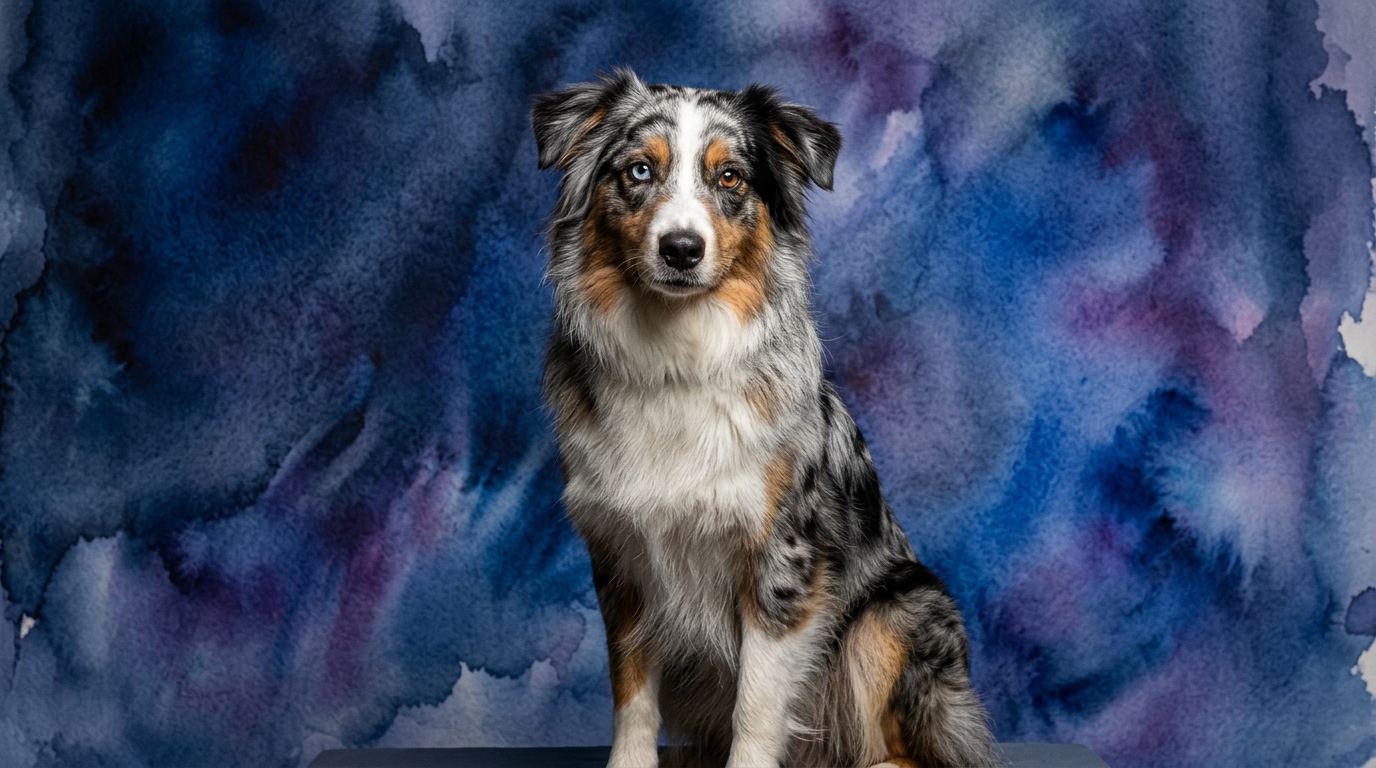

Side-by-Side IQ Profile
The Cosmic Pet IQ Lab's assessment reveals distinct cognitive architectures for these two breeds. The Australian Shepherd, a formidable herding dog, excels across the board: Problem Solving (5/5), Training Speed (5/5), Social Intelligence (4/5), Instinctive Drive (5/5), and Memory (5/5). This profile paints a picture of a mentally agile and highly motivated animal.
In contrast, the English Toy Spaniel, bred primarily for companionship, demonstrates a more moderate cognitive profile: Problem Solving (3/5), Training Speed (3/5), Social Intelligence (3/5), Instinctive Drive (3/5), and Memory (3/5). These ratings indicate a dog capable of learning and connection, but without the intense cognitive demands of a working breed.
Where Australian Shepherd Wins Cognitively
The Australian Shepherd's cognitive profile positions it as a powerhouse of practical intellect. Its 5/5 Problem Solving rating means it can independently figure out how to open gates, locate lost items, or navigate complex agility courses with little human intervention, often learning from observation. This capacity extends to adapting quickly to new environments and unexpected challenges.
The perfect 5/5 in Training Speed allows it to master advanced obedience, intricate tricks, or specialized working commands in record time, making it a highly versatile partner for competitive dog sports or service roles. Furthermore, its 5/5 Instinctive Drive fuels a relentless dedication to tasks, ensuring sustained focus and enthusiasm for prolonged mental engagement, whether it’s herding livestock or excelling in scent work. This breed's exceptional 5/5 Memory ensures that once a skill is acquired, it is deeply ingrained, allowing for seamless execution even after a period of inactivity, which is invaluable for consistent performance in demanding roles.
Where English Toy Spaniel Wins Cognitively
While not possessing the raw cognitive horsepower of a working breed, the English Toy Spaniel's cognitive strengths lie in its suitability for a specific, cherished role: that of a dedicated, low-maintenance companion. Its 3/5 Social Intelligence is perfectly calibrated for intimate human interaction, fostering a strong bond without the demanding expectations for complex communication or intricate tasks often sought by working breeds. This moderate social acumen means they are generally content with clear, direct emotional cues and thrive on consistent affection, making them less prone to anxiety from ambiguous social signals.
The 3/5 Instinctive Drive is a significant win for owners seeking a relaxed household dynamic; this breed is not compelled to invent 'jobs' like herding children or furniture, nor does it require constant physical or mental exertion to prevent destructive behaviors. Instead, their drives are primarily focused on proximity and comfort with their human family, leading to a naturally calm and adaptable presence within the home. Their moderate Problem Solving (3/5) means they are not constantly seeking new puzzles, which reduces the mental enrichment burden on the owner while still allowing for basic learning.
Which is Easier to Train and Why
Without question, the Australian Shepherd is considerably easier to train, driven by its 5/5 Training Speed and 5/5 Instinctive Drive. This breed possesses an innate eagerness to please and a powerful work ethic, absorbing new commands with remarkable swiftness, often anticipating what is desired. Their high problem-solving skills mean they quickly understand the 'why' behind a command, not just the 'what,' leading to more reliable and generalized learning. For instance, an Aussie might learn 'fetch the leash' after just a few tries and then apply that concept to 'fetch the ball' with minimal additional instruction.
In contrast, the English Toy Spaniel, with its 3/5 Training Speed and 3/5 Instinctive Drive, requires a different approach. While certainly trainable, they learn at a more measured pace and may lack the inherent motivation to perform complex tasks repeatedly without substantial reward or consistent encouragement. Their focus is often more on the comfort of their human's lap than on mastering a new trick. They respond well to positive reinforcement and gentle methods, but owners should anticipate more repetitions and a slower progression through training stages. For example, teaching an English Toy Spaniel 'stay' might require more frequent, shorter sessions and a higher value treat to maintain engagement compared to an Australian Shepherd.
Which Suits Active Owners vs Relaxed Owners
The cognitive profiles of these two breeds clearly delineate their suitability for different lifestyles. The Australian Shepherd, with its 5/5 Problem Solving, 5/5 Training Speed, 5/5 Instinctive Drive, and 5/5 Memory, is undeniably the choice for active owners. These dogs thrive when given a purpose, whether it's competitive agility, advanced obedience, herding, or extensive hiking. They require significant daily mental and physical stimulation to prevent boredom and potential behavioral issues, often becoming restless or destructive if their active minds are not engaged. An owner who enjoys dog sports, long outdoor adventures, or intricate training sessions will find an Australian Shepherd to be an unparalleled partner.
Conversely, the English Toy Spaniel, with its more moderate ratings across the board (3/5 for Problem Solving, Training Speed, Social Intelligence, Instinctive Drive, and Memory), is ideally suited for relaxed owners. This breed is content with shorter, leisurely walks, gentle play sessions, and ample cuddle time on the sofa. Their lower instinctive drive means they are less demanding of constant mental challenges and are generally happy to simply be in the presence of their family. Owners who prefer a calm home environment, enjoy quiet companionship, and are not seeking a dog for high-intensity activities will find the English Toy Spaniel to be a delightful and undemanding companion.
The Verdict
Opt for an Australian Shepherd if you are an active, dedicated owner seeking a highly trainable, driven, and mentally agile partner for demanding activities like dog sports, extensive outdoor adventures, or intricate training regimens.
Select an English Toy Spaniel if you desire a gentle, affectionate, and relatively low-maintenance companion dog that thrives on close human interaction and a relaxed home environment.
🧠 Find Your Pet's IQ Score
Our Pet IQ Lab assessment covers 25+ tests across 5 cognitive dimensions — personalized to your breed.
Take the Full IQ Test →Frequently Asked Questions
Does the Australian Shepherd's high instinctive drive make it difficult to live with for a novice owner?
An Australian Shepherd's strong instinctive drive (5/5) means they require significant mental and physical outlets; without proper engagement, they can become bored or channel their energy into unwanted behaviors like herding family members. A novice owner should be prepared for this commitment and seek guidance on channeling their drive constructively.
Can an English Toy Spaniel learn complex tricks or commands despite its moderate training speed?
Yes, an English Toy Spaniel can certainly learn complex tricks and commands, though it will typically require more patience, consistency, and positive reinforcement than a breed with a higher training speed. Their 3/5 training speed means they grasp concepts steadily, and their social intelligence ensures they enjoy the interaction.
How does the memory difference between these breeds affect daily life?
The Australian Shepherd's 5/5 memory means it quickly recalls routines, commands, and learned boundaries, making for a highly predictable and responsive companion in various situations. The English Toy Spaniel's 3/5 memory is sufficient for daily routines and basic commands but may require more consistent reinforcement for less frequent instructions or complex sequences, potentially necessitating more owner patience.