Side-by-Side IQ Profile: Australian Shepherd vs. German Shorthaired Pointer
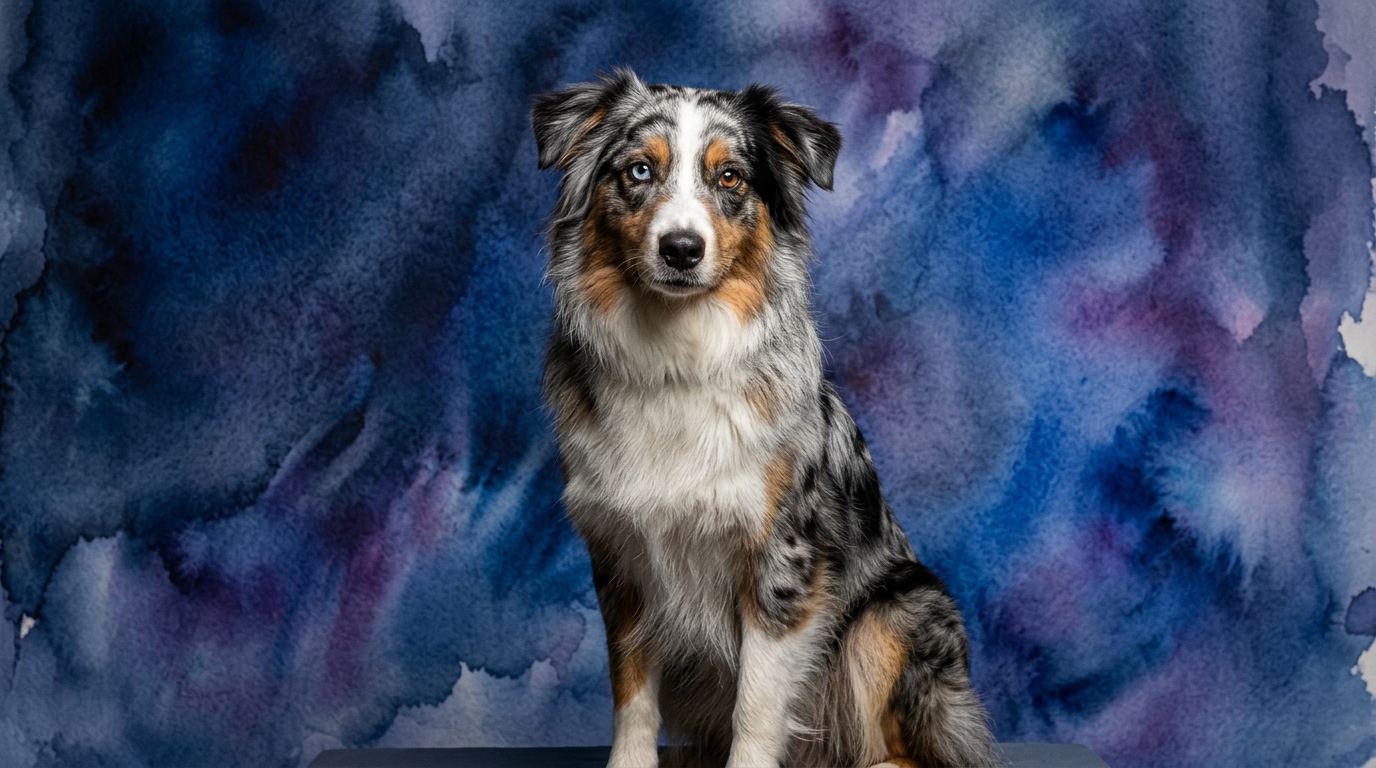
The Cosmic Pet Pet IQ Lab categorizes canine intelligence across five key dimensions, offering a nuanced view beyond simple obedience rankings. For the Australian Shepherd, a Herding breed not listed on Coren's traditional ranks, our lab assigns a Problem Solving score of 5/5, reflecting their adaptability in dynamic herding scenarios and strategic thinking to maneuver livestock. Their Training Speed is an exceptional 5/5, indicative of their rapid grasp of commands and quick associative learning. Social Intelligence stands at 4/5, as they form strong bonds with handlers but can be reserved with strangers. An intense Instinctive Drive of 5/5 fuels their focus on tasks, while their Memory is a perfect 5/5, ensuring excellent recall of learned behaviors and spatial layouts.
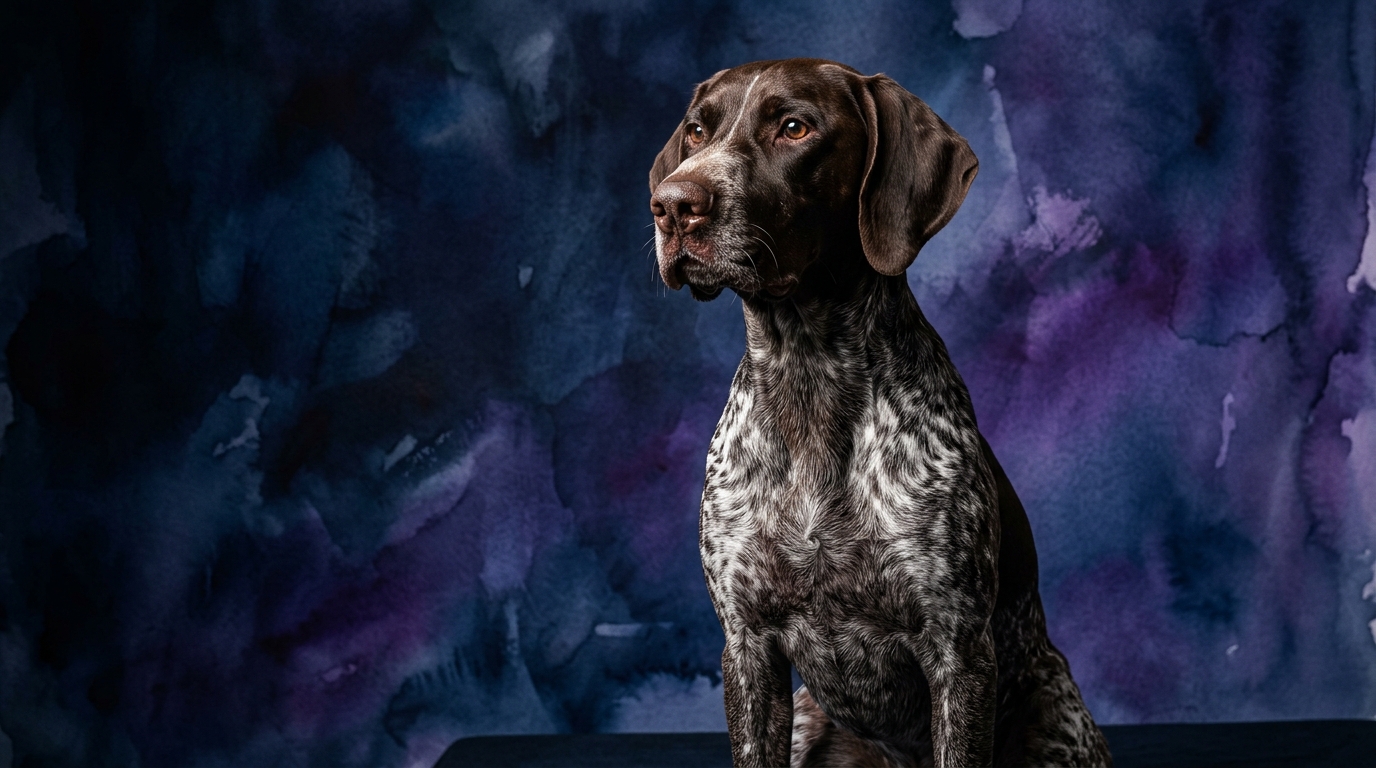
In contrast, the German Shorthaired Pointer, a Sporting breed ranked #17 by Coren, presents a different cognitive emphasis. They also achieve a Problem Solving score of 5/5, which in their case translates to independent decision-making in the field, navigating complex terrain to locate game, and strategizing pursuit. Their Training Speed is a strong 4/5, signifying quick learning, though perhaps requiring more repetition or motivation than an Aussie due to their independent nature. Social Intelligence is also 4/5, reflecting strong family bonds and a generally amiable disposition, but with a focus often tied to their hunting instincts. Their Instinctive Drive is a powerful 5/5, powering their keen scenting, relentless pursuit, and characteristic pointing. Finally, their Memory is rated 4/5, indicating good recall of commands and locations, yet potentially less exhaustive than the Aussie's for highly intricate sequences.
Where the Australian Shepherd Wins Cognitively
The Australian Shepherd's distinct cognitive advantages become clear when examining its exceptional Training Speed (5/5) and Memory (5/5), both scoring a full point above the German Shorthaired Pointer. This superior capacity isn't merely about learning basic commands; it signifies an inherent ability to rapidly forge associations between verbal cues, hand signals, and desired actions. An Aussie can absorb complex sequences, like those found in advanced obedience or agility courses, with remarkable efficiency, often anticipating the next step in a routine. Their profound memory ensures these learned behaviors are not only quickly acquired but also retained with impressive longevity, allowing for a vast and intricate behavioral repertoire.
This translates into a dog that requires fewer repetitions during training and maintains a high level of performance even after periods of inactivity. For owners who delight in teaching intricate commands, engaging in competitive dog sports, or performing complex tasks, the Aussie's unparalleled cognitive fluidity in absorbing and recalling information makes them an exceptionally rewarding and precise partner. Their mind is a sponge for structured learning, eager to process and execute detailed instructions with remarkable consistency and flair.
Where the German Shorthaired Pointer Wins Cognitively
While both breeds achieve a 5/5 in Problem Solving, the German Shorthaired Pointer's strength lies in the application of this skill, deeply intertwined with its powerful Instinctive Drive (5/5). The GSP excels at autonomous problem-solving in dynamic, expansive environments, often with minimal immediate human input. Unlike the more collaborative problem-solving typical of a herding breed, a GSP's intelligence is honed for independent strategizing in the hunt: navigating complex scent trails, assessing wind direction, and making rapid, real-time decisions to locate and track game. This involves a sophisticated integration of sensory information, environmental awareness, and predictive reasoning to anticipate prey movement.
Their instinctive drive isn't just a physical urge; it's a profound cognitive framework that directs their focus, persistence, and ingenuity in achieving their hunting objective. This breed also demonstrates a unique blend of physical and mental intelligence, where their remarkable athleticism is a direct extension of their strategic thinking, allowing them to execute precise, energy-efficient movements across diverse terrains. Their Coren ranking of #17 further underscores their capacity for intelligent, independent work in their specialized field, showcasing a mind engineered for the complexities of the sporting world, where self-reliance and quick, decisive action are paramount.
Which is Easier to Train and Why: Behavioral Differences
When considering ease of training, the Australian Shepherd generally holds a distinct advantage, primarily due to its 5/5 Training Speed and 5/5 Memory, which both surpass the German Shorthaired Pointer's 4/5 ratings. An Aussie often exhibits an almost innate desire to cooperate and please its handler, a trait deeply embedded from centuries of working in close partnership with humans to manage livestock. This inherent eagerness translates into a dog that not only picks up new commands with remarkable swiftness but also retains them with exceptional reliability.
They thrive on structure and respond well to consistent, positive reinforcement, readily forming strong associations between actions and consequences. The GSP, while certainly capable and intelligent, possesses a more independent spirit, a legacy of its role in hunting where autonomous decision-making is crucial. This independence can sometimes manifest as a slight recalcitrance or a tendency to follow an interesting scent over a handler's command. Training a GSP often requires more patience, creative motivation, and a deeper understanding of their powerful prey drive to channel their energy effectively, whereas the Aussie's predisposition for collaboration makes the learning process generally smoother and faster for most owners.
Matching Breeds to Lifestyles: Active vs. Relaxed Owners
Neither the Australian Shepherd nor the German Shorthaired Pointer are suitable companions for truly relaxed owners seeking a sedentary lifestyle; both breeds demand substantial daily engagement. However, their ideal owner profiles diverge in the nature of that activity. The Australian Shepherd thrives with owners who are committed to providing structured mental challenges alongside physical exercise. Their robust Problem Solving and Memory scores mean they excel at intricate tasks such as advanced obedience, agility, flyball, or even complex trick training. Owners who enjoy teaching new skills, participating in dog sports, or engaging in 'brain games' will find an Aussie an incredibly rewarding partner.
These dogs need their minds actively engaged, or they can become bored and channel their considerable intelligence into less desirable behaviors. Conversely, the German Shorthaired Pointer is best suited for owners who are avid outdoors enthusiasts, capable of providing extensive, vigorous physical outlets. Their powerful Instinctive Drive and boundless energy are best satisfied by activities that allow them to run, swim, hike, and explore vast spaces, often off-leash in safe environments. They excel at field work, scent tracking, and long-distance running. While they appreciate mental stimulation, their primary need is for expansive physical exertion that taps into their hunting heritage and allows them to utilize their keen senses in an open-air environment.
The Verdict
Choose an Australian Shepherd if you seek a highly cooperative, mentally agile partner for structured activities like obedience, agility, or herding, valuing rapid learning and excellent recall.
Opt for a German Shorthaired Pointer if you are an avid outdoors enthusiast who can provide extensive physical exercise and opportunities for independent exploration and scent-driven work.
🧠 Find Your Pet's IQ Score
Our Pet IQ Lab assessment covers 25+ tests across 5 cognitive dimensions — personalized to your breed.
Take the Full IQ Test →Frequently Asked Questions
Do Australian Shepherds bark more than German Shorthaired Pointers?
Australian Shepherds can be quite vocal, using barks to communicate during herding tasks or to alert their owners. German Shorthaired Pointers may also bark, especially when excited or focused on a scent, but their vocalizations tend to be less frequent outside of specific working scenarios. Both breeds benefit from training to manage excessive barking.
Which breed is better with children, Australian Shepherds or German Shorthaired Pointers?
Both breeds can be wonderful family companions with proper socialization and training. Australian Shepherds, with their herding instincts, might attempt to 'herd' children, requiring supervision. German Shorthaired Pointers are generally robust and playful, but their high energy requires children to be respectful of a dog's space and play style.
How much exercise do these breeds truly need daily?
Both breeds require substantial daily exercise, typically 60-90 minutes of vigorous activity. An Australian Shepherd benefits from a mix of physical exertion and mental challenges, while a German Shorthaired Pointer needs extensive physical outlets like long runs or swims to satisfy their powerful hunting drive.