Side-by-Side Cognitive Profiles: Aussie vs. Irish Setter
To truly understand the cognitive makeup of these two distinct breeds, The Cosmic Pet Pet IQ Lab assesses five key dimensions of canine intelligence. This detailed breakdown allows us to move beyond superficial observations and appreciate the nuanced strengths of each.
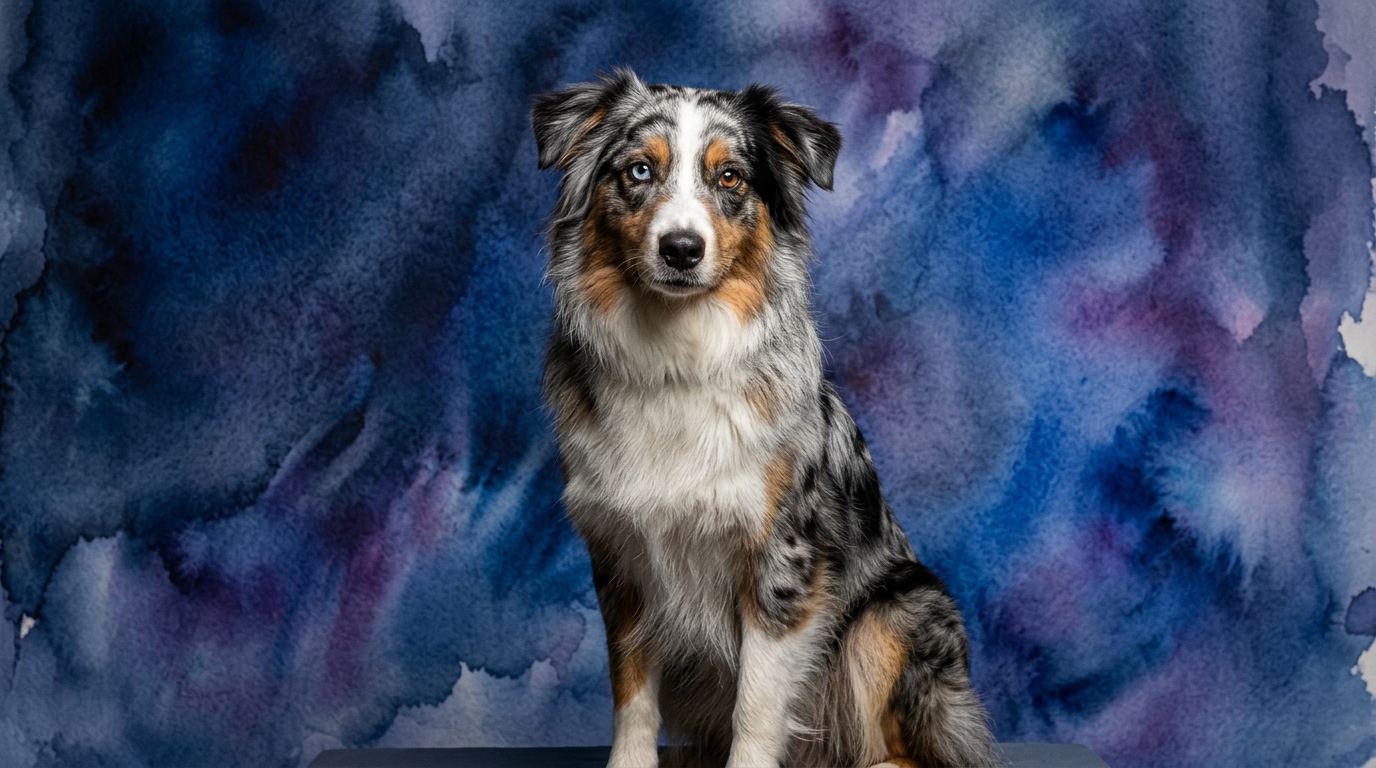
The Australian Shepherd, a formidable herding dog, exhibits a cognitive profile tailored for complex, dynamic work. Their Problem Solving is rated 5/5, reflecting an exceptional capacity to analyze situations and devise solutions, often independently, to manage livestock or navigate intricate tasks. Training Speed also scores 5/5, indicating a rapid acquisition of new commands and routines, driven by a profound desire for purpose and mental engagement. Social Intelligence, at 4/5, highlights their keen awareness of human cues and emotional states, enabling precise collaboration, though their focus is often directed towards their primary handler. Instincive Drive is a perfect 5/5, manifesting as an intense, innate desire to gather, drive, and control, translating into a powerful need for structured activity. Finally, their Memory, also 5/5, underscores their ability to retain vast amounts of information, from complex command sequences to detailed spatial awareness and past experiences.
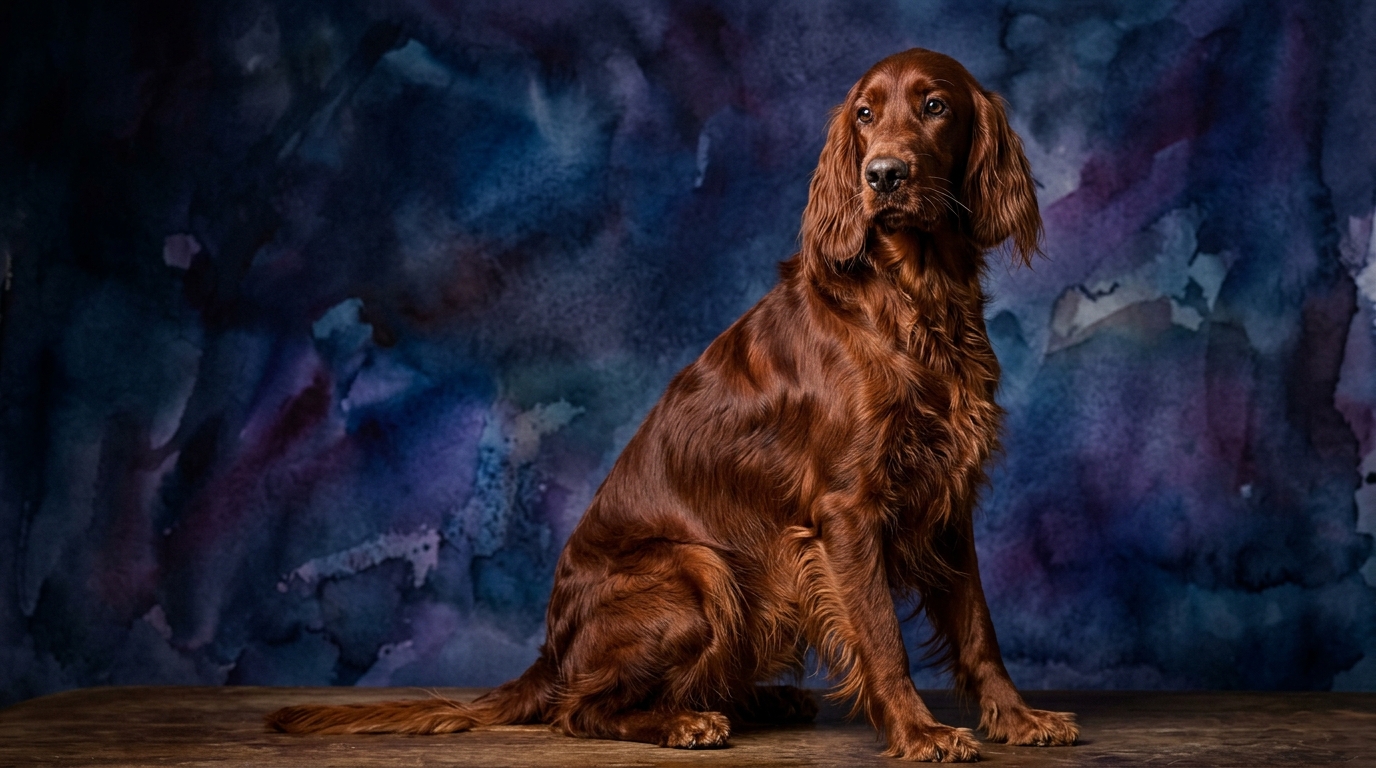
In contrast, the Irish Setter, a vibrant sporting dog, showcases a different set of cognitive strengths. Their Problem Solving is rated 4/5, demonstrating practical, task-oriented thinking, particularly effective in hunting scenarios, though they might be less inclined towards abstract or self-initiated solutions than the Aussie. Training Speed comes in at 4/5, indicating good learning ability, often fueled by enthusiasm and positive reinforcement, though they may require more consistent repetition than a herding breed. Social Intelligence is 3/5, reflecting their generally friendly and outgoing nature, but perhaps a less nuanced interpretation of subtle human emotions compared to breeds bred for close, intricate collaboration. Their Instincive Drive is 3/5, focusing primarily on scenting, flushing, and retrieving game, a powerful but less organizationally complex drive than that of a herder. Memory, at 4/5, indicates a solid retention of learned behaviors and locations, crucial for field work, providing a reliable foundation for their sporting pursuits.
Where the Australian Shepherd Excels Cognitively
The Australian Shepherd's cognitive architecture is a testament to its demanding heritage. Its perfect 5/5 in Problem Solving means these dogs don't just follow commands; they actively strategize. For instance, when presented with a novel obstacle course, an Aussie is more likely to assess various approaches and adapt its strategy mid-attempt, rather than simply repeating a failed method. Their 5/5 Training Speed is directly linked to this, as they absorb new information with remarkable efficiency, often requiring fewer repetitions to master complex multi-step commands or entire routines. This makes them exceptional candidates for advanced obedience, agility, and other dog sports where precision and rapid learning are paramount.
Furthermore, the Aussie's 5/5 Instincive Drive is not merely about physical energy; it's a cognitive imperative. This drive translates into a deep-seated desire for purpose and mental engagement, often manifesting as self-initiated action and strategic thinking in dynamic environments. They are constantly looking for a 'job' to do, and their memory (5/5) allows them to recall vast repertoires of learned behaviors, commands, and environmental details, enabling them to execute intricate tasks with impressive consistency. Their 4/5 Social Intelligence, while not broadly effusive, is profoundly tuned to their handler, allowing for precise communication and a deep, working partnership that relies on subtle cues and mutual understanding.
Where the Irish Setter Shines Cognitively
While the Irish Setter's scores might be slightly lower in some categories compared to the Australian Shepherd, their cognitive profile is perfectly adapted to their specialized role and offers distinct advantages. Their 4/5 Problem Solving, for example, is highly effective within their domain; they excel at practical, goal-oriented tasks like tracking a scent trail through varied terrain or locating hidden game, demonstrating persistence and ingenuity in these specific contexts. They are driven by an innate curiosity about their environment, particularly through scent, which is a powerful cognitive motivator.
The Irish Setter's 3/5 Instincive Drive, centered on flushing and retrieving, fosters a different kind of cognitive engagement. This drive, combined with their 4/5 Training Speed, means they are eager to learn tasks related to their sporting heritage, often responding with joyous enthusiasm. Their social intelligence, rated 3/5, manifests as a generally friendly, outgoing, and broadly affectionate disposition. While they might not be as finely tuned to subtle handler nuances as an Aussie, their boundless amiability makes them wonderful companions, readily engaging with family members and strangers alike. Their solid 4/5 Memory ensures they retain learned behaviors and field locations, which is essential for consistent performance during hunts or training sessions, allowing them to remember where game was flushed or a retrieve was made.
Ease of Training: Behavioral Differences Unpacked
When it comes to ease of training, the Australian Shepherd generally presents a more straightforward path for complex obedience and task learning, primarily due to their exceptional problem-solving ability (5/5) and rapid training speed (5/5). They possess an intrinsic desire to work and please their handler, making them highly receptive to instruction. Their 5/5 instinctive drive means they actively seek mental stimulation and a 'job,' which, when channeled through training, results in a highly focused and compliant student. However, this same intensity can be a double-edged sword; an Aussie that isn't adequately challenged will quickly become bored and may invent its own 'jobs,' often leading to undesirable behaviors, demanding consistency and clear direction from its owner.
The Irish Setter, with its 4/5 Training Speed, is certainly trainable, but often requires a different approach. Their enthusiasm can sometimes translate into distractibility, especially in stimulating environments, necessitating more patience and consistent repetition. Their lower instinctive drive score (3/5) compared to the Aussie means that while they enjoy activities, they might not possess the same inherent drive for 'work' for work's sake. Training an Irish Setter often benefits from varied motivational techniques, plenty of positive reinforcement, and shorter, engaging sessions to maintain their focus. Their 3/5 social intelligence suggests they might not pick up on subtle cues as quickly as an Aussie, requiring clearer, more direct communication during training. While they are eager to please, their exuberance can sometimes overshadow their attentiveness, making consistent engagement key.
Matching Lifestyles: Active vs. Engaged Owners
Neither the Australian Shepherd nor the Irish Setter is suited for a truly 'relaxed' owner in the sense of minimal engagement; both are energetic breeds that require significant physical activity. However, their cognitive profiles dictate different types of engagement. The Australian Shepherd, with its 5/5 instinctive drive and problem-solving, demands an active owner who can provide consistent mental stimulation and a 'job.' This breed thrives with owners involved in dog sports like agility, flyball, herding, or advanced obedience. A truly 'relaxed' owner who cannot meet the Aussie's intense need for mental and physical work will likely find themselves with a bored, potentially destructive, or overly 'herdy' companion. This breed needs an owner who understands and can consistently channel its profound cognitive capacity.
The Irish Setter also requires a highly active owner, but their engagement needs lean more towards companionship in adventures rather than intricate work. Their 3/5 instinctive drive and 4/5 problem-solving mean they are excellent partners for long runs, hikes, and outdoor exploration. An owner who enjoys extensive physical activity and can provide consistent, positive training without necessarily aiming for competitive dog sports might find the Setter a better fit. While they enjoy learning, their 'job' is often centered around being a joyful, energetic companion. They might tolerate *periods* of slightly less intense mental work than an Aussie, provided they still receive ample physical exercise and affectionate companionship. Owners who appreciate a boisterous, friendly presence and are prepared for consistent exercise will find a loyal friend in the Irish Setter.
The Verdict
Choose the Australian Shepherd if you are an owner seeking a highly collaborative partner for complex tasks, dog sports, or a working role, and can provide consistent mental stimulation and clear direction.
Opt for the Irish Setter if you appreciate a lively, affectionate companion for outdoor adventures and family life, and are prepared for consistent training with a focus on positive reinforcement, without the intense 'job' requirement of a herder.
🧠 Find Your Pet's IQ Score
Our Pet IQ Lab assessment covers 25+ tests across 5 cognitive dimensions — personalized to your breed.
Take the Full IQ Test →Frequently Asked Questions
Are Australian Shepherds good family pets?
Yes, with proper socialization and consistent mental and physical stimulation, Australian Shepherds bond closely with their family. However, their strong herding instincts mean they might try to 'herd' children or other pets, requiring careful supervision and training.
Do Irish Setters shed a lot?
Irish Setters do have a long, flowing coat that sheds moderately year-round, similar to many long-haired breeds. Regular grooming, including brushing several times a week, is essential to prevent mats and maintain the health and beauty of their coat.
Which breed is better for first-time dog owners?
The Australian Shepherd's intense need for mental work and a 'job' can be challenging for a novice owner without prior experience in managing high-drive breeds. The Irish Setter, though energetic and requiring consistent training, might be slightly more forgiving for a first-timer committed to providing ample exercise and positive reinforcement, as their 'work' ethic is less demanding than the Aussie's.