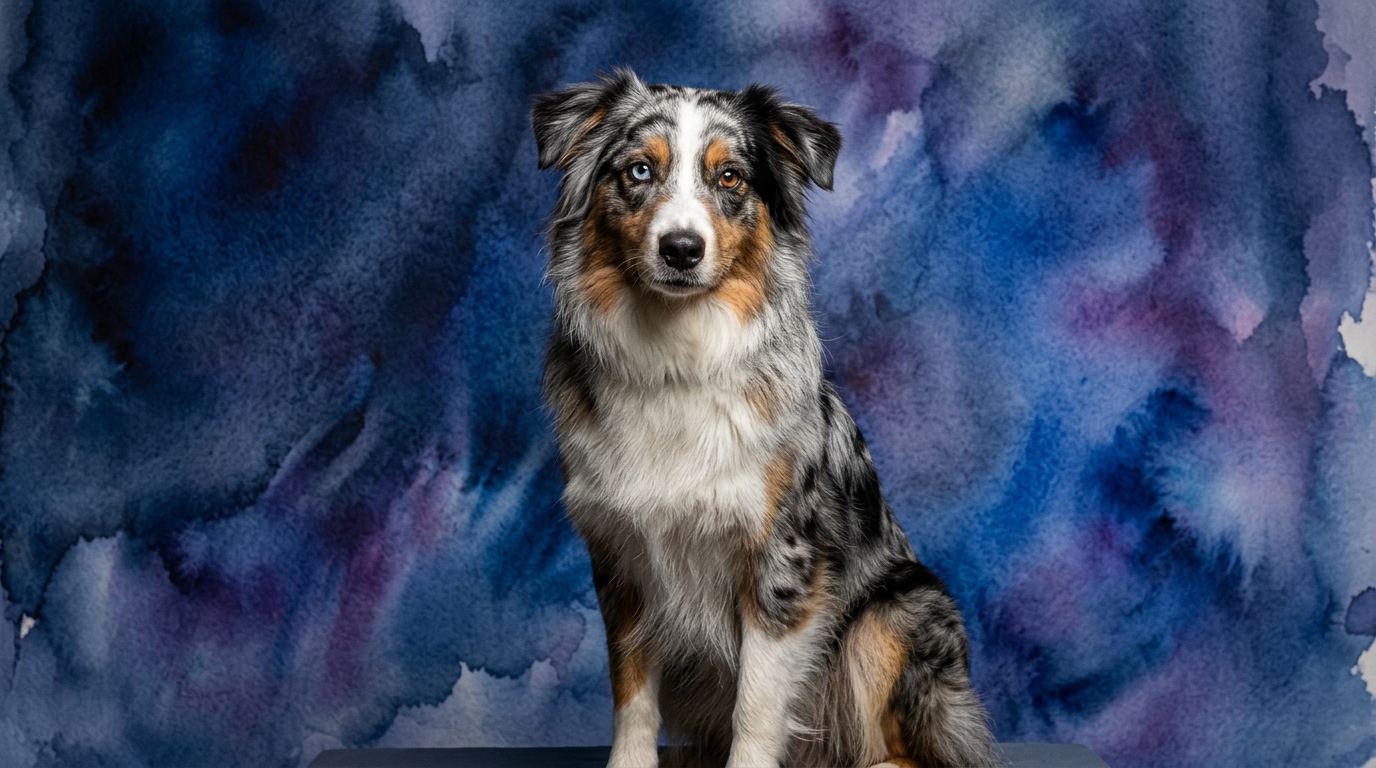
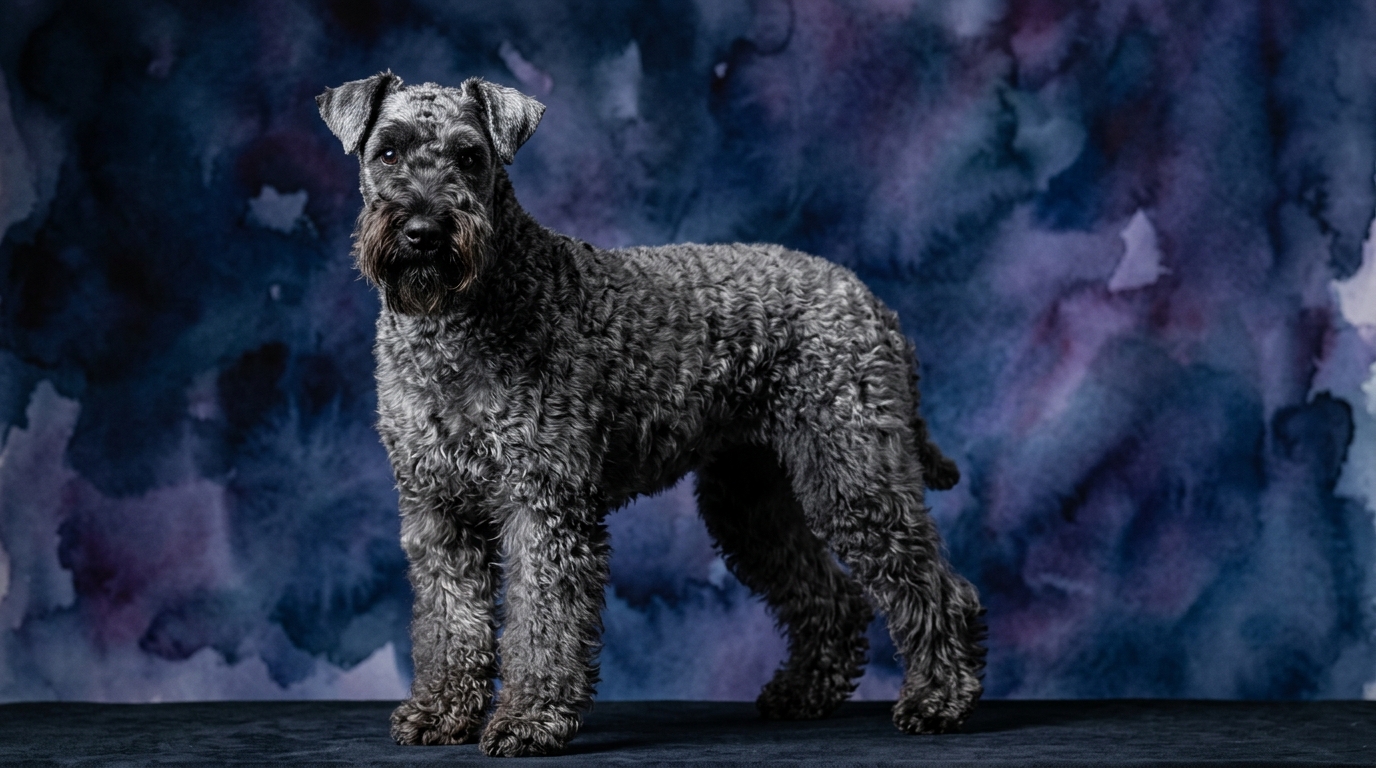
Side-by-Side IQ Profile
The Cosmic Pet's IQ Lab provides a unique lens through which to examine the cognitive landscapes of the Australian Shepherd and the Kerry Blue Terrier. The Australian Shepherd, a herding breed, demonstrates a robust cognitive toolkit across the board. Its Problem Solving is rated 5/5, indicating an exceptional capacity to navigate novel situations, strategize, and learn from experience, often anticipating outcomes. Training Speed also scores 5/5, signifying a remarkable eagerness and ability to grasp new commands and routines quickly, often requiring minimal repetition. Social Intelligence, at 4/5, suggests a strong aptitude for reading human cues and adapting behavior accordingly, fostering deep partnerships. The Instinctive Drive of 5/5 reflects a powerful innate motivation to perform breed-specific tasks, exhibiting persistent focus and energy. Finally, Memory, also 5/5, highlights an excellent retention of learned behaviors, commands, and experiences, contributing to their consistent performance.
In contrast, the Kerry Blue Terrier, a terrier breed, presents a different cognitive profile. Its Problem Solving is rated 3/5, indicating a moderate ability to tackle new challenges; they can figure things out but may rely more on trial and error or require more structured guidance than an Aussie. Training Speed also stands at 3/5, meaning they are capable learners but might need more patience, consistency, and creative motivation to master new commands. Social Intelligence, at 3/5, suggests they understand human interactions to a reasonable degree but might be less inclined to defer or seek constant direction, often displaying more independence. Instinctive Drive, at 3/5, reflects a moderate but distinct terrier tenacity, often expressed in prey drive or a determined approach to tasks, though perhaps less overtly cooperative than a herding dog's drive. Memory, at 3/5, indicates a solid capacity to recall information, though perhaps not with the same immediate recall or long-term retention of complex sequences as an Australian Shepherd.
Where Australian Shepherd Wins Cognitively
The Australian Shepherd's cognitive strengths manifest in its exceptional capacity for complex, multi-stage tasks and rapid learning. Their 5/5 Problem Solving means they don't just follow instructions; they can interpret situations, adapt strategies, and even pre-empt actions, making them adept at intricate agility courses or advanced obedience work. This is coupled with a 5/5 Training Speed, allowing them to absorb new information and commands with astonishing alacrity, transforming training into a dynamic, engaging dialogue rather than a repetitive drill. Their superior Memory (5/5) ensures that once a concept or command is learned, it is deeply ingrained, leading to consistent performance even after breaks. Furthermore, their high Instinctive Drive (5/5) means they possess an inherent desire to work and engage, translating into sustained focus and motivation for cognitive challenges. This combination makes them particularly adept at tasks requiring sequential thinking, quick decision-making under pressure, and the ability to link multiple cues and actions.
Where Kerry Blue Terrier Wins Cognitively
While the Kerry Blue Terrier's cognitive scores are generally lower than the Australian Shepherd's, their "wins" lie in a distinct type of mental fortitude and independence, characteristic of their terrier heritage. Their 3/5 Problem Solving, while not as high, suggests a practical, tenacious approach to overcoming obstacles rather than a highly analytical one. They are capable of figuring things out through sheer determination and a willingness to persist, often demonstrating cleverness in navigating their environment or achieving their goals in their own way. Their 3/5 Social Intelligence, for example, means they are not overly reliant on constant human direction, fostering a sense of self-reliance and individual thought. This can be a cognitive asset for owners who appreciate a dog with a robust, independent spirit, one that isn't constantly seeking validation or complex mental tasks from its human. Their Instinctive Drive of 3/5, though moderate, is channeled into a focused tenacity for specific tasks, like pursuing a scent or guarding their territory, showcasing a different kind of cognitive application – one rooted in ancient purpose and self-directed action. This independence means they excel in situations where a certain degree of self-sufficiency and a strong, individual will are valued.
Which is Easier to Train and Why
The Australian Shepherd is unequivocally easier to train compared to the Kerry Blue Terrier, a difference directly attributable to their distinct cognitive profiles and breed purposes. The Aussie's 5/5 Training Speed and 5/5 Memory mean they pick up commands and retain them almost effortlessly, making basic obedience and advanced tasks a relatively smooth process. Their 5/5 Problem Solving allows them to understand the *why* behind commands, not just the *what*, leading to faster generalization of learned behaviors to new situations. This breed thrives on working closely with humans, leveraging their 4/5 Social Intelligence to keenly observe and respond to handler cues. They are eager partners in learning, often seeking out opportunities for mental engagement and praise.
In contrast, the Kerry Blue Terrier, with 3/5 in Training Speed, Memory, and Problem Solving, requires a more patient, persistent, and often creative approach to training. Their independence, a hallmark of the terrier group, means they are less inclined to instantly comply or constantly seek human direction. While they are capable learners, their learning process is often slower and may involve more resistance or individual interpretation. Their moderate Social Intelligence means they might not be as keenly attuned to subtle human cues, and their Instinctive Drive, while present, is often directed towards their own pursuits rather than collaborative tasks. Trainers must leverage positive reinforcement, short, engaging sessions, and a deep understanding of terrier psychology to achieve consistent results, as attempting to force compliance often backfires with these spirited dogs.
Which Suits Active Owners vs Relaxed Owners
The cognitive profiles of these two breeds strongly dictate their suitability for different lifestyles. The Australian Shepherd, with its exceptionally high scores in Problem Solving (5/5), Training Speed (5/5), Instinctive Drive (5/5), and Memory (5/5), is an ideal companion for highly active and engaged owners. These are individuals who not only enjoy physical activity but also thrive on mental challenges, dog sports, and consistent interaction with their pet. Aussies require daily outlets for their considerable mental energy, excelling in activities like agility, obedience, herding trials, flyball, or even complex puzzle toys and scent work. Owners who can dedicate significant time to training, enrichment, and partnership will find the Aussie a fulfilling and responsive companion. A relaxed owner, or one unable to provide consistent mental and physical stimulation, would likely find an Australian Shepherd's cognitive needs overwhelming, potentially leading to boredom-induced behaviors.
The Kerry Blue Terrier, with its moderate scores across the board (3/5), offers a different proposition. While not a sedentary breed, their cognitive demands are less intense and their independence means they are less likely to constantly solicit complex mental tasks from their owners. They suit owners who appreciate a dog with a distinct personality, one that enjoys walks, playtime, and engaging in its own terrier-specific explorations, but might not require daily structured "work" sessions. These owners might be active in a general sense but are not necessarily seeking a canine partner for competitive dog sports or advanced obedience. A Kerry Blue Terrier can adapt to a slightly more relaxed household, provided their need for regular exercise and consistent, fair leadership is met. They are not a dog for a truly sedentary owner, but their cognitive profile makes them less demanding in terms of constant, high-level mental engagement compared to the Australian Shepherd.
The Verdict
Choose an Australian Shepherd if you are an active, dedicated owner eager to engage in advanced training, dog sports, and provide consistent, high-level mental stimulation for a highly cooperative and intelligent partner.
Choose a Kerry Blue Terrier if you appreciate an independent, spirited companion with a moderate drive, are prepared for consistent and patient training, and seek a dog that offers affection without demanding constant, complex cognitive engagement.
🧠 Find Your Pet's IQ Score
Our Pet IQ Lab assessment covers 25+ tests across 5 cognitive dimensions — personalized to your breed.
Take the Full IQ Test →Frequently Asked Questions
Can a Kerry Blue Terrier learn complex tricks?
Yes, Kerry Blue Terriers can learn complex tricks, but their 3/5 Training Speed and independence mean it will likely require more time, patience, and highly motivating rewards compared to an Australian Shepherd. Consistency and positive reinforcement are key to success.
How much mental stimulation does an Australian Shepherd need daily?
Australian Shepherds require significant daily mental stimulation, often needing 30-60 minutes of focused cognitive work in addition to physical exercise. This could include training sessions, puzzle toys, or engaging in dog sports to satisfy their 5/5 Problem Solving and Instinctive Drive.
Is one breed better for first-time dog owners?
The Australian Shepherd's high cognitive demands and intense drive can be challenging for first-time owners without a strong commitment to training and enrichment. The Kerry Blue Terrier's independence and moderate scores also require an owner who is patient and consistent, so neither is typically recommended as an "easy" first dog.