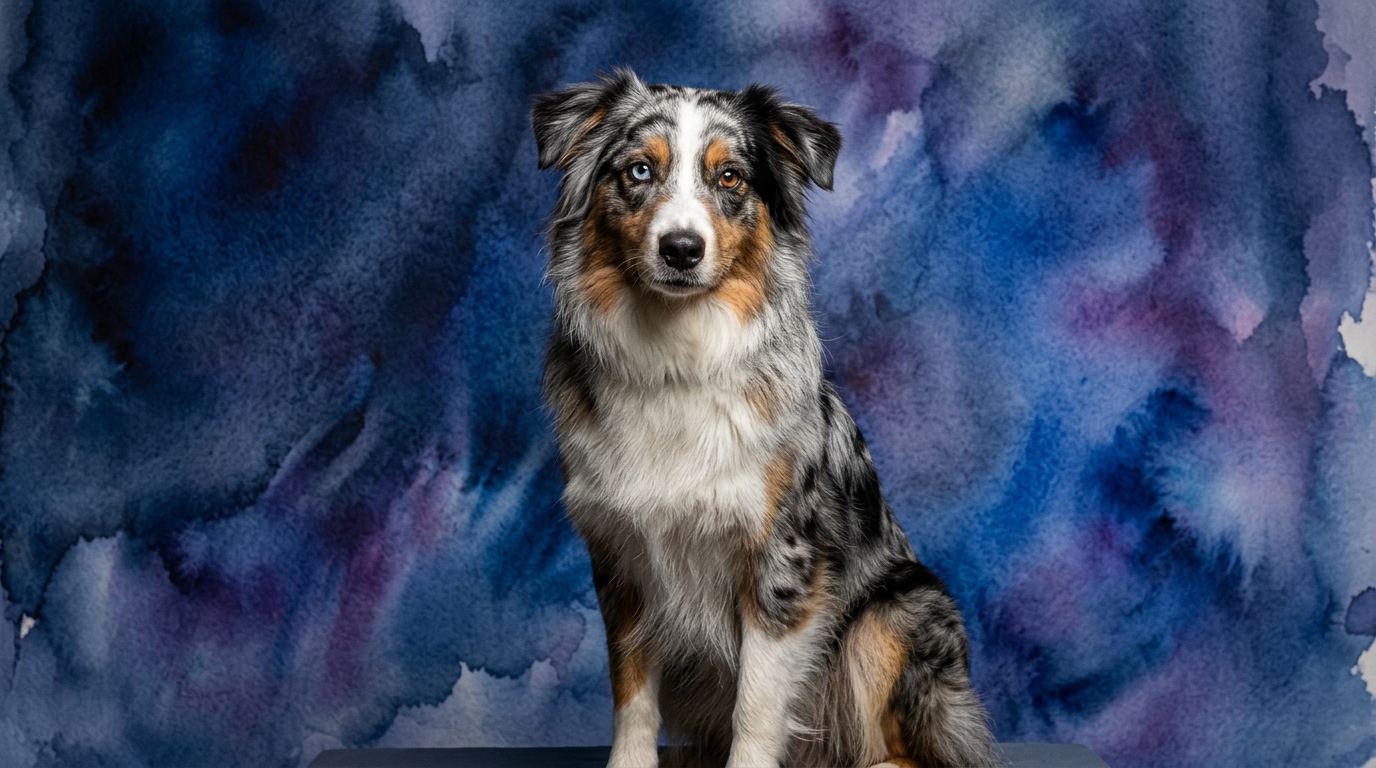
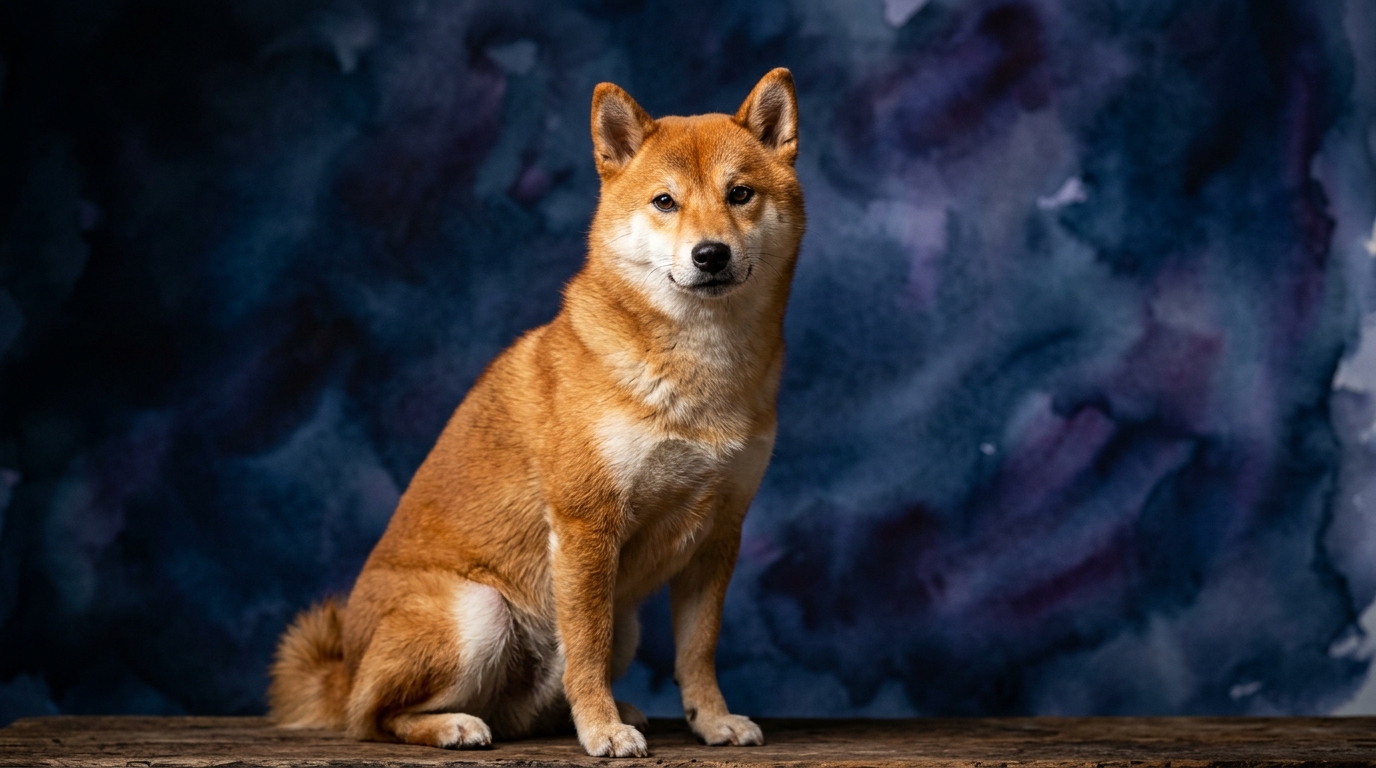
Side-by-Side Pet IQ Lab Profile
The Cosmic Pet IQ Lab offers a structured way to understand the cognitive strengths of different breeds. For the Australian Shepherd, their profile emphasizes a mind built for collaboration and complex tasks:
**Australian Shepherd IQ Profile:**
**Problem Solving (5/5):** Australian Shepherds demonstrate exceptional aptitude for navigating complex situations, quickly assessing environmental cues and devising effective strategies, whether it's figuring out a new puzzle toy or strategizing during a herding task. Their mental agility allows them to adapt rapidly to changing conditions and learn through observation.
**Training Speed (5/5):** These dogs absorb new commands and routines with remarkable swiftness, often requiring only a few repetitions to grasp a concept. Their eagerness to please and inherent focus contribute to their rapid learning curve, making them highly responsive to consistent, positive reinforcement.
**Social Intelligence (4/5):** Australian Shepherds possess a strong capacity for understanding and responding to human emotions and social cues. They form deep bonds with their families, often anticipating needs and reacting empathetically, though their intense focus on their 'flock' can sometimes translate to wariness of strangers.
**Instinctive Drive (5/5):** Their herding heritage manifests as a powerful, innate drive to organize and control, whether it's livestock, children, or other pets. This instinct fuels their motivation for structured activities and provides a strong internal compass for purpose-driven tasks.
**Memory (5/5):** Australian Shepherds exhibit a powerful memory, retaining commands, learned behaviors, and even specific routines over long periods. This robust recall contributes significantly to their training effectiveness and their ability to perform complex sequences of tasks.
In contrast, the Shiba Inu presents a distinct cognitive blueprint, highlighting independence and self-sufficiency:
**Shiba Inu IQ Profile:**
**Problem Solving (4/5):** Shiba Inus display a commendable ability to tackle challenges, often employing clever and sometimes unconventional methods to achieve their goals, such as escaping enclosures or figuring out how to reach forbidden items. Their independent nature often means they solve problems on their own terms, driven by curiosity and self-interest.
**Training Speed (2/5):** While capable of learning, Shiba Inus are not characterized by quick training uptake. Their independent streak and inherent skepticism can lead to a slower pace in acquiring new commands, often requiring patience, consistent motivation, and a clear demonstration of personal benefit to engage their cooperation.
**Social Intelligence (3/5):** Shiba Inus possess a moderate level of social intelligence, understanding human moods and intentions but often choosing to engage on their own terms. They form strong attachments to their primary caregivers but tend to be reserved and selective in their interactions with others, valuing personal space.
**Instinctive Drive (5/5):** The Shiba Inu's hunting lineage imbues them with a powerful prey drive and a strong sense of territoriality. This instinct manifests as vigilance, a desire to explore and hunt, and a self-reliant approach to their environment, rather than a drive to herd or please.
**Memory (4/5):** Shiba Inus have a solid memory, retaining learned behaviors and routines, especially those that are consistent and rewarding. They remember past experiences well, which can influence their future interactions, though their selective nature might mean they 'forget' commands they deem unimportant.
Where the Australian Shepherd Wins Cognitively
The Australian Shepherd's cognitive profile paints a picture of a dog built for complex, collaborative work. Their 5/5 in Problem Solving and Training Speed means they not only quickly grasp new concepts but also actively seek solutions to novel challenges, often in partnership with their human. This contrasts sharply with the Shiba Inu's more self-directed problem-solving. An Aussie will try to understand what you want them to do to solve a puzzle, whereas a Shiba might simply try to solve it their own way, without much regard for human input.
Furthermore, the Australian Shepherd's superior Social Intelligence (4/5 vs. 3/5) allows for a deeper level of reciprocal communication and emotional attunement with their human companions. They are more likely to pick up on subtle cues, respond to mood shifts, and actively participate in joint activities, fostering a highly cohesive working relationship. This makes them exceptional partners in sports like agility or obedience, where reading their handler is paramount. Their perfect 5/5 Memory further solidifies this advantage, ensuring that complex sequences of commands and learned strategies are retained over time, making advanced training a smooth progression rather than a constant re-teaching effort.
Where the Shiba Inu Wins Cognitively
While the Australian Shepherd excels in collaborative problem-solving and rapid training, the Shiba Inu's cognitive strengths lie in areas demanding independence and self-reliance. Their 5/5 Instinctive Drive, deeply rooted in their hunting ancestry, gives them an unmatched tenacity and focus when pursuing their own interests, whether it's tracking a scent or outsmarting a perceived barrier. This drive, combined with a 4/5 in Problem Solving, means they are adept at finding creative, often solitary, solutions to challenges, even if it means bending the rules.
The Shiba's unique cognitive makeup allows them to thrive in environments where self-sufficiency is valued. They might not be as eager to please, but their individualistic approach to problem-solving often results in ingenious, if sometimes inconvenient, solutions. For instance, a Shiba might figure out how to open a childproof gate by observing its mechanics, driven purely by their desire to explore, rather than waiting for human instruction. This independent thought, though sometimes challenging for owners, showcases a distinct form of cognitive prowess geared towards survival and autonomy, proving that intelligence manifests in diverse ways beyond human-centric definitions.
Which is Easier to Train and Why
The Australian Shepherd is unequivocally easier to train, as reflected in their 5/5 Training Speed. Their strong desire to work alongside their human, coupled with their exceptional memory and problem-solving skills, means they pick up commands and complex routines with remarkable speed. They thrive on having a job and are highly motivated by praise and collaboration. A typical Aussie will quickly understand the connection between a command and an action, and will remember it consistently, making them a joy to train for both basic obedience and advanced tasks.
In contrast, the Shiba Inu's 2/5 Training Speed presents a more significant challenge. Their independence and a tendency towards selective hearing mean that training requires immense patience, consistency, and a deep understanding of their motivations. A Shiba might understand a command perfectly but choose not to execute it if they don't perceive an immediate benefit or if something more interesting catches their attention. Their strong instinctive drive, while a cognitive strength, can also be a training hurdle, as their personal pursuits often override a handler's directives. Effective Shiba training often involves making the desired behavior more rewarding than any alternative, leveraging their problem-solving skills to 'trick' them into cooperation rather than relying on inherent eagerness to please, which is often minimal.
Which Suits Active Owners vs. Relaxed Owners
For active owners seeking a true partner in adventure and mental stimulation, the Australian Shepherd is an ideal match. Their 5/5 Instinctive Drive for herding, combined with their 5/5 Problem Solving and 5/5 Training Speed, means they require substantial physical exercise and, crucially, consistent mental engagement. Activities like agility, flyball, obedience trials, or even complex puzzle games are not just hobbies for an Aussie; they are essential outlets for their highly active minds and bodies. An owner who can provide daily structured activities, consistent training, and opportunities for problem-solving will find an Australian Shepherd to be an incredibly rewarding and engaged companion, thriving on shared purpose and activity.
Conversely, owners seeking a more relaxed companion who values personal space and independent activity might find the Shiba Inu a better fit, but with caveats. While they don't demand constant collaborative engagement like an Aussie, Shibas are far from 'couch potatoes.' Their 5/5 Instinctive Drive and 4/5 Problem Solving mean they still require regular exercise and mental stimulation to prevent boredom and destructive behaviors. However, their independent nature (3/5 Social Intelligence) means they are often content to explore on their own or observe their surroundings rather than constantly seeking human interaction or direction. A relaxed owner who appreciates a dog with a strong personality and is prepared for independent decision-making, offering clear boundaries and consistent, albeit less intense, training, would likely thrive with a Shiba Inu. They are suited for owners who enjoy walks and occasional games but don't necessarily want a dog constantly 'in their business' or needing a job to do alongside them.
The Verdict
Choose an Australian Shepherd if you are an active individual or family committed to providing extensive mental and physical engagement, valuing a highly trainable, collaborative, and socially attuned canine partner for sports or work.
Opt for a Shiba Inu if you appreciate an independent, resourceful, and self-reliant companion, and are prepared to engage in patient, consistent training that respects their unique will, suitable for owners who enjoy a dog's distinct personality without demanding constant partnership.
🧠 Find Your Pet's IQ Score
Our Pet IQ Lab assessment covers 25+ tests across 5 cognitive dimensions — personalized to your breed.
Take the Full IQ Test →Frequently Asked Questions
Are Australian Shepherds good for first-time dog owners?
Australian Shepherds can be a handful for first-time owners due to their intense need for mental and physical stimulation and strong herding instincts. While highly trainable with 5/5 training speed, their energy and cognitive demands require a significant commitment to consistent training and activity to prevent behavioral issues.
Do Shiba Inus bark a lot?
Shiba Inus are not typically excessive barkers, but they are known for their unique 'Shiba scream' – a high-pitched vocalization they use when excited, stressed, or unhappy. Their moderate social intelligence (3/5) means they might vocalize more when encountering strangers or in unfamiliar situations, but generally they are not prone to incessant barking.
Can a Shiba Inu live in an apartment?
A Shiba Inu can adapt to apartment living if their significant exercise and mental stimulation needs are consistently met. Their high instinctive drive (5/5) means daily walks, playtime, and opportunities for independent exploration are crucial, along with secure confinement due to their problem-solving skills (4/5) and escape artistry.