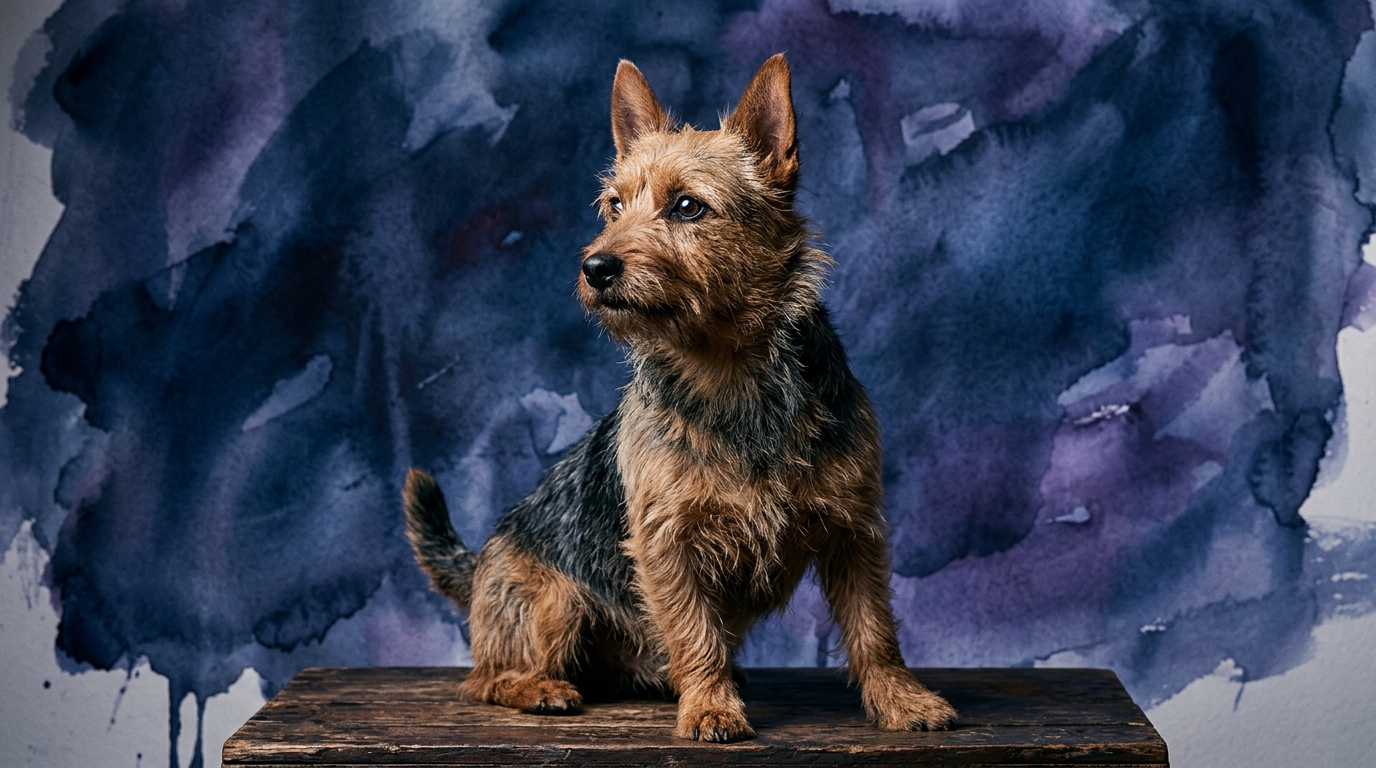
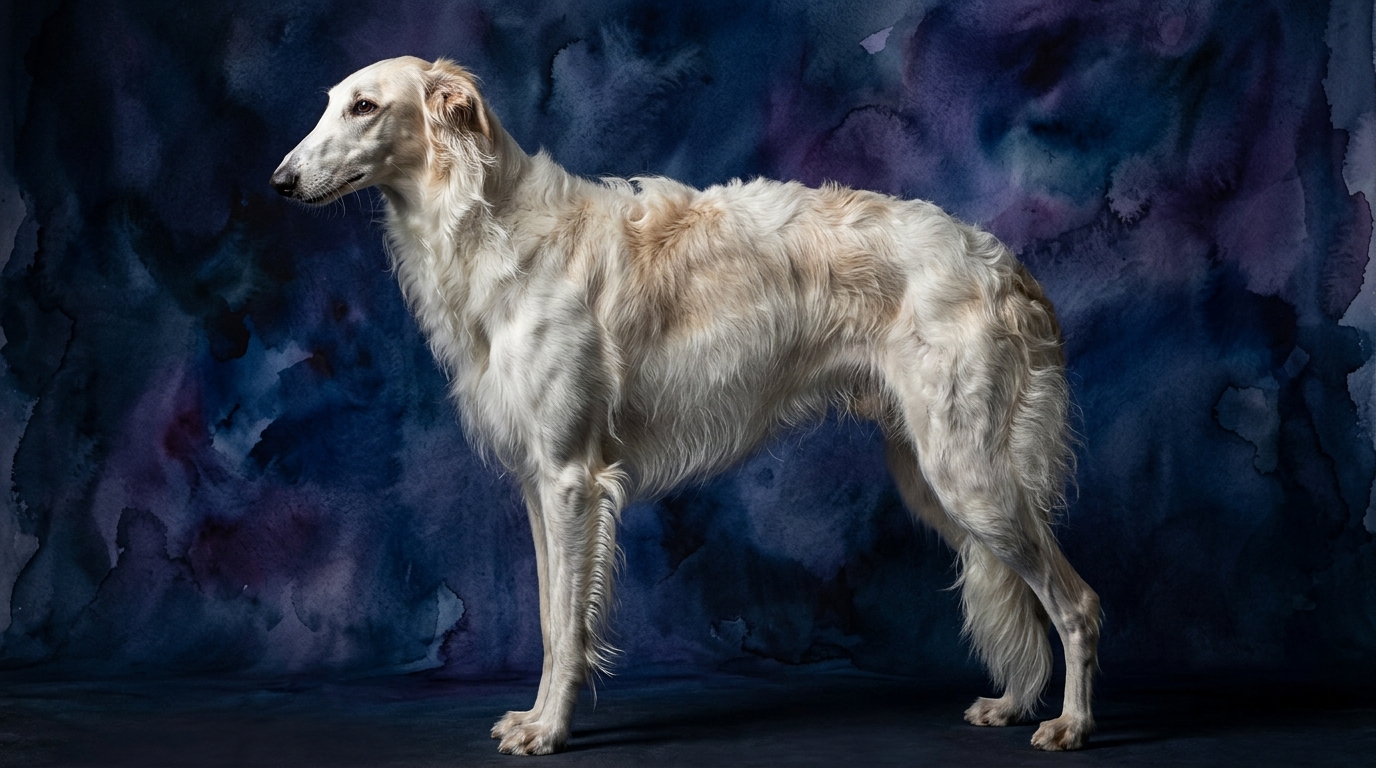
Side-by-Side IQ Profile: Australian Terrier vs. Borzoi
At The Cosmic Pet Pet IQ Lab, we assess canine intelligence across five key dimensions, and interestingly, both the Australian Terrier and the Borzoi register a consistent 3 out of 5 across the board. This identical scoring doesn't suggest cognitive sameness, but rather that their abilities, while robust, manifest in distinct ways dictated by their breed functions and temperaments. Let's explore how these scores translate into their everyday lives.
For the Australian Terrier, a 'problem solving' score of 3/5 often reflects their terrier tenacity in figuring out how to access small spaces, unearth hidden objects, or outwit perceived 'pests.' Their 'training speed' at 3/5 indicates they can grasp commands efficiently, though their independent nature means they might choose when to comply rather than lacking understanding. 'Social intelligence' at 3/5 highlights their capacity to form strong bonds and read human cues within their immediate family, often expressing their needs and desires clearly. Their 'instinctive drive' at 3/5 is prominently seen in their keen desire to chase, dig, and 'hunt,' a deeply ingrained behavior that requires consistent management. Finally, their 'memory' at 3/5 suggests they retain learned behaviors and routines effectively, remembering both commands and past experiences that inform their future actions.
The Borzoi, a large sighthound, also scores 3/5 in 'problem solving,' but their approach is often related to spatial awareness and strategic pursuit. This might involve calculating the optimal path to intercept a moving target or navigating complex terrain during a chase. Their 'training speed' of 3/5 means they learn commands well, but their independent, sometimes aloof, nature and a strong prey drive can make consistent, enthusiastic participation in repetitive drills a challenge. A 'social intelligence' score of 3/5 reflects their generally gentle, sensitive demeanor and their ability to form deep, quiet bonds with their chosen people, often demonstrating a nuanced understanding of household dynamics. Their 'instinctive drive' at 3/5 is overwhelmingly focused on the chase, a powerful urge to pursue anything that moves quickly, rooted in centuries of coursing tradition. Their 'memory' at 3/5 allows them to recall training, routines, and the layout of familiar environments, contributing to their generally calm and adaptable nature once settled.
Where the Australian Terrier Excels Cognitively
Despite sharing the same numerical scores, the Australian Terrier demonstrates particular cognitive strengths rooted in its terrier heritage. Their problem-solving, rated 3/5, shines brightest in tasks requiring persistence and resourcefulness in confined or challenging environments. This is not about grand strategy, but about finding immediate, practical solutions to obstacles like a closed gate or a buried toy. They exhibit a distinct ability to adapt quickly to new, immediate situations, often using their keen senses to navigate and manipulate their surroundings. This breed's memory, also 3/5, is particularly adept at recalling the locations of interesting scents or past 'victories' in their personal hunting grounds, making them highly effective at repeat exploratory behaviors. Their social intelligence, while perhaps not as overtly demonstrative as some breeds, is finely tuned to their family unit, allowing them to quickly discern moods and intentions, often leveraging this understanding to achieve their own objectives, such as securing extra attention or a favorite treat.
Where the Borzoi Excels Cognitively
The Borzoi, with its sighthound lineage, exhibits its 3/5 cognitive capabilities in a distinctly different manner. Their problem-solving strengths lie in spatial reasoning and independent decision-making, particularly when engaged in high-speed pursuits. A Borzoi's mind rapidly processes visual information to predict the trajectory of a moving object, adjusting its own course with impressive precision, a sophisticated form of real-time environmental problem-solving. Their instinctive drive, also 3/5, is a testament to their specialized visual hunting prowess, allowing them to focus intensely on a distant target while filtering out irrelevant sensory input. This selective attention is a hallmark of their cognitive profile. Furthermore, their memory (3/5) is excellent for recalling vast outdoor spaces and the specific routes or landmarks associated with their exercise routines, contributing to their calm confidence in familiar environments. Their social intelligence, while subtle, is highly attuned to the emotional states of their human companions, often responding with gentle reassurance or quiet companionship without needing explicit commands.
Training Dynamics: Australian Terrier vs. Borzoi
When it comes to training, the identical 3/5 'training speed' scores for both breeds belie significant differences in their approach and the handler's experience. The Australian Terrier, while quick to learn, often presents a challenge due to its independent and sometimes stubborn terrier nature. They understand what you want, but their strong will and self-assuredness mean they might weigh the command against their own immediate desires, requiring consistent, positive reinforcement and a firm, fair hand to ensure compliance. Distractions, especially those involving small moving objects or interesting scents, can easily divert their attention, making focus a key training objective. Their motivation often stems from engaging play, food rewards, and the satisfaction of pleasing their trusted human, but the 'terrier-tude' means training must always be stimulating and varied to prevent boredom and defiance.
The Borzoi, despite the same 3/5 'training speed,' approaches learning with a different temperament. They are sensitive and generally eager to please their handler, but their sighthound instincts can be a powerful competing force. While they grasp commands readily, their innate desire to chase anything that moves can make off-leash reliability in unsecured areas a significant hurdle. They respond best to gentle, consistent training methods, as harsh corrections can make them shut down or become wary. Their motivation is often found in praise, quiet affection, and the opportunity for a fulfilling sprint rather than endless repetitions. Training a Borzoi requires patience, understanding of their prey drive, and an emphasis on building a strong, trust-based relationship, rather than relying on sheer obedience drills. Their often quiet demeanor might be mistaken for disinterest, but they are typically processing information, even if their response isn't immediate or exuberant.
Suitability for Active vs. Relaxed Owners
The question of owner lifestyle compatibility is crucial when considering either an Australian Terrier or a Borzoi, as their activity needs, while both significant, manifest differently. The Australian Terrier is an energetic companion, perfectly suited for owners who enjoy regular, interactive activity. Their 'active' typically means bursts of high-intensity play, short brisk walks, and engaging in 'work' like digging or toy retrieval in a fenced yard. They thrive on mental stimulation and consistent engagement, making them a good fit for owners who are prepared to integrate their dog into daily routines and provide opportunities for problem-solving play. These dogs are generally not suited for entirely relaxed owners who prefer minimal interaction, as their inquisitive and tenacious nature requires an outlet.
The Borzoi, despite its impressive speed and size, can be surprisingly adaptable to a range of owner activity levels, provided its specific needs are met. While they require regular opportunities for an exhilarating full-speed run in a secure, expansive area, they are also content to be 'couch potatoes' indoors, often enjoying long periods of quiet rest. An 'active owner' for a Borzoi is one who can provide safe, consistent opportunities for off-leash sprinting, perhaps once a day or several times a week, but who also appreciates a calm, dignified presence in the home. They are less suited for owners who envision a dog that constantly needs to be 'doing' something or that will excel in highly structured, repetitive canine sports, unless those sports align with their sighthound instincts. A relaxed owner who can facilitate their unique exercise needs and then enjoy their serene companionship indoors might find a Borzoi an excellent match.
The Verdict
Choose an Australian Terrier if you seek a tenacious, engaging companion eager for interactive play and mental challenges within a family setting, and you appreciate a dog with a strong, independent personality.
Opt for a Borzoi if you can provide safe, expansive spaces for their essential high-speed runs and desire a graceful, calm, and quietly affectionate companion who is content with long periods of rest indoors.
🧠 Find Your Pet's IQ Score
Our Pet IQ Lab assessment covers 25+ tests across 5 cognitive dimensions — personalized to your breed.
Take the Full IQ Test →Frequently Asked Questions
Do Australian Terriers dig a lot?
Yes, Australian Terriers have a strong instinctive drive (3/5) for digging, inherited from their vermin-hunting ancestors. This behavior is deeply ingrained and they will often seek out opportunities to dig in yards, gardens, or even indoors if not provided with appropriate outlets or training.
Are Borzoi good off-leash?
Borzoi possess a powerful instinctive drive (3/5) to chase, known as prey drive, which means they are generally not reliable off-leash in unsecured areas. Their instinct to pursue a moving target can override even the most consistent training, making a secure, fenced area essential for off-leash exercise.
Which breed is better with children?
Both breeds can be good with children, but their temperaments differ. Australian Terriers, with their robust and playful nature, often enjoy interacting with older, respectful children, while Borzoi tend to be gentle and tolerant, often preferring a quieter, more observant role with kids. Supervision is always recommended for any dog-child interaction.