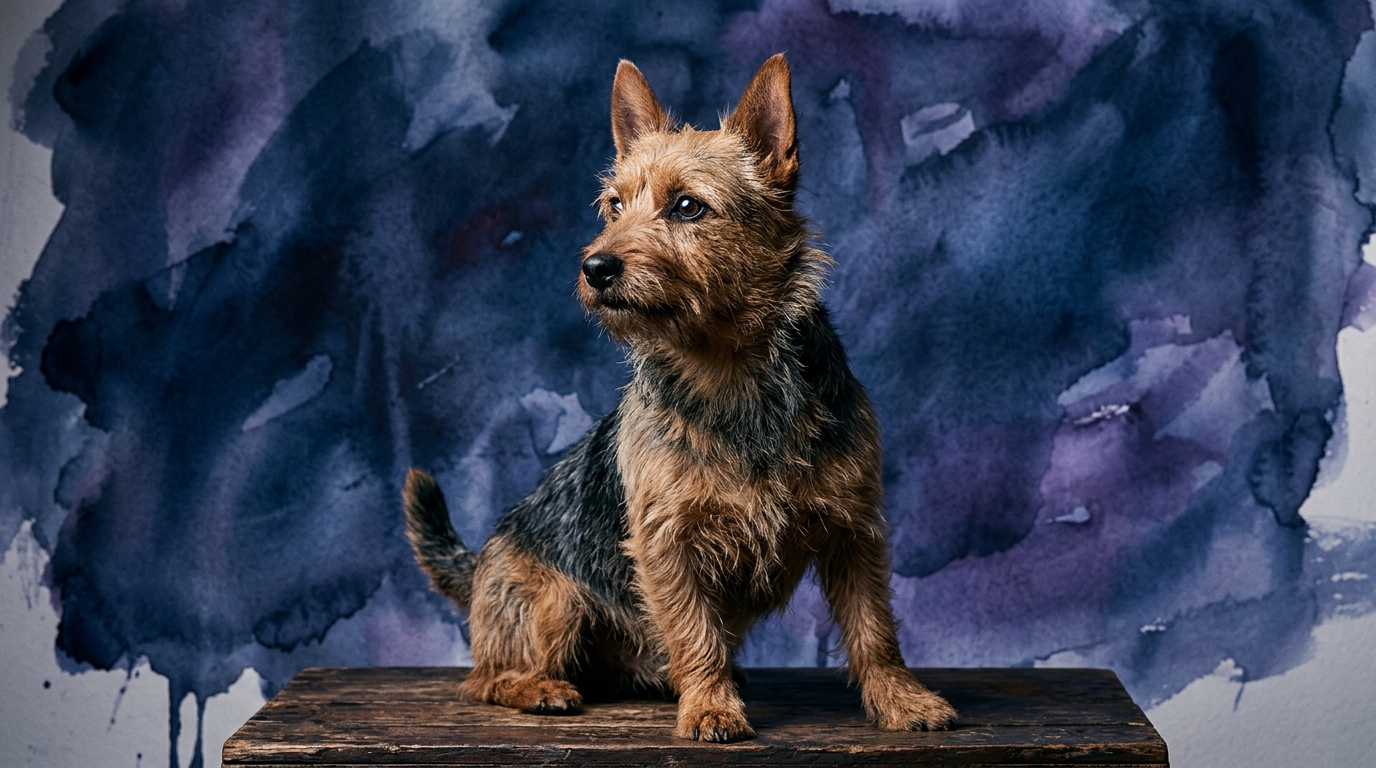
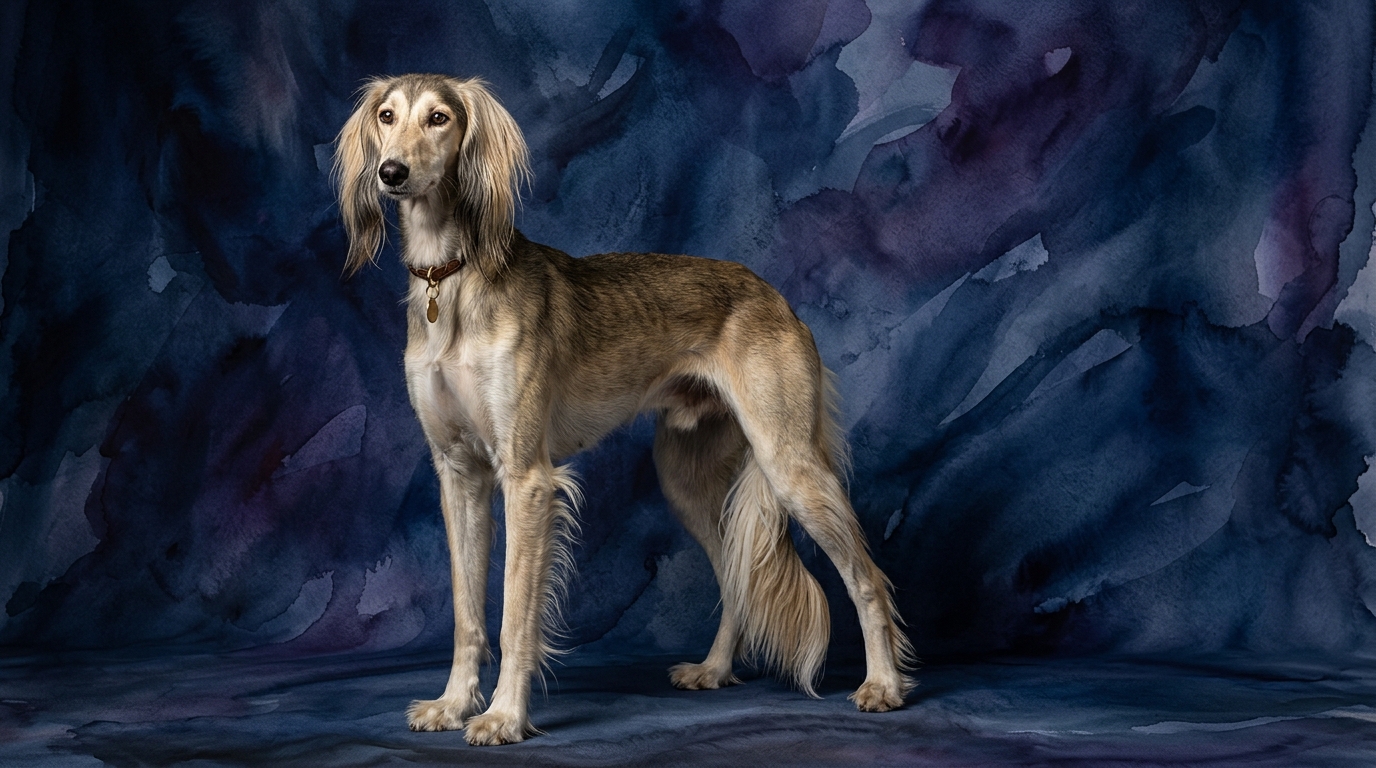
A Side-by-Side Look at Their Cognitive Profiles
The Cosmic Pet Pet IQ Lab assesses five key dimensions of canine intelligence, providing a comprehensive view beyond simple obedience. For both the Australian Terrier and the Saluki, all five dimensions — Problem Solving, Training Speed, Social Intelligence, Instinctive Drive, and Memory — are rated as 3/5, indicating a solid, capable, but not exceptional, cognitive foundation.
For the Australian Terrier, a 3/5 in Problem Solving often manifests as resourceful determination; they are adept at figuring out how to achieve their goals, whether that's getting to a perceived 'pest' or manipulating a situation to their advantage, often through persistent trial and error rather than abstract reasoning. Their 3/5 Training Speed reflects their ability to learn commands, but this is frequently tempered by a strong, independent will that requires consistent, engaging methods to overcome. Social Intelligence at 3/5 means they comprehend social cues and bond deeply with their immediate family, yet they may exhibit a discerning reserve with strangers, using their understanding of human behavior to navigate their social world. Their Instinctive Drive, also 3/5, underscores their terrier heritage: a moderate but persistent urge to dig, chase small animals, and vocalize, which provides intrinsic motivation for certain tasks. Finally, a Memory score of 3/5 indicates they retain learned behaviors, routines, and experiences effectively, contributing to both their capacity for learning and their ability to recall past successful (or mischievous) strategies.
The Saluki, with identical 3/5 scores, applies these cognitive strengths in a distinctly different manner, shaped by its sighthound lineage. Their 3/5 Problem Solving typically shines in scenarios demanding spatial awareness and efficient movement, such as navigating complex terrains during a chase or finding optimal paths. This isn't usually about intricate puzzle-solving but rather practical, real-world application. Training Speed at 3/5 suggests they can grasp commands, but their often-aloof nature and tendency to be easily distracted by visual stimuli mean that compliance is often discretionary, requiring patient, reward-based methods and an understanding that repetition can bore them. Their 3/5 Social Intelligence translates to deep, quiet bonds with their chosen humans, often expressed through subtle cues rather than overt displays, and a characteristic dignified reserve towards outsiders. The Saluki's 3/5 Instinctive Drive is overwhelmingly centered on their powerful prey drive—the urge to spot and pursue moving objects at high speed—a fundamental aspect of their being. Lastly, their 3/5 Memory ensures they recall training, routines, and experiences, yet their application of this memory in performance can be contingent on their interest level or the absence of more compelling external stimuli.
Where the Australian Terrier Demonstrates Cognitive Advantages
While both breeds share similar numerical ratings, the Australian Terrier's cognitive strengths often lie in its tenacious application of problem-solving and its robust social engagement within its immediate circle. An Australian Terrier's 3/5 problem-solving often involves a more hands-on, manipulative approach to their environment. They are more likely to independently figure out how to open a gate, access a treat container, or creatively 'manage' their humans to get what they want. This manifests as a street-smart cleverness that is highly focused on immediate, tangible rewards and achieving self-determined goals, often with an endearing stubbornness. Their social intelligence, though rated 3/5, leans towards an active, albeit selective, participation in family dynamics, making them adept at subtly influencing household routines or alerting their owners to perceived anomalies with a distinctive terrier confidence. This direct, self-directed mental agility, combined with their capacity for learning through persistent experimentation, gives them an edge in navigating complex domestic environments and expressing their desires clearly.
Where the Saluki Shows Cognitive Strengths
The Saluki's cognitive prowess, despite matching scores, often shines in areas demanding independent judgment, spatial reasoning, and an acute awareness of their surroundings, particularly in open spaces. Their 3/5 problem-solving is less about manipulating objects and more about efficient navigation and strategic pursuit. A Saluki excels at assessing distances, anticipating movement, and making split-second decisions during high-speed activity, showcasing a practical, instinct-driven intelligence that is highly specialized. Their memory, also 3/5, is particularly effective at recalling complex routes and landscapes, a vital asset for a breed bred to hunt over vast distances. Furthermore, their social intelligence, while reserved, allows for a nuanced understanding of their human companions, often expressing affection and need through subtle body language and a quiet presence. This combination of independent thought, exceptional spatial awareness, and a dignified observational capacity makes the Saluki a master of its physical environment and a discerning, if not effusive, companion.
Training Dynamics: Australian Terrier vs. Saluki
Training an Australian Terrier, despite their 3/5 training speed, requires a firm but fair hand and a sense of humor. Their terrier independence means they often question the necessity of a command, and their high self-interest can make them resistant to repetition. Owners often find success by making training a game, using high-value rewards, and keeping sessions short and engaging to prevent boredom and defiance. Their problem-solving skills mean they can quickly learn what works to get attention or treats, but also what they can get away with. Consistency is paramount to shaping their strong-willed nature into cooperative behavior, as they remember both positive and negative reinforcement patterns vividly.
Conversely, training a Saluki, also with a 3/5 training speed, presents a different set of challenges rooted in their sighthound disposition. They are not typically eager to please in the same way some other breeds are; their independent nature means they learn best when they perceive a clear benefit or when the training is novel and interesting. Repetitive drills can quickly lead to disengagement. Their powerful instinctive drive for chasing means that off-leash training in unsecured areas is often ill-advised, as a fleeting squirrel or distant movement can override any learned command. Owners must employ positive reinforcement, maintain a calm demeanor, and understand that while Salukis can learn a great deal, their obedience is often conditional upon their mood and environmental distractions. They remember commands, but their choice to execute them is often their own.
Lifestyle Suitability: Active vs. Relaxed Owners
For owners with an active lifestyle, both breeds offer engagement, but in different forms. The Australian Terrier, while compact, possesses a terrier's zest for life and requires regular physical activity to satisfy its moderate instinctive drive. They thrive on daily walks, interactive play, and opportunities to explore, making them suitable for active owners who enjoy consistent outdoor adventures and mental stimulation. They are adaptable but will become restless if their cognitive and physical needs are neglected. Their social intelligence means they enjoy being part of family activities, whether hiking or simply playing in the yard, and their memory ensures they quickly learn family routines and expectations.
The Saluki, in contrast, requires intense, explosive bursts of exercise. Owners who can provide access to safely enclosed spaces for them to gallop at full speed, or engage in sighthound-specific activities like lure coursing, will find the Saluki a fulfilling companion. However, once their exercise needs are met, Salukis are famously calm and relaxed indoors, often preferring to lounge elegantly on soft surfaces. This makes them surprisingly suitable for owners who appreciate a quiet, dignified presence indoors, provided they can commit to providing the necessary high-intensity physical outlet. Their reserved social intelligence and independent nature mean they are content to observe rather than constantly demand attention, fitting a more relaxed home environment once their primary physical needs are satisfied.
The Verdict
Choose an Australian Terrier if you appreciate a clever, tenacious companion who actively engages with family life and enjoys figuring things out, provided you can offer consistent training and mental enrichment.
Opt for a Saluki if you admire independent, elegant dogs with an intense need for bursts of speed, and you value a quiet, reserved companion indoors who bonds deeply but subtly.
🧠 Find Your Pet's IQ Score
Our Pet IQ Lab assessment covers 25+ tests across 5 cognitive dimensions — personalized to your breed.
Take the Full IQ Test →Frequently Asked Questions
Do Australian Terriers dig a lot?
Yes, Australian Terriers possess a moderate instinctive drive for digging, stemming from their heritage as vermin hunters. While their problem-solving skills might lead them to dig for entertainment, consistent training and providing appropriate outlets like a designated digging pit can help manage this natural behavior.
Are Salukis good with other pets?
Salukis can coexist peacefully with other pets, especially if raised together from a young age. However, their strong sighthound prey drive means small, fast-moving animals like cats or rabbits might trigger their chase instinct, requiring careful introductions and supervision.
How much exercise does an Australian Terrier need?
An Australian Terrier requires a moderate amount of daily exercise, typically 30-60 minutes of walks, playtime, or interactive activities. Their solid memory ensures they thrive on routine, and consistent physical and mental engagement prevents boredom and destructive behaviors.