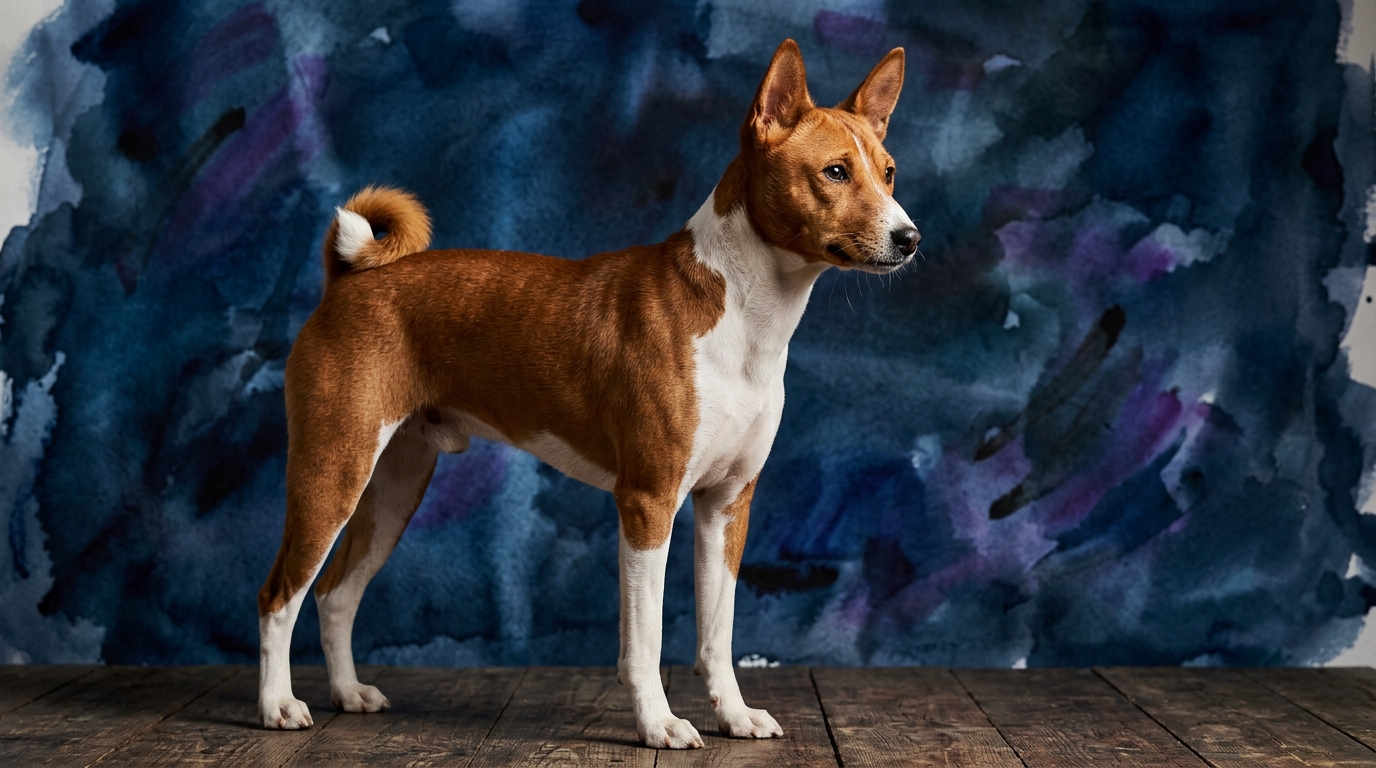
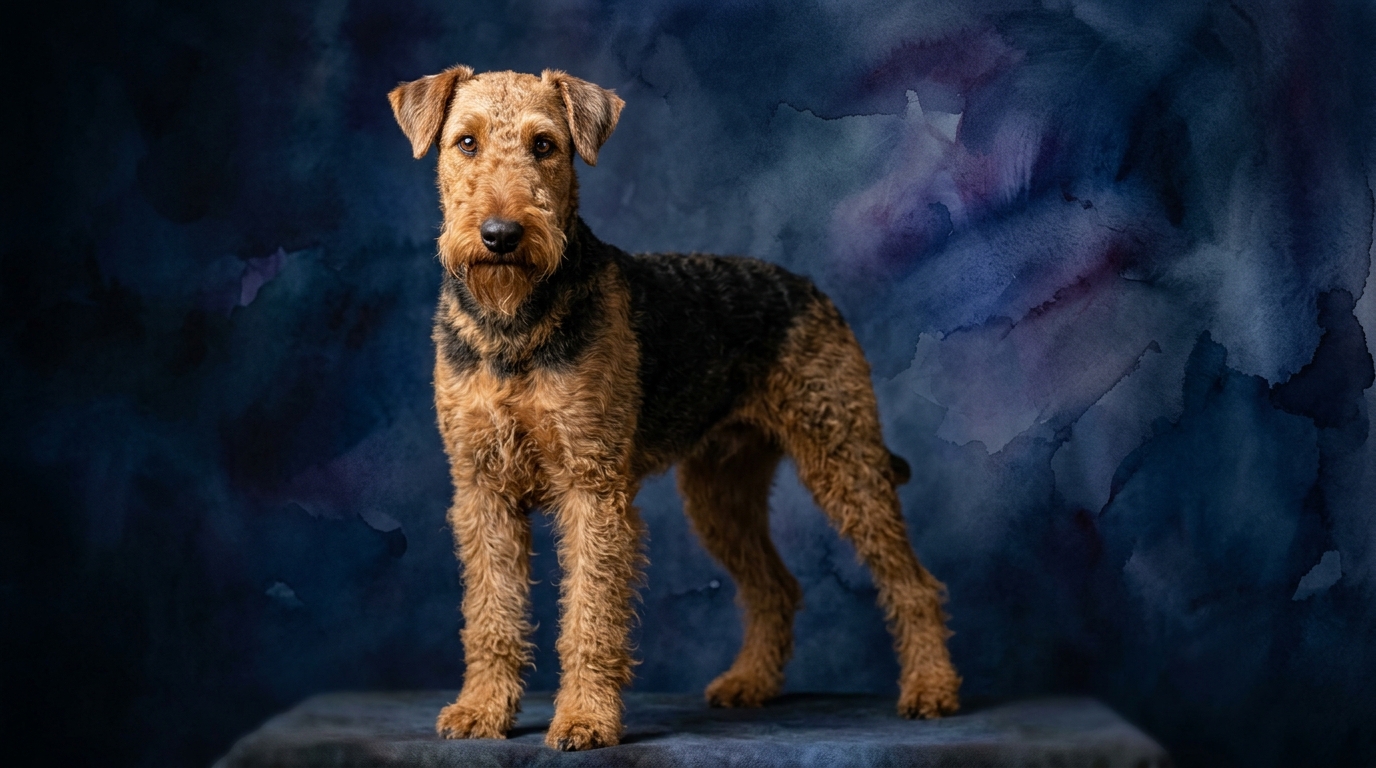
Side-by-Side Cognitive Profiles: Basenji vs. Airedale Terrier
The Cosmic Pet Pet IQ Lab employs a five-dimensional framework to assess canine intelligence, offering a nuanced understanding beyond simple obedience. For the Basenji, a hound with an independent spirit, its profile is marked by exceptional Problem Solving (5/5), a swift Instinctive Drive (5/5), and solid Memory (4/5). However, its Training Speed (1/5) is notably low, reflecting a self-directed nature, while Social Intelligence stands at a moderate (3/5). The Basenji's Coren rank of #78 places it lower in working and obedience intelligence, suggesting a preference for self-governance over human directives.
In contrast, the Airedale Terrier, a robust terrier, presents a more balanced, human-collaborative cognitive profile. It shows strong capabilities in Training Speed (4/5) and Memory (4/5), with commendable Problem Solving (4/5). Its Instinctive Drive (3/5) is present but more manageable, and Social Intelligence also rates at a moderate (3/5). The Airedale's Coren rank of #29 signifies a much higher aptitude for understanding and performing tasks for humans, reflecting its history as a versatile working companion.
Where the Basenji's Cognition Shines Brightest
The Basenji truly excels in Problem Solving, scoring a perfect 5/5, which is a testament to its profound capacity for independent thought and creative solutions. This isn't about solving puzzles for human reward, but rather about navigating complex environments or achieving personal goals with ingenuity, often finding unique ways to outmaneuver perceived obstacles. For instance, a Basenji might figure out how to open a specific latch on a gate through observation and experimentation, not because it was taught, but because it desires to explore.
Furthermore, its Instinctive Drive (5/5) is a powerful cognitive engine, fueling its persistent pursuit of objectives, particularly those related to prey or exploration. This drive, combined with its problem-solving prowess, enables Basenjis to devise sophisticated strategies for hunting or escaping, making them incredibly resourceful. While this can manifest as 'mischief' from a human perspective, it is a clear demonstration of advanced cognitive planning and execution in service of their innate impulses.
The Airedale Terrier's Cognitive Strengths
The Airedale Terrier's primary cognitive advantage lies in its remarkable Training Speed (4/5), indicating a strong willingness and ability to learn and execute human commands efficiently. Unlike the Basenji, the Airedale generally thrives on structured learning and enjoys the mental engagement that comes with mastering new tasks. This makes them highly receptive to traditional training methods and capable of quickly grasping complex sequences of commands, which is reflected in their higher Coren rank.
While its Problem Solving is a respectable 4/5, the Airedale's approach is often more collaborative, aiming to understand and fulfill human expectations rather than purely independent exploration. Their moderate Instinctive Drive (3/5) allows for a more adaptable focus, enabling them to channel their energy into tasks provided by their owners, such as agility or obedience work, with enthusiasm and determination. This blend of trainability and problem-solving makes them excellent partners for various activities.
Trainability: A Tale of Two Approaches
When it comes to ease of training, the Airedale Terrier stands out as the more cooperative student, largely due to its 4/5 Training Speed. Airedales typically possess a keen desire to engage with their human companions and find satisfaction in performing tasks well. Their terrier heritage means they enjoy having a 'job' and respond positively to clear, consistent instruction, making them suitable for a wide range of obedience and sport activities. Real-world behavior often shows Airedales eager to please, readily focusing on their handler during training sessions and picking up new cues swiftly.
The Basenji, with its 1/5 Training Speed, presents a different challenge entirely. Its independent nature and high problem-solving capacity mean it evaluates commands based on its own perceived value or interest rather than an inherent desire to comply. A Basenji might understand a command perfectly but choose not to execute it if it sees a more compelling alternative, such as chasing a squirrel. Training a Basenji demands immense patience, creative motivation, and a deep understanding of positive reinforcement, as they thrive on engagement rather than compulsion. They are not stubborn, but rather self-directed thinkers who require a compelling 'why' to participate.
Matching Canine Cognition to Owner Lifestyles
For owners seeking an active companion that thrives on structured engagement and collaborative tasks, the Airedale Terrier is an excellent match. Their strong Training Speed and adaptable Instinctive Drive mean they excel in activities like hiking, agility, and competitive obedience, where a partnership with their human is central. Owners who enjoy consistent training, providing a 'job' for their dog, and engaging in outdoor adventures will find the Airedale an enthusiastic and capable partner. They generally enjoy being involved in family activities and respond well to a consistent routine.
The Basenji, conversely, suits owners who appreciate a dog with a profound independent streak and are prepared for a companion that constantly provides mental intrigue rather than predictable obedience. These owners need to be 'active' in a different sense: actively managing their environment to prevent escapes driven by high instinctive drive, and actively devising creative, engaging mental challenges to satisfy their problem-solving mind. They are ideal for individuals who enjoy observing complex canine behavior, are patient with selective compliance, and can provide a secure, stimulating environment where the Basenji's unique cognitive strengths can flourish without leading to frustration.
The Verdict
Choose the Basenji if you are an experienced owner who values independent thought, enjoys solving complex behavioral puzzles, and is prepared for a dog that will consistently challenge and intrigue you with its self-reliant mind. They are best for those who appreciate a clever, cat-like companion and can provide consistent, engaging mental stimulation without expecting traditional obedience.
Opt for the Airedale Terrier if you seek an active, responsive partner eager for structured learning and collaborative activities, thriving on a clear sense of purpose. They are an excellent fit for owners who enjoy consistent training, participate in dog sports, and desire a loyal companion that integrates readily into an joyful, family-centric lifestyle.
🧠 Find Your Pet's IQ Score
Our Pet IQ Lab assessment covers 25+ tests across 5 cognitive dimensions — personalized to your breed.
Take the Full IQ Test →Frequently Asked Questions
Are Basenjis truly 'stubborn' when it comes to training?
Basenjis aren't stubborn in the traditional sense, but their high problem-solving and low training speed mean they evaluate commands based on their own perceived value. They learn quickly but may choose not to comply if the motivation isn't compelling enough, preferring to pursue their own interests rather than unquestioningly follow directives.
How does the Airedale Terrier's Coren rank reflect its intelligence?
The Airedale Terrier's Coren rank of #29 places it in the 'Excellent Working Dogs' category, indicating a strong capacity for understanding new commands quickly and obeying them reliably. This reflects their aptitude for structured learning and their desire to work collaboratively with humans, making them highly trainable for various tasks and sports.
Do both breeds have similar memory capabilities?
Yes, both the Basenji and the Airedale Terrier score 4/5 in memory, suggesting they effectively retain learned information and experiences. This means they can remember commands, routines, and past interactions, which is valuable for both problem-solving and training, though their application of this memory might differ based on their individual motivations.