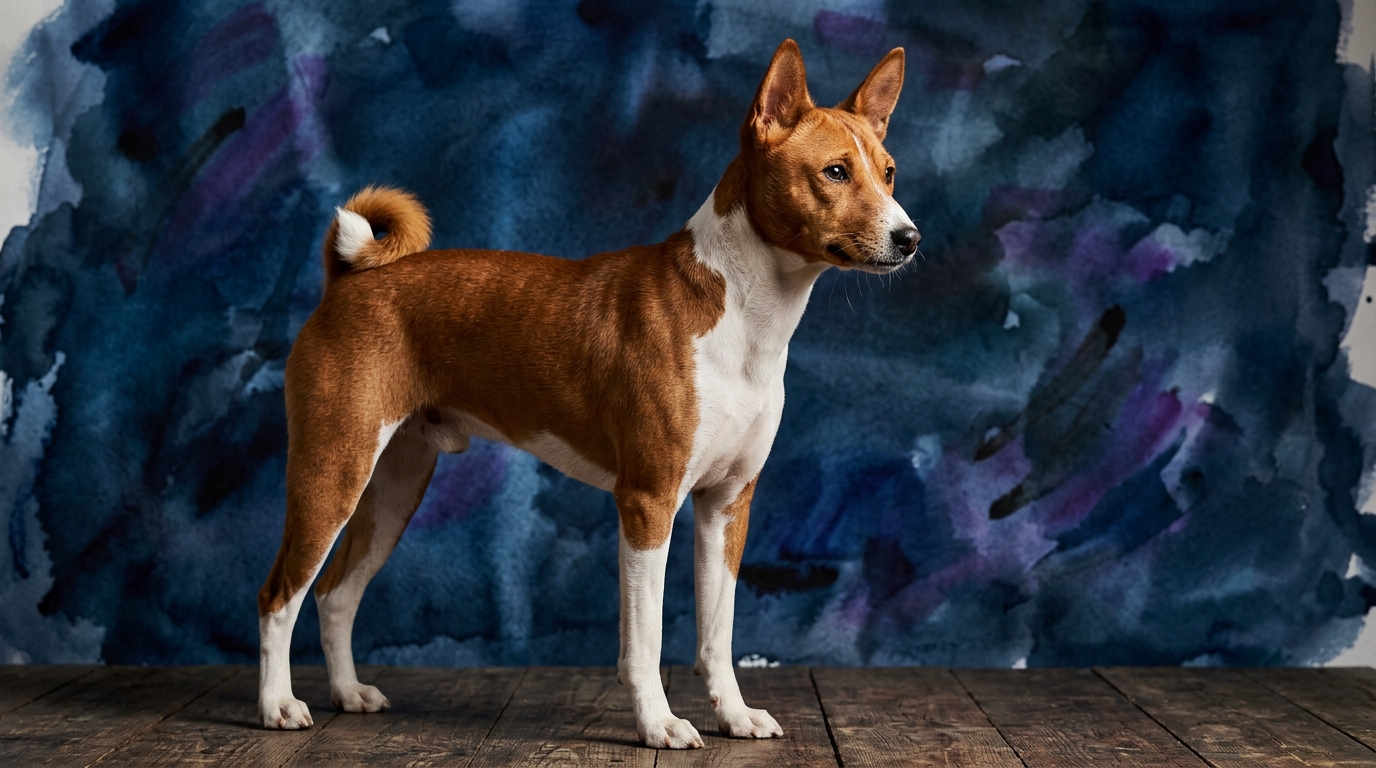
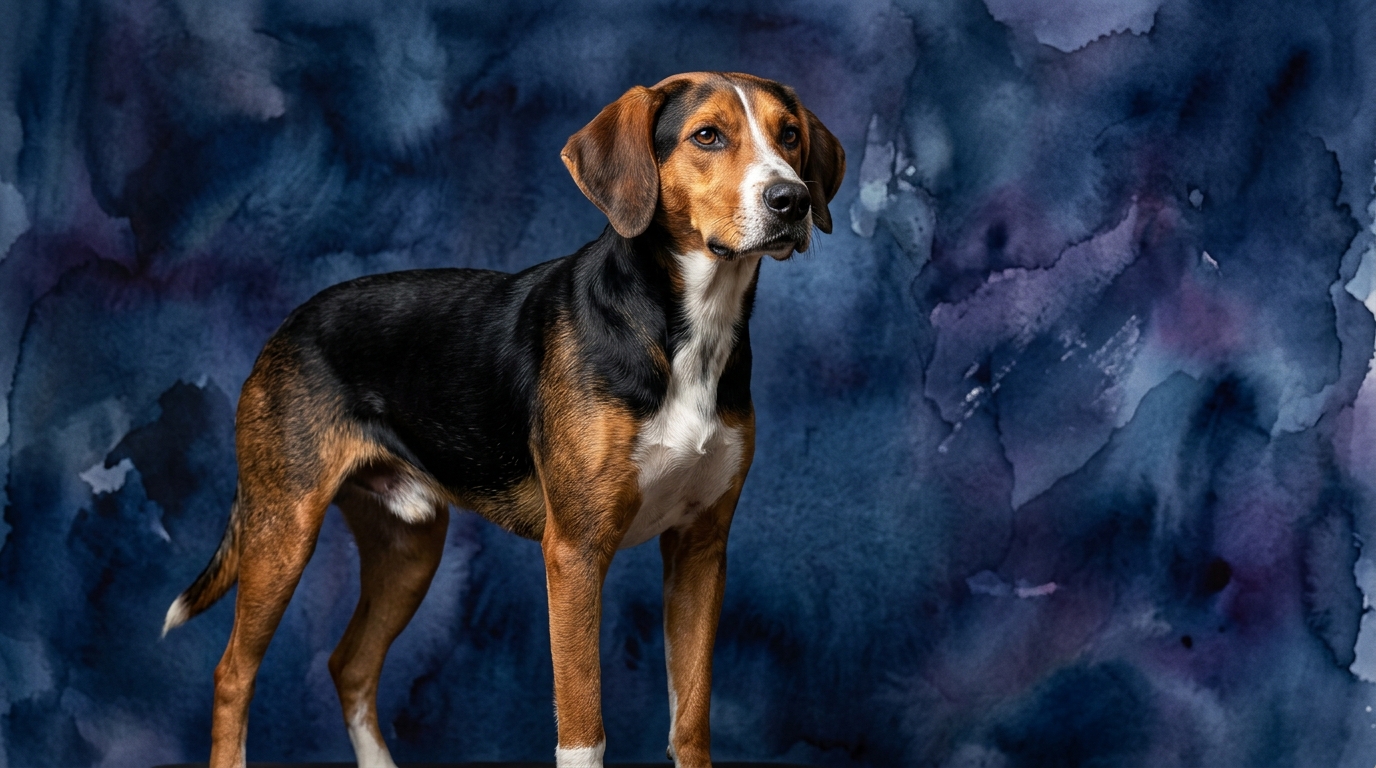
Side-by-Side IQ Profile: Basenji vs. American Foxhound
The Basenji, often referred to as the 'barkless dog,' holds a Coren rank of #78, indicating a unique cognitive makeup. Our Pet IQ Lab assessment scores the Basenji highly in Problem Solving (5/5), reflecting their exceptional resourcefulness and ability to independently navigate complex situations. Their instinctive Drive is also very strong (5/5), a testament to their ancient hunting heritage and acute environmental awareness. However, their Training Speed is notably low (1/5), suggesting a strong-willed nature that prioritizes self-direction over human instruction. Social Intelligence is moderate (3/5), as they form deep bonds with their chosen family but often remain aloof with strangers, and their Memory is robust (4/5), allowing them to retain learned experiences and adapt strategies effectively.
In contrast, the American Foxhound, while not Coren-ranked, presents a more balanced cognitive profile. Our Pet IQ Lab scores show a moderate Problem Solving ability (3/5), indicating they are capable of solving tasks, especially those related to their hunting purpose, but less inclined towards independent, intricate puzzles outside of that context. Their Training Speed is also moderate (3/5), suggesting a greater willingness to cooperate and learn from human instruction compared to the Basenji. Social Intelligence (3/5) reflects their generally friendly and amiable nature, often enjoying the companionship of both humans and other dogs, though their primary focus can be on their nose. Their Instinctive Drive (3/5) is significant, particularly their powerful scent drive, while their Memory (3/5) is solid for routines and commands, though perhaps not as nuanced as the Basenji’s for intricate details.
Where the Basenji Wins Cognitively
The Basenji’s cognitive strengths truly shine in their Problem Solving capabilities, scoring a remarkable 5/5 compared to the American Foxhound's 3/5. This manifests as an extraordinary ability to independently strategize and overcome obstacles, whether it's figuring out how to open latches, scale fences, or creatively obtain a forbidden treat. Owners often describe them as 'escape artists' or 'masterminds,' constantly evaluating their environment for opportunities and weak points. This isn't about rote learning, but about intrinsic, adaptive intelligence that allows them to devise novel solutions to challenges.
Furthermore, the Basenji's superior Instinctive Drive (5/5 vs. 3/5) and Memory (4/5 vs. 3/5) contribute to their unique cognitive advantage. Their heightened instinctive awareness means they are incredibly perceptive to subtle environmental cues, constantly processing information that might go unnoticed by others. This, coupled with their strong memory, allows them to quickly learn from experiences and refine their tactics, making them exceptionally resourceful and resilient in pursuing their own objectives, often outsmarting those around them.
Where the American Foxhound Wins Cognitively
The American Foxhound's primary cognitive advantage lies in their more amenable Training Speed (3/5 vs. Basenji's 1/5). While not a lightning-fast learner by all standards, their willingness to engage with human instruction and respond to commands makes the training process significantly more straightforward. Their cooperative nature, stemming from their historical role as a pack hunter working alongside humans, means they are generally more eager to please and less inclined to challenge directives, preferring to work with their handler rather than independently against them.
While both breeds score 3/5 in Social Intelligence, the American Foxhound's manifestation of this intelligence often translates into a more universally approachable and less aloof demeanor. Their pack mentality fosters a more open friendliness towards a wider circle of people and other dogs, making them generally easier to integrate into diverse social settings. This social adaptability, combined with their moderate problem-solving, makes them more predictable and less prone to the subtle, independent manipulations a Basenji might employ.
Which is Easier to Train and Why?
Without question, the American Foxhound is generally considered easier to train than the Basenji, directly reflecting their respective Training Speed scores of 3/5 versus 1/5. The Foxhound's inclination towards cooperation means they are more responsive to traditional positive reinforcement methods and more likely to comply with commands. They thrive on consistency and clear communication, and their desire to be part of a 'pack' often translates into a desire to work alongside their human companions, making them more receptive students in obedience classes and daily routines.
The Basenji’s low training speed isn't due to a lack of learning capacity, but rather a profound independence and a strong selective motivation. They learn very well, but often on their own terms and only if they perceive a direct benefit to themselves. This means training a Basenji requires immense patience, creativity, and a deep understanding of their unique motivations. They are less driven by a desire to please and more by their own agenda, often using their exceptional problem-solving skills to find loopholes or subtly defy instructions rather than simply obey.
Which Suits Active Owners vs. Relaxed Owners?
Neither the Basenji nor the American Foxhound are truly suited for relaxed, sedentary owners, as both breeds possess significant energy and instinctive drives that require management. However, their specific needs diverge. The American Foxhound is undeniably suited for highly active owners who can provide extensive physical exercise, especially opportunities for long runs, hikes, or scent-tracking activities. Their endurance and powerful scent drive mean they require significant outdoor time to be content, thriving in environments where they can engage their natural instincts for exploration and pursuit. A lack of sufficient exercise will almost certainly lead to boredom and potentially destructive behaviors.
The Basenji, while also energetic, demands a different kind of 'active' ownership. Their high problem-solving and instinctive drive mean they require constant mental stimulation and structured engagement to prevent boredom and mischief. They need owners who are active in their approach to training, enrichment, and managing their independent nature, rather than just providing endless physical exertion. While they enjoy exercise, their needs lean more towards brain games, puzzle toys, and consistent, creative training to channel their cleverness, making them suitable for owners who are intellectually engaged and prepared for a dog that thinks for itself.
The Verdict
Choose the Basenji if you are an experienced owner seeking an independent, clever, and often mischievous companion who thrives on mental challenges and values a dog with a unique, self-directed personality, provided you are prepared for their training complexities.
Opt for the American Foxhound if you are an active, outdoors-loving owner seeking a friendly, robust, and cooperative scent hound for extensive physical activities, valuing a more amiable and trainable companion for your adventures.
🧠 Find Your Pet's IQ Score
Our Pet IQ Lab assessment covers 25+ tests across 5 cognitive dimensions — personalized to your breed.
Take the Full IQ Test →Frequently Asked Questions
Are Basenjis untrainable?
Basenjis are not untrainable, but their low training speed and strong independence mean they require a very specific, patient, and creative approach to training. They learn best when motivated by something they truly value, rather than simply to please their owner.
Do American Foxhounds need a lot of exercise?
Yes, American Foxhounds have significant stamina and a strong drive to run and explore due to their hunting lineage. They require daily vigorous exercise, including long runs or scent work, to keep them physically and mentally content.
Which breed is generally better with children?
Both breeds can be good with children with proper socialization and supervision. However, the American Foxhound, being generally more openly friendly and less aloof, might integrate more easily into a busy family environment compared to the more reserved Basenji.