Side-by-Side Cognitive Profiles: Basenji vs. Collie (Rough)
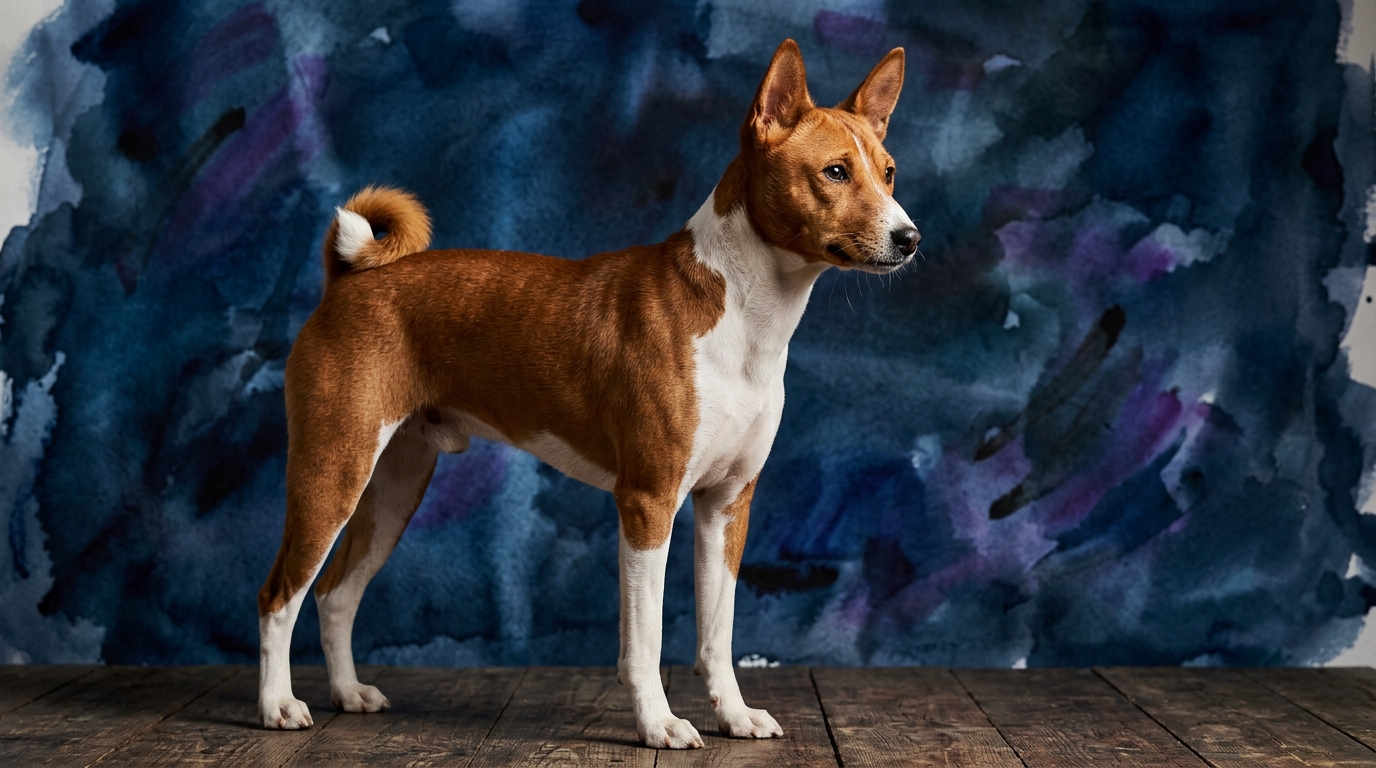
The Cosmic Pet Pet IQ Lab employs five dimensions to map canine cognition, and applying these to the Basenji and Collie (Rough) paints a vivid picture of their mental landscapes. The Basenji, a Hound breed with a Coren ranking of #78, exhibits a unique blend of sharp independent thought and self-reliance. Its Problem Solving is rated an exceptional 5/5, indicating an aptitude for devising novel solutions to challenges, often through trial and error or observation. However, its Training Speed is a modest 1/5, suggesting a slower uptake of conventional commands and a need for highly motivating incentives. Social Intelligence stands at 3/5, showing a moderate ability to interpret human cues but often prioritizing its own agenda. An Instinctive Drive of 5/5 highlights a profound connection to primal behaviors like scent tracking and pursuit, while its Memory at 4/5 indicates a strong capacity to recall experiences and learned associations over time.
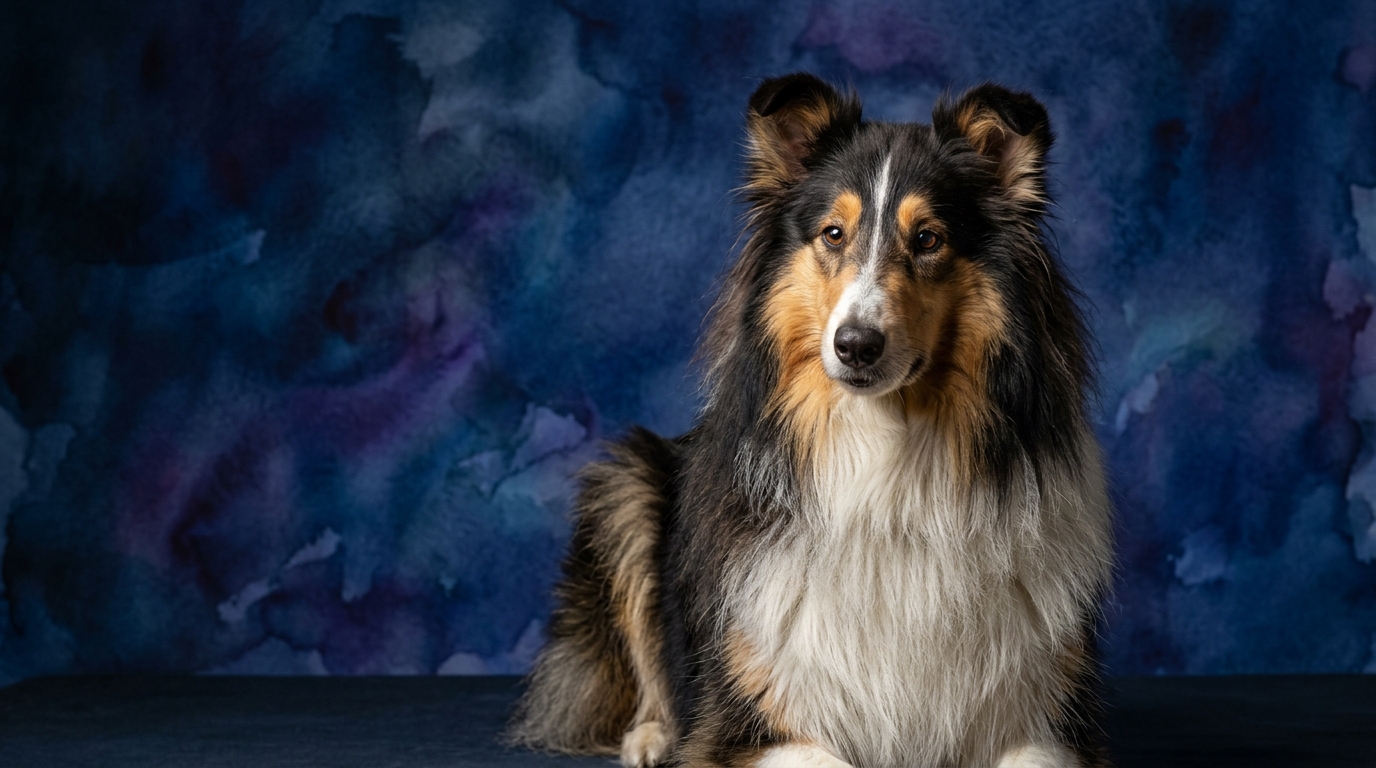
In contrast, the Collie (Rough), a Herding breed with a Coren ranking of #16, presents a profile geared towards cooperation and responsiveness. Its Problem Solving is rated 4/5, demonstrating solid practical intelligence, especially in tasks related to its herding heritage, though perhaps less inclined towards purely abstract puzzles than the Basenji. The Collie's Training Speed is a robust 4/5, signifying a quick grasp of new commands and a desire to please its human companions. Social Intelligence mirrors the Basenji at 3/5, indicating a similar moderate ability to read and respond to human emotions and intentions. Its Instinctive Drive is 3/5, present but more manageable than the Basenji's, often channeled into constructive activities. Finally, the Collie (Rough) excels in Memory, scoring a perfect 5/5, allowing it to retain a vast repertoire of commands, routines, and past experiences with remarkable accuracy.
Where the Basenji Demonstrates Cognitive Advantage
The Basenji's cognitive strengths primarily reside in its formidable Problem Solving ability (5/5) and its profound Instinctive Drive (5/5). This breed doesn't wait for instructions; it actively assesses situations and formulates its own strategies. For instance, a Basenji presented with a puzzle feeder might not follow the 'intended' method but instead creatively manipulate it, perhaps by nudging it off a table to spill contents, showcasing its independent thought process. This resourcefulness makes them formidable escape artists, capable of figuring out latches or scaling fences that would baffle many other breeds.
Furthermore, their intense instinctive drive means they are acutely attuned to their environment, processing sensory information with remarkable depth. A Basenji's ability to track a scent trail over long distances or navigate complex terrain purely by instinctual cues illustrates a sophisticated form of environmental problem-solving that operates on a different, often more primal, level than the Collie's structured approach. This means they are inherently self-sufficient in navigating and interacting with their world, often requiring less direct guidance in exploratory scenarios.
Where the Collie (Rough) Demonstrates Cognitive Advantage
The Collie (Rough) shines brightest in its exceptional Memory (5/5) and impressive Training Speed (4/5), which together form a powerful learning combination. This breed can absorb and recall a significant volume of commands, routines, and past interactions, making them highly predictable and consistent companions once trained. Their ability to remember complex sequences of actions, such as those required in obedience or agility competitions, far surpasses many breeds, allowing them to perform intricate tasks with fluidity and precision.
Their strong memory and quick learning allow them to generalize learned behaviors across different contexts more readily. If a Collie learns 'sit' in the living room, it will likely apply that command just as effectively in a park. This consistency, coupled with their moderate instinctive drive (3/5), means they are less likely to be sidetracked by environmental stimuli and more likely to remain focused on tasks initiated by their human partners. This cognitive profile makes them particularly adept at roles requiring sustained attention and a broad understanding of human expectations, from service work to performing arts.
Training Dynamics: Basenji vs. Collie (Rough)
When it comes to training, the Basenji and Collie (Rough) present fundamentally different experiences due to their cognitive leanings. The Basenji's Training Speed of 1/5, coupled with its high Instinctive Drive of 5/5, means that traditional obedience methods often meet with resistance. A Basenji isn't necessarily incapable of learning, but rather requires a convincing 'what's in it for me?' argument. Their independent problem-solving mind means they will often try to outsmart the training process, finding alternative, sometimes undesired, ways to achieve their goals. Training a Basenji demands immense patience, creative motivation, and a willingness to make training feel like a game that benefits them, rather than a series of demands.
Conversely, the Collie (Rough), with its Training Speed of 4/5 and perfect Memory of 5/5, is typically an eager and responsive student. They thrive on clear communication, consistent routines, and positive reinforcement, quickly grasping new commands and retaining them over time. Their moderate instinctive drive means they are generally less distracted by external stimuli than a Basenji and more inclined to focus on their handler. Real behavioral differences include the Basenji's tendency to bolt after a scent or ignore a recall if something more interesting captures its attention, whereas a Collie is more likely to check in with its handler and wait for instructions, making them significantly more biddable in varied environments. The Collie's desire to cooperate makes them a joy for those who relish the training journey, while the Basenji challenges an owner to think like a dog, employing wit and strategy.
Suitability for Active vs. Relaxed Owners
The Basenji's cognitive profile makes it an ideal match for active, experienced owners who appreciate a canine partner with a truly independent spirit and a curious, investigative mind. Their high instinctive drive (5/5) translates into a need for substantial physical and mental engagement, often involving activities that tap into their natural hunting and exploring urges. Owners who enjoy long, varied walks, scent work, or puzzle games that allow the Basenji to use its problem-solving prowess will find a rewarding companion. Relaxed owners might find the Basenji's self-directed nature and need for stimulation overwhelming, as an under-exercised or under-stimulated Basenji can become quite inventive in finding its own entertainment, which may not always align with household rules.
The Collie (Rough), with its balanced instinctive drive (3/5), impressive memory (5/5), and eagerness to train (4/5), can suit a wider range of lifestyles, from active to moderately active. Owners who enjoy engaging in dog sports like obedience, agility, or herding trials will find the Collie's cognitive strengths perfectly aligned with these activities. They also make wonderful companions for families who enjoy regular walks, interactive play, and consistent training sessions. While they are not sedentary dogs, their desire to cooperate means that their energy can be more easily channeled and managed compared to the Basenji's more autonomous approach. A relaxed owner who is still committed to daily walks and consistent mental engagement through training can find a deeply devoted and responsive partner in a Collie (Rough).
The Verdict: When to Choose Each Breed
The Verdict
Choose a Basenji if you are an experienced, active owner who values an independent, problem-solving companion and are prepared for a unique training challenge, appreciating their self-directed nature and strong instinctive drives. They thrive with owners who celebrate their wit and can provide consistent, engaging outlets for their curiosity.
Opt for a Collie (Rough) if you seek a highly trainable, devoted companion eager to learn and participate in family activities, valuing consistency, responsiveness, and a strong memory. They are a good fit for owners who enjoy a cooperative training relationship and can provide regular physical and mental engagement without an overwhelming need for independent exploration.
🧠 Find Your Pet's IQ Score
Our Pet IQ Lab assessment covers 25+ tests across 5 cognitive dimensions — personalized to your breed.
Take the Full IQ Test →Frequently Asked Questions
Is the Basenji difficult to train?
The Basenji can be challenging to train due to its low Training Speed (1/5) and strong independent nature. They require creative, highly motivating methods and immense patience, often needing to be convinced that following a command benefits them personally rather than simply complying with a request.
Do Collies (Rough) have a good memory?
Yes, the Collie (Rough) excels in memory, scoring a perfect 5/5 in this dimension. This means they can retain a vast amount of information, including commands, routines, and past experiences, making them consistent and reliable in learned behaviors.
Which breed is better for an owner interested in dog sports?
The Collie (Rough) is generally better suited for dog sports like obedience or agility due to its high Training Speed (4/5), exceptional Memory (5/5), and cooperative nature. While a Basenji's problem-solving skills could be applied, their independent drive often makes structured competitive activities less appealing to them.