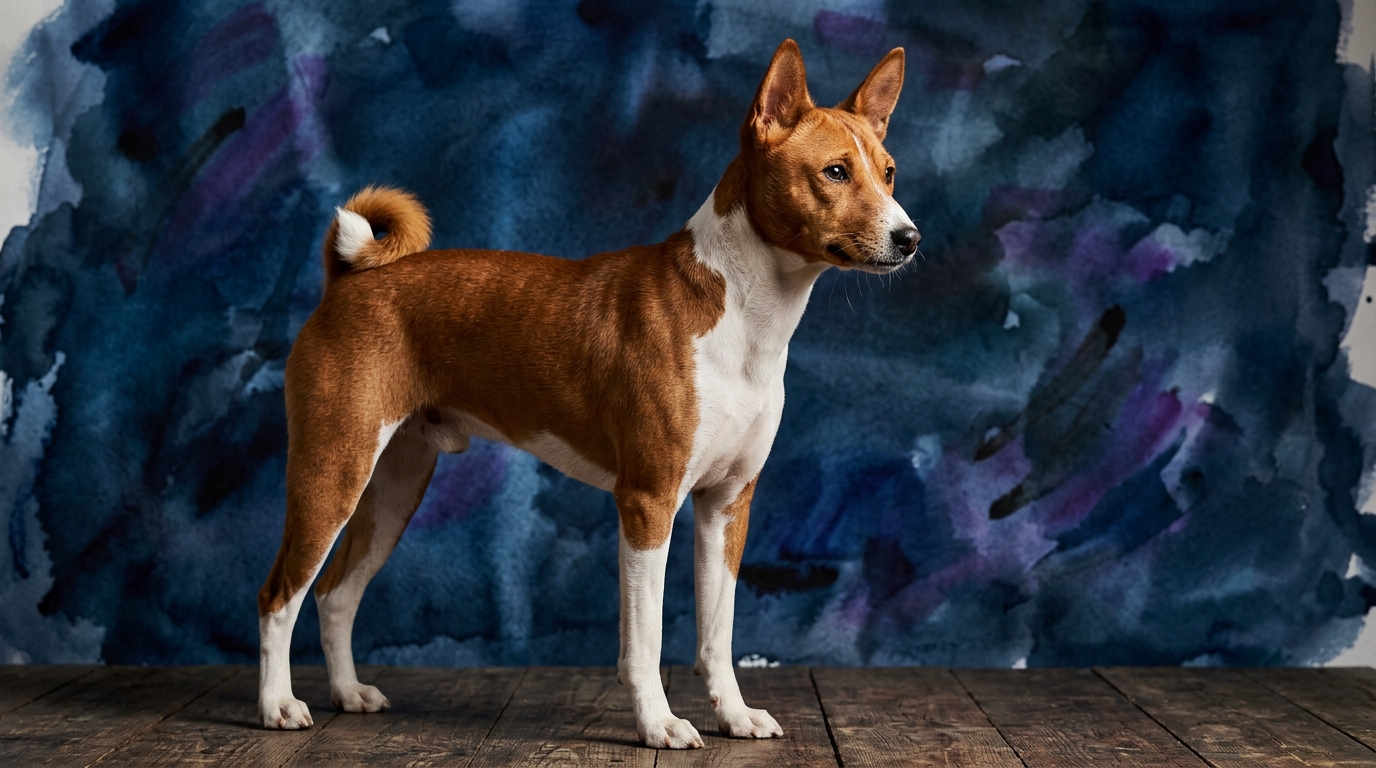
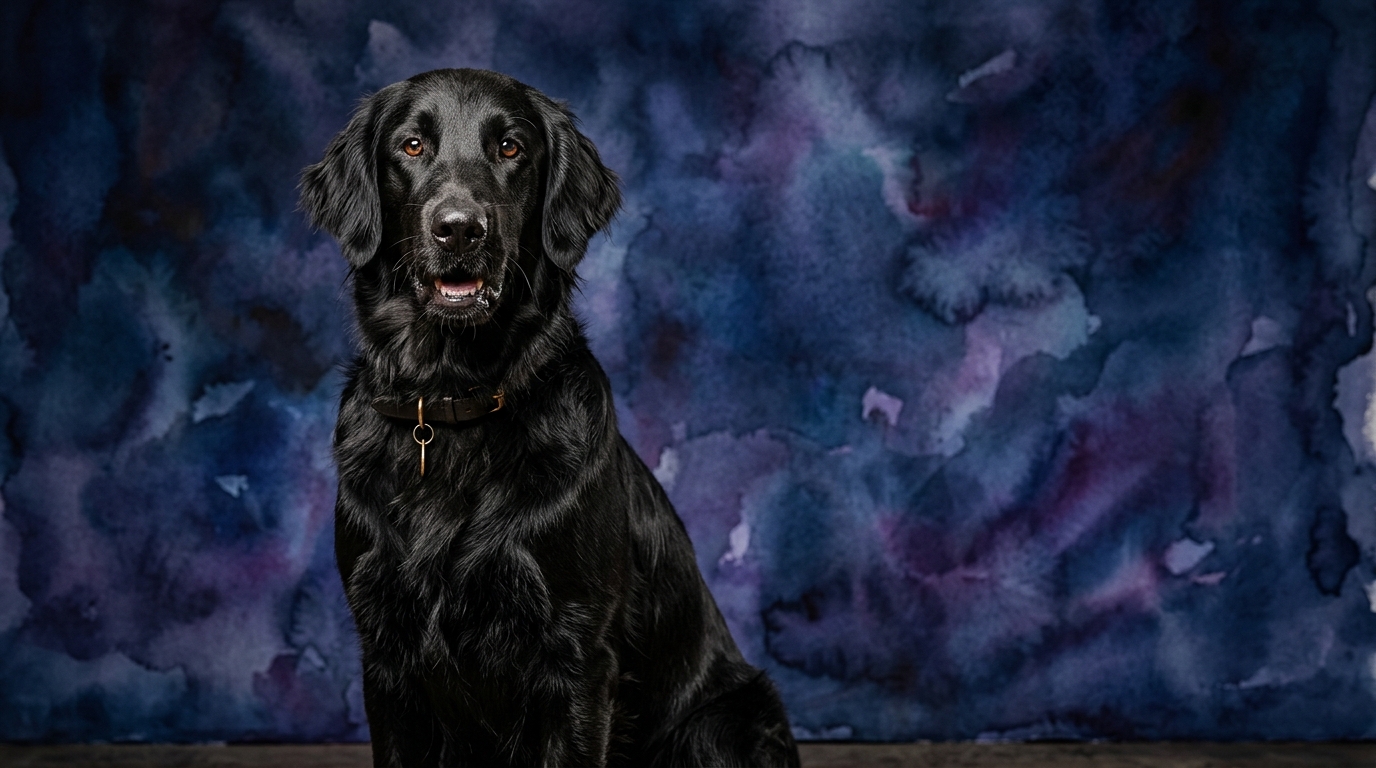
Side-by-Side Cognitive Profiles: Basenji vs. Flat-Coated Retriever
The Basenji, a unique 'barkless' hound from Central Africa, holds a Coren rank of #78, placing them in the category of fair working intelligence. Their cognitive makeup is heavily influenced by centuries of independent hunting in challenging environments. For problem-solving, the Basenji scores an impressive 5/5, indicating a profound ability to figure things out for themselves, often using cunning and ingenuity.
However, their training speed is a challenging 1/5, reflecting a strong independent streak and a disinterest in repetitive human-directed tasks. Social intelligence for a Basenji is rated 3/5; they form deep bonds with their families but can be aloof with strangers and selective in their interactions. Their instinctive drive is a commanding 5/5, underscoring their powerful prey drive, acute senses, and self-reliance in tracking. Memory for this breed is a solid 4/5, allowing them to recall locations, past experiences, and strategies for achieving their goals.
In stark contrast, the Flat-Coated Retriever, originating from the UK as a gundog, boasts a Coren rank of #17, signifying a much higher working intelligence. Their cognitive strengths are rooted in a history of collaborative work with humans, particularly in retrieving game. Their problem-solving ability is rated 4/5; they are capable and intelligent but often prefer to work *with* their human companions to solve tasks.
The Flat-Coated Retriever truly shines in training speed, scoring 4/5. They are quick learners, eager to please, and thrive on positive reinforcement and engagement. Their social intelligence is also 3/5, but it manifests as an outgoing, friendly nature, demonstrating a strong desire for interaction and understanding of human social cues. Instinctive drive for the Flat-Coat is 3/5, primarily focused on retrieving and working collaboratively, rather than independent hunting. Finally, their memory is an outstanding 5/5, allowing them to retain vast amounts of information, commands, and routines with remarkable consistency.
Where the Basenji's Cognition Excels
The Basenji's standout cognitive strength lies in their exceptional, self-directed problem-solving. While the Flat-Coated Retriever can solve problems, the Basenji approaches challenges with an almost cat-like independence, constantly evaluating their environment for opportunities or escape routes. This isn't about following a human's lead; it's about figuring out how to open a child-proof gate, scale a fence, or access a hidden treat without any external guidance. Their high score of 5/5 in this area means they are masters of autonomous strategy, often surprising owners with their ingenuity and persistence.
Furthermore, their instinctive drive, also rated 5/5, gives them a profound advantage in self-sufficiency and environmental awareness. This translates into unparalleled sensory perception and a deep-seated understanding of their natural surroundings. A Basenji's ability to track, navigate, and react to stimuli independently, leveraging their sharp senses, is a testament to their ancient heritage as a hunter that relies solely on its own faculties for survival and success.
Where the Flat-Coated Retriever's Cognition Shines
The Flat-Coated Retriever's cognitive strengths are fundamentally geared towards cooperation and teachability. Their training speed, a robust 4/5 compared to the Basenji's 1/5, is a clear differentiator. This breed absorbs new commands and routines with an enthusiastic alacrity, making them exceptionally responsive to structured learning environments. They genuinely enjoy the process of training and working alongside their human partners, viewing it as a rewarding collaborative effort.
Equally impressive is the Flat-Coat's memory, which is a perfect 5/5. This superior recall allows them to consistently execute learned behaviors, remember complex sequences of commands, and accurately locate retrieved items, even after significant time has passed. Their memory underpins their reliability and consistency, making them incredibly dependable in tasks and daily interactions. While their problem-solving is slightly lower than the Basenji's, their willingness to engage with humans to solve problems, rather than independently, makes them highly effective in tasks requiring joint effort.
Trainability: A Tale of Two Temperaments
When it comes to ease of training, the Flat-Coated Retriever is undeniably the more straightforward choice. Their high training speed and eager-to-please disposition mean they are quick to grasp new concepts and happy to repeat behaviors for positive reinforcement. They thrive on clear instructions, consistent routines, and the joy of working closely with their owner. Their moderate instinctive drive is also easily channeled into constructive activities like retrieving or obedience, making them highly biddable and responsive to commands.
The Basenji, conversely, presents a significant training challenge due to their low training speed and profound independence. They are not inherently interested in pleasing humans through repetitive tasks; instead, they are driven by their own motivations and innate curiosity. Training a Basenji requires immense patience, creativity, and a deep understanding of their cognitive makeup. Owners must transform training into a stimulating game that appeals to their problem-solving nature, rather than relying on traditional obedience methods, which they often perceive as pointless or boring. They are not unintelligent, but rather selective in what they choose to learn and when they choose to obey.
Matching Breeds to Lifestyles: Active vs. Relaxed Owners
For active owners seeking a highly engaged and cooperative partner for structured activities, the Flat-Coated Retriever is an excellent match. They possess boundless energy that is best channeled through activities like agility, obedience, hiking, or field trials. These dogs thrive on having a 'job' and spending quality, interactive time with their families. Their biddability makes them adaptable to various adventures, and they are typically enthusiastic companions for runs or long walks, always eager to participate in shared experiences. Their need for activity is more about 'doing things together' rather than independent exploration.
The Basenji also requires an active owner, but one who appreciates and can manage their independent, curious nature. Their activity needs are less about structured, cooperative tasks and more about providing secure opportunities for exploration, vigorous bursts of running, and mental challenges that satisfy their high problem-solving and instinctive drives. Owners must be prepared for a dog that might prefer to explore a scent trail independently rather than stick to a heel, or find creative ways to escape if bored. While they can be affectionate, they are not typically the 'always by your side' type, making them less suitable for those desiring a constantly compliant companion or a truly relaxed, low-maintenance pet without significant mental engagement.
The Verdict
Choose the Basenji if you are an experienced owner who values a truly independent, clever, and sometimes challenging companion, appreciating their unique self-reliance and profound problem-solving abilities over conventional obedience.
Opt for the Flat-Coated Retriever if you seek a joyful, biddable, and highly trainable partner who excels in cooperative tasks, thrives on interaction, and brings boundless enthusiasm to every shared activity.
🧠 Find Your Pet's IQ Score
Our Pet IQ Lab assessment covers 25+ tests across 5 cognitive dimensions — personalized to your breed.
Take the Full IQ Test →Frequently Asked Questions
Are Basenjis untrainable?
No, Basenjis are not untrainable, but their training approach differs significantly from more biddable breeds. They require immense patience, positive reinforcement, and a focus on making training a stimulating game that appeals to their independent problem-solving nature, rather than relying on rote obedience.
How do their social intelligence scores, both 3/5, manifest differently?
While both breeds score similarly in social intelligence, the Basenji's often leans towards understanding human cues to achieve their own goals, sometimes appearing aloof or selectively responsive. The Flat-Coated Retriever's social intelligence typically manifests as a strong desire for cooperative interaction and pleasing their human companions, making them more outwardly friendly, expressive, and eager to engage.
Despite their lower problem-solving score compared to the Basenji, are Flat-Coated Retrievers still good at puzzles?
Absolutely. Their problem-solving ability (4/5) is still very good, and they often excel at puzzle toys because they genuinely enjoy the process of working for a reward and engaging their minds. They may approach puzzles with more enthusiasm and a desire for human interaction or guidance than a Basenji, who might tackle it with independent cunning.