Side-by-Side Cognitive Profiles
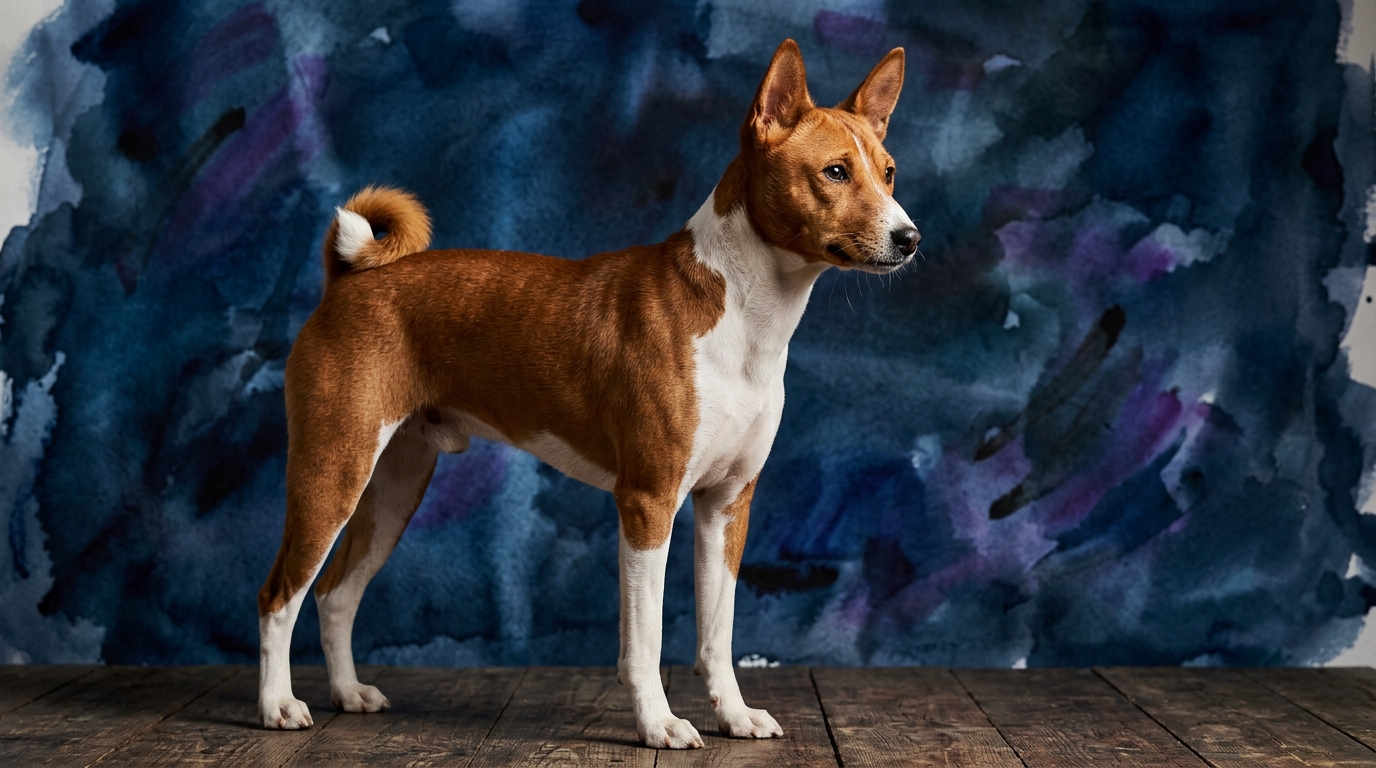
**Basenji (Hound, Coren Rank #78):** The Basenji, often described as a 'barkless dog,' presents a unique cognitive blueprint. Their Problem Solving is rated 5/5, indicating an exceptional capacity for independent thought and navigating complex situations without human intervention, often finding their own solutions to perceived obstacles. Training Speed stands at a challenging 1/5; these dogs are not inherently eager to please and require significant creativity and consistency from their trainers, learning at their own deliberate pace. Social Intelligence is 3/5, suggesting they are observant and form strong bonds, but often with a selective circle, preferring to engage on their own terms rather than seeking constant interaction. An Instinctive Drive of 5/5 highlights their profound connection to their sighthound heritage, possessing an intense prey drive and an acute awareness of their surroundings. Their Memory is a robust 4/5, meaning they retain learned information and spatial awareness effectively, remembering routines and experiences with considerable accuracy.
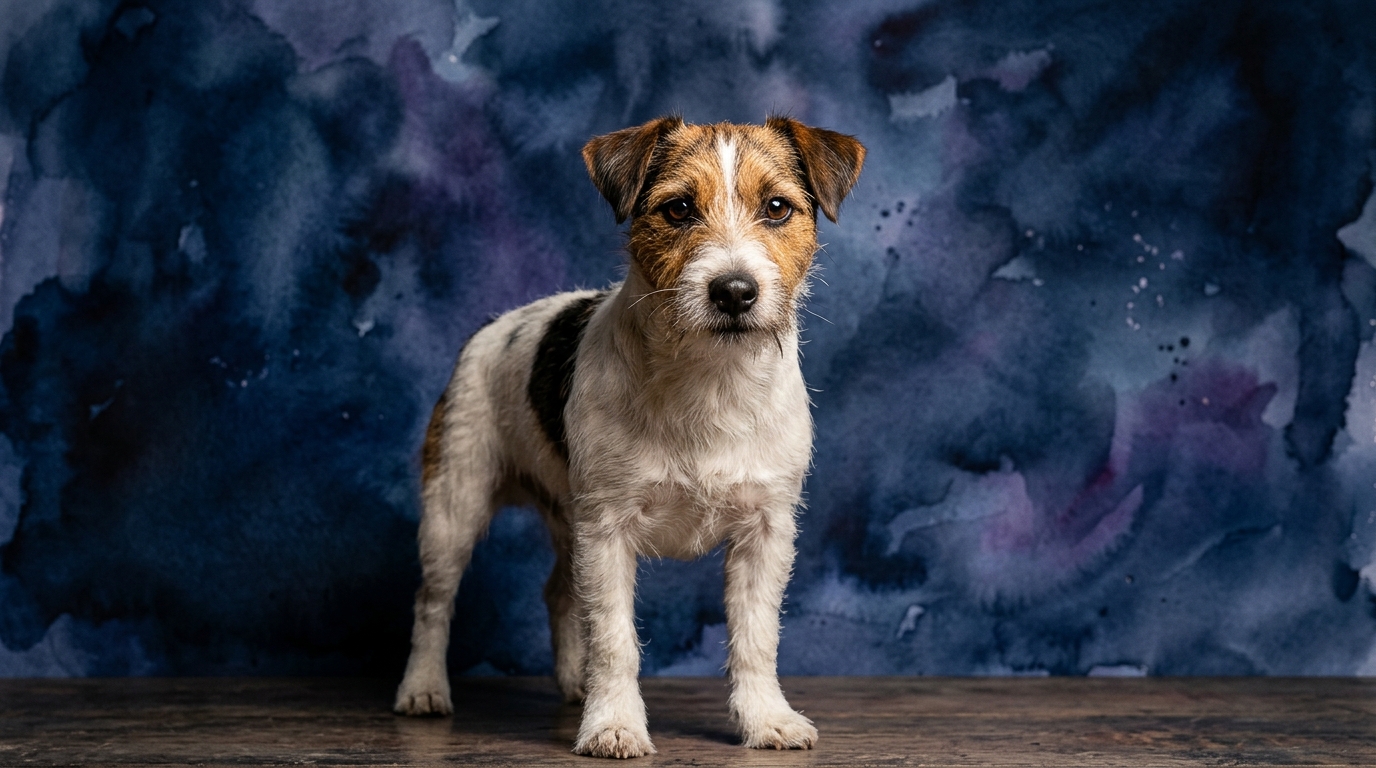
**Jack Russell Terrier (Terrier, Not Coren-ranked):** The Jack Russell Terrier, while not appearing on the Coren ranking, demonstrates a formidable intellect tailored to its terrier lineage. Their Problem Solving is also 5/5, reflecting an unwavering determination to overcome challenges, often through persistent trial and error, driven by a clear goal. Training Speed is 3/5, indicating they are capable of learning commands and tasks efficiently, though their strong will and independent streak can sometimes make consistency a challenge. Social Intelligence, at 3/5, means they are generally outgoing and capable of forming strong social bonds, but their assertiveness might require careful management in multi-dog or unfamiliar social settings. Their Instinctive Drive is a powerful 5/5, a hallmark of their breed, manifesting as an intense prey drive, boundless energy, and an unyielding focus on tasks that engage their natural hunting instincts. Memory is rated 4/5, allowing them to recall complex sequences, routines, and experiences, making them adept at learning and repeating tasks.
Where the Basenji Excels Cognitively
The Basenji’s cognitive strengths lie in its profound independence and self-sufficiency, a trait deeply etched by its ancestral role in hunting. Their 5/5 problem-solving ability, coupled with their low training speed, means they excel at autonomously figuring out how to achieve their objectives, often bypassing conventional methods. This isn't a dog waiting for direction; it’s a dog evaluating a situation and devising its own solution, whether it's opening a gate, escaping an enclosure, or retrieving a desired item through unconventional means. This self-directed intelligence requires an owner who appreciates and can channel an independent thinker, rather than one who expects immediate compliance. Their 4/5 memory supports this by allowing them to recall past successful 'solutions' to similar problems, reinforcing their self-reliant approach. Their social intelligence, while not overtly effusive, allows for keen observation and understanding of their human family dynamics, often leading to subtle, nuanced interactions that reward attentive owners.
Where the Jack Russell Terrier Excels Cognitively
The Jack Russell Terrier’s cognitive prowess is defined by its tenacious application of intelligence, particularly in goal-oriented tasks. Their 5/5 problem-solving is often expressed through relentless pursuit and focused determination, making them exceptionally effective at tasks requiring sustained effort and clever maneuvering. While both breeds score 5/5 in problem-solving, the JRT's higher training speed (3/5) allows for a more direct and cooperative application of this intelligence within a structured training environment. This means they are quicker to grasp and execute complex commands, especially when those tasks align with their strong instinctive drive. Their 4/5 memory ensures they retain learned behaviors and strategies, building a robust repertoire of skills that can be repeatedly deployed. This combination of sharp intellect, trainability, and unwavering drive makes them formidable competitors in dog sports and highly capable working companions.
Ease of Training: Basenji vs. Jack Russell Terrier
When it comes to ease of training, the Jack Russell Terrier holds a distinct advantage over the Basenji. The Basenji's training speed of 1/5 is arguably its most significant challenge for many owners. These dogs are independent and often perceive commands as suggestions rather than directives, requiring immense patience, positive reinforcement, and a deep understanding of their unique motivations. They are not primarily driven by a desire to please and may quickly become bored with repetitive drills, demanding innovative and engaging training methods. Conversely, the Jack Russell Terrier, with a training speed of 3/5, is generally more responsive to traditional training techniques. They possess an eagerness to learn and work, especially when tasks tap into their prey drive or provide a mental challenge. While they can be stubborn and have a strong will, their inherent drive to engage and their capacity to quickly grasp concepts make them more amenable to consistent instruction, resulting in faster acquisition of new skills compared to the Basenji.
Suiting Active vs. Relaxed Owners
Neither the Basenji nor the Jack Russell Terrier is suited for truly relaxed, sedentary owners; both require substantial mental and physical engagement. However, the *nature* of this engagement differs. The Basenji, despite its powerful instinctive drive (5/5), can appear more independent in its activity. It thrives on opportunities for exploration, scent work, and problem-solving that allow it to use its intelligence autonomously. An owner who enjoys long, varied walks, puzzle toys, and perhaps lure coursing or competitive obedience that respects the Basenji's self-directed nature would find a good match. They need outlets for their energy, but might not demand constant interactive play in the same way. The Jack Russell Terrier, on the other hand, is generally a more demanding companion for active owners. Their relentless energy, combined with their strong instinctive drive (5/5) and problem-solving tenacity, means they thrive with consistent, high-intensity physical activity and structured mental challenges. Owners who are keen on dog sports like agility, earthdog trials, flyball, or daily vigorous exercise and engaging training sessions will find the JRT an enthusiastic partner. They require an owner who can match their boundless zest for life and provide consistent direction.
The Verdict
Choose the Basenji if: You appreciate a cognitively independent and resourceful companion, are prepared for creative and patient training approaches that respect their self-reliant nature, and seek a dog that engages with the world on its own terms, offering unique, subtle companionship.
Choose the Jack Russell Terrier if: You seek an intensely engaged, tenacious, and cooperative partner for active pursuits and challenging training, are ready to provide consistent mental and physical stimulation, and desire a dog that channels its sharp intellect and boundless drive into shared activities.
🧠 Find Your Pet's IQ Score
Our Pet IQ Lab assessment covers 25+ tests across 5 cognitive dimensions — personalized to your breed.
Take the Full IQ Test →Frequently Asked Questions
Are Basenjis difficult to live with due to their intelligence?
Basenjis possess a high problem-solving IQ, but their low training speed and independent nature mean they use this intelligence on their own terms, which can be perceived as 'difficult' if owners expect immediate compliance. They require consistent, creative management to channel their cleverness constructively, rather than letting them outsmart their environment in undesirable ways.
How does the Jack Russell Terrier's instinctive drive manifest in daily life?
The JRT's powerful instinctive drive (5/5) translates into intense focus, boundless energy, and a persistent desire to pursue small animals or engage in activities that mimic hunting. This requires ample physical exercise and mental stimulation, like structured play, puzzle toys, or dog sports, to prevent boredom and redirected behaviors.
Despite similar social intelligence scores, how do these breeds interact differently with people?
While both score 3/5 in social intelligence, the Basenji often displays a more reserved, observant sociability, forming deep but selective bonds and preferring interaction on its own terms. The Jack Russell Terrier tends to be more outwardly confident and assertive in social settings, eager to engage but potentially requiring more management to ensure polite interactions with strangers or other animals.