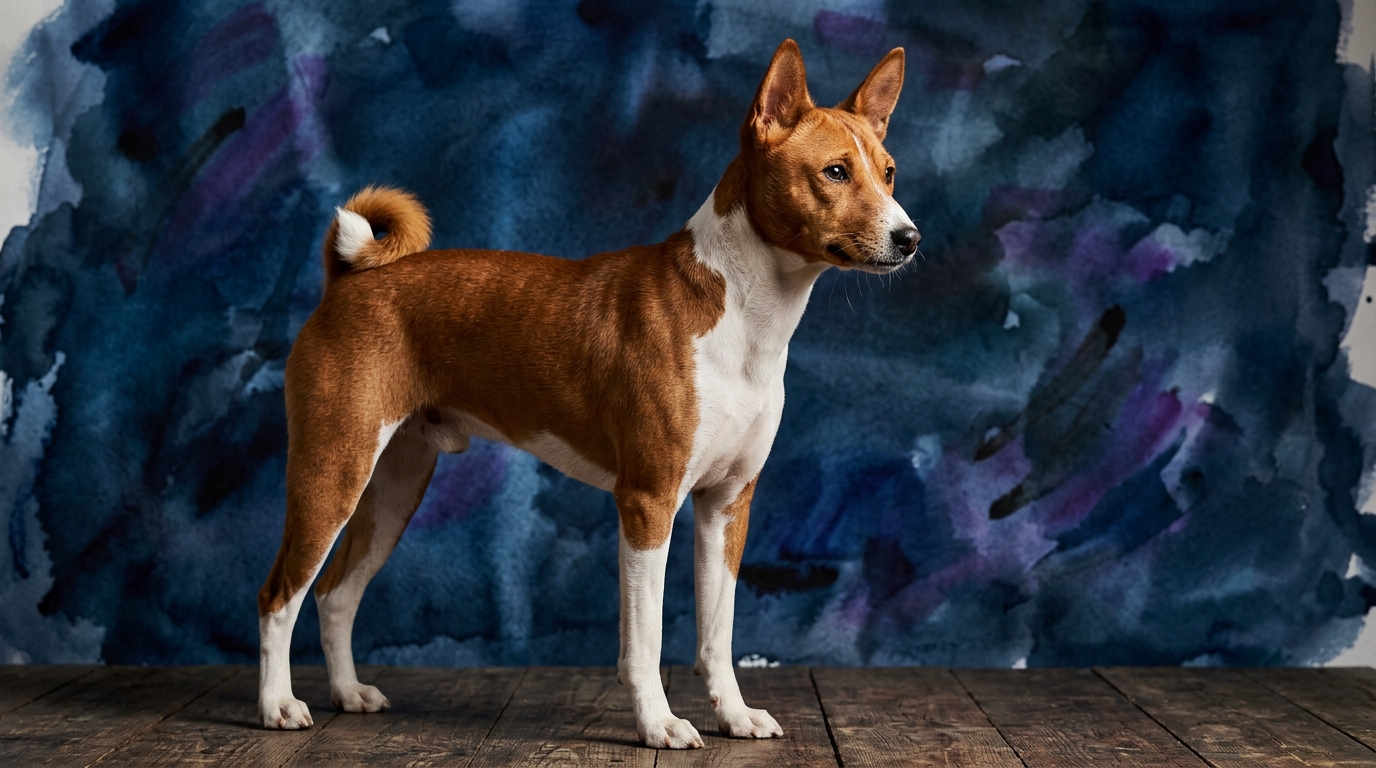

Side-by-Side IQ Profile: Basenji vs. Norfolk Terrier
The Cosmic Pet Pet IQ Lab provides a detailed framework for understanding canine intelligence across five key dimensions. Let's delve into how the Basenji and Norfolk Terrier stack up:
**Basenji (Hound)**: Problem Solving (5/5) manifests as ingenious, self-directed solutions to obstacles like opening gates or reaching treats, relying on methodical thought. Training Speed (1/5) means they learn commands very slowly, often due to selective compliance rather than comprehension issues. Social Intelligence (3/5) indicates moderate attunement to human dynamics, forming bonds without always prioritizing human expectations. Instinctive Drive (5/5) is an exceptionally powerful urge for hunting, tracking, and chasing, requiring robust outlets. Memory (4/5) allows for strong retention of experiences and learned behaviors, both positive and negative.
**Norfolk Terrier (Terrier)**: Problem Solving (3/5) shows a competent ability to tackle moderate challenges, often through trial and error, but lacks the Basenji's complex strategizing. Training Speed (3/5) means they learn commands at a moderate pace, generally responsive to consistent positive reinforcement due to an eagerness to please. Social Intelligence (3/5) makes them adept at understanding family dynamics and integrating well, maintaining a distinct terrier personality. Instinctive Drive (3/5) presents a moderate propensity for digging, chasing, and alertness, more manageable than the Basenji’s intense urges. Memory (3/5) provides a solid, reliable recall for routines and past interactions, contributing to a predictable companion.
Where the Basenji Wins Cognitively
The Basenji's cognitive strengths shine particularly in areas requiring independent thought and intricate planning. Their 5/5 problem-solving ability makes them masters of self-sufficiency, often devising ingenious methods to achieve their goals, whether it’s escaping a yard or opening a treat cupboard; they assess, plan, and execute without awaiting direction. This breed's superior memory (4/5) ensures that once a solution is found or a boundary tested, that information is retained, allowing for refined strategies. This combination makes them exceptionally adept at navigating complex environments and remembering intricate patterns. Their profound instinctive drive (5/5) also provides a relentless focus when pursuing a scent or engaging in a chase, showcasing a highly specialized form of intelligence geared towards their primal purpose.
Where the Norfolk Terrier Wins Cognitively
The Norfolk Terrier’s cognitive advantages are rooted in their more balanced approach to learning and interaction. While not matching the Basenji's peak in independent problem-solving, their moderate training speed (3/5) is a significant asset, indicating a greater willingness and capacity to absorb and respond to human-initiated instruction efficiently. This makes teaching basic manners and advanced tricks more straightforward. Unlike the Basenji, whose problem-solving is often self-serving, the Norfolk Terrier’s cognitive functions are more readily channeled into cooperative tasks. Their moderate instinctive drive (3/5) also means natural urges like digging or chasing are present but typically less overwhelming, allowing for easier redirection and integration into a domestic setting without constant management of intense primal behaviors.
Which is Easier to Train, and Why
Between these two breeds, the Norfolk Terrier is unequivocally easier to train, primarily due to its 3/5 training speed versus the Basenji's challenging 1/5. Norfolks generally exhibit a greater desire to engage with and please their human companions, making them more receptive to cues and rewards. Their tenacity, when managed with positive reinforcement, leads to consistent learning. The Basenji’s low training speed stems from profound independence and a lack of inherent motivation to comply with human commands; they understand what is asked but often choose not to perform if it doesn't align with their immediate interest. Teaching a Basenji requires immense patience, creativity, and understanding their unique motivations, often feeling more like negotiation than traditional instruction, as their strong problem-solving skills are frequently applied to outsmarting training attempts.
Matching Canine Cognition to Owner Lifestyle
The Basenji, with its 5/5 instinctive drive and 5/5 problem-solving, is ideally suited for highly active owners who thrive on mental engagement and robust physical activity. This breed requires consistent outlets for its profound energy and ancient hunting instincts, making long, stimulating walks, scent work, and challenging puzzle toys essential. Owners who appreciate an independent companion and are prepared to manage a dog that frequently devises its own entertainment will find a match. Conversely, the Norfolk Terrier, with its moderate instinctive drive (3/5) and balanced training speed (3/5), fits well with owners seeking a companion that is active but also enjoys periods of relaxation. They appreciate daily walks and playtime but are generally more content to settle indoors. They suit owners wanting an engaged, sociable dog that participates in family life without demanding the intense, specialized management required by the Basenji’s unique cognitive profile.
The Verdict
Choose a Basenji if you are an experienced, highly active owner prepared for a truly independent canine mind that excels at self-directed problem-solving and requires extensive mental and physical stimulation.
Opt for a Norfolk Terrier if you desire a spirited yet cooperative companion, adaptable to a moderately active lifestyle, and amenable to consistent, positive training.
🧠 Find Your Pet's IQ Score
Our Pet IQ Lab assessment covers 25+ tests across 5 cognitive dimensions — personalized to your breed.
Take the Full IQ Test →Frequently Asked Questions
Do Basenjis bark much?
Basenjis are often called "barkless dogs" because they typically don't bark in the conventional sense. Instead, they produce a unique yodel-like sound, sometimes referred to as a "baroo," especially when excited or vocalizing.
Are Norfolk Terriers good with children?
Norfolk Terriers can be good with respectful children, often enjoying playtime and companionship. Like all breeds, early socialization and teaching children how to interact gently are crucial for a positive relationship.
Which breed is more prone to wanderlust?
The Basenji, with its exceptionally strong instinctive drive (5/5) and superior problem-solving (5/5), is significantly more prone to wanderlust. Their independent nature and drive to explore scents can lead them to escape and roam, demanding secure containment.