
Side-by-Side Cognitive Profiles: Basenji vs. Russian Toy
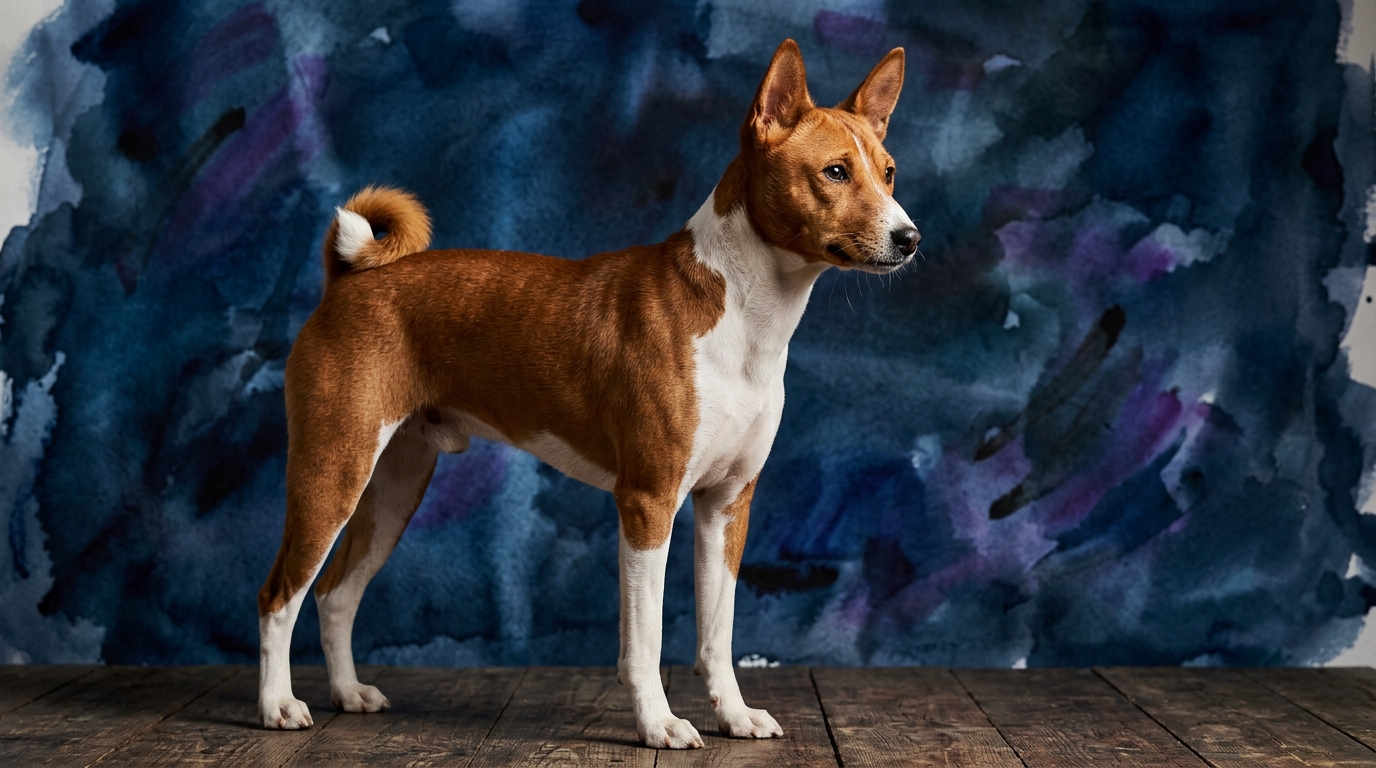
The Basenji, often called the 'barkless dog,' presents a unique cognitive blueprint. Its Problem Solving ability scores a robust 5 out of 5, indicating a profound capacity for independent thought and creative solutions. However, its Training Speed is a low 1 out of 5, suggesting a challenge for traditional obedience. Social Intelligence stands at 3 out of 5, meaning they can form bonds but often retain a degree of aloofness. Instinctive Drive is exceptionally high at 5 out of 5, reflecting their strong heritage as sighthounds, while Memory is also strong at 4 out of 5, allowing them to retain complex information and routines.
In contrast, the Russian Toy, a small and elegant companion breed, showcases a more consistently moderate cognitive profile. Its Problem Solving aptitude is a respectable 3 out of 5, indicating they can navigate routine challenges and learn new tasks. Training Speed is also 3 out of 5, suggesting a reasonable willingness and capacity for learning commands. Social Intelligence matches the Basenji at 3 out of 5, showing an ability to connect with people and other animals. Instinctive Drive is 3 out of 5, present but not overwhelming, and Memory is also 3 out of 5, sufficient for daily life and learning.
Where the Basenji Excels Cognitively
The Basenji's cognitive strengths lie primarily in its exceptional Problem Solving and powerful Instinctive Drive. A Basenji will often outwit complex puzzle toys with remarkable speed, not through trial and error but by analyzing the mechanism and devising a solution. This breed's high Problem Solving score means they are adept at figuring out how to open gates, escape enclosures, or retrieve inaccessible items, often employing strategies that surprise their owners. Their 5/5 Instinctive Drive fuels this intelligence, making them relentless in pursuit of a perceived goal, whether it's tracking a scent or outsmarting a barrier to reach something interesting. This drive, combined with a 4/5 Memory, means they quickly learn and recall which strategies work for achieving their objectives, making them formidable in self-directed tasks and explorations. They remember past successes and failures, refining their approaches over time, which contributes to their reputation for being resourceful and independent thinkers.
Where the Russian Toy Shines Cognitively
The Russian Toy's cognitive advantages are rooted in its balanced and adaptable intellect, particularly noticeable in its Training Speed relative to the Basenji. With a 3 out of 5 in Training Speed, the Russian Toy is generally more receptive to learning commands and performing tricks than the Basenji. This means they are often more eager to please and easier to motivate through positive reinforcement, making them suitable for owners who enjoy teaching basic obedience or engaging in dog sports like agility. Their moderate Problem Solving (3/5) and Memory (3/5) scores indicate they are capable learners, able to grasp new concepts and retain information without the extreme independence that can sometimes complicate training with other breeds. Their consistent 3/5 across most cognitive dimensions suggests a harmonious blend of intelligence that makes them versatile companions, capable of adapting to various living situations and owner expectations without extreme behavioral challenges driven by overpowering instincts or stubborn independence.
Ease of Training: Basenji vs. Russian Toy
When it comes to training, the distinction between these two breeds is pronounced due to their differing Training Speed scores. The Basenji's score of 1 out of 5 signifies a breed that is notoriously challenging to train in traditional obedience. They are independent thinkers, often described as 'cat-like' in their approach to commands; they understand what you want but will decide if and when they want to comply. This is not due to a lack of understanding, but rather a strong will and a preference for self-direction. Owners often report that Basenjis are highly skilled at selective hearing, applying their considerable problem-solving abilities to avoid performing tasks they deem uninteresting or unnecessary.
In contrast, the Russian Toy's Training Speed of 3 out of 5 indicates a much more cooperative and responsive learner. While not the fastest learners in the canine world, they are generally eager to engage with their owners and respond well to consistent, positive reinforcement. Their moderate social intelligence and lower instinctive drive compared to the Basenji mean they are less likely to be distracted by their own agenda and more inclined to focus on their handler during training sessions. This makes the Russian Toy a more approachable breed for novice owners or those who desire a dog that will readily learn and perform basic commands and household manners.
Suitability for Active vs. Relaxed Owners
The Basenji's cognitive profile strongly aligns with active owners who can provide ample mental and physical stimulation. Their exceptional 5/5 Instinctive Drive and 5/5 Problem Solving mean they require consistent engagement to prevent boredom and destructive behaviors. They thrive with owners who enjoy activities like lure coursing, scent work, or advanced puzzle games that tap into their natural hunting instincts and intellectual curiosity. A Basenji needs an owner who appreciates and can manage a dog with a strong independent streak and a drive to explore and outsmart its environment. Relaxed owners might find the Basenji's endless curiosity and high energy demands overwhelming, leading to potential frustration for both dog and human.
The Russian Toy, with its moderate scores across the board (mostly 3/5), is better suited for owners who might be described as moderately active or even more relaxed, provided their needs for companionship and routine mental engagement are met. While they still enjoy walks and playtime, their instinctive drive is less intense, and their problem-solving tends to be less about outwitting their environment and more about engaging with their owner. They are content with regular, shorter walks, indoor play, and cuddling, making them excellent companions for apartment dwellers or individuals seeking a less demanding, yet still engaging, canine friend. Their balanced temperament allows them to adapt more readily to a quieter lifestyle, as long as they receive consistent attention and affection.
The Verdict
Choose a Basenji if you are an experienced, active owner who values an independent, highly resourceful, and intellectually challenging companion who will constantly surprise you with their ingenuity.
Choose a Russian Toy if you seek a charming, affectionate, and relatively biddable companion that is easier to train and adapts well to a variety of lifestyles, including more relaxed home environments.
🧠 Find Your Pet's IQ Score
Our Pet IQ Lab assessment covers 25+ tests across 5 cognitive dimensions — personalized to your breed.
Take the Full IQ Test →Frequently Asked Questions
Are Basenjis truly 'barkless'?
Basenjis are often called the 'barkless dog' because they typically do not bark in the traditional sense, but they do make unique vocalizations like yodeling, chortling, and growling, especially when excited or expressing themselves.
Do Russian Toys require extensive grooming?
Russian Toys have a relatively low-maintenance coat. Short-haired varieties require minimal grooming, while long-haired types need regular brushing a few times a week to prevent tangles and keep their feathering neat.
Which breed is better with children?
The Russian Toy, with its generally more adaptable and companion-oriented nature, tends to be a better fit for families with older, respectful children. Basenjis, due to their independent streak and less tolerant nature, are often better suited for homes without young children or with very dog-savvy older children.