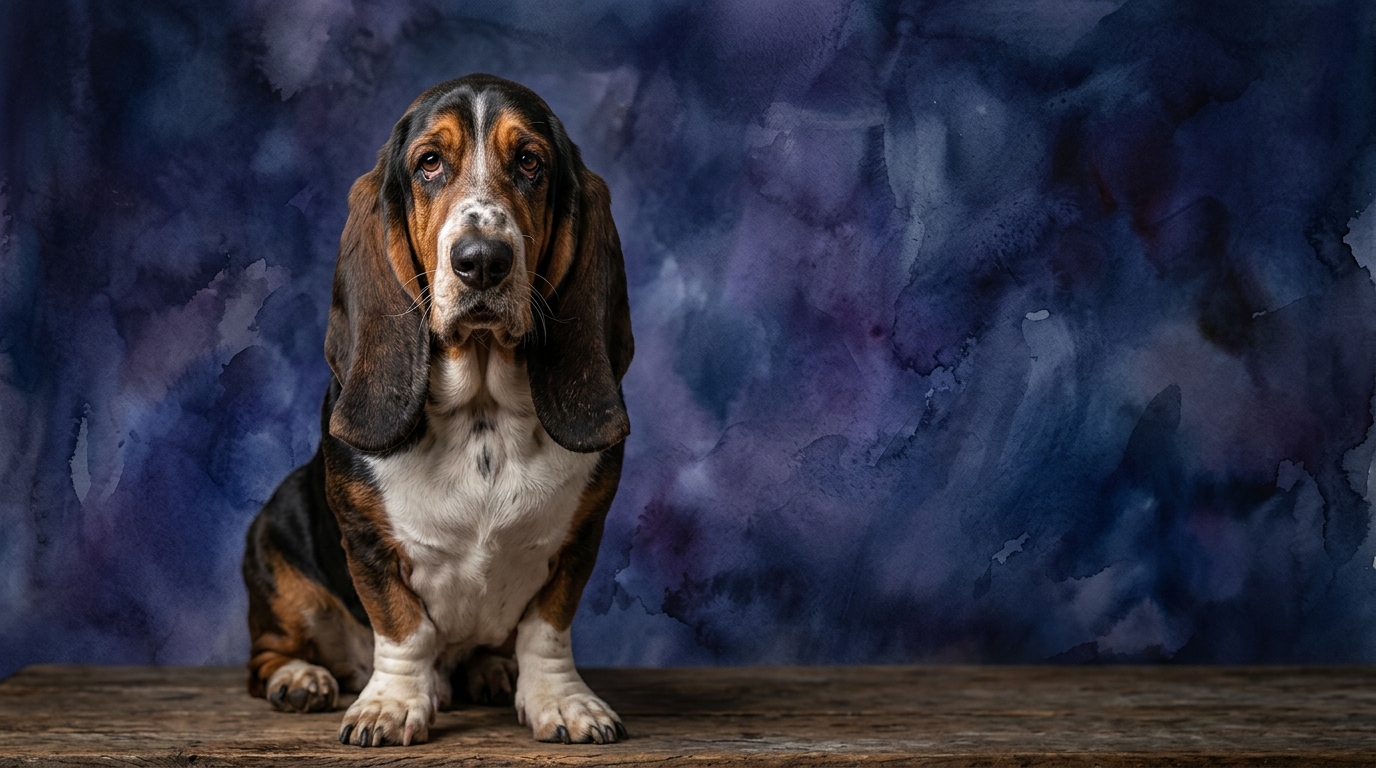
Side-by-Side IQ Profile: Basset Hound
The Basset Hound, Coren-ranked #71, brings a unique cognitive profile rooted in its scent-tracking heritage. Their Problem Solving (3/5) reflects a methodical, persistent approach; they may not find the quickest solution, but their determination, especially with a compelling scent, is unwavering, often relying on trial-and-error. Training Speed (3/5) indicates they learn at their own pace; their independent streak and single-minded focus on scent can make them appear stubborn, necessitating patient, consistent, positive reinforcement. Social Intelligence (3/5) manifests as a calm, amiable, and tolerant presence, interacting well with families, though they might not always be acutely tuned into subtle human emotional shifts when engrossed in a scent. Their Instinctive Drive (3/5) is an overwhelming desire to follow scent trails, demonstrating a powerful, almost trance-like focus on olfactory input, making them formidable trackers. Memory (3/5) for Bassets means an excellent recall of scent paths and locations where interesting smells were encountered, allowing them to remember complex routes and environmental details tied to specific odors.
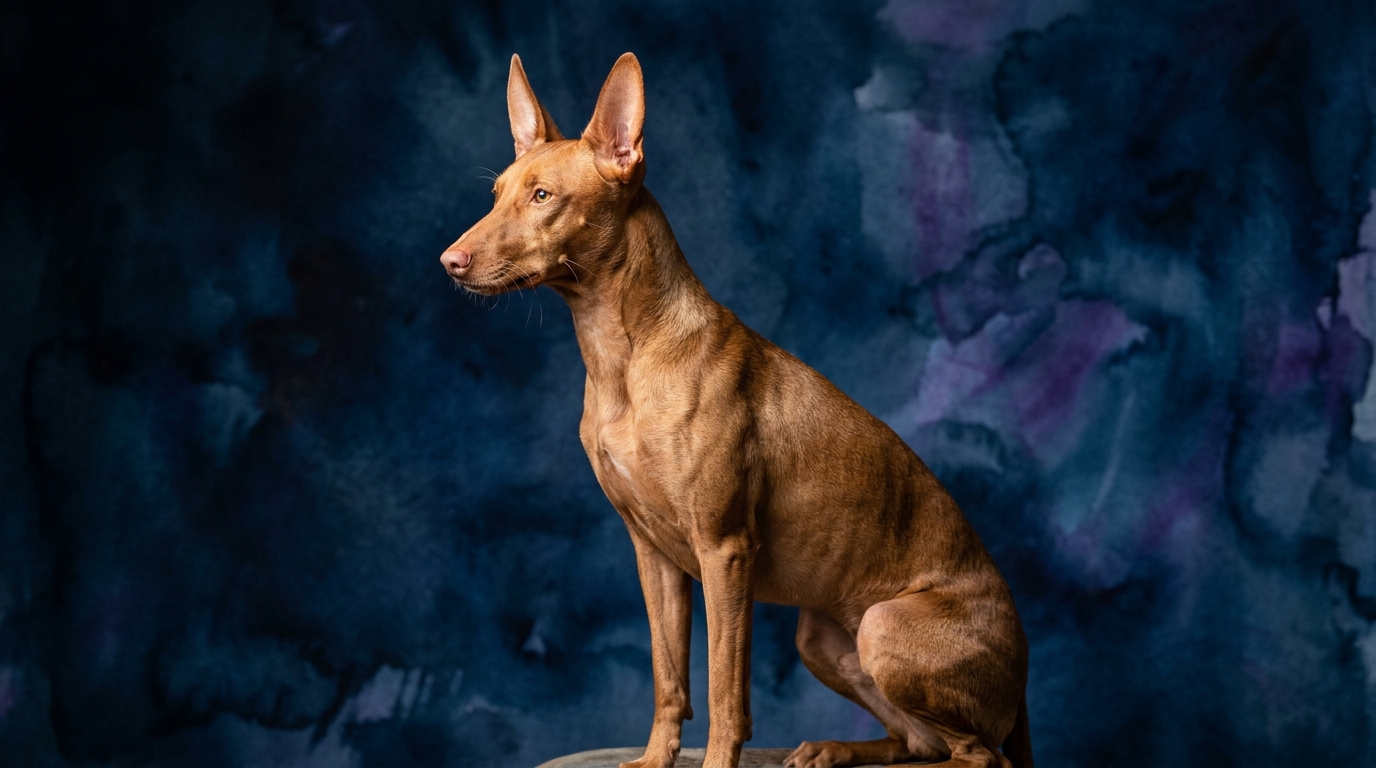
Side-by-Side IQ Profile: Pharaoh Hound
The Pharaoh Hound, not Coren-ranked, showcases a different set of cognitive strengths, honed for sight hunting in open terrain. Their Problem Solving (3/5) involves an agile, observant mindset, with solutions often centered on strategic movement, assessing visual cues, and quick adaptation, though they might disengage from prolonged or non-visually stimulating challenges. Training Speed (3/5) means they can learn quickly with the right motivation, but their independence and potential for distraction contribute to this score, responding best to positive, engaging methods and shutting down if training becomes harsh or dull. Social Intelligence (3/5) describes them as sensitive and attuned to their owners' moods, desiring connection and playfulness with their chosen family, but often reserved or aloof with strangers. Their Instinctive Drive (3/5) is primarily a strong prey drive, fueled by sight and speed, indicating a powerful impulse to chase anything that moves. Memory (3/5) for Pharaoh Hounds means a good recall for routines, people, and places, quickly learning their environment and household habits, contributing to their ability to navigate and adapt.
Where Basset Hound Wins Cognitively
The Basset Hound truly excels in tasks requiring sustained focus and methodical investigation, particularly when a scent is involved. Their 3/5 in Problem Solving, combined with an equally ranked Instinctive Drive, means they possess an unparalleled ability to stick with a complex olfactory puzzle until solved. If the challenge involves tracking a faint trail over varied terrain for extended periods, the Basset's deliberate, unyielding nature gives them a distinct cognitive edge. Their memory, also a 3/5, is specifically tuned to recall intricate scent patterns and routes, allowing them to retrace steps or follow long-forgotten trails with remarkable accuracy. This specialized memory and persistent problem-solving make them masters of scent work, where other breeds might lose interest or grow frustrated.
Where Pharaoh Hound Wins Cognitively
The Pharaoh Hound's cognitive strengths lie in its quick perception, agility, and adaptability to dynamic environments. Their 3/5 in Problem Solving manifests as a capacity for rapid assessment of visual information and executing swift, efficient physical solutions, such as navigating obstacles or finding the quickest path to a perceived target. Coupled with their 3/5 Instinctive Drive for chasing, they demonstrate superior cognitive processing for tasks demanding quick reflexes and spatial awareness. Their sensitivity, reflected in their Social Intelligence, also means they are often more attuned to subtle environmental changes or shifts in human demeanor, allowing for quicker, more nuanced reactions in certain social or environmental contexts. This makes them particularly adept at activities requiring observation and immediate action.
Which is Easier to Train and Why
Neither breed is inherently “easy” to train given their shared 3/5 Training Speed and independent hound nature, but their challenges differ. The Basset Hound's primary training hurdle is its profound scent distraction and inherent stubbornness. Once a Basset locks onto a scent, it can be incredibly difficult to redirect their attention, making recall particularly challenging. Their learning process is often slow and requires immense patience, consistency, and a high-value reward system to overcome their single-minded focus. The Pharaoh Hound, while also independent, presents a different set of training considerations. Their sensitivity means they respond poorly to harsh corrections, which can cause them to shut down or become anxious. They also have a strong prey drive and can be easily distracted by movement. However, a Pharaoh Hound's desire to please their chosen family and their general athleticism can make them quicker to pick up new commands *if* the training is engaging, positive, and varied. They thrive on mental stimulation and can bore easily with repetitive drills. So, while both require dedication, the Pharaoh Hound might appear to learn faster in an optimal, stimulating environment, whereas the Basset will always demand a more patient, scent-aware approach.
Which Suits Active Owners vs. Relaxed Owners
For owners seeking a more relaxed, contemplative companion, the Basset Hound often fits the bill. While they require daily walks and opportunities to explore scents, their energy bursts are typically followed by long periods of napping. Their deliberate pace and tendency to enjoy lounging make them suitable for individuals or families who appreciate a calm, low-key presence indoors. However, “relaxed” doesn't mean “no effort”; Bassets still need consistent engagement and scent work to prevent boredom and destructive behaviors. Conversely, the Pharaoh Hound is better suited for active owners. Their history as swift sight hounds means they possess significant energy and a need for regular, vigorous exercise. They thrive on activities like lure coursing, agility, or long, off-leash runs in secure areas where they can stretch their legs and satisfy their prey drive. Their cognitive quickness and physical prowess demand an owner who can provide consistent mental and physical challenges, making them ideal for individuals or families with an active lifestyle who enjoy training and participating in dog sports.
The Verdict
If your lifestyle leans towards serene companionship, punctuated by methodical scent-guided strolls, and you appreciate a dog with unwavering focus on a task, the Basset Hound is your ideal match.
For those who seek an agile, sensitive, and visually-driven companion eager to engage in energetic activities and quick, responsive interactions, the Pharaoh Hound will undoubtedly thrive in your active home.
🧠 Find Your Pet's IQ Score
Our Pet IQ Lab assessment covers 25+ tests across 5 cognitive dimensions — personalized to your breed.
Take the Full IQ Test →Frequently Asked Questions
Do Basset Hounds or Pharaoh Hounds bark more?
Basset Hounds are generally known for their distinctive baying, which they use to communicate or when on a scent trail. Pharaoh Hounds tend to be quieter, though they will bark to alert or express excitement, but typically less vocally than a Basset.
Are Basset Hounds or Pharaoh Hounds better with children?
Both breeds can be good with children when properly socialized, but their temperaments differ. Basset Hounds are often more tolerant and placid, while Pharaoh Hounds can be playful and affectionate but might be more sensitive to rough handling, so supervision is key for both.
Which breed is more prone to health issues?
Basset Hounds are prone to back problems due to their long spines, ear infections from their pendulous ears, and bloat. Pharaoh Hounds are generally robust but can be sensitive to anesthesia and are occasionally prone to certain cancers or patellar luxation, so research reputable breeders for both.