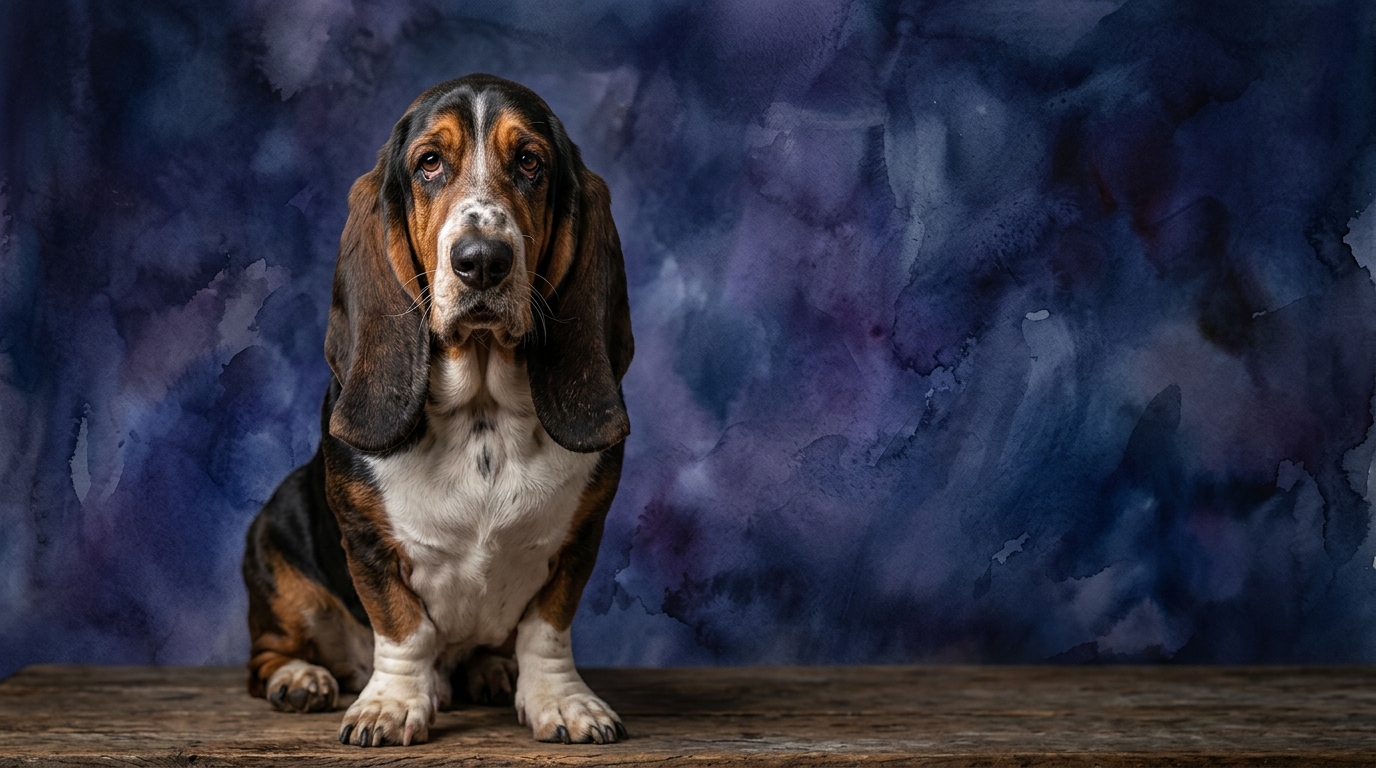
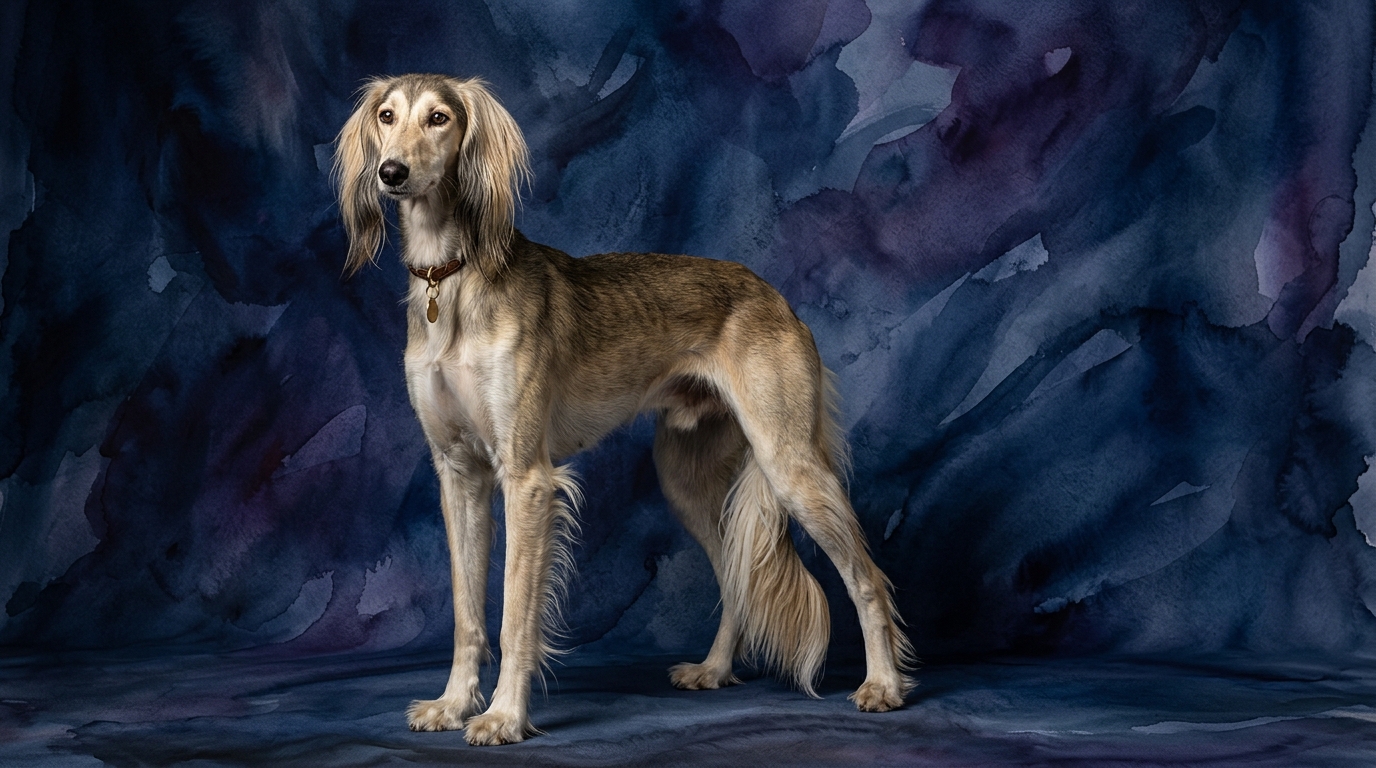
Side-by-Side IQ Profile: Basset Hound vs Saluki
At The Cosmic Pet Pet IQ Lab, we evaluate canine cognition across five key dimensions. For both the Basset Hound and the Saluki, our assessment yields a consistent 3/5 across the board, signaling an average capacity within the canine spectrum, yet the *application* of this capacity differs significantly due to their specialized breed roles.
The **Basset Hound** (Coren rank #71) demonstrates **Problem Solving (3/5)** through its methodical, persistent nature in unraveling scent puzzles; they excel at following complex trails, requiring sustained focus over speed. Their **Training Speed (3/5)** is often hampered by their powerful instinct to follow their nose, prioritizing an interesting smell over a verbal command, demanding patient, consistent, and highly motivating methods. **Social Intelligence (3/5)** for Bassets is expressed through their generally amiable and tolerant demeanor, forming strong family bonds and integrating well, though they might prefer observing over constant interaction. Their **Instinctive Drive (3/5)** is almost entirely focused on tracking, an unwavering urge to pursue olfactory information deeply ingrained for hunting. Finally, their **Memory (3/5)** is particularly strong for scent trails and routines, recalling complex pathways and specific odors over long periods, a critical asset for their original purpose.
The **Saluki** (Not Coren-ranked), in contrast, shows **Problem Solving (3/5)** that manifests in strategic sight hunting; they analyze terrain, anticipate prey movements, and calculate efficient chase routes independently at high speeds. Their **Training Speed (3/5)** is less about stubbornness and more about a discerning attitude; they grasp concepts quickly but need to perceive value in commands, often choosing not to comply if a command seems pointless or interferes with their perceived freedom. **Social Intelligence (3/5)** in Salukis is characterized by sensitivity and reservation, forming deep attachments with family but being more aloof with strangers, expressing affection in an understated way. Their **Instinctive Drive (3/5)** is primarily focused on sight hunting, possessing an explosive prey drive triggered by movement, leading to incredibly fast and focused chases. Their **Memory (3/5)** serves them well for routines, familiar locations, and the people they trust, especially useful for navigating territories and recalling past chases.
Where the Basset Hound Wins Cognitively
The Basset Hound truly shines in areas demanding sustained, deep sensory processing and an unyielding commitment to a task once initiated. Their cognitive advantage, despite the 3/5 problem-solving score, lies in their unparalleled ability to deconstruct complex scent trails. A Basset can meticulously follow a cold trail for hours, ignoring distractions that would deter other breeds. This isn't just instinct; it’s a sophisticated cognitive process of data interpretation and pattern recognition based on olfactory input, a form of intelligence that few breeds can match.
Their memory, while rated 3/5 overall, holds a specific strength in retaining intricate scent maps and environmental details over time, allowing them to revisit and re-evaluate areas with impressive recall. This specialized cognitive function makes them superior in tasks requiring persistent, focused sensory work, where other dogs might give up or become overwhelmed by the sheer volume of information. The Basset's placid temperament also lends itself to quiet, contemplative problem-solving, allowing them to delve deep into a scent puzzle without the urgency or high-energy output of a sighthound.
Where the Saluki Wins Cognitively
The Saluki's cognitive strengths, while also rated 3/5, manifest in a vastly different domain: rapid, independent decision-making and spatial awareness in high-speed pursuit. Their cognitive advantage in problem-solving is evident in their capacity to instantly assess a dynamic environment, calculate trajectories, and adapt their chase strategy on the fly, all while moving at incredible speeds. This requires acute visual processing, quick pattern recognition of prey movement, and the ability to execute complex motor plans without direct human intervention.
Their instinctive drive, focused on sight hunting, translates into a cognitive advantage for tasks demanding swift, autonomous action and an innate understanding of physics in motion. Furthermore, their memory excels in recalling open spaces, optimal running paths, and the general layout of their hunting grounds, which is crucial for their independent sighthound role. This breed's intelligence is geared towards independent action and immediate, high-stakes problem-solving in a visually stimulating, fast-paced context, making them unparalleled in tasks requiring speed, agility, and self-reliance.
Which is Easier to Train and Why
When considering ease of training, the Basset Hound and Saluki present distinct challenges, despite both having a training speed score of 3/5. The Basset Hound's primary hurdle is its profound olfactory drive and independent nature, which can be interpreted as stubbornness. A Basset will often prioritize an intriguing scent over a human command, making recall particularly difficult in an open environment. Their training requires immense patience, consistency, and a high-value reward system to compete with their nose; they can learn, but their learning curve for traditional obedience often feels slow because their focus is easily diverted by sensory input.
Conversely, the Saluki's challenge stems from its independence and discerning personality. They are not inherently disobedient but often need to understand the 'why' behind a command or perceive it as worthwhile. They can be aloof and less motivated by pleasing their owner than some other breeds. While they can learn quickly, their willingness to perform is contingent on their mood, the perceived benefit, and the trainer's ability to make the session engaging and respectful of their sensitive nature. Neither is a 'beginner's dog' for obedience, but the Basset's difficulty is rooted in sensory distraction, while the Saluki's is in independent thought and a less eager-to-please temperament.
Which Suits Active Owners vs. Relaxed Owners
The Basset Hound and Saluki cater to very different owner lifestyles. The Basset Hound, despite its short legs, is a robust scent hound requiring consistent, albeit often slower-paced, activity. They suit relaxed owners who enjoy leisurely, long walks where the dog can follow scent trails, or those willing to engage in scent work games at home. While they are relatively calm indoors, their need for mental and physical stimulation through their nose is non-negotiable; a bored Basset can become destructive or vocal. They are ideal for owners who appreciate a dog's independent pursuit of olfactory adventures and are not seeking a high-energy running companion.
In contrast, the Saluki is unequivocally suited for active owners. This breed requires significant opportunities to run at full speed in a safe, enclosed area. Their high prey drive and need for bursts of intense physical activity mean they are not content with just a leash walk. Owners must be prepared to provide regular access to large, secure spaces where the Saluki can truly stretch its legs and satisfy its sighthound instincts. They are excellent companions for runners or those who enjoy participating in lure coursing or similar speed-based activities, making them unsuitable for sedentary lifestyles.
The Verdict
Opt for the Basset Hound if you appreciate a dog with a calm indoor presence, a deep interest in scent work, and are prepared for a persistent, independent companion who thrives on olfactory exploration. They are perfect for owners who enjoy patient training and leisurely, sniff-filled walks.
Select the Saluki if you lead an active lifestyle, can provide ample opportunities for high-speed running in secure environments, and value a sensitive, independent, and graceful companion. This breed thrives with owners who respect their aloof nature and intense sighthound instincts.
🧠 Find Your Pet's IQ Score
Our Pet IQ Lab assessment covers 25+ tests across 5 cognitive dimensions — personalized to your breed.
Take the Full IQ Test →Frequently Asked Questions
Are Basset Hounds difficult to train?
Basset Hounds can be challenging due to their strong scent drive and independent nature, which often makes them appear stubborn in traditional obedience. Consistent, positive reinforcement and high-value rewards are essential to overcome their tendency to follow their nose over commands, requiring patience from their owners.
Do Salukis need a lot of exercise?
Yes, Salukis require significant exercise, specifically opportunities for high-speed running in a safe, enclosed area to satisfy their sighthound instincts. While they can be calm indoors, daily bursts of intense physical activity are crucial for their well-being, making them unsuitable for sedentary lifestyles.
Which breed is better with children?
Both breeds can be good with children, but their approaches differ. Basset Hounds are generally tolerant and placid, often forming gentle bonds. Salukis are more sensitive and reserved, preferring calm interactions and requiring children to understand and respect their space and quiet nature.