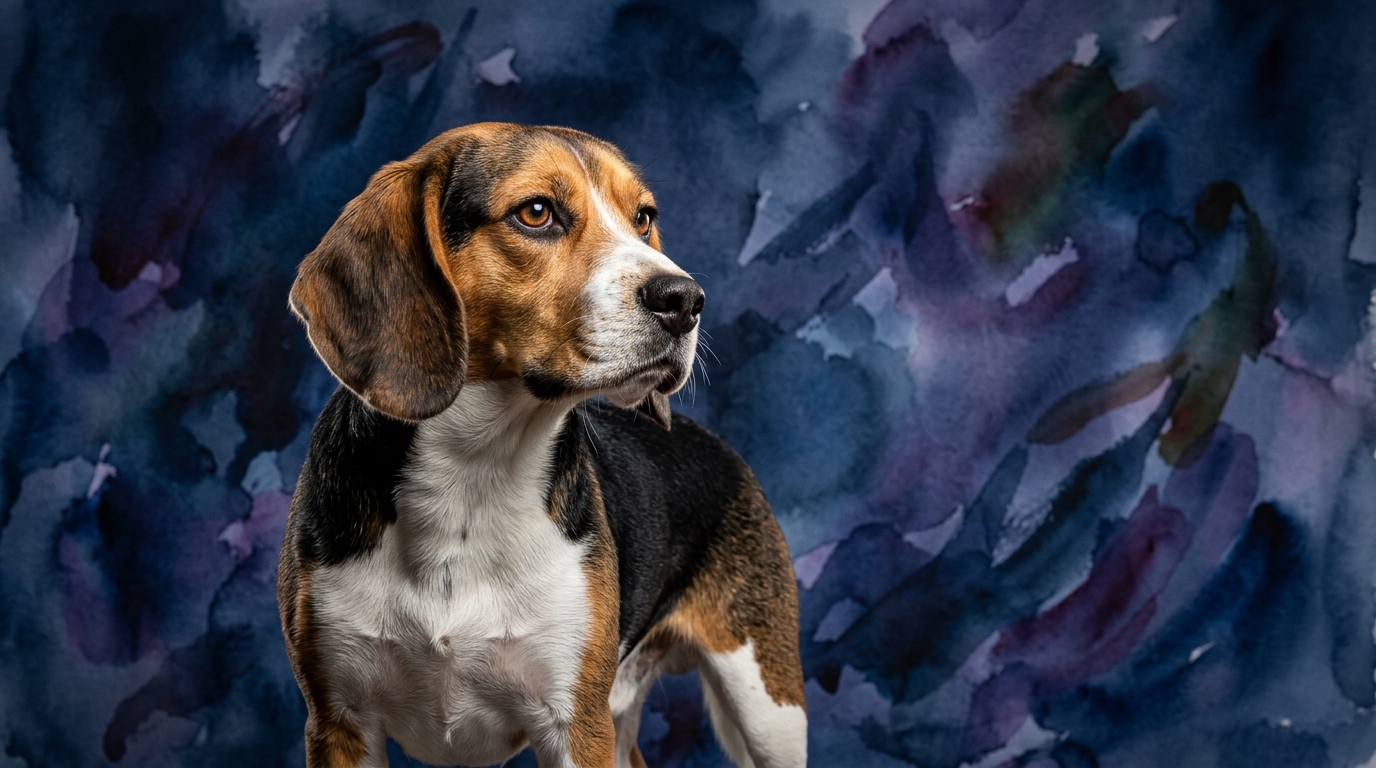
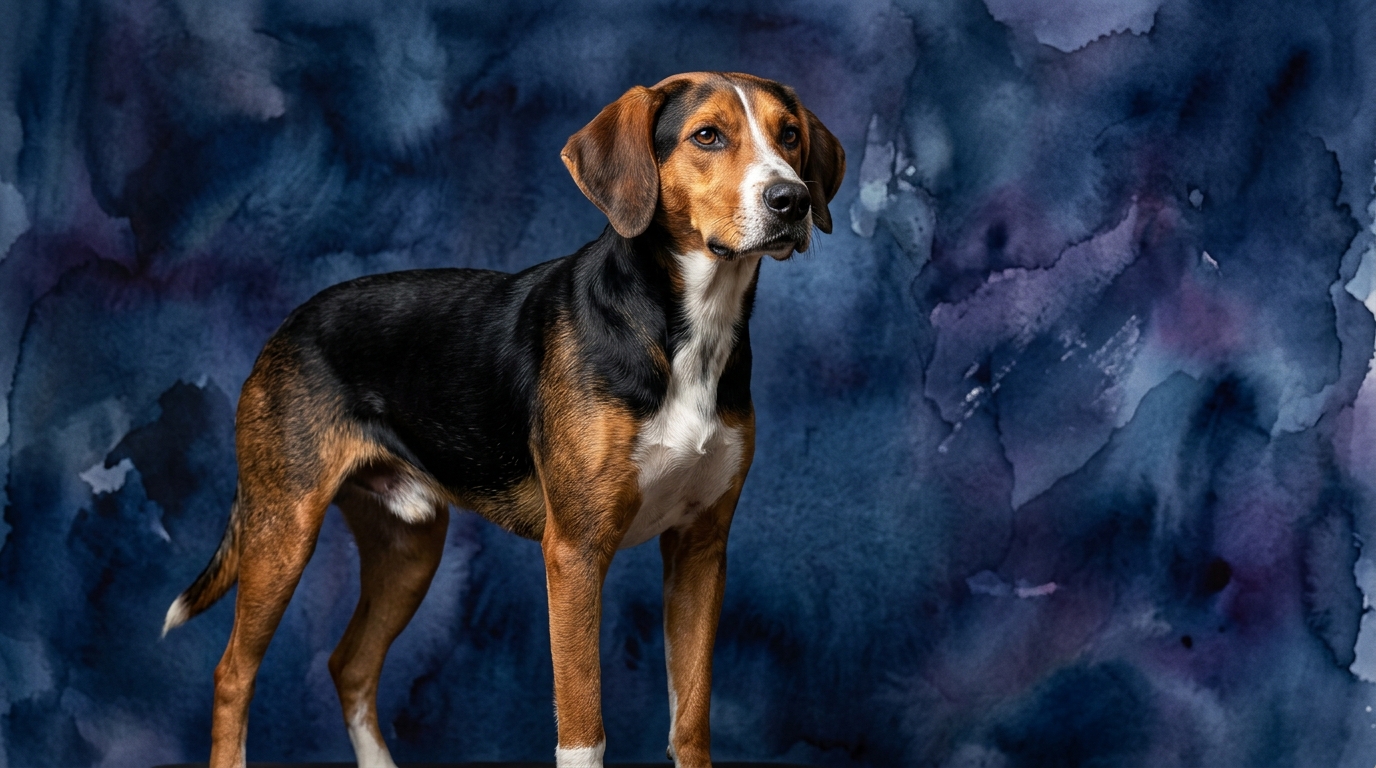
Side-by-Side Cognitive Profiles: Beagle vs. American Foxhound
The Cosmic Pet Pet IQ Lab provides a structured lens through which we can compare the cognitive profiles of the Beagle and the American Foxhound. These five dimensions — problem-solving, training speed, social intelligence, instinctive drive, and memory — offer a nuanced understanding of how each breed processes information and interacts with its environment.
The Beagle, with a Coren ranking of #72, presents a compelling cognitive blueprint. Their problem-solving ability scores a respectable 4/5, indicating a capacity for navigating complex scenarios, often driven by their keen nose. However, their training speed is rated at 2/5, suggesting a more deliberate approach to learning formal commands, a characteristic often observed in breeds with strong independent streaks. Social intelligence stands at 3/5, meaning they can connect with humans but might not always prioritize human directives over their own impulses. A significant 5/5 in instinctive drive underscores their powerful, unwavering scenting and tracking instincts, which are central to their being. Finally, their memory rates at 4/5, allowing them to recall scent trails, routines, and learned experiences with considerable accuracy.
In contrast, the American Foxhound, while not Coren-ranked, offers a distinct cognitive profile. Their problem-solving ability is marked at 3/5, demonstrating practical intelligence in pursuit and endurance-based tasks, though perhaps with less intricate strategizing than a Beagle. Training speed is a moderate 3/5, suggesting they can pick up commands at an average pace, potentially making them slightly more amenable to instruction than their smaller hound cousin. Social intelligence aligns with the Beagle at 3/5, indicating a similar level of interaction and responsiveness to human companionship. Their instinctive drive is rated 3/5; while still a powerful scent hound, this score implies their drive might be more focused on sustained chase rather than the Beagle's intense, puzzle-like scent work, or perhaps simply less overwhelming in its manifestation. Memory for the American Foxhound is also 3/5, adequate for recalling important locations, routines, and the intricacies of their hunting environment.
Where the Beagle's Cognition Excels
The Beagle’s cognitive strengths shine brightest in specific areas. Their 4/5 problem-solving score suggests a superior capacity for navigating intricate scent puzzles and overcoming obstacles to reach a desired target. This often manifests as cleverness in finding ways to access food or escape enclosures if a compelling scent is present. Moreover, their exceptional 5/5 instinctive drive, while challenging for training, means they possess an unparalleled dedication to scent work, making them relentless and highly effective at following a trail. This intense focus, combined with their 4/5 memory, allows them to retain complex scent patterns and learned pathways over time, giving them an edge in tasks requiring detailed recall of sensory information.
Where the American Foxhound's Cognition Shines
The American Foxhound, while scoring lower in some individual metrics, presents a different kind of cognitive advantage. Their 3/5 training speed, notably higher than the Beagle’s 2/5, suggests they may be marginally more responsive to formal obedience training and quicker to grasp new commands when properly motivated. This subtle difference can translate into a more straightforward training experience for owners. Furthermore, their 3/5 problem-solving and instinctive drive, while not as intense as the Beagle’s, might indicate a more balanced cognitive approach. Their drive is geared towards sustained, long-distance pursuit rather than intricate scent puzzle-solving, reflecting a robust endurance and practical application of their abilities in the field, making them adept at tasks requiring consistent, prolonged effort.
Training Dynamics: Which Breed Offers an Easier Path?
When evaluating ease of training, the data clearly points towards the American Foxhound having a slight edge. The Beagle’s 2/5 training speed, coupled with an overwhelming 5/5 instinctive drive, means they often require immense patience and consistent, creative motivation to learn and obey commands. Their nose is their master, and once locked onto a scent, redirecting their attention can be an uphill battle, often leading to selective deafness. Their independent nature, a hallmark of their scent hound heritage, means they are not inherently eager to please in the same way some other breeds might be; they prefer to follow their nose. In contrast, the American Foxhound’s 3/5 training speed suggests a more receptive learner, and their 3/5 instinctive drive, while still potent, might be less all-consuming. This allows for more windows of opportunity to engage them in training without constant competition from their olfactory senses. While still a hound requiring consistent, positive reinforcement, their slightly more moderate drive and faster learning curve can make the training journey feel less arduous for a dedicated owner.
Matching Breeds to Lifestyles: Active vs. Relaxed Owners
Considering their cognitive and physical needs, both breeds generally thrive with active owners, but their specific activity profiles differ. The Beagle, with its 5/5 instinctive drive and 4/5 memory, requires significant mental engagement, particularly through scent work and puzzle toys, alongside regular physical exercise to prevent boredom and destructive behaviors. Their relentless pursuit of scent means they are not content with short strolls; they need opportunities to explore and follow their noses safely, making them suitable for owners who enjoy structured scent games or long, secure off-leash adventures. A truly relaxed owner might struggle with a Beagle's persistent energy and single-minded focus when a scent is detected, which demands constant vigilance. The American Foxhound, while scoring a 3/5 in instinctive drive, is a breed built for endurance and sustained running. They need vast amounts of physical exercise, ideally in large, fenced areas where they can stretch their long legs. While their cognitive demands might be slightly less about intricate problem-solving and more about consistent physical output, they are far from a couch potato. They suit active owners who participate in activities like running, hiking, or even field trials, and who can provide ample space for them to roam. Neither breed is truly suited for a relaxed owner seeking a low-maintenance companion; both require significant commitment to their exercise and mental stimulation needs, albeit with different emphases.
The Verdict
Choose a Beagle if you are fascinated by the intricate world of scent, enjoy engaging in complex scent games, and are prepared to manage a powerful, independent drive with consistent, patient training. They are ideal for owners who appreciate a dog with exceptional memory for trails and a charming, if sometimes stubborn, personality that thrives on mental challenges.
Opt for an American Foxhound if you lead a very active lifestyle, have ample space for a dog that loves to run, and prefer a companion whose training, while still requiring dedication, might progress slightly faster than a Beagle's. They are best for owners who value endurance, a moderate drive, and a generally amiable disposition that thrives on consistent physical activity.
🧠 Find Your Pet's IQ Score
Our Pet IQ Lab assessment covers 25+ tests across 5 cognitive dimensions — personalized to your breed.
Take the Full IQ Test →Frequently Asked Questions
Which breed is better for apartment living?
Neither breed is ideal for small apartment living due to their high exercise requirements and vocal tendencies. Beagles require significant mental stimulation and scent work to prevent boredom, while American Foxhounds need vast spaces to run and expend their energy. Both can become destructive or excessively vocal if their needs aren't met in a confined environment.
Do Beagles and American Foxhounds get along with other pets?
Both Beagles and American Foxhounds generally have good social intelligence (3/5) and can get along with other pets, especially if introduced properly during puppyhood. However, their strong prey drive, particularly in Beagles (5/5 instinctive drive), means small, non-canine pets might trigger their hunting instincts, requiring careful supervision.
How much exercise do these breeds typically need?
Beagles require at least an hour of vigorous exercise daily, ideally incorporating scent work, alongside mental enrichment to satisfy their high instinctive drive. American Foxhounds, built for endurance, need even more, often two or more hours of intense running or sustained activity to truly thrive and prevent boredom or restlessness.