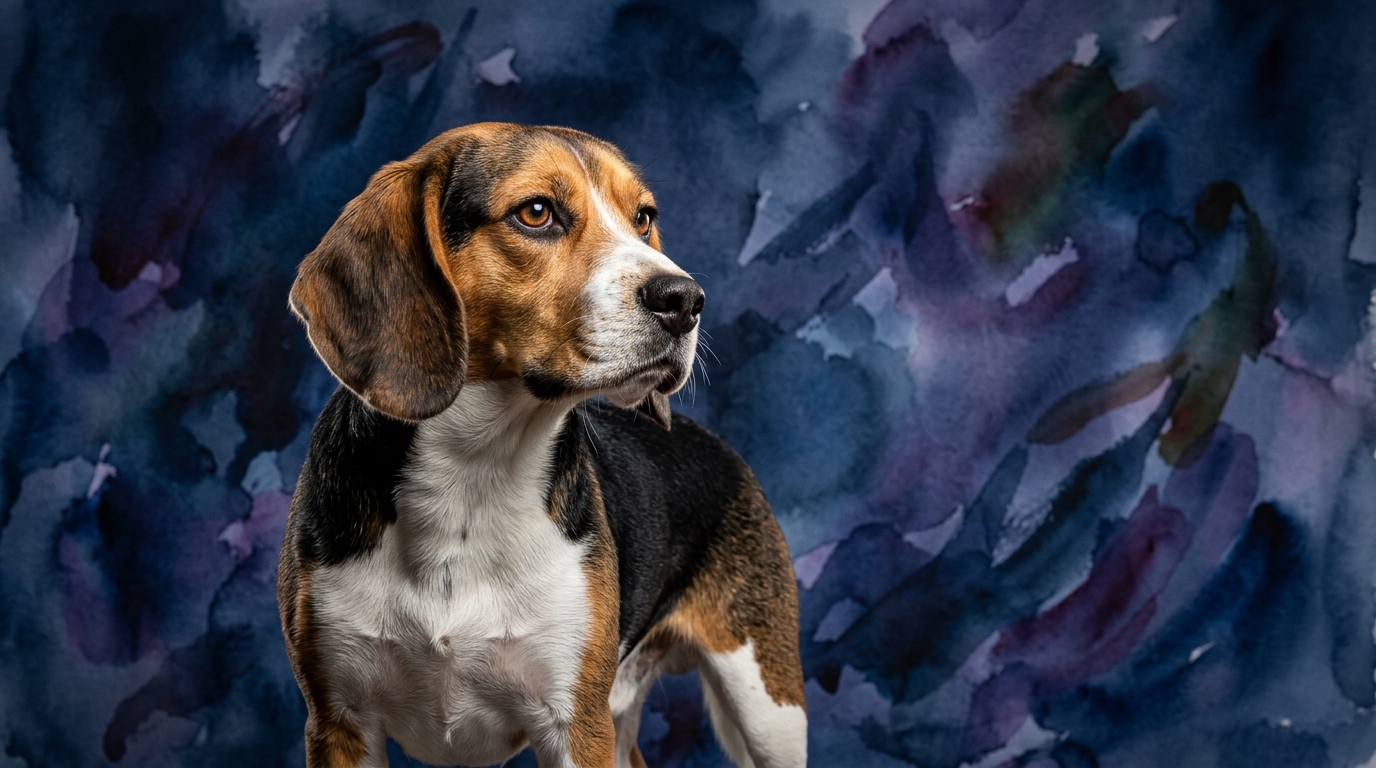
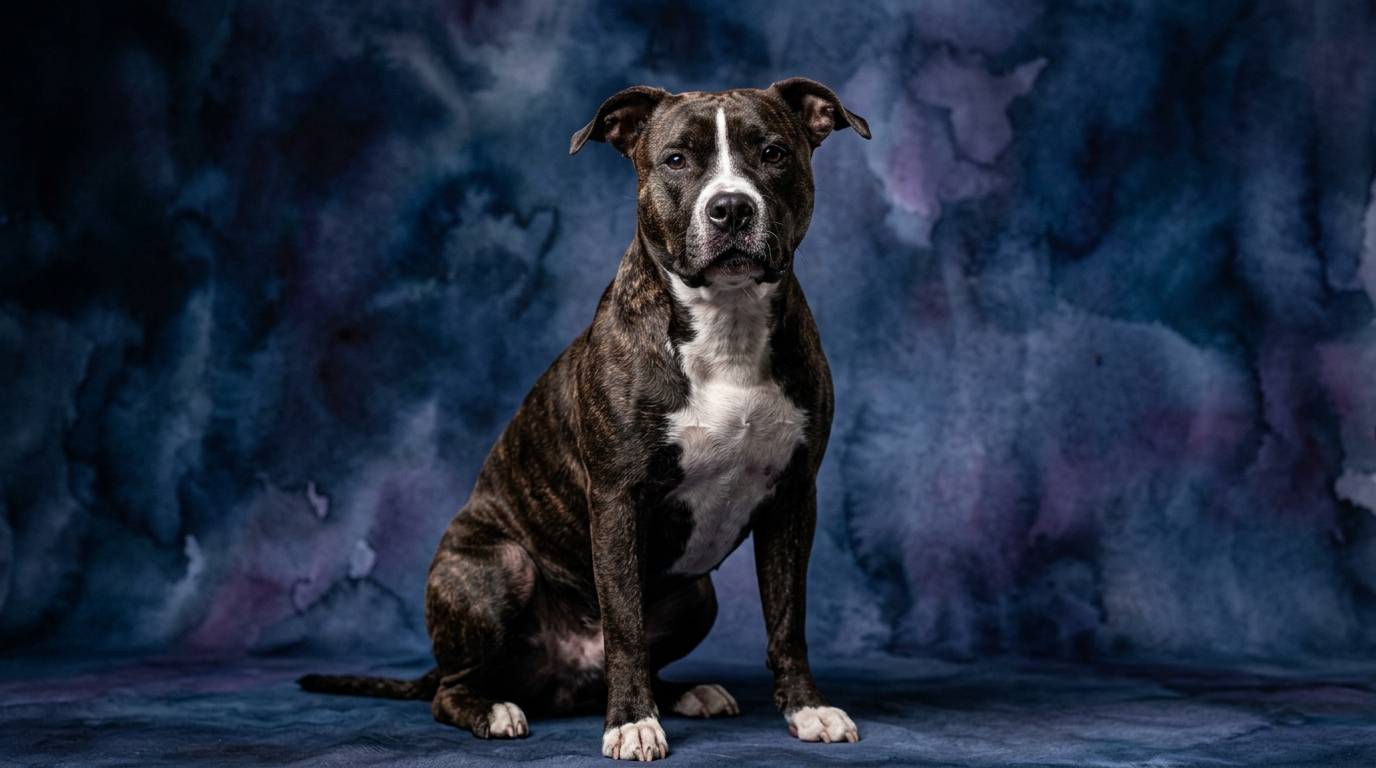
Side-by-Side IQ Profile: Beagle vs. AmStaff
The Beagle (Hound, Coren rank #72): The Beagle's cognitive strengths are deeply rooted in its heritage as a scent hound. Its Problem Solving is rated 4/5, primarily excelling in olfactory puzzles, navigating complex scent trails, and independently locating hidden items with relentless focus. Training Speed is 2/5, reflecting a challenge in traditional obedience due to their overwhelming drive to follow their nose, often making them appear stubborn. Social Intelligence scores 3/5; they are generally amiable with people and other dogs, reading cues adequately but often prioritizing their sensory world. Their Instinctive Drive is a perfect 5/5, manifesting as an almost obsessive focus on scent work, baying, and tireless tracking. Memory is 4/5, particularly strong for scent profiles and spatial navigation linked to olfactory cues, allowing them to retrace complex paths.
The American Staffordshire Terrier (Terrier, Coren rank #48): The AmStaff's intelligence profile reflects its role as a versatile companion and working dog. Their Problem Solving is 3/5, indicating a solid capacity for overcoming obstacles and understanding tasks presented by their handler. Training Speed is 3/5; they are generally eager to please and can learn commands efficiently with consistent reinforcement. Social Intelligence is 3/5, forming strong bonds with their human family and attuned to their dynamics, reading intentions and seeking interaction. Instinctive Drive is 3/5; while possessing a prey drive, it is generally more controlled than a Beagle's, motivating them through play, interaction, and a desire to engage. Memory is 4/5, demonstrating strong retention of learned behaviors, routines, and recognition of familiar individuals and environments.
Where the Beagle's Cognition Shines
The Beagle's cognitive prowess is unequivocally centered around its olfactory capabilities. Their 4/5 Problem Solving isn't about obedience; it's about independently deciphering intricate scent puzzles, meticulously following a cold trail, and persisting until a target is located. This specialized intelligence, driven by an unparalleled 5/5 Instinctive Drive for scent, allows them to filter out distractions to focus solely on their primary sensory input. Their 4/5 Memory supports this by enabling precise recall of scent profiles and the spatial layout of previous scent discoveries, making them natural experts in navigation based on smell.
American Staffordshire Terrier: Cognitive Strengths
The American Staffordshire Terrier's cognitive strengths lie in its balanced adaptability and responsiveness to human guidance, reflected in its higher Coren rank of #48. While their Problem Solving is rated 3/5, this indicates a practical intelligence for understanding and executing tasks presented by humans. Their 3/5 Training Speed highlights their capacity to absorb and retain commands effectively, making them generally more amenable to structured learning. Coupled with a 3/5 Social Intelligence, AmStaffs are adept at forming strong bonds and interpreting human intentions, contributing directly to their trainability and ability to integrate seamlessly into a family, often seeking to cooperate rather than follow an overwhelming independent drive.
Training Dynamics: Which Breed Learns Faster?
When it comes to traditional obedience, the American Staffordshire Terrier generally demonstrates a faster Training Speed (3/5) compared to the Beagle (2/5). This difference is largely attributable to their instinctive drives. AmStaffs have a moderate Instinctive Drive (3/5), meaning their natural motivations can often be channeled through positive reinforcement, and they are typically eager to please. In contrast, the Beagle's overwhelming 5/5 Instinctive Drive for scent means their nose often dictates their attention. A Beagle can be learning "sit," but if a compelling scent drifts by, their brain immediately switches to "track," making consistent focus a significant hurdle. While Beagles are capable of learning, their independent, scent-driven nature means training requires exceptional patience, creativity, and high-value rewards to compete with the allure of the olfactory world.
Lifestyle Match: Active vs. Relaxed Owners
The cognitive profiles of these two breeds offer distinct matches for different owner lifestyles. For active owners who thrive on engaging a dog's natural instincts, the Beagle is an ideal, albeit demanding, companion. Their relentless 5/5 Instinctive Drive and 4/5 Problem Solving in scent work mean they require more than just physical exercise; they need consistent mental stimulation through tracking games or investigative walks. A "relaxed" owner might find a Beagle's independent pursuits and vocalizations overwhelming. Conversely, the American Staffordshire Terrier, with its moderate 3/5 Instinctive Drive and 3/5 Training Speed, offers more flexibility. They thrive with active engagement, enjoying vigorous play and walks, but are generally more content to relax indoors after their needs are met. Owners seeking a dog responsive to direction might find the AmStaff a more suitable match than the perpetually scent-driven Beagle.
The Verdict
Choose the Beagle if you are prepared to embrace and channel an unparalleled olfactory intelligence, delight in a dog whose world is rich with scent, and seek a companion for dedicated scent work or adventurous, sniff-led explorations.
Opt for the American Staffordshire Terrier if you value a responsive, eager-to-please companion capable of learning a wide array of tasks, appreciate a dog that integrates readily into family life, and can provide consistent leadership and engaging activities.
🧠 Find Your Pet's IQ Score
Our Pet IQ Lab assessment covers 25+ tests across 5 cognitive dimensions — personalized to your breed.
Take the Full IQ Test →Frequently Asked Questions
Are Beagles difficult to train?
Beagles are not unintelligent, but their formidable instinctive drive for scent often makes them challenging in traditional obedience. Their independent nature means they prioritize following a scent over responding to commands, requiring extra patience and highly motivating rewards to maintain focus.
Do American Staffordshire Terriers need a lot of exercise?
American Staffordshire Terriers benefit from regular, vigorous exercise to keep them physically and mentally healthy, typically 30-60 minutes daily. This can include brisk walks, jogging, playtime, or engaging in dog sports, but they are generally less intensely driven than a Beagle and can relax indoors after their needs are met.
Which breed is better with children?
Both Beagles and American Staffordshire Terriers can be excellent family dogs with proper socialization and training. Beagles are generally tolerant and playful, while AmStaffs are often noted for their affectionate and patient nature with children, though supervision is always essential with any dog breed.