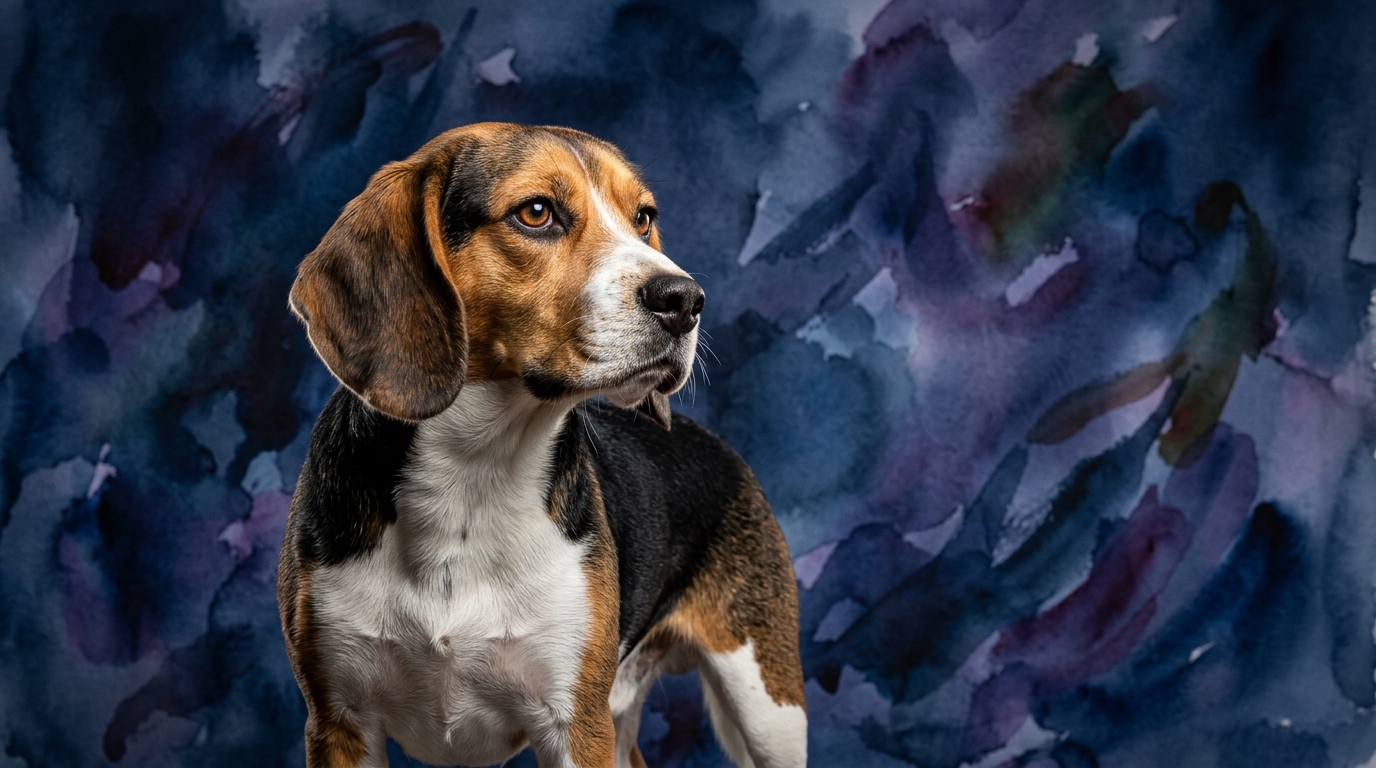
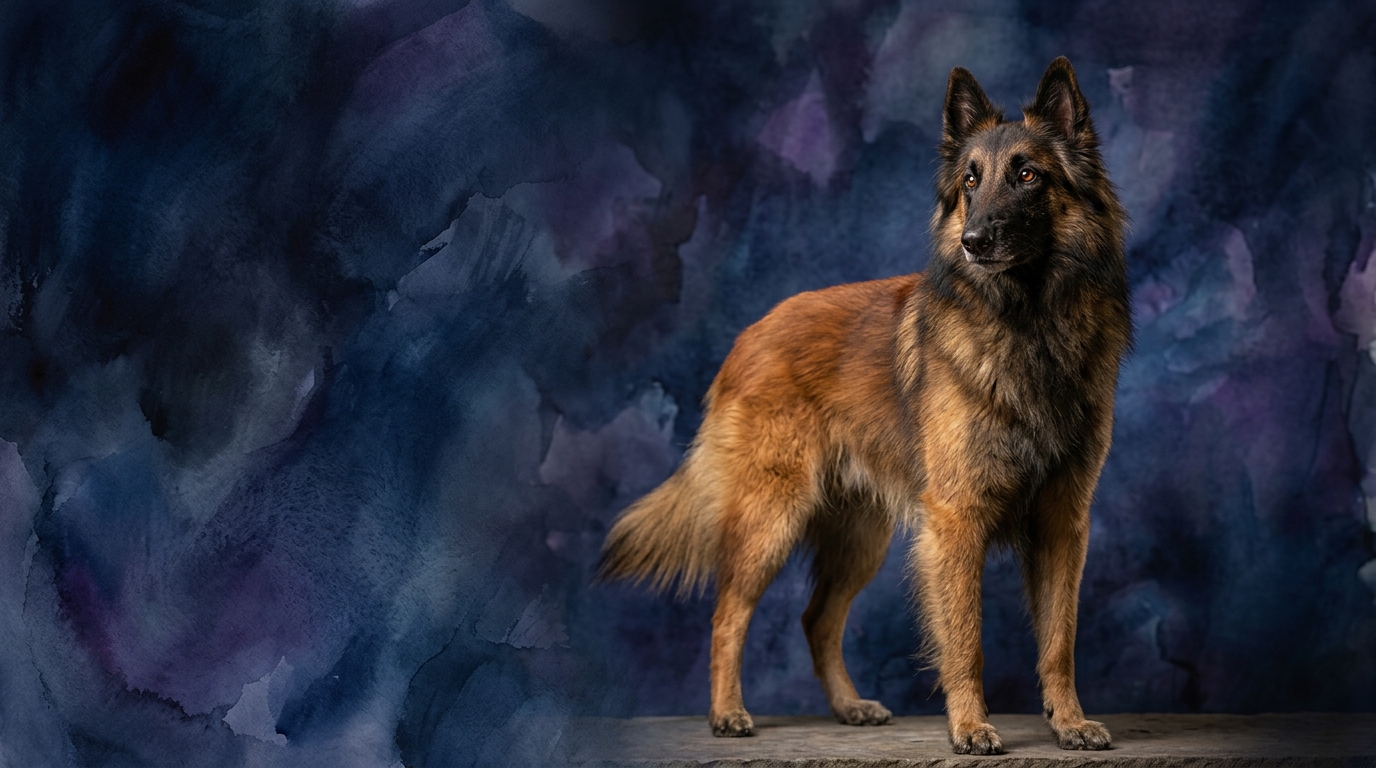
Side-by-Side IQ Profile: Beagle vs. Belgian Tervuren
The Cosmic Pet Pet IQ Lab employs a five-dimensional framework to assess canine intelligence, offering a nuanced view beyond simplistic rankings. For the Beagle, a Coren rank of #72 reflects a specialized cognitive makeup, while the Belgian Tervuren, at Coren rank #14, showcases a broad aptitude for human-directed tasks.
The Beagle's profile highlights Problem Solving at 4/5, primarily excelling in olfactory challenges, and Training Speed at 2/5, indicating a need for patience due to their independent nature. Their Social Intelligence is 3/5, generally affable but often prioritizing their nose over human cues. A powerful Instinctive Drive of 5/5 underscores their relentless pursuit of scent, complemented by a Memory of 4/5 for trails and associated rewards.
In contrast, the Belgian Tervuren's scores paint a picture of impressive cognitive dexterity. Problem Solving registers a perfect 5/5, reflecting their capacity for complex, adaptive thinking. Their Training Speed also hits 5/5, signifying rapid learning and eagerness to cooperate. Social Intelligence is 3/5, indicating deep bonds with family but often reservedness with strangers. An Instinctive Drive of 3/5 points to their herding impulses, while their Memory stands at an exceptional 5/5, allowing for retention of intricate commands and routines.
Where the Beagle Shines Cognitively
While the Coren ranking might place the Beagle lower in terms of obedience intelligence, their unique cognitive strengths are undeniable, particularly in the realm of scent work. Their instinctive drive (5/5) is not merely a physical trait but a profound cognitive specialization, enabling them to process and follow complex scent trails with astonishing precision and persistence.
Beagles exhibit a distinct form of problem-solving (4/5) that involves intricate olfactory discrimination and environmental mapping. They can ignore visual distractions and auditory cues, focusing solely on a scent puzzle that would overwhelm many other breeds. This single-minded dedication, while sometimes challenging for owners trying to get their attention, is a testament to their deep-rooted cognitive programming for detection and tracking. Their memory (4/5) is particularly potent for scent-related information, allowing them to recall where specific odors were encountered or pathways taken, even after long periods.
Where the Belgian Tervuren Excels Cognitively
The Belgian Tervuren's cognitive prowess is evident across multiple dimensions, particularly in their capacity for complex learning and adaptive problem-solving. Their perfect 5/5 score in Problem Solving stems from their herding heritage, which demanded quick, independent thinking to manage livestock and respond to dynamic situations. This translates into a dog that can strategize, anticipate, and adapt to novel challenges, whether in competitive dog sports or real-world tasks.
Their exceptional Training Speed (5/5) and Memory (5/5) are inextricably linked, allowing them to grasp and retain extensive repertoires of commands and behaviors with remarkable efficiency. A Tervuren can learn multi-step sequences, understand subtle cues, and perform intricate tasks, making them highly versatile for various working roles or advanced companion activities. This combination of rapid acquisition and solid retention means they can continuously build upon their knowledge, performing with precision and consistency over time.
Ease of Training: Behavioral Differences
When considering ease of training, the differences between these two breeds are stark and directly tied to their evolutionary roles. The Belgian Tervuren, with its 5/5 Training Speed, is generally considered a highly trainable breed. They possess an innate desire to work alongside their human partners, seeking direction and thriving on mental engagement. This cooperative spirit, coupled with their sharp intellect and excellent memory, means they quickly pick up new commands and excel in structured obedience, agility, and other dog sports. A Tervuren's focus is typically directed towards their handler, making them highly responsive to instruction.
Conversely, the Beagle's Training Speed of 2/5 reflects a more independent and instinct-driven approach to the world. Their profound instinctive drive (5/5) for scent often overrides human commands. Imagine trying to teach a Beagle a 'stay' command when a compelling new scent wafts by; their nose dictates their priorities, leading them to follow the trail rather than adhere to the instruction. This isn't a lack of intelligence, but a different cognitive focus. Training a Beagle requires immense patience, creativity, and the understanding that high-value rewards (often food or access to a safe sniff-spot) are crucial to competing with their powerful olfactory distractions. Their independent decision-making when on a scent trail means they are less inclined to constantly check in with their handler for guidance, a significant behavioral difference from the Tervuren.
Suitability for Active vs. Relaxed Owners
The energy levels and cognitive needs of both breeds dictate their suitability for different lifestyles, though neither is truly a 'relaxed' owner's dog in the traditional sense. The Belgian Tervuren is unequivocally suited for highly active owners who are prepared to provide significant mental and physical stimulation daily. Their sharp minds and athletic bodies demand purpose-driven activities like advanced obedience, agility, tracking, or even protection work. A Tervuren thrives when given a job to do, and without sufficient outlets for their intelligence and energy, they can become bored, anxious, and potentially destructive, making them unsuitable for owners seeking a low-maintenance companion.
The Beagle, while not requiring the same intensity of structured 'work,' still needs substantial daily exercise and outlets for their primary instinct. Active owners who enjoy long walks, hikes, or opportunities for their dog to engage in scent games will find a Beagle fulfilling. Their energy is often expressed through bursts of activity and extensive sniffing expeditions, rather than sustained, high-speed performance. While they might be more amenable to a less formally structured routine than a Tervuren, a Beagle is not a couch potato. Owners who prefer a truly relaxed lifestyle, with minimal daily activity, would find even a Beagle's needs challenging to meet, particularly their need to explore the world through their nose.
The Verdict
Choose a Beagle if you appreciate an independent spirit, enjoy leisurely scent walks, and are prepared for a dog whose primary motivation lies in olfactory exploration rather than strict adherence to commands.
Opt for a Belgian Tervuren if you seek a highly engaged canine partner for advanced training, dog sports, or a working role, and can provide consistent mental and physical challenges.
🧠 Find Your Pet's IQ Score
Our Pet IQ Lab assessment covers 25+ tests across 5 cognitive dimensions — personalized to your breed.
Take the Full IQ Test →Frequently Asked Questions
Do Beagles respond well to positive reinforcement training?
Absolutely. Beagles thrive on positive reinforcement, especially when high-value treats or opportunities for scent work are used as rewards. Their independent nature means force-based methods are counterproductive and often lead to frustration for both dog and owner.
What kind of mental stimulation does a Belgian Tervuren need?
Belgian Tervurens require constant mental engagement, including complex puzzle toys, learning new tricks, advanced obedience, agility, or even protection work. Without sufficient mental challenge, they can become bored and develop undesirable behaviors such as excessive barking or destructive chewing.
How do their Coren ranks reflect their intelligence?
The Coren rank primarily assesses 'working and obedience intelligence,' which strongly favors breeds like the Tervuren (rank 14) that excel in understanding and executing human commands. The Beagle (rank 72) has a different kind of intelligence, focused on instinctual problem-solving through scent rather than obedience, which isn't as heavily weighted in the Coren ranking.