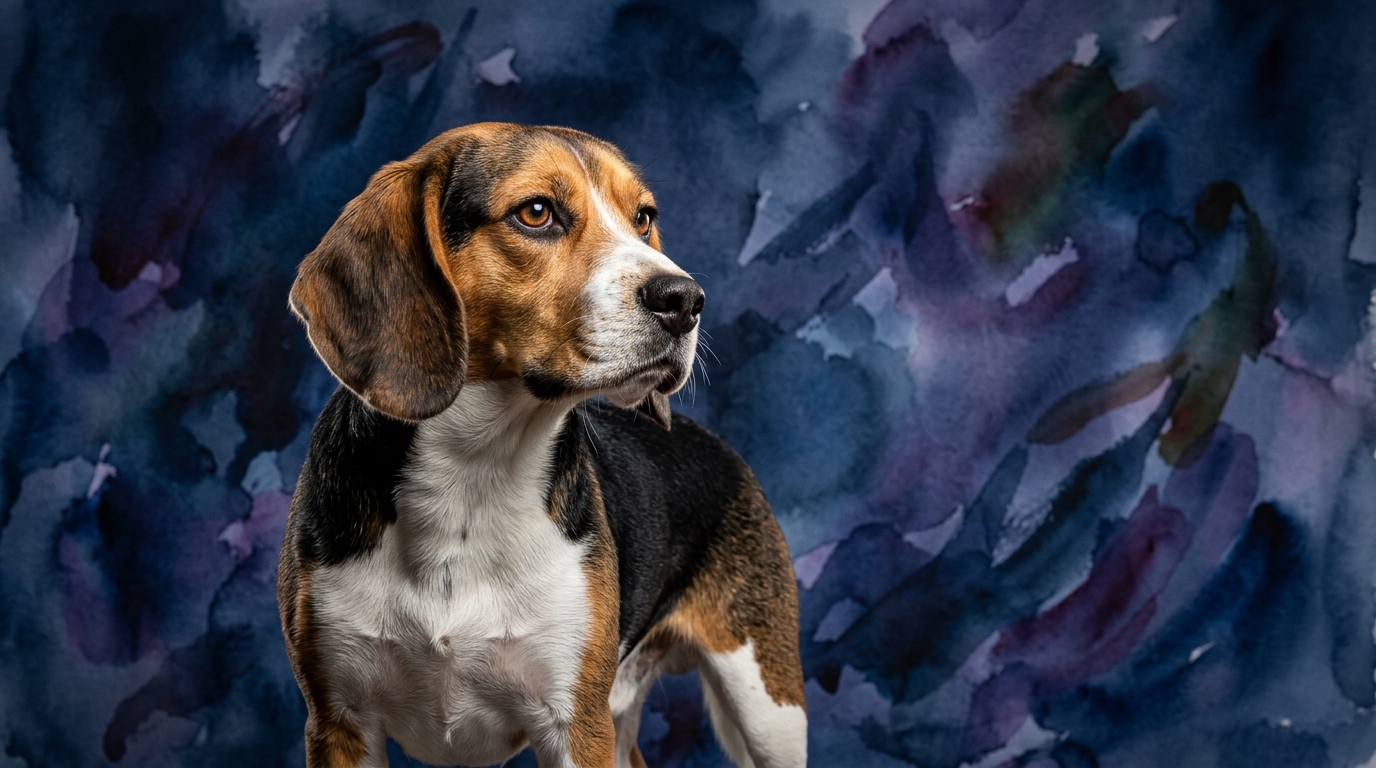
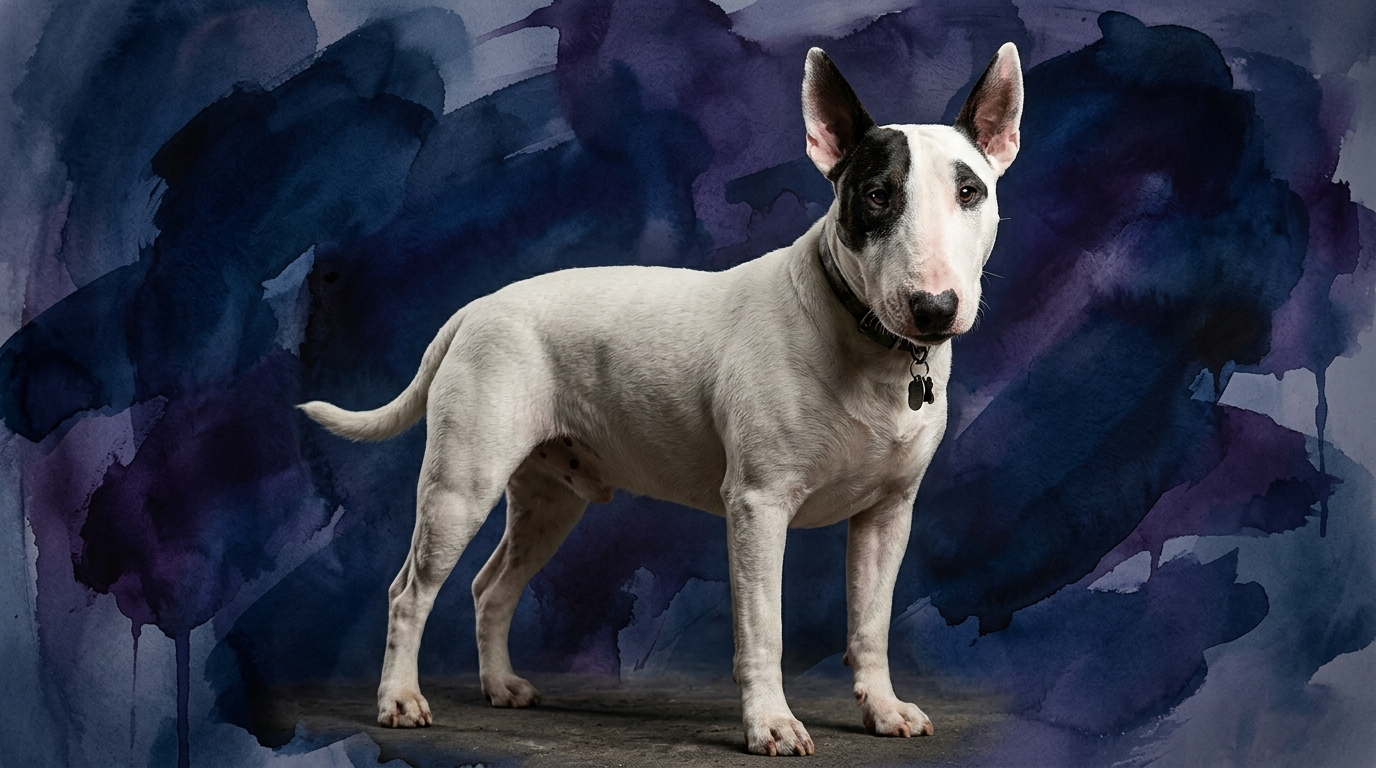
Side-by-Side Cognitive Profile: Beagle vs. Bull Terrier
The Cosmic Pet Pet IQ Lab evaluates canine cognition across five distinct dimensions, offering a nuanced understanding of each breed’s mental strengths and predispositions. For the Beagle, ranked #72 by Coren, and the Bull Terrier, ranked #66, these metrics paint a compelling picture of their inherent capabilities and how they manifest in everyday life.
When it comes to **Problem Solving**, the Beagle scores an impressive 4/5. This reflects their exceptional ability to navigate complex scent trails, demonstrating a persistent, sequential approach to uncovering hidden rewards or information. Their cognitive strength lies in their capacity for sustained focus on a sensory task, often involving intricate trial-and-error to achieve their goal, deeply rooted in their scenting heritage.
The Bull Terrier, in contrast, registers a 3/5 for Problem Solving. Their approach to challenges is often characterized by a directness and determination, sometimes relying on brute force or repeated attempts rather than intricate, multi-step strategies. While they can learn routines and master tasks, their cognitive style might be less about abstract strategizing and more about robust, persistent engagement with the immediate environment.
In **Training Speed**, the Beagle scores 2/5. This isn't indicative of a lack of learning capacity, but rather their independent nature and powerful instinctive drive. Their primary focus on olfactory stimuli means that competing with an enticing scent requires immense patience, creativity, and high-value rewards from a trainer. They learn at their own pace, often prioritizing environmental cues over human directives.
The Bull Terrier achieves a 3/5 in Training Speed. Generally, they exhibit a moderate responsiveness to training, often eager to please their human companions and less prone to intense external distractions than the Beagle. They thrive on consistency, clear expectations, and engaging methods, though their inherent terrier stubbornness can emerge if training lacks motivation or clarity.
For **Social Intelligence**, both breeds score 3/5. Beagles are typically friendly and gregarious, forming strong bonds within their chosen 'pack' and often enjoying interactions with both humans and other dogs. They read social cues adequately, appreciating companionship while also maintaining an independent streak that allows them to follow their nose when it calls.
Bull Terriers also score 3/5 in Social Intelligence, forming deep, often singular attachments with their core family members. They display a playful and affectionate demeanor within their trusted circle and are generally adept at understanding human intentions and emotional states. However, their interactions with unfamiliar dogs might require careful management due to their robust and sometimes boisterous nature.
The **Instinctive Drive** of the Beagle is exceptionally high at 5/5. Their entire being is hardwired for tracking; they possess an unparalleled hunting instinct driven purely by scent. This unwavering focus on a trail can override almost any other learned behavior or human command, demonstrating a profound, specialized cognitive dedication to their ancestral purpose.
The Bull Terrier exhibits a moderate Instinctive Drive at 3/5. This is often expressed as a strong desire for play, chasing, and sometimes a protective instinct towards their family. While they enjoy vigorous physical activity and engagement, their prey drive is less singularly focused and overwhelming than the Beagle's scent-driven pursuit, making them more amenable to redirection.
Finally, for **Memory**, the Beagle scores 4/5. They demonstrate excellent recall, particularly for locations associated with scent trails or rewarding experiences. They can remember complex routes and retain intricate sequences of sensory information, making them highly effective trackers and capable of learning sophisticated tasks over time when motivated by their primary drive.
The Bull Terrier scores 3/5 in Memory. They possess a solid memory for routines, commands, and familiar people, retaining learned behaviors effectively with consistent reinforcement. While capable of learning and remembering, their recall for more abstract or exceedingly complex information might not be as pronounced as breeds with higher scores in this cognitive dimension, focusing more on practical applications.
Where the Beagle Excels Cognitively
The Beagle's cognitive strengths are deeply intertwined with their olfactory prowess and their singular focus on scent. Their 4/5 Problem Solving score, coupled with a 5/5 Instinctive Drive, highlights a sophisticated form of environmental navigation and information processing. When presented with a scent puzzle, a Beagle doesn't just sniff; they methodically analyze, follow complex sequences, and make decisions based on subtle changes in odor concentration, a task that requires immense cognitive effort and sustained attention.
Their 4/5 Memory score further enhances this specialized intelligence. Beagles remember not just the presence of a scent, but its location, the path taken to find it, and even the context in which it was encountered. This allows them to build a detailed 'cognitive map' of their environment based on smell, enabling them to retrace steps or efficiently locate previously identified scent sources. This isn't just rote memorization; it's a dynamic, sensory-driven form of recall that the Bull Terrier, with its 3/5 memory, does not exhibit to the same degree.
Where the Bull Terrier Shines Cognitively
The Bull Terrier’s cognitive advantage becomes apparent when considering their 3/5 Training Speed score, which surpasses the Beagle's 2/5. While both breeds are capable learners, the Bull Terrier generally demonstrates a greater readiness to engage with and internalize human-led learning tasks. Their moderate 3/5 Instinctive Drive means they are less frequently overwhelmed by external, primal urges that divert their attention from a handler, allowing for a more focused and cooperative training dynamic.
This responsiveness indicates a cognitive style that prioritizes interaction and compliance with human direction, provided the training is clear, consistent, and positive. Unlike the Beagle, whose mind is often consumed by the invisible world of scent, the Bull Terrier's attention is more readily available for social learning and understanding human cues. This makes them, on average, more straightforward to guide through obedience commands and learn household manners, appealing to owners who value a more direct and less distraction-prone learning partner.
Which is Easier to Train and Why
When comparing the ease of training, the Bull Terrier generally holds an advantage over the Beagle, primarily due to their differing levels of instinctive drive and responsiveness to human direction. The Bull Terrier's 3/5 Training Speed reflects a dog that is often eager to please and more focused on their handler during training sessions. While they can exhibit their own brand of terrier stubbornness, their moderate instinctive drive (3/5) means they are less likely to be completely consumed by environmental distractions like novel scents, allowing for more consistent engagement with lessons.
The Beagle, with its 2/5 Training Speed, presents a more significant training challenge. Their powerful 5/5 Instinctive Drive means their nose often dictates their priorities, overriding human commands, especially in outdoor environments filled with intriguing smells. This isn't a deficit in their ability to learn; rather, it's a deeply ingrained behavioral priority system where the call of a scent trail is often more compelling than any verbal cue. Training a Beagle requires immense patience, high-value rewards, and a deep understanding of their scent-driven world to successfully compete for their attention and gain compliance. For an owner seeking a more straightforward training journey, the Bull Terrier's cognitive profile typically offers fewer inherent hurdles.
Suitability for Active vs. Relaxed Owners
Understanding the cognitive profiles of Beagles and Bull Terriers also helps in matching them with appropriate lifestyles. For **active owners**, both breeds offer companionship, but with different needs. A Beagle, with its 5/5 Instinctive Drive and 4/5 Problem Solving, thrives with owners who can provide consistent outlets for their scenting abilities. This might include long hikes, participation in nose work sports, or extensive outdoor exploration. Their mental and physical well-being is intrinsically linked to engaging their powerful sense of smell and tenacious tracking instincts. Owners who enjoy being outdoors and can embrace a dog that often has its nose to the ground will find a Beagle fulfilling.
Bull Terriers also require significant engagement and exercise, making them suitable for active owners, but their needs are slightly different. Their moderate 3/5 Instinctive Drive translates into a robust energy level that enjoys vigorous play, structured walks, and interactive games. They are often happy to participate in family activities and enjoy being the center of attention during playtime. Owners who enjoy energetic games, consistent training, and integrating their dog into a bustling family life will find the Bull Terrier a rewarding companion. While they need exercise, their focus is less singularly on an independent sensory quest and more on shared activity with their people.
For **relaxed owners**, neither breed is genuinely suited for a sedentary lifestyle, as both possess significant energy and a need for mental stimulation. However, if 'relaxed' implies less intense outdoor adventuring, a Bull Terrier might adapt slightly better, provided they receive ample indoor play, puzzle toys, and consistent interaction with their family. Their social intelligence and desire to be with their people can make them content with a variety of engaging activities within the home environment.
A Beagle, conversely, would likely struggle in a truly relaxed, low-activity home. Their overwhelming drive to track and explore means that boredom can quickly manifest as destructive behaviors, persistent barking, or attempts to escape and follow a scent. Their cognitive profile demands an active outlet for their natural instincts; without it, their mental and physical health can suffer, making them a less ideal choice for those seeking a perpetually calm, low-maintenance companion.
The Verdict
Choose a Beagle if you are captivated by a dog with unparalleled olfactory intelligence, a tenacious problem-solver on a scent trail, and are prepared for a consistent, patient training approach to manage a powerful natural drive.
Choose a Bull Terrier if you seek a devoted companion who is generally more receptive to human-led training, offers robust playfulness, and thrives on engaging with their family, even if their problem-solving tends to be more direct and less nuanced.
🧠 Find Your Pet's IQ Score
Our Pet IQ Lab assessment covers 25+ tests across 5 cognitive dimensions — personalized to your breed.
Take the Full IQ Test →Frequently Asked Questions
Are Beagles difficult to train?
Beagles are not inherently unintelligent, but their powerful instinctive drive (5/5) and focus on scent can make training challenging. They require patient, consistent methods and high-value rewards to compete with their natural urge to follow a captivating smell. Their perceived difficulty stems from their independent, scent-driven priorities rather than a lack of learning capacity, demanding a unique training approach.
Do Bull Terriers need a lot of exercise?
Yes, Bull Terriers are robust and energetic dogs that require regular physical activity to stay healthy and mentally stimulated. Daily walks, vigorous play sessions, and opportunities for mental engagement are important to prevent boredom and manage their moderate instinctive drive, ensuring they are well-adjusted companions who thrive on interaction.
Which breed is better with children?
Both Beagles and Bull Terriers can be excellent family dogs, but their interactions depend heavily on individual temperament, socialization, and proper supervision. Beagles are generally tolerant and playful, while Bull Terriers are often devoted and protective of their family. Introducing either breed to children requires careful management and teaching both children and dogs how to interact respectfully, ensuring positive experiences for all.