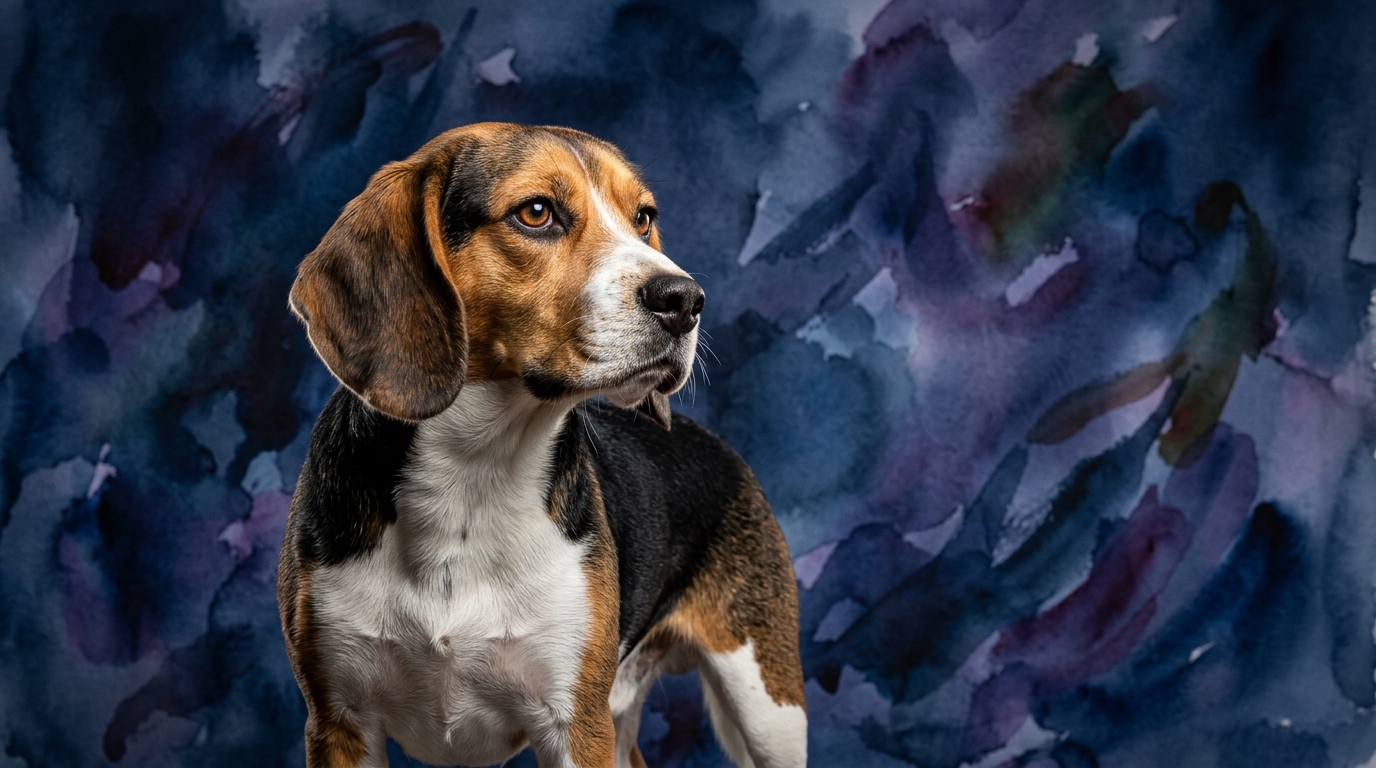
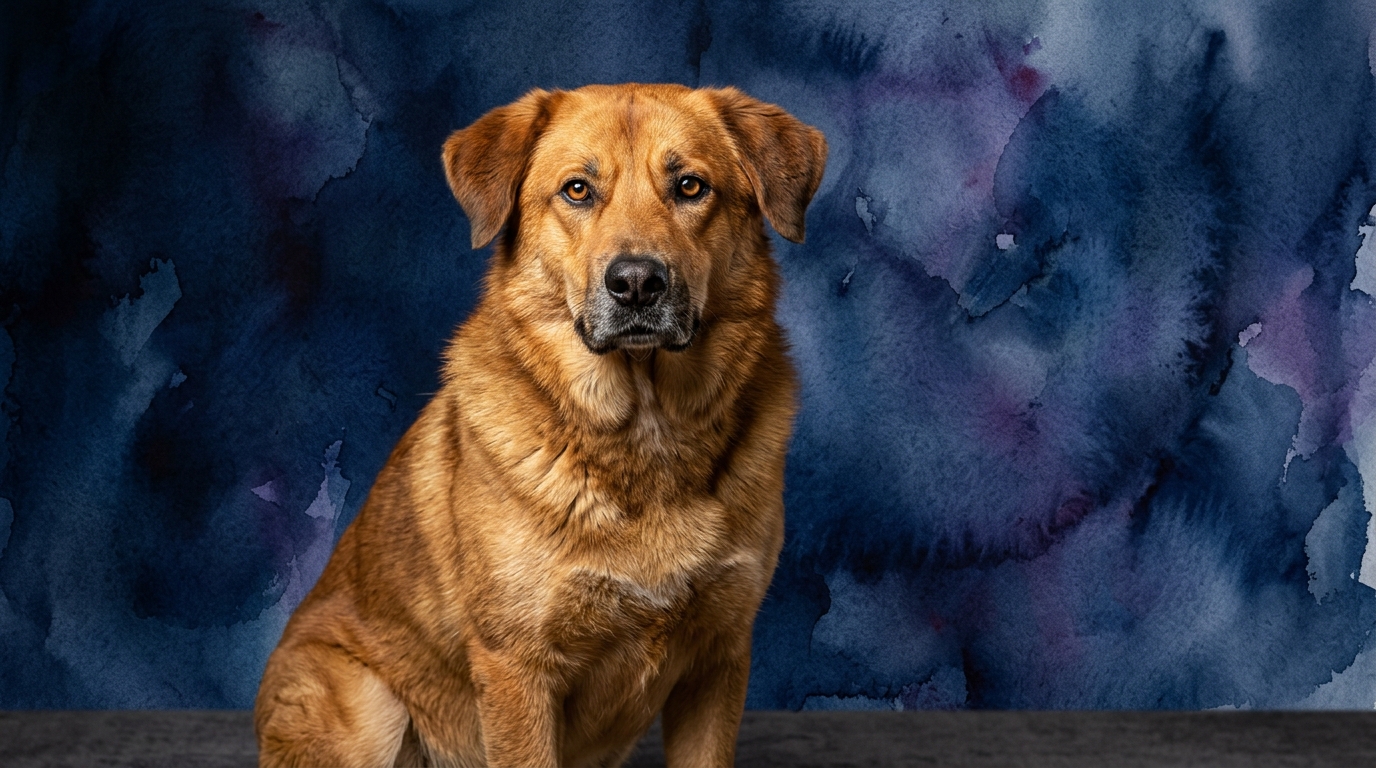
Side-by-Side: The Cosmic Pet IQ Profiles
The Cosmic Pet Pet IQ Lab evaluates canine intelligence across five key dimensions, providing a granular view of a breed's cognitive strengths and inclinations. For the Beagle, a breed rooted in scent-tracking, its profile reflects a mind optimized for independent pursuit and sensory processing. Its Problem Solving score of 4/5 indicates a high capacity for independent thought, particularly in navigating complex environments to achieve a goal. Training Speed, however, registers at 2/5, suggesting that while capable, their focus may be directed elsewhere during formal training. Social Intelligence stands at 3/5, reflecting their pack-oriented nature. A commanding Instinctive Drive of 5/5 underscores their unwavering commitment to their primary purpose, while Memory at 4/5 highlights their ability to retain crucial information, especially scent trails.
In contrast, the Chinook, a breed developed for its utility as a sled dog and companion, presents a more balanced cognitive blueprint. Its Problem Solving score of 3/5 indicates practical, task-oriented thinking rather than independent exploration. Training Speed is rated 3/5, suggesting a moderate willingness and aptitude for learning human-directed commands. Social Intelligence also scores 3/5, emphasizing their capacity for forming bonds and understanding social cues within their human family. Their Instinctive Drive, at 3/5, is present but more manageable and versatile than the Beagle's singular focus. Memory, too, stands at 3/5, indicating a solid ability to recall learned tasks and experiences, without the Beagle's exceptional sensory recall.
Where the Beagle's Mind Shines
The Beagle’s cognitive architecture is a masterclass in specialized intelligence, particularly evident in its exceptional Problem Solving and Instinctive Drive. Their 4/5 Problem Solving isn't about deciphering complex puzzles for human amusement, but rather an innate ability to independently navigate intricate scent pathways, overcome environmental obstacles, and strategize to locate a hidden scent source. This translates into a dog that, once on a trail, will employ remarkable ingenuity to follow it, often requiring minimal human direction. They can assess wind direction, terrain changes, and even the age of a scent with an almost scientific precision, constantly updating their mental map.
Furthermore, the Beagle's 5/5 Instinctive Drive is not merely a strong urge, but a profound cognitive commitment. When their nose engages, their entire being is focused on the pursuit. This unwavering dedication allows them to persevere through distractions and discomfort, exhibiting a singular mental tenacity that few breeds can match. Their 4/5 Memory supports this, enabling them to recall specific scent profiles and even the 'memory' of a trail, allowing them to retrace steps or pick up a lost scent with impressive accuracy. This combination makes them supremely effective in activities that leverage their natural inclinations, such as scent work or tracking sports, where their independent problem-solving and drive are assets, not hindrances.
Chinook's Cognitive Strengths
The Chinook's cognitive profile, while different from the Beagle's specialized focus, showcases a versatile and cooperative intelligence honed for partnership. Their 3/5 Training Speed indicates a solid capacity for absorbing and executing commands, driven by a desire to work alongside their human companions. Unlike the Beagle's often self-directed mental energy, Chinooks are generally more attuned to human cues and find satisfaction in collaborative tasks. This makes them responsive to positive reinforcement, eager to learn new routines, and generally easier to guide through structured training sessions, leading to a more predictable learning curve.
The Chinook's 3/5 Social Intelligence, while matching the Beagle's numerical score, manifests differently. It speaks to their strong family orientation and empathetic nature, allowing them to integrate smoothly into household dynamics and understand the emotional nuances of their human pack. They are often quite perceptive to moods and changes in routine, responding with a gentle presence. Their balanced 3/5 Instinctive Drive allows them to engage in various working roles without being overwhelmingly fixated on a single task, making them adaptable companions for activities like hiking, carting, or general obedience. This balance, coupled with their 3/5 Memory for learned tasks, makes the Chinook a reliable and consistent partner, capable of remembering a diverse repertoire of commands and social expectations.
Training Dynamics: Beagle vs. Chinook
When it comes to ease of training, the differences between the Beagle and the Chinook are quite pronounced, largely due to their primary motivations and instinctive drives. The Beagle, with its 2/5 Training Speed and powerful 5/5 Instinctive Drive, presents a unique challenge. Their minds are constantly processing a world of scents, and once a compelling aroma is detected, their cognitive focus irrevocably shifts. This intense sensory engagement means that during a training session, a Beagle might be physically present but mentally miles away, deep in olfactory exploration. Training a Beagle requires immense patience, creativity, and high-value rewards to consistently capture and redirect their attention from their innate calling. Their 'difficulty' isn't a lack of mental capacity, but an overwhelming internal pull towards scent-tracking that often overrides human instruction, demanding a trainer who understands and can work with, rather than against, this profound inclination.
The Chinook, on the other hand, with its 3/5 Training Speed and more moderate 3/5 Instinctive Drive, generally proves easier to train for obedience and cooperative tasks. They possess a greater inherent desire to please their human companions and find satisfaction in collaborative activities. Their working dog heritage means they are more accustomed to taking direction and understanding their role within a team. While they still require consistent training and mental engagement, their focus is less prone to being hijacked by external stimuli like a compelling scent. A Chinook is more likely to maintain attention on their handler, process commands efficiently, and exhibit a steady willingness to learn, making them a more straightforward student for those seeking a responsive and cooperative canine partner.
Matching Minds to Lifestyles: Active vs. Relaxed Owners
Choosing between a Beagle and a Chinook based on your lifestyle hinges on understanding their cognitive needs and how they translate into daily behavior. For owners with an active lifestyle, both breeds can be suitable, but they fulfill different types of activity. An owner who enjoys long, meandering walks, scent games, or even competitive tracking will find the Beagle's mind perfectly aligned. Their cognitive fulfillment comes from engaging their powerful olfactory senses and independent problem-solving on a trail. However, this also means 'active' for a Beagle owner often translates to managing a dog that might follow its nose over your commands, requiring a proactive approach to safe, contained exercise.
Conversely, an active owner who values a hiking partner, a participant in dog sports like agility or obedience, or a companion for family adventures might gravitate towards the Chinook. Their balanced drive and cooperative nature make them excellent partners for shared physical activities, where they thrive on human interaction and purpose. They are less likely to disappear on a scent trail and more inclined to stay connected, making them a more predictable outdoor companion. For owners seeking a more relaxed pace, neither breed is truly a 'couch potato.' However, a Chinook, once adequately exercised, is generally more content to settle quietly with their family, whereas a Beagle's internal world of scents might keep them perpetually 'on duty,' even indoors, leading to restless behavior if not sufficiently engaged in scent-based activities. The Chinook's social intelligence makes them better suited for a home where their primary 'job' is to be a cherished, integrated family member, albeit one who still appreciates a good romp.
The Verdict: When to Choose Each
The choice between a Beagle and a Chinook ultimately depends on what cognitive traits you prioritize and the lifestyle you can offer. If you are an owner who appreciates a dog with an unparalleled independent problem-solving ability in the realm of scent, possesses immense patience for training a highly driven mind, and can provide consistent outlets for intense olfactory engagement, the Beagle will offer a uniquely rewarding companionship. Their specific cognitive strengths lie in their unwavering dedication to their instinctive purpose, making them a fascinating study in specialized canine intelligence.
If your preference leans towards a cooperative, versatile companion with a balanced drive, a moderate training speed, and a strong desire to integrate into family life, the Chinook is likely the better fit. They excel as partners in shared activities and offer a more straightforward training experience for those who value responsiveness and a harmonious working relationship. The Chinook's intelligence shines in its adaptability and its capacity for deep, collaborative bonds, making them ideal for active families seeking a devoted and engaged canine.
The Verdict
Choose the Beagle if you are prepared for a dog whose profound scent drive dictates much of its behavior, requiring patient, consistent, and creative training to channel its independent problem-solving mind. They are ideal for owners who enjoy engaging with a dog's natural instincts and can provide ample scent-based enrichment.
Opt for the Chinook if you desire a cooperative, versatile companion that thrives on partnership and family integration, offering a more responsive training experience and a balanced drive for various activities. They are best for active owners seeking a devoted and adaptable partner for shared adventures and a harmonious home life.
🧠 Find Your Pet's IQ Score
Our Pet IQ Lab assessment covers 25+ tests across 5 cognitive dimensions — personalized to your breed.
Take the Full IQ Test →Frequently Asked Questions
Are Beagles difficult to train due to their low training speed score?
The Beagle's 2/5 Training Speed doesn't signify a lack of learning capacity, but rather their profound instinctive drive for scent-tracking often overrides human commands. Training them requires exceptional patience, high-value rewards, and a consistent approach to redirect their focus from the captivating world of smells to human instruction, making it a challenging but rewarding endeavor.
What kind of activities do Chinooks excel at, given their balanced IQ profile?
Chinooks, with their balanced IQ profile, excel in activities that leverage their cooperative nature and moderate drive, such as hiking, sledding, carting, and various dog sports like obedience or rally. Their social intelligence and willingness to learn make them excellent partners for family adventures and well-integrated companions in a variety of active settings.
Which breed is generally better suited for families with young children?
While both breeds can be good with children, the Chinook's stronger emphasis on social intelligence and family integration, combined with a more manageable instinctive drive, often makes them a slightly more predictable and gentle presence in homes with young children. Beagles, while typically good-natured, might be more prone to following their nose and could inadvertently be less attentive to small children during their scent pursuits, requiring more supervision.