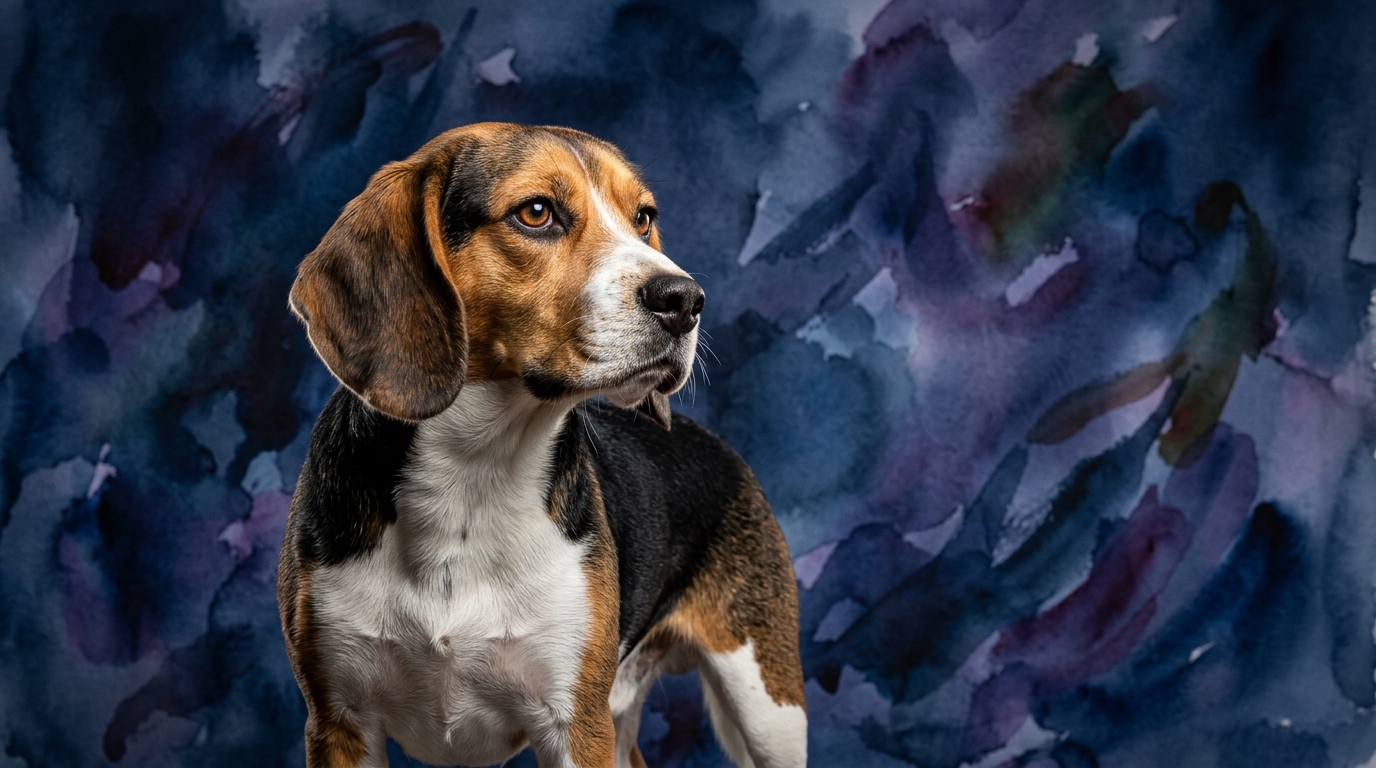

Side-by-Side IQ Profile: Beagle vs. Dachshund
The Cosmic Pet Pet IQ Lab's granular metrics offer a clear cognitive snapshot for these two distinct hound breeds. While both share a common ancestral group, their specialized roles have shaped unique intellectual leanings.
Beagle: Ranked #72 by Coren, a Beagle's overall obedience and working intelligence is moderate. Their Problem Solving score of 4/5 suggests adeptness at navigating novel situations, often fueled by sensory input. However, a Training Speed of 2/5 indicates a need for patient, consistent methods due to potential distraction. Social Intelligence 3/5 points to responsiveness in interactions, balanced with independence. Instinctive Drive 5/5, rooted in scent hound heritage, compels them to track odors. Memory 4/5 signifies strong retention of learned behaviors and experiences, good and bad.
Dachshund: With a Coren rank of #49, Dachshunds show a superior aptitude for general obedience and working intelligence over Beagles. Problem Solving 4/5 mirrors the Beagle's capacity for clever solutions when motivated. Training Speed 2/5, like Beagles, necessitates persistent, engaging methods to counter inherent predispositions. Social Intelligence 3/5 allows for strong bonds but often on their own terms. Instinctive Drive 5/5, stemming from badger-hunting, manifests as strong prey drive and digging tendencies. Memory 3/5, slightly lower than a Beagle's, may require more frequent reinforcement for learned behaviors and quicker forgetting of negative associations.
Where the Beagle Wins Cognitively
The Beagle's distinct cognitive edge lies in its superior Memory score of 4/5, compared to the Dachshund's 3/5. This enhanced mnemonic capacity means Beagles often retain learned commands and routines longer, potentially reducing the need for constant refresher training once a behavior is established. Owners might observe more reliable recall and command execution, even after breaks. Their memory aids in navigating familiar spaces and recalling favored item locations. A stronger memory can also enhance problem-solving, as Beagles might recall successful past strategies for future challenges. Conversely, this means Beagles can vividly recall negative experiences or undesirable habits, complicating remedial training.
Where the Dachshund Wins Cognitively
The Dachshund's primary cognitive advantage is its notably higher Coren Working & Obedience Intelligence rank of #49, surpassing the Beagle's #72. This suggests a superior aptitude for understanding and executing human commands. Despite a shared 2/5 Training Speed, this rank suggests a higher potential for obedience and working capability with proper motivation. Their problem-solving (4/5), combined with a tenacious instinctive drive (5/5) and slightly lower memory (3/5), can make them adept at finding immediate solutions without dwelling on past failures. This translates to a dog that, once motivated, often perseveres until a task is completed. Their working intelligence, irrespective of training speed, indicates deeper comprehension when tasks align with their motivations, proving effective in activities like earthdog trials.
Which is Easier to Train, and Why?
Neither Beagle nor Dachshund are considered 'easy' to train, a direct result of their identical low Training Speed (2/5) and profound Instinctive Drive (5/5). Both demand patient, consistent owners utilizing positive reinforcement and high-value rewards to gain attention.
The Beagle's powerful scent drive presents a primary challenge; their incessant processing of olfactory information makes focusing on a handler difficult when a compelling scent emerges. Hardwired to follow scents, their instinct frequently overrides learned behaviors. This can manifest as perceived stubbornness, when in fact, instincts are merely taking precedence. While their 4/5 memory helps retain lessons, their 5/5 drive means the allure of a scent often takes precedence.
Dachshunds, bred for independent badger hunting, exhibit self-reliance and tenacity often perceived as stubbornness. Their intense instinctive drive translates to strong prey drive, digging, and tunneling inclinations, challenging recall and leash focus in stimulating settings. Their 4/5 problem-solving often serves self-interest (e.g., reaching scents, digging escapes), rather than direct command fulfillment. A 3/5 memory, lower than the Beagle's, suggests they may need more consistent reinforcement to maintain fresh commands, particularly against strong instincts. For both, successful training redirects these powerful drives into constructive outlets, rather than suppression.
Family Pet Suitability: Active vs. Relaxed Owners
Their shared high Instinctive Drive (5/5) and moderate Social Intelligence (3/5) are crucial for assessing suitability for different lifestyles.
For active owners, both can be rewarding, but their activity needs manifest differently. A Beagle-suitable active owner provides abundant scent work, long walks, or safe, secure off-leash exploration guided by their nose. Engaging their 5/5 drive demands mental stimulation like K9 Nose Work or advanced hide-and-seek, beyond mere physical exercise. Their 4/5 memory makes them suitable for owners valuing consistent activity schedules. Moderate social intelligence ensures bonding, but their nose can still supersede commands, demanding vigilance.
Active Dachshund owners should facilitate digging instincts and prey drive through earthdog trials, hunting-mimicking puzzle toys, or supervised backyard digging. Despite short legs, Dachshunds require regular, brisk walks to satisfy hunting heritage and prevent boredom. Their problem-solving (4/5) and drive can be channeled into agility or obedience with consistent, engaging training, leveraging their Coren rank.
For relaxed owners, neither breed is ideal without significant commitment to managing their powerful innate drives. Without adequate mental and physical stimulation, both are prone to behaviors like barking, chewing, or digging, due to their 5/5 instinctive drive. A truly relaxed owner preferring minimal engagement beyond basic care may feel overwhelmed. If 'relaxed' means enjoying quiet evenings but committing to daily walks, training games, and mental puzzles, a Dachshund might be slightly more adaptable due to smaller size and a 3/5 memory, potentially making past indulgences less ingrained than a Beagle's. A Beagle's formidable scent drive makes true relaxation difficult without regular olfactory exploration. A Dachshund might be content with shorter, purposeful outdoor activity balanced with indoor mental challenges, unlike a Beagle's need for long, investigative walks.
The Verdict
Choose a Beagle if you are prepared to channel a profound scent drive, valuing a companion with strong memory and a nose-first approach to the world, even with dedicated training.
Choose a Dachshund if you appreciate a tenacious, problem-solving companion with higher general working intelligence, ready for purposeful activities that satisfy innate hunting and digging instincts, understanding consistent reinforcement is key.
🧠 Find Your Pet's IQ Score
Our Pet IQ Lab assessment covers 25+ tests across 5 cognitive dimensions — personalized to your breed.
Take the Full IQ Test →Frequently Asked Questions
Are Beagles or Dachshunds better for first-time owners?
Neither breed is typically recommended for inexperienced first-time owners due to their strong instinctive drives (5/5) and low training speeds (2/5). Both require consistent, patient training and dedicated engagement to channel their natural predispositions constructively. An owner new to dogs might find these specific challenges particularly demanding without prior experience.
Do Beagles or Dachshunds bark more?
Both Beagles and Dachshunds have a propensity for vocalization, stemming from their hound heritage. Beagles are known for their distinct baying, used to signal during hunts, and may bark excessively if bored or left alone. Dachshunds also tend to be quite vocal, using barks to alert owners to perceived intruders or to express their strong opinions and alert instincts.
Which breed is more independent?
Both breeds display a notable degree of independence due to their origins as hunting dogs that needed to make decisions without constant human direction. Beagles will readily follow a scent trail to the exclusion of their handler, while Dachshunds exhibit a self-reliant tenacity when pursuing their prey drive, often ignoring commands in favor of their instincts. Their moderate social intelligence (3/5) reflects this balance of attachment and autonomy.