
Side-by-Side Cognitive Profiles: The Terrier's Wit vs. The Hound's Nose
The Jack Russell Terrier's cognitive profile is marked by exceptional Problem Solving (5/5), indicating remarkable ingenuity in navigating challenges and devising independent strategies. Training Speed is a moderate 3/5, suggesting reasonable command acquisition. Social Intelligence sits at 3/5, reflecting an ability to understand cues with characteristic independence. A potent Instinctive Drive (5/5) underscores their deep urge to pursue and explore, central to their heritage. Memory at 4/5 supports their adaptability.
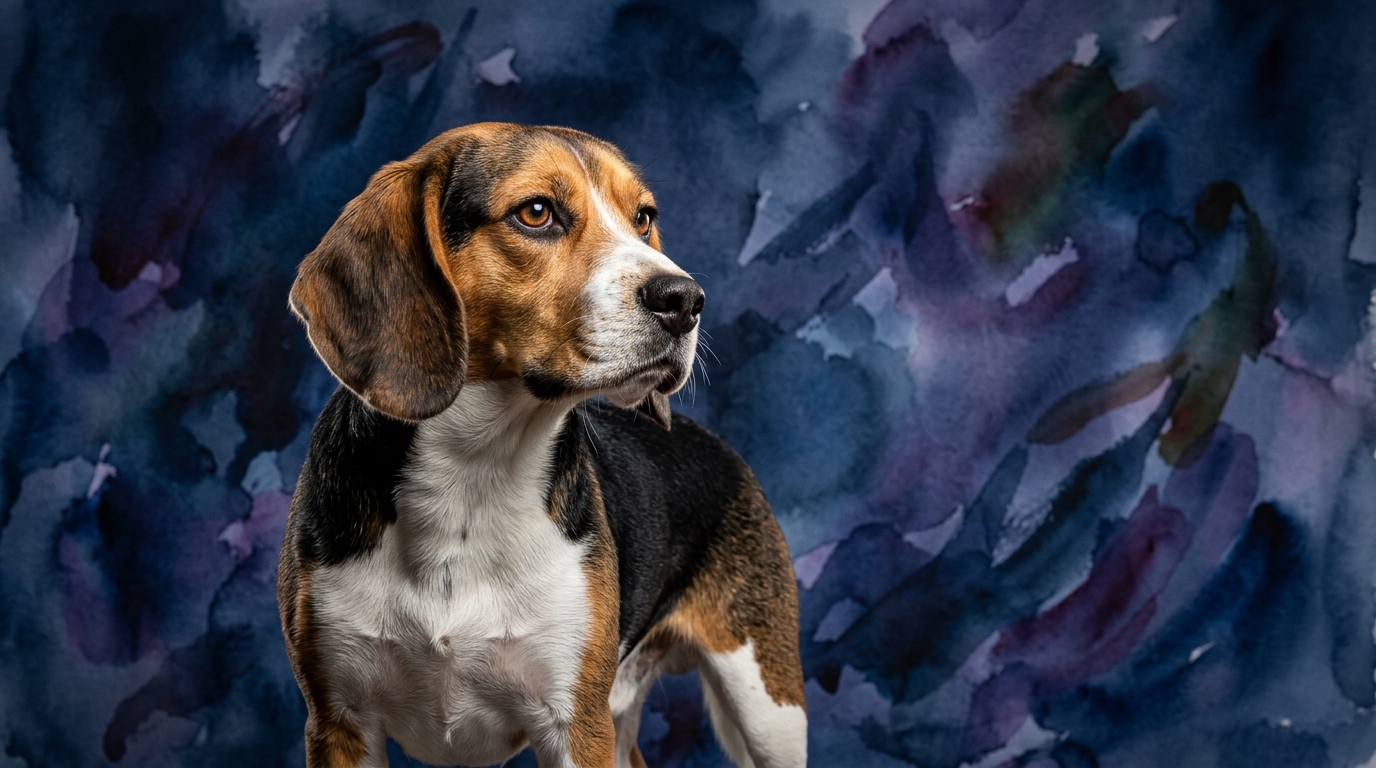
In contrast, the Beagle’s cognitive landscape is distinctly oriented. Problem Solving is 4/5, indicating capability but less independent initiative. Training Speed is 2/5, often slower due to intense focus on environmental scents. Social Intelligence matches at 3/5, important for their pack-hunting background. An overwhelming Instinctive Drive (5/5) highlights their profound motivation for tracking scent trails. Memory, also 4/5, aids in retaining vast spatial and scent information. The Beagle’s #72 Coren rank illustrates a specific working intelligence, evaluated on obedience.
Where the Jack Russell Terrier Cognitively Excels
The Jack Russell Terrier’s standout strength is its exceptional Problem Solving (5/5), signifying independent thought and ingenuity. Faced with an obstacle, a JRT actively assesses, tries varied approaches, and manipulates its environment to reach objectives without constant human direction. This manifests in behaviors like creatively bypassing barriers or figuring out gate latches. Their high score demands varied mental challenges beyond simple repetition.
This superior problem-solving is rooted in their terrier heritage, requiring quick, decisive thinking and on-the-fly strategy adaptation when working independently. Their cleverness in overcoming hurdles is crucial. Owners must provide ample enrichment, as misdirected problem-solving can lead to undesirable "solutions" like escapes or unauthorized access to forbidden areas.
Where the Beagle Cognitively Excels
While the Beagle’s general Problem Solving is 4/5, its true cognitive excellence lies in its specialized application of intelligence, particularly its 5/5 Instinctive Drive focused on olfaction. Their problem-solving acumen, combined with strong memory (4/5), shines brightest when deciphering complex scent trails, navigating varied terrains, and persistently following paths invisible to humans. This is a sophisticated cognitive process involving identification, tracking, and mapping.
The Beagle excels in sequential problem-solving unique to its breed purpose. Successfully tracking a convoluted scent trail involves complex pattern recognition, memory recall of previous markers, and sustained focus, filtering environmental odors. This makes them unparalleled in scent work, tracking, and search and rescue, where their focused drive, memory for scent, and problem-solving approach to olfactory puzzles are invaluable.
Which is Easier to Train and Why
Trainability considers learning speed and compliance motivation. The Jack Russell Terrier’s 3/5 Training Speed means moderate learning, with 5/5 Problem Solving enabling quick grasp of cause and effect. However, their equally high 5/5 Instinctive Drive can be a major distraction; a compelling scent or movement easily overrides new commands. JRT training requires consistency, engaging methods for their clever minds, and firm management of their independent spirit. They learn rapidly but may choose non-compliance if instincts suggest a better alternative.
The Beagle, with a 2/5 Training Speed, generally learns commands slower. This stems from their overwhelming 5/5 Instinctive Drive, intensely focused on scent. When "on a scent," a Beagle dedicates all cognitive resources to olfactory processing, often rendering them oblivious to human cues. Training methods must use high-value reinforcement in low-distraction environments. Despite good memory and social intelligence, their motivation hierarchy places scent-following highest, demanding immense patience and consistency.
Which Makes a Better Family Pet for Active Owners vs. Relaxed Owners
For active owners seeking mental and physical engagement, both breeds offer rewards with different demands. An active owner choosing a Jack Russell Terrier needs to embrace their problem-solving mind and prey drive. This entails daily, varied exercise beyond walks, incorporating agility or complex puzzle toys to challenge their 5/5 problem-solving and manage their 5/5 instinctive drive. These owners must enjoy interactive play and consistent training, preventing boredom-driven destructive behaviors.
For relaxed owners, or those seeking a sedentary companion, both breeds are challenging if their needs are neglected. A truly relaxed owner will struggle with a JRT’s relentless energy; high problem-solving and drive can manifest as digging or escaping. Similarly, a Beagle’s profound 5/5 instinctive drive for scent work requires daily outlets for their nose and significant exploration. A "relaxed" Beagle owner enjoys long, sniff-filled walks or structured nose work. Without these outlets, Beagles can become vocal or wander. Neither breed suits a genuinely sedentary lifestyle without considerable proactive management.
The Verdict
Choose the Jack Russell Terrier if you are an active, consistent owner who relishes engaging a clever dog with complex mental challenges and can manage a strong independent streak and prey drive. This breed thrives with owners who provide structured activities that channel their exceptional problem-solving abilities and boundless energy.
Opt for the Beagle if you are a patient owner who appreciates a dog with an unparalleled sense of smell and is willing to dedicate significant time to fulfilling their profound instinctive drive for scent work and exploration. This breed is ideal for those who enjoy slower, sniff-filled walks and understanding a dog primarily motivated by its nose.
🧠 Find Your Pet's IQ Score
Our Pet IQ Lab assessment covers 25+ tests across 5 cognitive dimensions — personalized to your breed.
Take the Full IQ Test →Frequently Asked Questions
Is a Jack Russell Terrier more challenging to live with than a Beagle?
The challenge level depends on owner expectations and lifestyle. Jack Russell Terriers present a challenge through their high problem-solving and intense prey drive, demanding consistent mental stimulation and engagement. Beagles, conversely, challenge owners with their profound scent-driven instinctive drive, often prioritizing smells over human commands, requiring patience and creative training to manage.
Do Beagles often get lost due to their strong instinctive drive?
Beagles possess a 5/5 instinctive drive heavily oriented towards scent, which means they are prone to following interesting smells for long distances, sometimes becoming oblivious to their surroundings. This characteristic makes secure containment and reliable recall training absolutely essential to prevent them from getting lost while pursuing a compelling scent trail.
How does the Jack Russell Terrier's problem-solving ability impact daily life?
A Jack Russell Terrier's 5/5 problem-solving ability means they are adept at figuring things out independently, which can be both a blessing and a challenge. They might quickly learn to open cabinets or gates, requiring owners to be vigilant about securing their environment and providing ample, varied mental enrichment to prevent boredom-driven destructive behaviors.