Side-by-Side Pet IQ Lab Profiles
Understanding a dog's cognitive makeup requires looking beyond a single metric. Our Cosmic Pet Pet IQ Lab evaluates five distinct dimensions: problem solving, training speed, social intelligence, instinctive drive, and memory, painting a comprehensive picture of each breed's mental aptitudes.
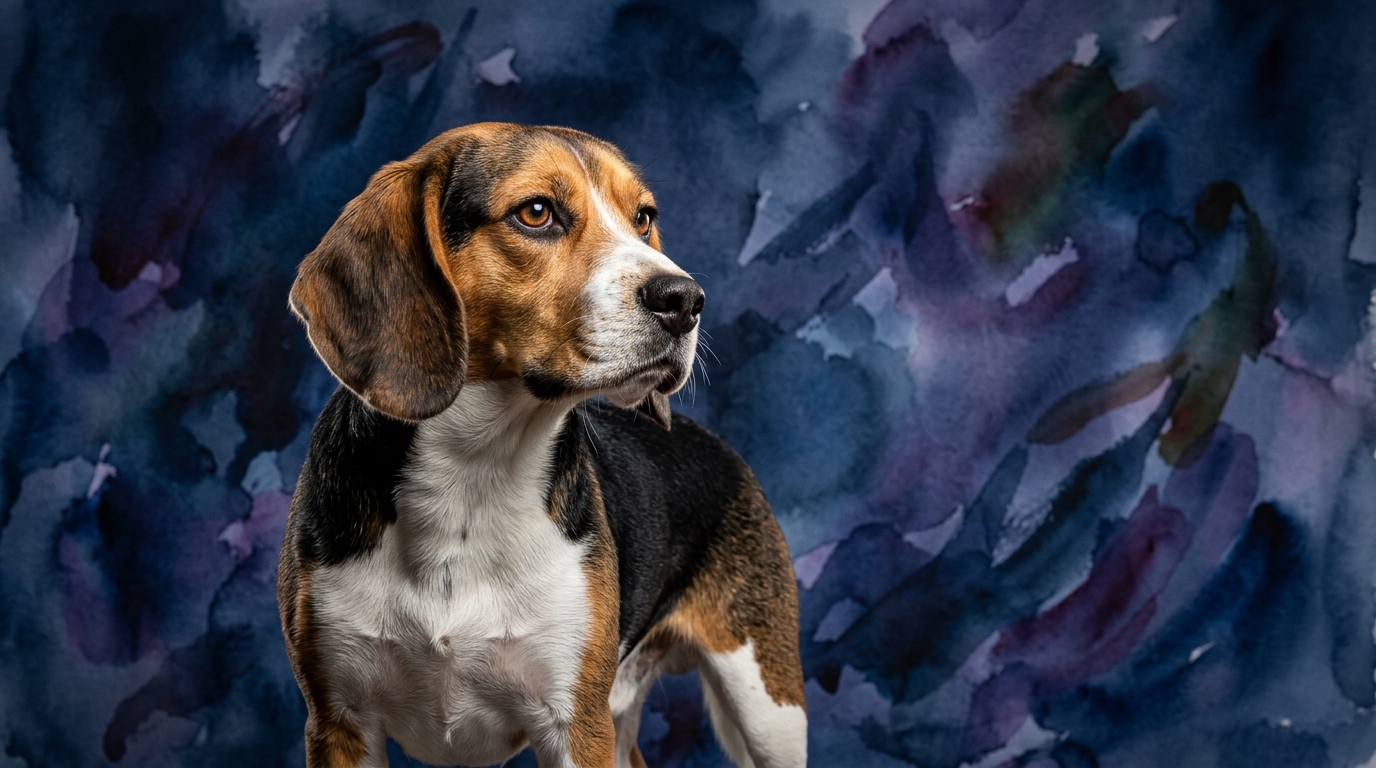
The Beagle, a breed steeped in centuries of scent hound tradition, exhibits a cognitive profile perfectly tuned for its work. With a Coren rank of #72 for obedience and working intelligence, their overall intellectual framework is often misunderstood when solely viewed through a command-following lens. Their Problem Solving score of 4 out of 5 highlights their exceptional ability to unravel complex scent trails, methodically piecing together olfactory information to locate a hidden source or track a path, a form of deduction centered on their nose rather than physical manipulation. A Training Speed of 2 out of 5 reflects their independent nature and powerful instinctive drive; a Beagle's world is often dominated by compelling scents, making it challenging to maintain focus on human-initiated commands when a fascinating odor beckons. Scoring 3 out of 5 in Social Intelligence, Beagles are generally amiable companions, capable of forming strong bonds with their human families and often enjoying the company of other dogs, though their primary focus might shift to a captivating smell rather than intricate social cues in certain environments. Their perfect 5 out of 5 in Instinctive Drive underscores their overwhelming predisposition for scent work, where their entire being is geared towards tracking, exploring, and interpreting the world through their nose. Finally, Beagles possess a robust Memory (4/5), particularly for scent-related information, recalling complex scent trails, the locations of previous interesting smells, and familiar routes crucial for their historical role as tracking hounds.
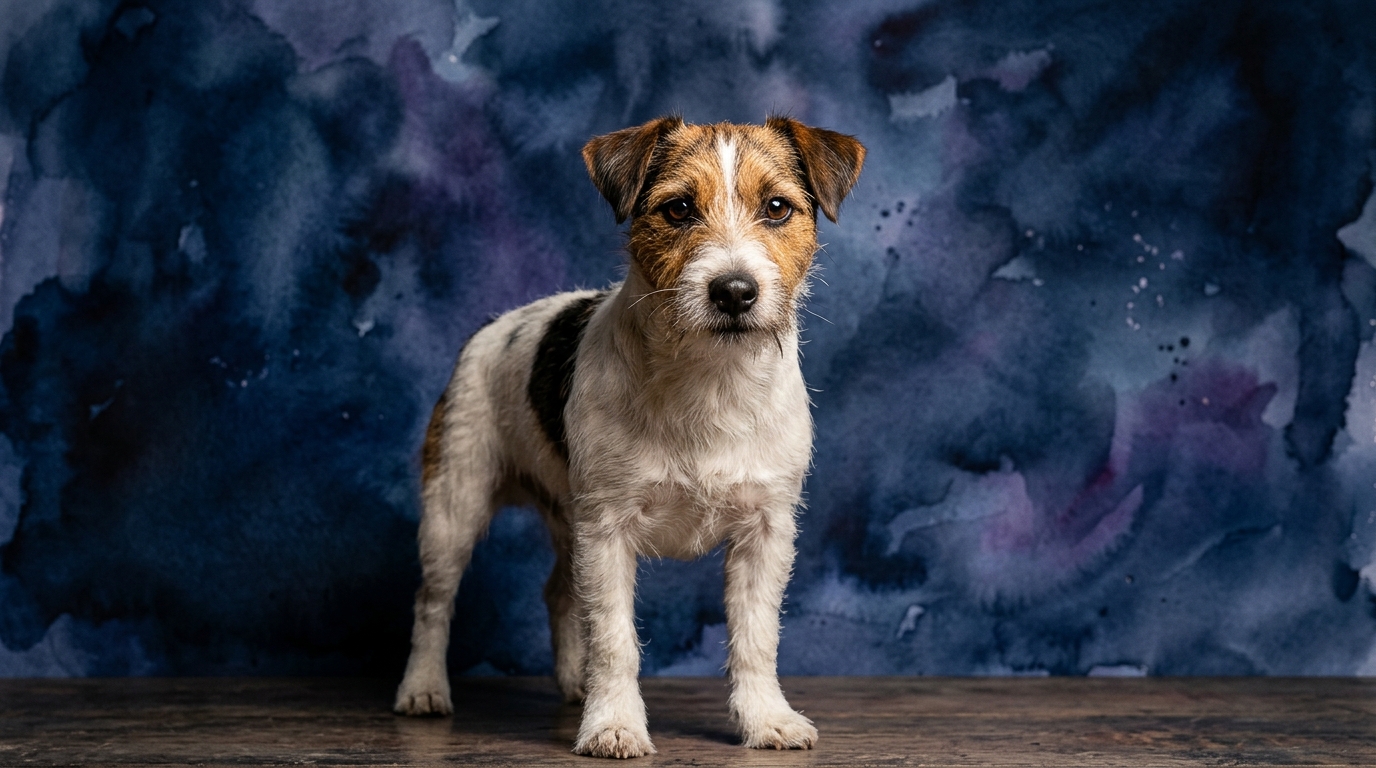
The Jack Russell Terrier, a dynamo from the terrier group, is not included in Stanley Coren's traditional obedience rankings, yet their cognitive abilities are undeniably sharp and intensely focused. Their intelligence is a testament to their heritage as tenacious vermin hunters. The Jack Russell Terrier earns a top score of 5 out of 5 for Problem Solving; these dogs are master strategists when it comes to achieving their goals, whether it's figuring out how to open a gate, retrieve a toy from an impossible spot, or outsmarting perceived prey, often with a direct, persistent, and highly inventive approach. With a Training Speed of 3 out of 5, Jack Russell Terriers typically grasp new commands more quickly than Beagles; they are attentive and eager to learn, especially when the training involves engaging activities or promises a rewarding outcome. However, their high drive and independent spirit mean they might choose to comply only if they perceive a benefit or if the human's will is stronger. Jack Russell Terriers score 3 out of 5 in Social Intelligence, forming deep, loyal bonds with their families and capable of understanding human moods and intentions, often acting as alert and protective companions, though their strong independent streak and intense focus on their environment can sometimes overshadow subtle social cues. Like the Beagle, the Jack Russell Terrier scores a perfect 5 out of 5 in Instinctive Drive; their drive is rooted in their history of hunting vermin, manifesting as an insatiable urge to chase, dig, and explore with boundless energy and relentless determination. Jack Russell Terriers exhibit a strong Memory (4/5), remembering routines, the location of favored toys or hiding spots, and learned commands with impressive accuracy, often linked to practical outcomes, aiding them in repeat successful strategies or navigating their known environment effectively.
Where the Beagle Wins Cognitively
The Beagle's cognitive edge lies squarely in its olfactory domain. Their unparalleled ability to process and interpret scent information allows them to navigate a world that humans can only dimly perceive, making them specialists in a unique form of environmental problem-solving. This means they cognitively excel in tasks requiring sustained focus on a complex scent trail, demonstrating remarkable endurance in mental tracking challenges. Their systematic approach to unraveling olfactory puzzles, combined with a robust memory for scent pathways, makes them the superior choice for any activity where the nose leads the way, from intricate scent detection games to leisurely explorations where every new smell is a chapter in a book.
Where the Jack Russell Terrier Wins Cognitively
Conversely, the Jack Russell Terrier shines brightest in practical, physical problem-solving and rapid concept acquisition. Their top score in problem-solving indicates a dog that can quickly assess a situation, devise a strategy, and execute it with tenacious determination to achieve a tangible outcome. Whether it's figuring out how to open a cabinet, retrieve a toy from under furniture, or navigate an agility course, their cognitive strength is in their inventive and persistent approach to overcoming physical and mental obstacles. Their slightly higher training speed also gives them an edge in quickly grasping novel commands and complex sequences, provided the motivation is compelling enough to override their independent spirit.
Which is Easier to Train and Why
Neither breed is inherently "easy" to train in the traditional sense, but they present different challenges. The Beagle, with a training speed of 2/5, can be perceived as more difficult due to its profound distraction by scent. Their independent decision-making, driven by an overwhelming instinctive urge to follow a compelling odor, often means human commands become secondary. Training a Beagle requires immense patience, creativity in making training more rewarding than the environment, and an understanding that their Coren rank of #72 reflects this specific challenge in obedience, not a lack of overall cognitive ability.
The Jack Russell Terrier, at 3/5 training speed, may pick up commands faster, but their higher problem-solving and equally intense instinctive drive (5/5) introduce a different kind of challenge. They are quick to learn what they want to learn or what benefits them, but their independent, sometimes stubborn nature means they might choose to ignore commands if a more exciting opportunity (like chasing a squirrel) presents itself. Training a JRT demands consistency, firm but fair leadership, and making sure that compliance is always the most rewarding option in their eyes. For both, understanding their deep-seated drives is crucial for effective training.
Which Suits Active Owners vs. Relaxed Owners
It's crucial to understand that both Beagles and Jack Russell Terriers possess a 5/5 instinctive drive, meaning neither is suited for a truly "relaxed" owner who prefers minimal engagement. However, the nature of their activity requirements differs significantly. The Beagle suits owners who are active in a more meandering, exploratory sense. They thrive on long, sniff-filled walks, scent games, and opportunities to use their nose extensively. While they need regular physical exercise, their primary mental stimulation comes from olfactory exploration, making them suitable for owners who enjoy slower-paced, investigative outdoor activities rather than high-octane physical sports.
The Jack Russell Terrier, conversely, demands an owner who is intensely active and prepared for constant engagement. Their boundless energy and relentless prey drive necessitate vigorous daily exercise, such as running, fetch, or competitive dog sports like agility, flyball, or earthdog trials. They need owners who can provide consistent mental challenges and physical outlets to prevent boredom and potential destructive behaviors. A JRT is for an owner who thrives on a fast-paced, highly interactive lifestyle, understanding that a tired JRT is a well-behaved JRT.
The Verdict
Choose a Beagle if you appreciate a dog whose world revolves around scent, you enjoy long, meandering walks filled with olfactory discoveries, and you possess the patience to work with a companion whose primary motivation isn't always human approval.
Choose a Jack Russell Terrier if you lead a highly active lifestyle, thrive on engaging a quick-witted, tenacious companion in rigorous dog sports, and are prepared for a dog with boundless energy and a strong independent streak that requires consistent mental and physical challenges.
🧠 Find Your Pet's IQ Score
Our Pet IQ Lab assessment covers 25+ tests across 5 cognitive dimensions — personalized to your breed.
Take the Full IQ Test →Frequently Asked Questions
Are Beagles difficult to train because of their problem-solving ability?
Beagles aren't difficult because of their problem-solving, but because their scent-driven problem-solving often overrides human commands. Their focus on environmental odors makes them selectively attentive, requiring consistent, high-value motivation during training.
Do Jack Russell Terriers get along with other pets, given their high instinctive drive?
Jack Russell Terriers can co-exist with other pets, especially if raised together from a young age, but their intense prey drive (5/5) can make them unsuitable for homes with small rodents or birds. Careful introductions and supervision are essential, particularly with cats and other small animals.
Which breed is better for a family with young children?
Both breeds can be good family dogs with proper socialization and training, but their high energy and drives require consideration. A Beagle's generally affable nature and moderate social intelligence might make them slightly more predictable, while a Jack Russell's intense energy and potential for nip-and-chase games require very careful supervision with young children.