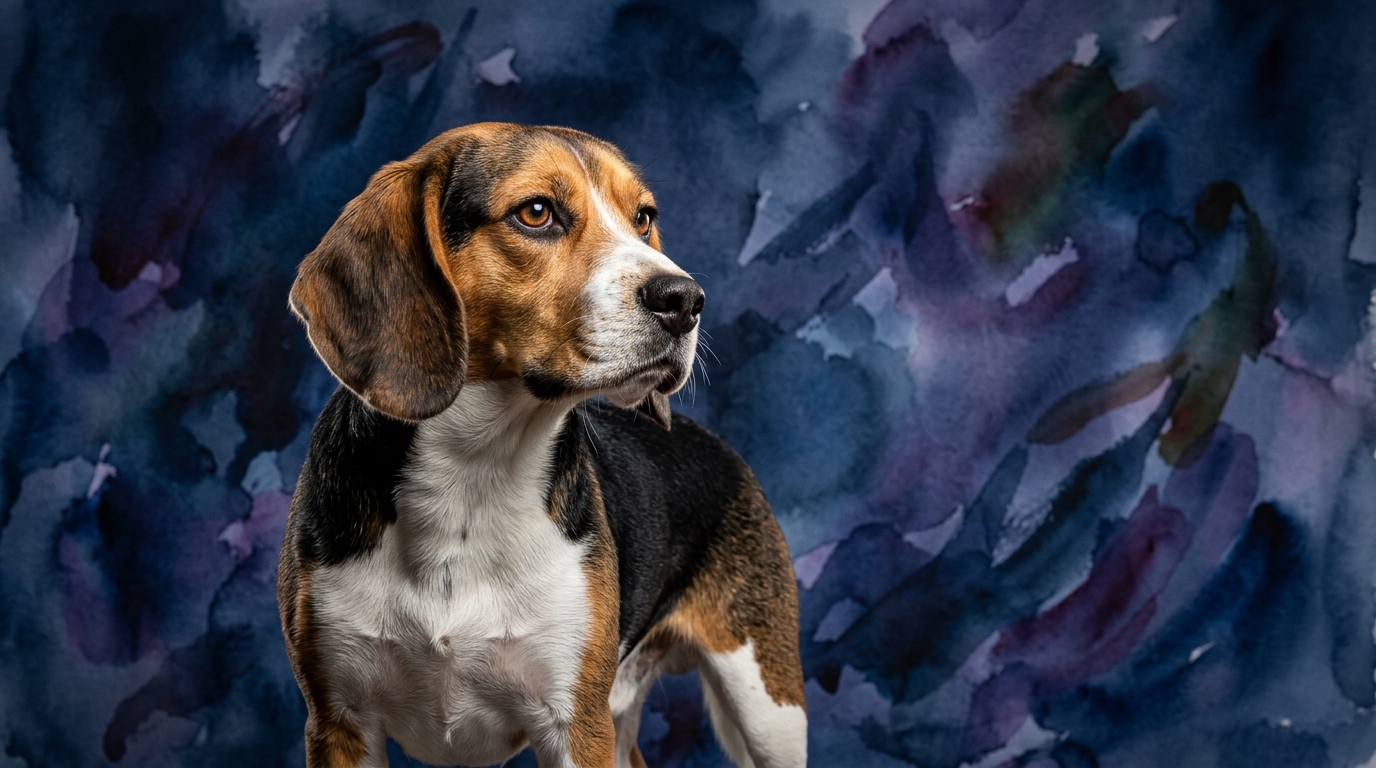
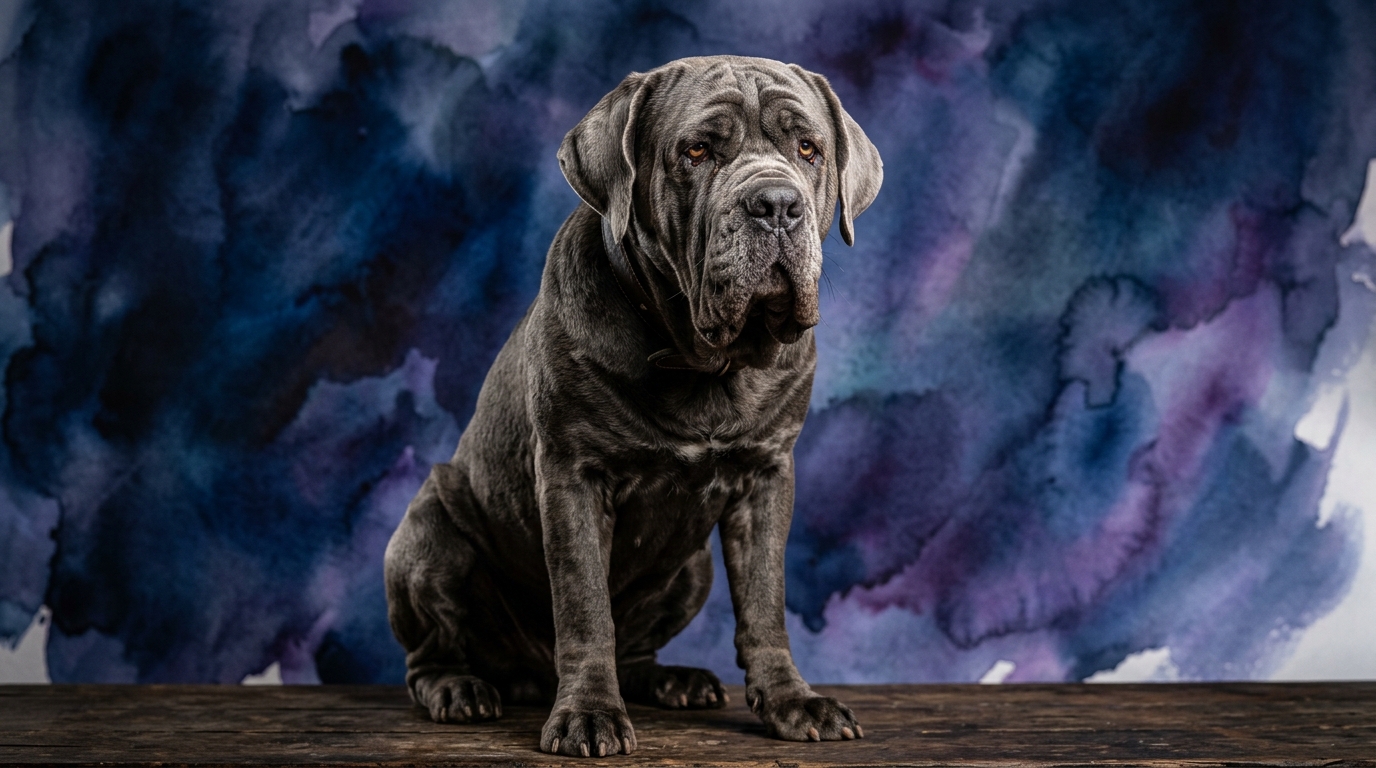
Side-by-Side IQ Profile: Beagle vs. Neapolitan Mastiff
At The Cosmic Pet Pet IQ Lab, we analyze canine intelligence across five key dimensions. The Beagle, a dog from the Hound group, holds a Coren rank of #72, reflecting its unique cognitive strengths. Its Problem Solving is rated 4/5, indicating a strong ability to navigate complex situations, particularly those involving scent. Training Speed for the Beagle is 2/5, suggesting a more independent learning curve. Social Intelligence stands at 3/5, showing an adequate understanding of pack dynamics and human cues. Its Instinctive Drive is an impressive 5/5, showcasing an unparalleled commitment to its primary instinct. Finally, its Memory is 4/5, demonstrating a good capacity for recall, especially related to its drives.
The Neapolitan Mastiff, a Working group dog, is not Coren-ranked, yet possesses a distinct cognitive profile suited to its role. Its Problem Solving is 3/5, indicating practical, task-oriented thinking. Training Speed is 3/5, suggesting a moderate pace of learning with consistent methods. Social Intelligence matches the Beagle at 3/5, reflecting its awareness of its family and surroundings. Its Instinctive Drive is also 3/5, focusing more on guardianship than active pursuit. The Neapolitan Mastiff’s Memory is 3/5, signifying a solid ability to retain routines and experiences relevant to its protective duties.
Where the Beagle Wins Cognitively
The Beagle’s cognitive architecture shines brightest in areas directly tied to its ancestral purpose. Its Problem Solving, rated 4/5 compared to the Neapolitan Mastiff’s 3/5, is particularly adept at unraveling complex scent trails, navigating obstacles, and persistent searching. Beagles leverage their keen sense of smell to solve 'where is it?' puzzles with remarkable efficiency, often outmaneuvering barriers to reach a perceived reward, such as a hidden treat or a captivating aroma. Their cognitive energy is channeled into deciphering environmental mysteries, a testament to their focused mental capabilities.
The Beagle's Instinctive Drive, a perfect 5/5 against the Mastiff's 3/5, is not merely a physical trait but a profound cognitive commitment. This intense, singular focus on scent allows them to filter out myriad distractions and dedicate immense brainpower to tracking. Tracking is a highly complex cognitive task involving sophisticated memory, spatial reasoning, and discrimination, making their unwavering dedication to an odor a true mental superpower. This drive means their mental faculties are always 'on' when a scent is present, processing a constant stream of information.
Furthermore, the Beagle’s Memory, rated 4/5 compared to the Neapolitan Mastiff’s 3/5, is intrinsically linked to their powerful drive. They possess a strong recall for the locations of scents, successful hunting paths, and the precise spots where interesting smells were last encountered. This memory is highly functional, allowing them to build a detailed and accurate mental map of their olfactory world, which is crucial for their primary purpose of trailing and discovery.
Where the Neapolitan Mastiff Wins Cognitively
While the Beagle excels in scent-driven tasks, the Neapolitan Mastiff demonstrates distinct cognitive strengths aligned with its role as a guardian. Although both breeds share a 3/5 rating for Social Intelligence, the *nature* of this intelligence differs significantly. The Neapolitan Mastiff's social acumen is geared towards discernment and protection. They are adept at evaluating intentions, recognizing subtle shifts in human body language, and understanding the social hierarchy within their family unit. This allows them to act as vigilant, discerning guardians, making nuanced judgments about who is a friend or a potential threat, a cognitive strength crucial for their protective role.
The Neapolitan Mastiff's Training Speed, rated 3/5 compared to the Beagle's 2/5, indicates a slightly quicker grasp of obedience commands. This is particularly true when training aligns with their desire to please their family or maintain order. Their cognitive process allows for a more direct absorption of structured commands, provided the motivation is clear and consistent. This makes them more receptive to formal instruction and routine compared to the Beagle's often scent-distracted learning style, where external stimuli can easily hijack their attention.
Regarding Problem Solving, while rated lower than the Beagle at 3/5, the Neapolitan Mastiff's abilities often manifest in practical, real-world scenarios related to their protective duties. They might figure out how to subtly block an entryway, position themselves strategically to observe their territory, or intervene in a perceived conflict with a calculated presence. Their cognitive approach is less about abstract puzzles and more about applying logical solutions to maintain security and order within their domain, showcasing a different, yet effective, form of intelligence.
Which is Easier to Train and Why
When comparing training ease, the Neapolitan Mastiff generally presents a more straightforward experience than the Beagle, despite both having their unique challenges. The Neapolitan Mastiff's training speed is rated 3/5, compared to the Beagle's 2/5. This difference stems from the fundamental drivers of each breed. Neapolitan Mastiffs, as working dogs, often possess a desire to please their family and respond to clear, consistent leadership. Their protective instincts mean they can be motivated by the desire to maintain order and security, making them receptive to commands that establish routine and boundaries. While they can be stubborn, their willingness to cooperate, especially in tasks perceived as beneficial to the household, makes them more amenable to structured obedience.
In contrast, the Beagle's powerful instinctive drive (5/5) is overwhelmingly directed towards scent. A Beagle's brain is constantly processing olfactory information, making it incredibly difficult to capture and hold their attention during training sessions, especially outdoors. A Beagle might 'forget' a command if an interesting scent crosses their path, not out of defiance, but because their cognitive processing prioritizes that olfactory stimulus above all else. This isn't a lack of intelligence, but a difference in cognitive wiring, making consistent recall and off-leash training particularly demanding for Beagles. Their independent nature, honed over centuries of solo hunting, also means they are less inclined to automatically defer to human instruction, requiring more patience, creativity, and high-value rewards to achieve consistent results.
Which Suits Active Owners vs. Relaxed Owners
For owners seeking a highly active companion, the Beagle is the clear choice. Their extraordinary instinctive drive (5/5) and boundless energy demand regular, stimulating exercise that engages both their bodies and their incredibly sharp noses. Beagles thrive on long walks, challenging scent games, and opportunities to explore, making them ideal for individuals or families who enjoy hiking, running, or participating in canine sports like Scent Work or agility. Their cognitive satisfaction comes from engaging their primary sense and fulfilling their innate desire to track and investigate. A Beagle with insufficient mental and physical exercise can become bored, leading to destructive behaviors or excessive vocalization, a direct result of their powerful cognitive and physical engines not being properly utilized.
Conversely, the Neapolitan Mastiff is far better suited for more relaxed owners. While they require daily walks to maintain health and prevent obesity, their energy levels are considerably lower, and their instinctive drive (3/5) is geared more towards watchful guardianship than active pursuit. They are content with a comfortable home environment, preferring to observe and protect their family from a vantage point. Their cognitive needs revolve around companionship, clear routines, and a sense of purpose within their family unit, rather than high-octane physical challenges. Owners who appreciate a calm, dignified presence and are prepared for a dog that prefers lounging by their side to scaling mountains will find the Neapolitan Mastiff a rewarding companion. They need space and a secure yard, not necessarily for constant activity, but for comfortable movement and patrolling their perceived territory.
The Verdict
Choose a Beagle if you are an active individual or family passionate about outdoor activities, willing to dedicate significant time to engaging their powerful scent drive, and prepared for a charming but independently-minded companion.
Opt for a Neapolitan Mastiff if you desire a calm, watchful, and deeply loyal guardian for a more relaxed home environment, prioritizing companionship and a dignified presence over high-energy adventures.
🧠 Find Your Pet's IQ Score
Our Pet IQ Lab assessment covers 25+ tests across 5 cognitive dimensions — personalized to your breed.
Take the Full IQ Test →Frequently Asked Questions
Is a Beagle or Neapolitan Mastiff better for a first-time dog owner?
The Beagle, while demanding in terms of exercise and scent management, is generally more manageable for first-time owners due to its smaller size and often more forgiving nature. The Neapolitan Mastiff's sheer size, protective instincts, and potential for stubbornness require a confident, experienced owner.
Which breed is more likely to escape a yard?
A Beagle is significantly more likely to escape a yard, driven by their powerful scent instinct. They will follow a captivating smell over, under, or through fences, making a securely fenced yard and vigilant supervision crucial. Neapolitan Mastiffs are more territorial and generally less inclined to roam once they establish their boundaries.
How do their problem-solving skills differ in a home environment?
A Beagle's problem-solving in a home often involves figuring out how to access food, open cabinets, or locate hidden treats, driven by their olfactory curiosity. A Neapolitan Mastiff's problem-solving might focus on navigating tight spaces, positioning themselves to observe, or subtly blocking a perceived threat at the door, leveraging their spatial awareness and protective nature.