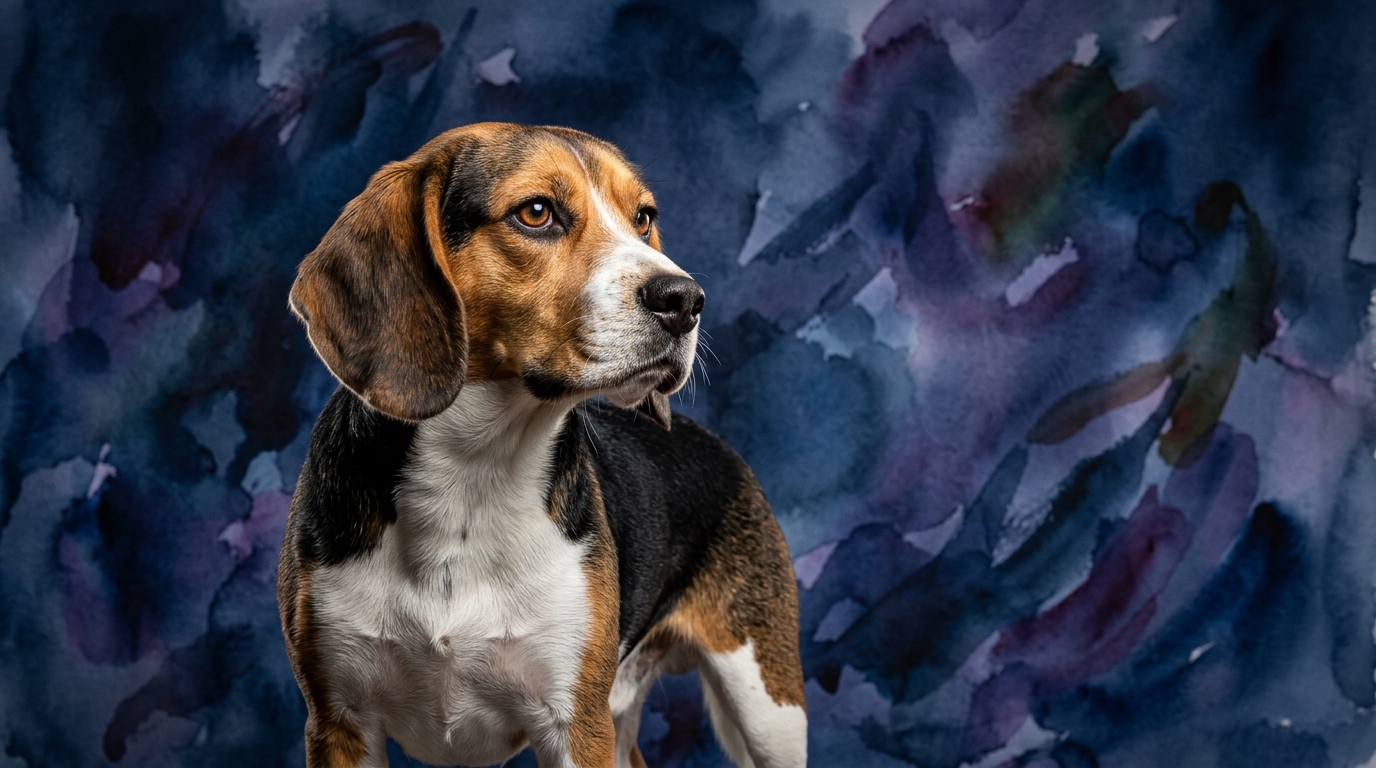

Side-by-Side Cognitive Profiles: Beagle vs. Old English Sheepdog
At The Cosmic Pet Pet IQ Lab, we evaluate canine intelligence across five key dimensions, providing a nuanced understanding beyond simple obedience. Let's break down the cognitive blueprints of the Beagle and the Old English Sheepdog (OES).
The Beagle, a Hound breed, registers a Coren rank of #72, placing it in the category of fair working intelligence. Its Problem Solving score is 4/5, indicating a strong capacity for independent thought, particularly when driven by instinct. Training Speed, however, is rated 2/5, reflecting a potential challenge in quick command acquisition. Social Intelligence stands at 3/5, suggesting moderate adaptability in group dynamics, while its Instinctive Drive is an impressive 5/5, highlighting its powerful, innate purpose. Memory for a Beagle is 4/5, excellent for recalling complex scent trails.
In contrast, the Old English Sheepdog, a Herding breed, holds a more favorable Coren rank of #44, signaling above-average working intelligence. Its Problem Solving ability is 3/5, demonstrating practical intelligence but perhaps less abstract reasoning than some breeds. Training Speed is 3/5, indicating a moderate pace for learning new commands. Social Intelligence matches the Beagle at 3/5, signifying a similar capacity for interaction. Its Instinctive Drive is also 3/5, reflecting a strong but manageable herding impulse. The OES's Memory is rated 4/5, suggesting a good retention of routines and learned behaviors.
Comparing these dimensions directly, we see that while both breeds share similar scores in Social Intelligence and Memory, their strengths diverge significantly in Problem Solving, Training Speed, and Instinctive Drive. These differences shape their learning styles, trainability, and suitability for various lifestyles.
Where the Beagle's Cognition Shines Brightest
The Beagle truly excels in problem-solving that directly taps into its primary sensory world: scent. With a Problem Solving score of 4/5, this breed demonstrates remarkable ingenuity and persistence when unraveling a scent puzzle. This isn't about solving complex logic games, but rather meticulously tracing an elusive odor through varied environments, overcoming obstacles like dense undergrowth or crossing water, purely driven by its nose.
This superior problem-solving capability is inextricably linked to its Instinctive Drive, which is rated a perfect 5/5. A Beagle's drive to follow a scent is almost unparalleled, leading it to independently work through challenges that would deter many other breeds. Its memory score of 4/5 further supports this, allowing it to recall intricate scent patterns and previous pathways, building on past experiences to locate its quarry or track a specific trail. For tasks requiring independent, scent-driven deduction and an unwavering focus on a olfactory goal, the Beagle's cognitive architecture is exquisitely adapted.
The Old English Sheepdog's Unique Cognitive Advantages
The Old English Sheepdog's cognitive strengths, while different from the Beagle's, are equally impressive within its own domain. Its Coren rank of #44 places it significantly higher in terms of working and obedience intelligence, suggesting a greater general capacity for understanding and executing commands. While its Problem Solving score is 3/5, this reflects a practical intelligence geared towards managing livestock and navigating complex social structures within a flock, rather than abstract puzzles.
The OES's Training Speed of 3/5, a notch above the Beagle's 2/5, indicates a more receptive learner in structured training environments. This breed is often more eager to please and less prone to independent distractions than a scent hound, making it generally more amenable to command-based learning. Its memory score of 4/5, combined with its herding instincts, allows it to retain complex routines and understand the nuanced movements required for managing animals, or even remembering household rules and family dynamics. This blend of practical problem-solving and moderate trainability makes the OES adept at roles requiring consistent understanding and application of learned behaviors.
Navigating Training: Beagle vs. Old English Sheepdog
When it comes to ease of training, the Old English Sheepdog generally presents a more straightforward path than the Beagle. The OES's Training Speed of 3/5 reflects a moderate eagerness to learn and respond to commands. Their history as herding dogs means they are often attuned to human direction and possess a desire to work collaboratively. While they can have an independent streak typical of herding breeds, it's usually channeled into their work rather than outright defiance. They thrive on clear, consistent communication and positive reinforcement, often learning new cues within a reasonable number of repetitions.
The Beagle, with a Training Speed of 2/5, can be considerably more challenging to train in conventional obedience. Their overwhelming Instinctive Drive (5/5) means that once a compelling scent is detected, their focus on human commands can vanish almost entirely. Their problem-solving abilities are geared towards their olfactory mission, not necessarily to deciphering human requests. This isn't a lack of intelligence, but a prioritization of their powerful natural urges. Training a Beagle requires immense patience, creativity, and often specialized techniques to overcome their inherent distractions, making early and consistent training crucial to managing their independent nature. Real behavioral differences include the Beagle's tendency to 'go deaf' when on a scent, while an OES might be more likely to pause and look to its handler for direction even if distracted.
Matching Breeds to Lifestyles: Active vs. Relaxed Owners
The choice between a Beagle and an Old English Sheepdog also hinges significantly on an owner's lifestyle and activity level. For active owners who relish outdoor adventures and can provide consistent mental and physical stimulation, the Beagle is an excellent fit. Their powerful instinctive drive and need to follow scents mean they thrive on long walks, scent work, and exploring varied environments. They require daily, vigorous exercise to prevent boredom and destructive behaviors, making them ideal companions for hikers, runners, or those interested in canine scent sports. Their independent nature, while challenging in training, means they can be content exploring on their own terms once their exercise needs are met.
The Old English Sheepdog, while also an active breed, suits owners who appreciate a more structured, purposeful activity routine rather than relentless, independent exploration. Their herding background means they enjoy having a 'job' and excel in activities like agility, obedience, or even assisting with farm work. They need regular exercise, including walks, play, and opportunities to run, but their energy is often more easily channeled into directed tasks. Relaxed owners might find the OES's grooming needs daunting, but their generally more compliant nature in training makes them suitable for those who prefer a dog more engaged in family activities and less prone to bolting after a scent. They can be content with a good romp in the yard followed by quality time indoors, provided their daily exercise requirements are met.
The Verdict
Choose the Beagle if you are an active, patient owner who embraces a dog's profound independent drive and can provide ample opportunities for scent exploration and vigorous, engaging exercise.
Opt for the Old English Sheepdog if you seek a trainable, family-oriented companion who thrives on purposeful activity, enjoys being part of household routines, and you are prepared for significant grooming.
🧠 Find Your Pet's IQ Score
Our Pet IQ Lab assessment covers 25+ tests across 5 cognitive dimensions — personalized to your breed.
Take the Full IQ Test →Frequently Asked Questions
Are Beagles difficult to train due to their intelligence?
Beagles aren't difficult to train due to a lack of intelligence, but rather because their powerful instinctive drive for scent often overrides their desire to follow human commands. Their problem-solving skills are highly specialized for tracking, requiring patient and consistent training methods that account for their independent nature.
Do Old English Sheepdogs need a lot of mental stimulation?
Yes, Old English Sheepdogs benefit greatly from mental stimulation, stemming from their background as working herding dogs. They enjoy learning new commands, participating in dog sports like agility, or engaging in puzzle toys to keep their minds active and prevent boredom. Regular training sessions also fulfill this need.
Which breed is better for a first-time dog owner?
For a first-time dog owner, the Old English Sheepdog might be a more manageable choice due to its slightly higher training speed and general eagerness to please, despite its grooming demands. Beagles, while charming, can be more challenging for novices due to their strong scent drive and independent streak, which require consistent and experienced handling.