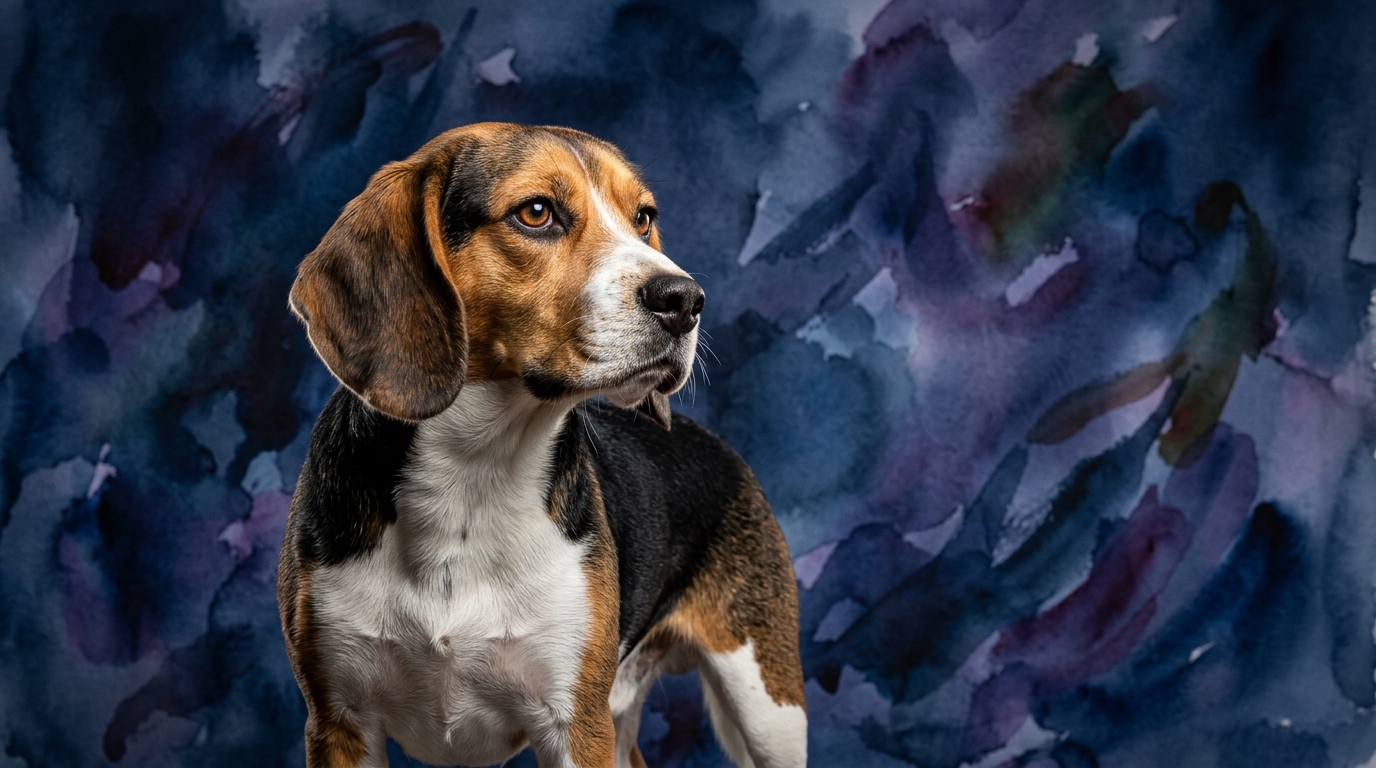

Side-by-Side Cognitive Profiles
The Beagle, holding a Coren rank of #72, presents a cognitive blueprint heavily influenced by its olfactory prowess. Their problem Solving at 4/5 indicates a strong aptitude for navigating complex environments and figuring out how to access desired items, often employing their keen senses. However, their training Speed is a more challenging 2/5, largely due to a profound instinctive Drive (5/5) to follow scents, which frequently overrides human directives. Social Intelligence stands at 3/5, suggesting a moderate ability to interpret human cues, while their memory, rated 4/5, is robust, particularly for recalling locations, scents, and past experiences related to their primary drive.
In contrast, the Rhodesian Ridgeback, with a Coren rank of #52, displays a more balanced and independent cognitive profile. Their problem Solving is rated 3/5, practical and often geared towards self-sufficiency rather than intricate puzzles. Training Speed is a moderate 3/5, indicating they can learn, but often require consistent, engaging methods. Social Intelligence is also 3/5, showing a respectable capacity for understanding social dynamics, similar to the Beagle. Their instinctive Drive, at 3/5, is present but less overwhelming than a Beagle's, focused more on guarding and tracking. Memory, at 3/5, is solid, allowing them to retain learned behaviors and recognize familiar situations.
Where the Beagle Excels Cognitively
The Beagle's primary cognitive advantage lies in its specialized instinctive Drive (5/5) and memory (4/5) when applied to their core purpose. This breed possesses an extraordinary capacity for scent discrimination and tracking, a skill refined over centuries for hunting small game. While some might perceive this drive as a distraction, it represents a highly developed cognitive function for processing vast amounts of olfactory data and remembering complex scent patterns.
Furthermore, the Beagle's problem Solving (4/5) ability, when applied to tasks relevant to their instincts, can be quite sophisticated. They excel at figuring out how to overcome obstacles to reach a scent source or how to navigate intricate environments based on olfactory cues. This isn't about solving abstract puzzles, but about practical, survival-oriented problem-solving deeply intertwined with their sensory world.
Their memory (4/5) supports this prowess, enabling them to recall specific scent trails, the locations of past discoveries, and the behaviors associated with successful foraging or hunting. This robust sensory memory allows them to build a detailed mental map of their environment, rich with olfactory information, which is a significant cognitive strength.
Where the Rhodesian Ridgeback Shows Cognitive Strengths
The Rhodesian Ridgeback's cognitive strengths manifest in a more balanced and independent manner, reflecting their history as versatile guardians and hunters of large game. Their training Speed (3/5) and instinctive Drive (3/5) are higher than the Beagle's, suggesting a greater openness to learning human-directed tasks without being overwhelmingly sidetracked by a single, powerful instinct. This makes them generally more adaptable to diverse training scenarios.
Their problem Solving (3/5) is characterized by practical application and a degree of independent thought. Ridgebacks often assess situations and make decisions based on their own judgment, a trait valuable for a dog expected to protect property or track dangerous prey without constant human instruction. This self-reliance requires a different kind of cognitive processing than the Beagle's scent-focused approach.
While their memory (3/5) and social Intelligence (3/5) scores are moderate, they contribute to a well-rounded cognitive profile that supports their role as a capable companion and protector. They can remember commands and routines, and their social understanding allows for effective communication within a family unit, albeit often with a reserved demeanor. Their Coren rank of #52 indicates a general aptitude for obedience learning that surpasses the Beagle's.
Training Dynamics: Beagle vs. Ridgeback
When considering ease of training, the Rhodesian Ridgeback generally presents a more straightforward path. Their training Speed (3/5) is moderate, meaning they can absorb new commands and routines with consistent effort. Their instinctive Drive (3/5) is present but not as singularly overwhelming as the Beagle's. This allows Ridgebacks to focus more readily on human instructions, making them receptive to various forms of obedience and specialized training. Their independent nature means they respond best to fair, consistent methods and often thrive with a trainer who understands their need for purpose.
The Beagle, with a training Speed (2/5), can be more challenging to train in conventional obedience. Their profound instinctive Drive (5/5) for scent work is a double-edged sword; while it makes them exceptional at tracking, it also means their nose often dictates their actions over human commands. A Beagle on a captivating scent trail can appear "deaf" to calls, not due to a lack of understanding, but because their primary cognitive function is engaged elsewhere. Training a Beagle effectively often requires immense patience, creativity, and a willingness to leverage their scent drive rather than fight against it, perhaps through scent-based games or activities.
Real behavioral differences highlight this distinction. A Ridgeback might thoughtfully consider a command before executing it, sometimes displaying a stubborn streak, but they are generally working with you. A Beagle, however, might follow a command perfectly indoors, only to completely ignore it outdoors if an intriguing scent crosses their path, demonstrating the powerful influence of their specialized cognitive wiring. This isn't a lack of intelligence, but a prioritization of their strongest cognitive function.
Matching Breeds to Owner Lifestyles
For active owners seeking a dog for hiking, running, or dog sports that require focus and collaboration, the Rhodesian Ridgeback often presents a more suitable match. Their instinctive Drive (3/5) is conducive to activities like agility, lure coursing, or even advanced obedience, where their physical prowess can be combined with their moderate training Speed (3/5) and independent problem-solving. They thrive on having a job and require consistent mental and physical engagement to prevent boredom and maintain their balanced temperament.
Owners who appreciate a dog with a reserved but loyal nature and a need for structured exercise will find a good companion in the Ridgeback. Their capacity for problem-solving and moderate drive makes them adaptable to various tasks, from guarding to tracking, provided they receive appropriate guidance and stimulation.
Conversely, the Beagle, despite its powerful instinctive Drive (5/5), might not be the ideal partner for high-intensity, structured activities that demand constant human focus. Their drive is primarily olfactory, leading them to be easily distracted by scents rather than focused on a human-directed task during runs or hikes. While they absolutely need activity, it often takes the form of long sniffing walks, exploring fenced yards, or participating in scent work games, which cater to their innate cognitive strengths.
For more relaxed owners, or those seeking a companion for less structured, more casual exercise, the Beagle can be a good fit, provided their need for scent exploration is met. They enjoy leisurely strolls where they can follow their nose, and are often content to cuddle after their cognitive and physical needs are satisfied. The Rhodesian Ridgeback, however, would likely find a purely relaxed lifestyle insufficient, needing more directed activity to channel their energy and cognitive capacity. Their independent nature and moderate instinctive Drive (3/5) mean they require purpose, even if it's just supervising the yard, to feel fulfilled.
The Verdict
Choose the Beagle if you are fascinated by the world of scent, appreciate a dog with a strong, specialized drive, and are patient with training that leverages their natural inclinations. They are ideal for owners who enjoy long, sniffing walks and can provide ample opportunities for their keen problem-solving and memory related to olfactory tasks.
Opt for the Rhodesian Ridgeback if you seek a capable, independent companion that requires consistent, engaging training and a structured outlet for their moderate drive and problem-solving skills. They suit active owners who can provide a sense of purpose and appreciate a reserved yet loyal protector.
🧠 Find Your Pet's IQ Score
Our Pet IQ Lab assessment covers 25+ tests across 5 cognitive dimensions — personalized to your breed.
Take the Full IQ Test →Frequently Asked Questions
Do Beagles truly struggle with obedience training?
Beagles don't "struggle" with understanding, but their powerful instinctive drive for scent often overrides their desire to comply with human commands, especially outdoors. Effective training requires patience and methods that incorporate or redirect their natural drive, rather than fight against it.
Are Rhodesian Ridgebacks good family dogs despite their independent nature?
Yes, Rhodesian Ridgebacks can be excellent family dogs, forming strong bonds with their human companions. Their social intelligence allows them to integrate well, but their independent streak means they thrive with clear boundaries and consistent leadership. They are often reserved with strangers but fiercely loyal to their family.
How does Coren rank relate to these breeds' IQ scores?
Coren rank primarily measures a dog's "working and obedience intelligence," reflecting how quickly they learn new commands and comply. The Beagle's #72 rank and lower training speed reflect their strong independent drive, while the Ridgeback's #52 rank indicates a more responsive learning capacity in this specific area. The IQ scores provide a more nuanced breakdown of different cognitive dimensions.