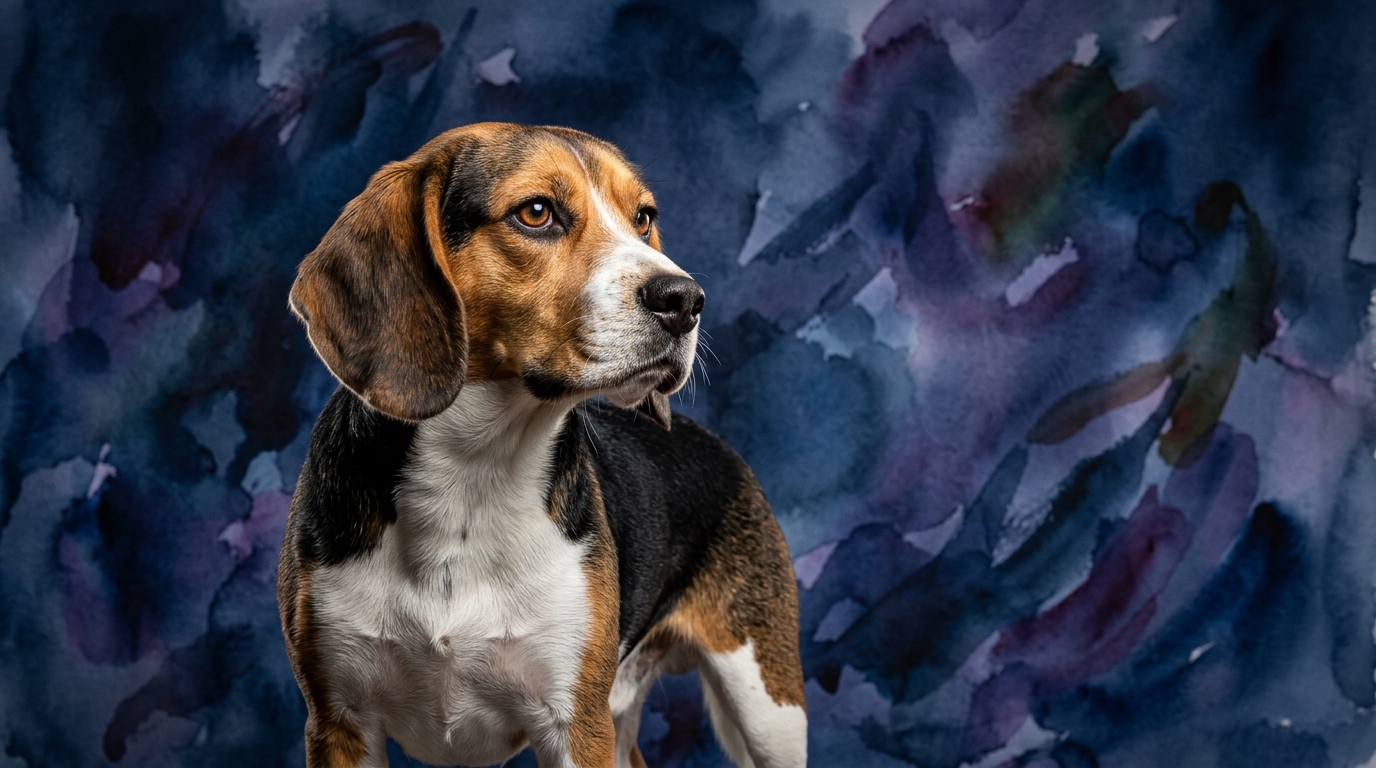
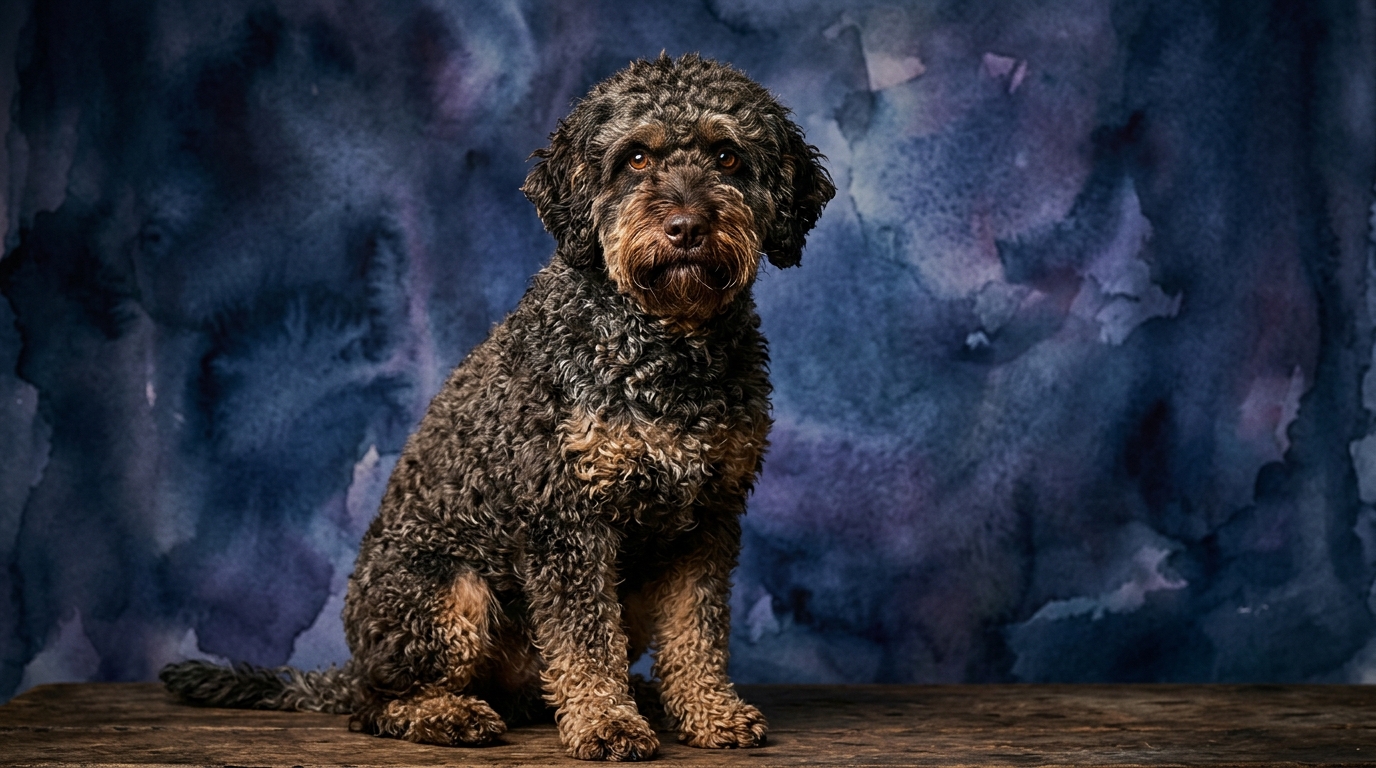
Side-by-Side IQ Profile: Beagle vs. Spanish Water Dog
To understand the cognitive landscape of these two distinct breeds, we examine their profiles across five key dimensions as assessed by The Cosmic Pet Pet IQ Lab:
**Beagle (Hound, Coren Rank #72):**
**Problem Solving (4/5):** Beagles excel at navigating complex scent trails and overcoming obstacles to reach a desired odor. Their persistence in following a scent often requires creative solutions, like finding alternative routes or working through environmental challenges.
**Training Speed (2/5):** While capable, Beagles are not quick learners of new commands. Their powerful olfactory drive frequently overrides human instruction, demanding consistent, patient, and highly rewarding training to maintain focus.
**Social Intelligence (3/5):** Beagles are generally amiable, forming bonds with humans and other dogs. Their social intelligence allows integration into packs and families, though their primary focus often remains on scent tasks over intricate social cues.
**Instinctive Drive (5/5):** This is the Beagle's defining cognitive trait. Their drive to follow a scent is exceptionally strong, almost overwhelming, making them relentless in pursuit of odors, a quality perfected for hunting.
**Memory (4/5):** Beagles possess robust memory, especially for recalling scent patterns and interesting smell locations. They remember complex routes and specific scent associations over long periods, crucial for tracking.
**Spanish Water Dog (Herding, Not Coren-Ranked):**
**Problem Solving (3/5):** SWDs show moderate problem-solving, capable of figuring out tasks related to their herding and working roles. They adapt to changing environmental situations, though with less independent ingenuity than a Beagle pursuing a scent.
**Training Speed (3/5):** These dogs show average aptitude for learning new commands, responding reasonably well to positive reinforcement. Eager to please handlers, this aids in quicker acquisition of new behaviors.
**Social Intelligence (3/5):** SWDs are socially capable, forming strong attachments to family and often reserved with strangers. Their social understanding is geared towards collaborative work with people and managing livestock.
**Instinctive Drive (3/5):** The SWD's instinctive drive is balanced, rooted in herding. They have a natural inclination to gather and control, but this drive is more amenable to direction and less singularly focused.
**Memory (3/5):** SWDs possess functional memory, allowing recall of learned commands, routines, and environmental layouts. This supports consistent task performance and remembering family members.
Where the Beagle Wins Cognitively
The Beagle’s cognitive strengths are deeply rooted in its olfactory prowess and relentless pursuit. Its **Instinctive Drive (5/5)** is unparalleled; no other breed matches the single-minded dedication a Beagle brings to a scent trail, allowing tireless work. This powerful drive fuels its **Problem Solving (4/5)**, as a Beagle must ingeniously navigate obstacles, decipher faint traces, and strategize routes to follow an elusive scent. Whether figuring out how to squeeze under a fence or tracking a complex pattern, their solutions are often driven by their nose, showcasing specific ingenuity. Furthermore, their **Memory (4/5)** is particularly strong for scent-related information. A Beagle can recall the faintest nuances of a specific odor or remember a fruitful hunting ground from weeks past, building an internal map of olfactory data. This specialized memory and problem-solving, coupled with supreme instinctive drive, make them masters of scent detection and tracking.
Where the Spanish Water Dog Wins Cognitively
The Spanish Water Dog excels in areas reflecting its versatile working heritage, particularly adaptability and responsiveness. While the Beagle's strengths are highly specialized, the SWD’s come from a more balanced, cooperative profile. Its **Training Speed (3/5)**, though not exceptional, is notably higher than the Beagle's (2/5). This indicates a greater willingness to engage with human instruction and a quicker grasp of new commands, making them more amenable to diverse training. This responsiveness is crucial for a herding dog taking direction in dynamic environments. The SWD’s **Problem Solving (3/5)**, while less singularly focused than the Beagle's scent-driven ingenuity, is geared towards practical tasks and adapting to changing work scenarios. They can assess situations and make decisions within their job, such as moving livestock or navigating terrains under guidance. Their balanced **Instinctive Drive (3/5)**, centered on herding, allows them to channel natural urges into constructive activities directed by their owner, rather than being solely driven by independent sensory input.
Training Aptitude: Which is Easier to Train and Why?
Based on their cognitive profiles, the Spanish Water Dog generally presents as the easier breed to train. The SWD’s **Training Speed (3/5)** reflects a moderate learning aptitude and a greater inclination to work collaboratively. Their herding background fosters a desire for purpose and responsiveness to direction, making them receptive to commands and routines. In contrast, the Beagle’s **Training Speed (2/5)** indicates a more challenging training journey. Their overwhelming **Instinctive Drive (5/5)** to follow scents often overrides human commands. A Beagle on a scent trail can appear "deaf" to its owner, making recall or focus training particularly arduous. While both require consistency, the Beagle demands exceptional patience and creative, high-value rewards to compete with the allure of a captivating odor. Behavioral differences highlight this: an SWD is more likely to check in with its owner seeking guidance, whereas a Beagle might plunge into an olfactory adventure, requiring significant effort to re-engage attention.
Owner Suitability: Active vs. Relaxed Lifestyles
Both Beagles and Spanish Water Dogs require active engagement, but the *nature* of that activity differs significantly. The Beagle, with its supreme **Instinctive Drive (5/5)** for scent work and moderate **Problem Solving (4/5)**, suits owners prepared for consistent, stimulating walks allowing sniffing, or keen on dog sports like scent work. They need a secure yard because their nose will lead them astray. While content to nap after a good "hunt," their independent pursuit of odor means a relaxed owner might find them challenging if mental and physical needs aren't met. The Spanish Water Dog, with its balanced **Instinctive Drive (3/5)** and greater **Training Speed (3/5)**, thrives with active owners providing a job or engaging, collaborative activities. They excel in dog sports like agility, obedience, or dock diving, leveraging athleticism and desire to work alongside their person. A relaxed owner might struggle with an SWD's need for purpose and mental engagement, potentially leading to boredom. Neither is suited for a purely sedentary lifestyle, but the SWD demands more interactive, directed activity, while the Beagle needs outlets for its independent, olfactory explorations.
The Verdict
Choose a Beagle if you are fascinated by the power of scent, are prepared for patient, consistent training to manage their independent drive, and want a companion for long, sniff-filled adventures.
Opt for a Spanish Water Dog if you seek a versatile, biddable working partner for dog sports, are committed to providing consistent mental and physical challenges, and appreciate a strong, collaborative bond.
🧠 Find Your Pet's IQ Score
Our Pet IQ Lab assessment covers 25+ tests across 5 cognitive dimensions — personalized to your breed.
Take the Full IQ Test →Frequently Asked Questions
Are Beagles difficult to train?
Beagles can be challenging to train due to their powerful instinctive drive to follow scents, which often distracts them from human commands. Their training speed is rated 2/5, meaning they require significant patience, consistency, and high-value rewards to learn new behaviors effectively.
What kind of mental stimulation does a Spanish Water Dog need?
Spanish Water Dogs thrive on mental stimulation that engages their herding instincts and desire to work collaboratively. Activities like obedience, agility, puzzle toys, and learning new tricks are excellent, providing purpose and preventing boredom.
How do the breeds' social intelligence scores compare in practical terms?
Both Beagles and Spanish Water Dogs score 3/5 in social intelligence, but express it differently. Beagles are generally gregarious with other dogs and people, often driven by their nose. SWDs bond strongly with their family and can be more reserved with strangers, showing their social intelligence through a watchful, loyal demeanor.