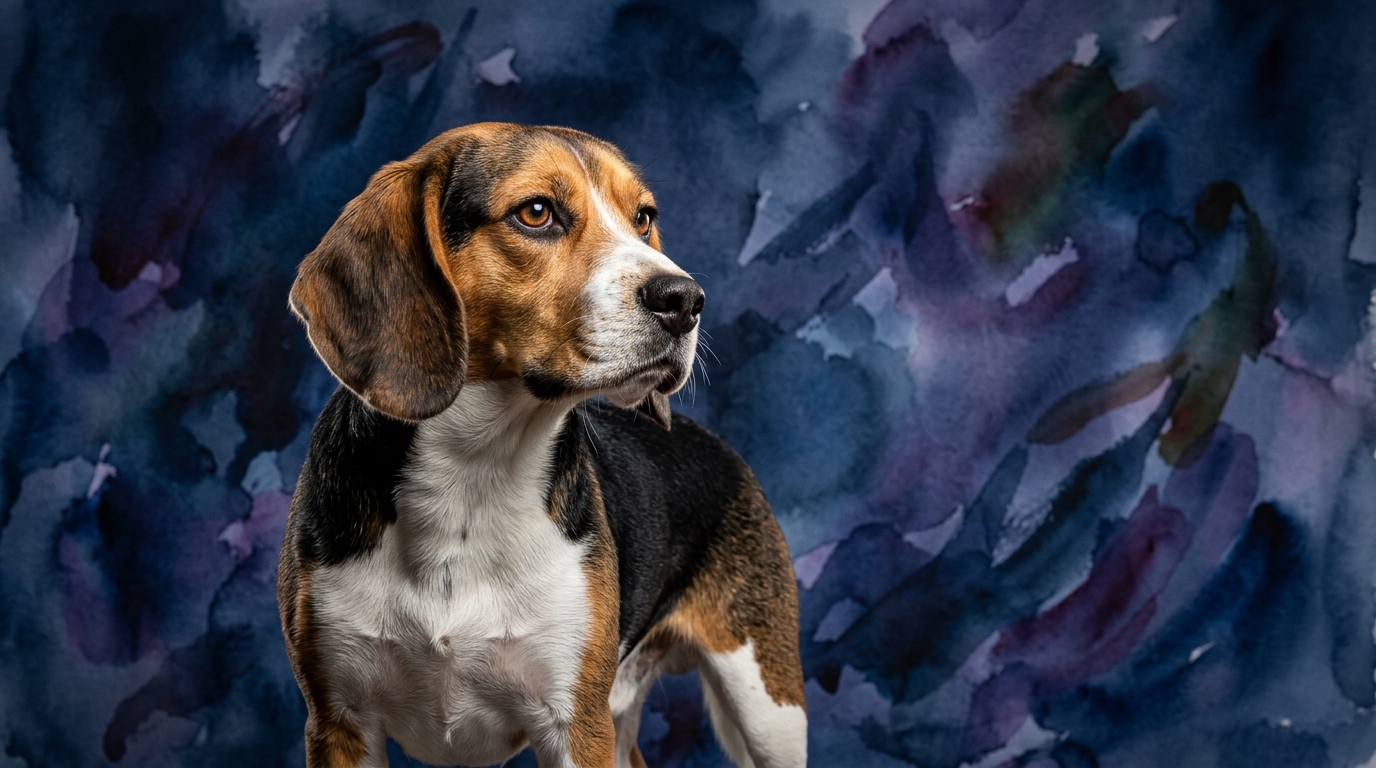
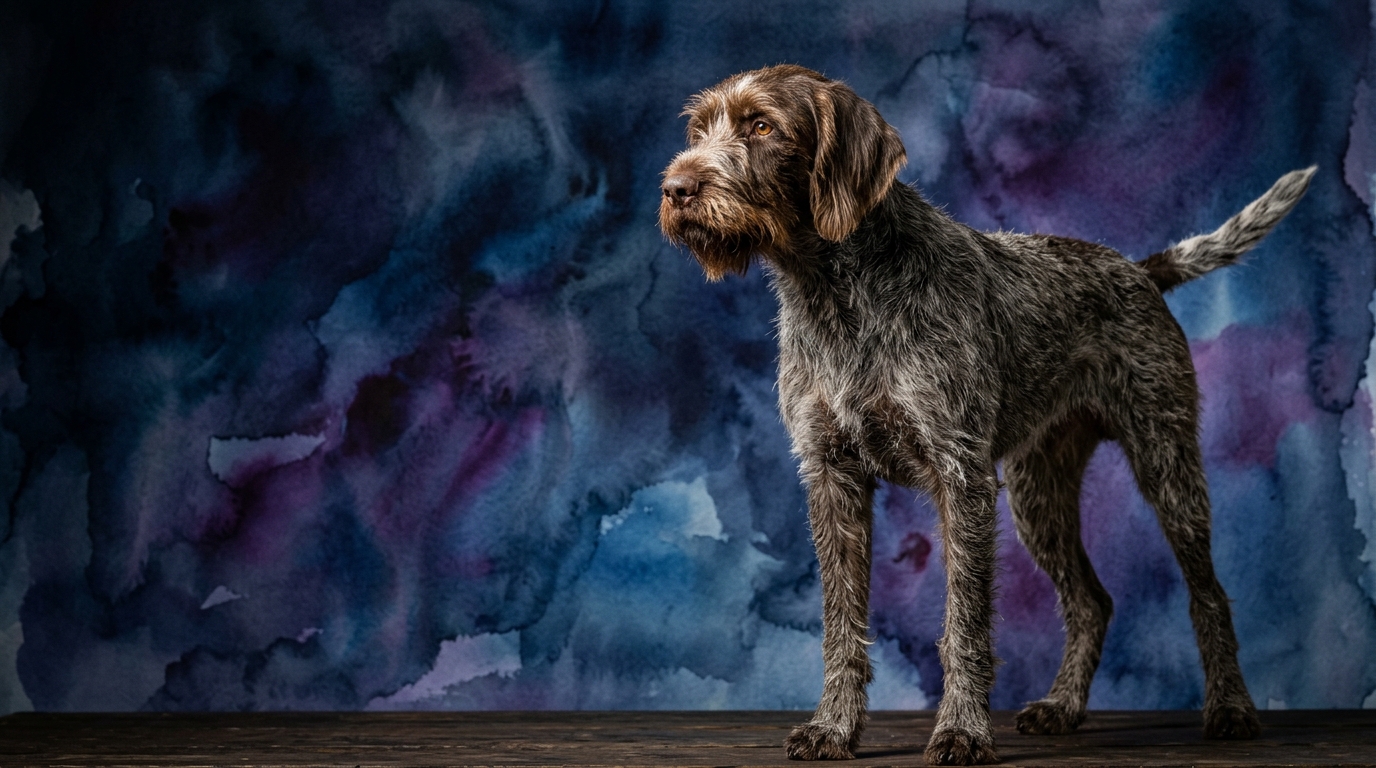
Side-by-Side IQ Profile: Beagle vs. Wirehaired Pointing Griffon
The Cosmic Pet Pet IQ Lab provides a nuanced framework for understanding canine cognition, breaking down intelligence into five key dimensions. For the Beagle, a breed Coren-ranked at #72, its profile illuminates a specialized mind. Its Problem Solving is rated 4/5, not necessarily in abstract puzzles but in navigating complex environments to achieve a goal, often scent-related. Training Speed is 2/5, indicating a slower acquisition of new commands, often challenged by its primary focus. Social Intelligence stands at 3/5, suggesting moderate awareness of human cues and pack dynamics. Its Instinctive Drive is a robust 5/5, reflecting an intense, singular motivation, predominantly its powerful nose. Finally, its Memory is 4/5, particularly effective for recalling scent trails and learned routes.
In contrast, the Wirehaired Pointing Griffon (WPG), a Sporting breed without a Coren ranking, presents a more balanced, albeit less extreme, cognitive profile. Its Problem Solving is 3/5, demonstrating an adequate capacity to figure out novel situations, often in a cooperative hunting context. Training Speed is 3/5, suggesting a more consistent and moderately paced learning curve compared to the Beagle. Social Intelligence also scores 3/5, indicating a similar level of responsiveness to human interaction and social cues. The WPG’s Instinctive Drive is 3/5, present and purposeful for its hunting tasks but not as overwhelmingly singular as the Beagle’s. Its Memory is likewise 3/5, sufficient for remembering commands, routines, and game locations without the Beagle’s specialized depth for scent-specific recall.
Where the Beagle Excels Cognitively
The Beagle's cognitive strengths are profoundly rooted in its olfactory prowess and the drive to utilize it. Its 4/5 Problem Solving score shines brightest when presented with tasks requiring the interpretation of scent information. This isn't about solving a logic puzzle but about finding a hidden item by scent, navigating a complex trail, or using its nose to 'read' the environment to locate its quarry. This capacity for scent-based problem-solving is exceptional, allowing Beagles to persist and innovate in scenarios where other breeds might give up.
Furthermore, the Beagle's 5/5 Instinctive Drive is a double-edged sword that, in the right context, represents a formidable cognitive asset. This intense, almost singular focus on scent means a Beagle will dedicate immense mental energy to tracking, unearthing, and following a trail. This drive fuels its problem-solving abilities, pushing it to overcome obstacles and distractions in pursuit of its olfactory goals. Its 4/5 Memory complements this, enabling it to recall complex scent patterns and the locations associated with them, making it an incredibly effective scent hound capable of retracing intricate paths or remembering where a particular scent was last detected. This combination makes the Beagle a master of its sensory domain, demonstrating a specialized form of cognitive brilliance.
Where the Wirehaired Pointing Griffon Excels Cognitively
The Wirehaired Pointing Griffon's cognitive strengths lie in its balanced applicability and cooperative nature, particularly evident in its Training Speed and more adaptable Instinctive Drive. While its Problem Solving at 3/5 is not as specialized as the Beagle's, it indicates a versatile mind capable of assessing various situations and finding solutions relevant to its hunting and companionship roles. This isn't limited to scent work but extends to understanding handler cues in different environments or adapting to changing hunting conditions.
The WPG’s 3/5 Training Speed is a distinct advantage, signifying a dog that is generally more responsive and quicker to learn a broader range of commands and behaviors. This moderate pace of learning, combined with its 3/5 Social Intelligence, means the WPG is often more attuned to human instruction and eager to collaborate, making it an effective partner in varied activities beyond just scent work. Its Instinctive Drive, also 3/5, is strong enough for its sporting purposes but not so overwhelming that it overshadows its willingness to engage with its handler. This balance allows the WPG to excel in tasks requiring both independent action and handler direction, demonstrating cognitive flexibility and a trainable drive that sets it apart from the more singularly focused Beagle.
Training Dynamics: Beagle vs. Wirehaired Pointing Griffon
When it comes to training, the cognitive profiles of the Beagle and the Wirehaired Pointing Griffon present very different experiences. The Beagle’s 2/5 Training Speed indicates that new commands and behaviors are acquired slowly, a direct consequence of its profound 5/5 Instinctive Drive. A Beagle’s world is dominated by scent, and once its nose is engaged, it becomes incredibly difficult to redirect its attention to a human command. This strong drive, while invaluable for specific scent work, translates into a dog that can seem 'stubborn' or 'distracted' during general obedience training. For instance, teaching a reliable recall to a Beagle requires immense consistency and high-value rewards to compete with the allure of a captivating scent trail, as its natural inclination is to follow its nose wherever it leads, often ignoring calls.
In contrast, the Wirehaired Pointing Griffon, with its 3/5 Training Speed and 3/5 Instinctive Drive, generally offers a more cooperative training experience. While still possessing a sporting drive, it is less overwhelming and more amenable to human direction. WPGs are typically more focused on their handler during training sessions, learning commands at a moderate but steady pace. Their balanced drive means they can be motivated by a variety of rewards and are less likely to become completely engrossed in a single sensory input to the exclusion of their handler. This makes the WPG generally easier to train for a wider range of obedience and advanced tasks, as their inherent drive is more integrated with a desire to work alongside humans rather than solely for their own sensory gratification. Real behavioral differences include a WPG's tendency to check back with its handler during walks versus a Beagle's propensity to 'go deaf' when on a scent.
Matching Breeds to Lifestyles: Active vs. Relaxed Owners
The distinct cognitive profiles of the Beagle and the Wirehaired Pointing Griffon directly influence which type of owner they will thrive with. The Beagle, with its potent 5/5 Instinctive Drive and specialized 4/5 Problem Solving in scent work, is best suited for active owners who are prepared to channel this intense energy and mental focus. A Beagle requires consistent engagement for its nose, whether through structured scent games, tracking activities, or long, exploratory walks where it can follow interesting smells. A relaxed owner who cannot provide sufficient outlets for this innate drive will likely encounter behavioral challenges such as persistent howling, destructive chewing, or escape attempts, as the Beagle seeks to fulfill its profound need for olfactory exploration independently. Its moderate 3/5 Social Intelligence means it appreciates companionship but its primary motivation is often internal and sensory.
The Wirehaired Pointing Griffon, while also an active sporting breed, offers a different dynamic. Its balanced 3/5 Instinctive Drive and 3/5 Training Speed make it suitable for active owners who seek a versatile and cooperative canine companion. WPGs enjoy various activities, from hiking and swimming to agility and hunting, and they typically engage in these with their human partners. They thrive on having a 'job' and appreciate being involved in family activities, making them a good fit for owners who enjoy an active outdoor lifestyle and want a dog to share it with. While they need regular exercise and mental stimulation, their cognitive balance means they are often more adaptable to a varied schedule and less singularly driven than a Beagle, potentially making them a more manageable choice for an active family rather than a dedicated outdoor enthusiast whose primary focus is scent work.
The Verdict
Choose a Beagle if you are a dedicated, active owner fascinated by scent work, prepared to manage a strong independent drive, and eager to provide consistent mental stimulation through olfactory challenges.
Opt for a Wirehaired Pointing Griffon if you seek a versatile, cooperative, and moderately active companion who is generally easier to train and eager to participate in a wide range of outdoor and family activities.
🧠 Find Your Pet's IQ Score
Our Pet IQ Lab assessment covers 25+ tests across 5 cognitive dimensions — personalized to your breed.
Take the Full IQ Test →Frequently Asked Questions
Are Beagles truly stubborn during training?
Beagles are often perceived as stubborn due to their profound 5/5 Instinctive Drive, which prioritizes scent following over human commands. Their 2/5 Training Speed means they learn new behaviors slowly, especially when distracted by their environment, requiring immense patience and consistent, high-value motivation from their handler.
Does the Wirehaired Pointing Griffon need a lot of exercise?
Yes, as a sporting breed, the Wirehaired Pointing Griffon requires a significant amount of daily exercise to satisfy its 3/5 Instinctive Drive and maintain its physical and mental well-being. This can include long walks, running, swimming, or engaging in dog sports, as they thrive on purposeful activity and companionship during exercise.
How do their social intelligence scores impact living in a family?
Both breeds have a 3/5 Social Intelligence score, indicating they are generally aware of human cues and capable of forming bonds with their family members. This suggests they can integrate well into a family environment, appreciating companionship without being overly demanding or entirely aloof, making them suitable for households seeking a moderately social canine.