
Side-by-Side IQ Profile: Unpacking Cognitive Strengths
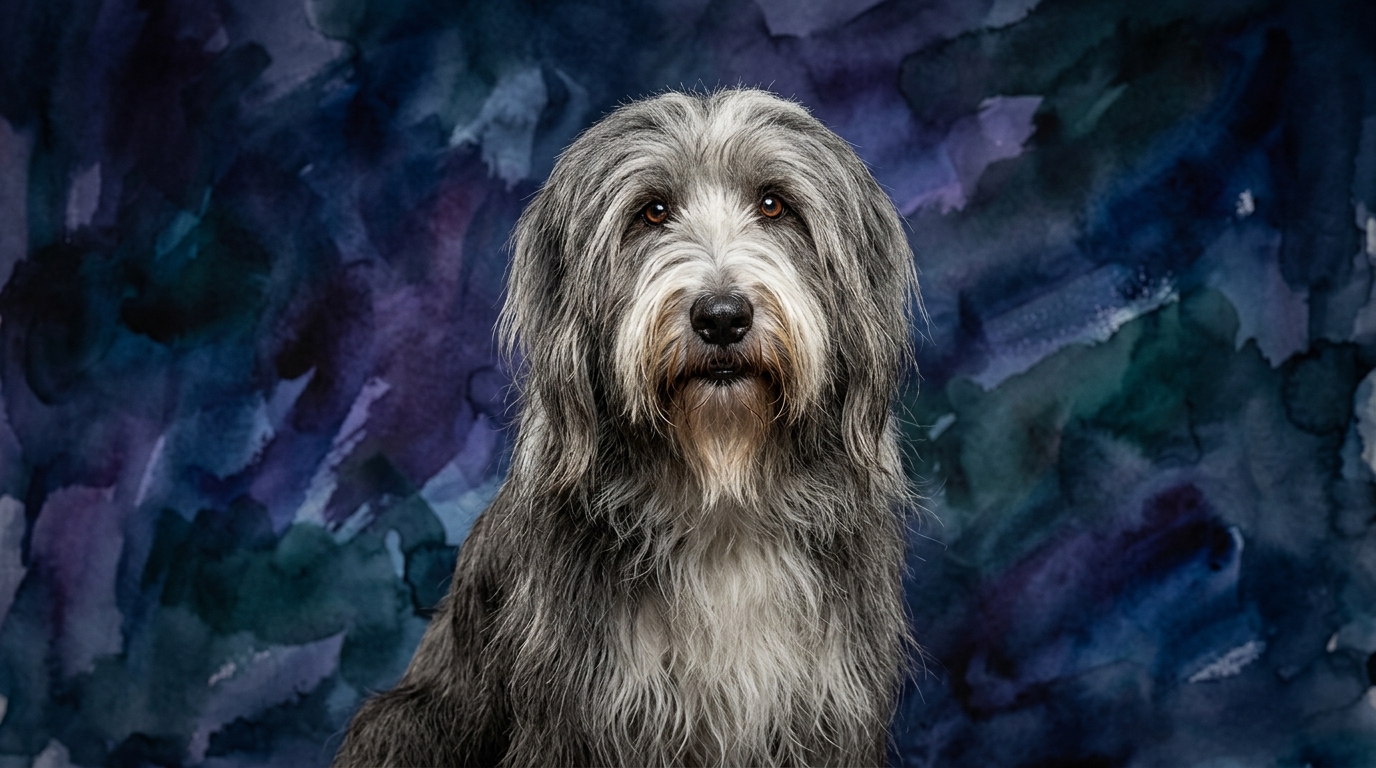
The Cosmic Pet Pet IQ Lab employs a multi-dimensional approach to assess canine intelligence, moving beyond simple obedience to encompass problem-solving, training speed, social intelligence, instinctive drive, and memory. For the Bearded Collie, a breed renowned for its engaging presence, these dimensions paint a picture of a capable and thoughtful working dog. Its Problem Solving score of 4/5 indicates a strong capacity for figuring out complex situations and adapting to new challenges, a crucial trait for managing livestock. Training Speed, also at 4/5, suggests they grasp new commands and routines effectively, though consistent reinforcement is key. Social Intelligence, rated 3/5, reflects their ability to read cues and interact appropriately within a family or working dynamic, without necessarily being overtly manipulative. An Instinctive Drive of 3/5 points to a present but manageable herding impulse, which can be channeled into appropriate activities. Finally, a Memory score of 4/5 confirms their ability to retain learned behaviors and experiences over time, making them reliable companions once lessons are established.
In contrast, the Schipperke, a compact and spirited companion, demonstrates a sharper edge in several cognitive areas, reflected in its impressive Coren rank of #15 compared to the Bearded Collie's #34. The Schipperke truly shines with a top-tier Problem Solving score of 5/5, indicating an exceptional ability to strategize and independently overcome obstacles, often with a clever, sometimes mischievous, flair. Its Training Speed, also a perfect 5/5, highlights its remarkable capacity for rapid learning, absorbing new information with impressive quickness. Like the Bearded Collie, its Social Intelligence stands at 3/5, suggesting a similar level of understanding human and environmental cues, though often filtered through its independent nature rather than a strong desire to please. An Instinctive Drive of 3/5 reveals a strong prey drive and vigilant watchdog tendencies, characteristic of its historical role as a barge dog and vermin catcher. Completing its profile, the Schipperke boasts a Memory score of 5/5, indicating an outstanding ability to recall commands, experiences, and routines with remarkable accuracy and longevity.
Where the Bearded Collie Exhibits Distinct Cognitive Advantages
While the Schipperke boasts higher raw scores in several cognitive dimensions, the Bearded Collie’s intelligence is uniquely tailored by its herding heritage, offering distinct advantages in specific contexts. Its Problem Solving at 4/5, combined with its 3/5 Social Intelligence and Instinctive Drive, manifests as a nuanced ability to manage dynamic, live situations. A Bearded Collie excels at reading the subtle movements and moods of a flock, anticipating their actions, and strategically positioning itself to guide them without resorting to force. This isn't just about solving a static puzzle; it's about continuously interpreting and influencing a fluid, living environment, requiring a different kind of adaptable and collaborative cognitive application.
The Bearded Collie’s cognitive strengths often lie in its thoughtful and cooperative nature. Its 4/5 Memory and Training Speed, while not 5/5, contribute to a dog that forms deep, lasting partnerships with its handlers. They learn complex sequences of commands for herding or agility not just through rote memorization, but by understanding the purpose and flow of the task, making them exceptional partners for intricate, multi-step activities. This breed demonstrates a patient persistence in problem-solving, often preferring to work through a challenge methodically rather than relying solely on quick, independent solutions, a trait that can be invaluable in sustained, collaborative endeavors.
Where the Schipperke Stands Out Cognitively
The Schipperke’s cognitive profile, marked by multiple 5/5 scores, positions it as a truly exceptional independent thinker and rapid learner. Its Problem Solving at 5/5 means this breed is incredibly adept at devising its own solutions to challenges, often displaying ingenuity that can surprise owners. Whether it's figuring out how to open a 'dog-proof' cabinet, outmaneuvering a puzzle toy, or finding a novel way to get attention, the Schipperke's mind is always active, strategizing and innovating. This high problem-solving capacity stems from a history of needing to be self-sufficient and resourceful on barges, where quick thinking was essential for survival and duty.
Complementing its superior problem-solving is its 5/5 Training Speed and 5/5 Memory. A Schipperke can pick up new commands and tricks at an astonishing rate, often after just a few repetitions. This rapid assimilation of information, coupled with its outstanding memory, means that once something is learned – whether a desired behavior or an undesirable habit – it tends to stick. This makes them highly responsive to consistent, engaging training, but also means owners must be diligent in preventing the formation of unwanted behaviors, as these too will be remembered with remarkable clarity. Their quick wit and impressive recall make them formidable competitors in dog sports that demand precision and speed, such as obedience and agility.
Training Dynamics: Which is Easier and Why?
When it comes to ease of training, the Schipperke generally has an edge due to its 5/5 Training Speed and 5/5 Memory. These traits mean it grasps new concepts and retains them with remarkable efficiency. An owner can often teach a Schipperke a new command in fewer sessions compared to many other breeds. However, 'easier' doesn't always mean 'simple.' The Schipperke's strong independence and high problem-solving capacity (5/5) mean they can get bored quickly with repetitive drills and may choose to 'think' for themselves rather than immediately comply if they don't see the value. Engaging their intelligent minds with varied, challenging, and rewarding training methods is crucial to harness their learning potential and prevent stubbornness or mischief.
The Bearded Collie, with its 4/5 Training Speed and 4/5 Memory, is by no means difficult to train; it simply operates on a slightly different cadence. They are eager to please their handlers and form strong working bonds, making them highly amenable to training, though they might take a few more repetitions to solidify a new behavior. Their herding background means they excel in structured, sequential tasks and appreciate consistency. While not as lightning-fast as the Schipperke, the Bearded Collie's cognitive approach is often more collaborative, making them excellent partners for owners who enjoy a steady, patient training journey focused on building a deep understanding and rapport, rather than just quick command acquisition. Behavioral differences often manifest in the Schipperke's tendency towards self-directed action if bored, versus the Collie's more cooperative and thoughtful approach to learning.
Matching Lifestyles: Active Owners vs. Relaxed Owners
Both the Bearded Collie and the Schipperke are active breeds, but their ideal owners and activity types diverge significantly. The Bearded Collie thrives with active owners who enjoy long walks, hikes, or engaging in dog sports like agility, obedience, or herding trials. Their Herding group classification means they possess stamina and a desire for purpose-driven activity. They are best suited for individuals or families who can commit to daily, sustained physical exercise and mental engagement that taps into their collaborative problem-solving and social intelligence. A relaxed owner who cannot provide consistent outlets for their energy and cognitive needs may find a Bearded Collie becoming restless or developing unwanted behaviors out of boredom.
The Schipperke, while smaller, demands an equally, if not more, mentally stimulating environment. Its intense cognitive prowess (5/5 Problem Solving, 5/5 Memory) means it requires an owner who can consistently challenge its mind with puzzle toys, trick training, short bursts of high-intensity play, and varied experiences. They are not content to be couch potatoes; a bored Schipperke is a resourceful Schipperke, often finding its own 'entertainment' through digging, barking, or creative mischief. While they don't necessarily need miles of running like a Collie, they need vigorous, engaging play and mental work. Therefore, neither breed is truly suited for 'relaxed' owners in the sense of minimal engagement; both require active participation, but the *nature* of that activity differs, with the Schipperke demanding more focused mental exertion and the Collie more sustained physical output.
The Verdict
Choose the Bearded Collie if you seek a thoughtful, collaborative partner for sustained outdoor adventures and enjoy a patient, consistent training journey that builds a deep bond.
Opt for the Schipperke if you appreciate a quick-witted, independent thinker who thrives on mental challenges and can provide the consistent, engaging stimulation its sharp mind demands.
🧠 Find Your Pet's IQ Score
Our Pet IQ Lab assessment covers 25+ tests across 5 cognitive dimensions — personalized to your breed.
Take the Full IQ Test →Frequently Asked Questions
Is a Bearded Collie good for first-time dog owners?
A Bearded Collie can be a good fit for first-time owners who are committed to consistent training, socialization, and providing ample exercise. Their cooperative nature makes them responsive, but their energy and grooming needs require dedication.
Do Schipperkes bark a lot?
Schipperkes are known for their vigilant nature and can be quite vocal, often barking to alert their owners to anything unusual. Early training and socialization can help manage excessive barking, but their watchdog instincts are strong.
Which breed is better with children?
Both breeds can be good with children when properly socialized and raised together, but their temperaments differ. Bearded Collies are generally more tolerant and playful, while Schipperkes, though loyal, can be less patient with boisterous play due to their independent nature, making supervision crucial.