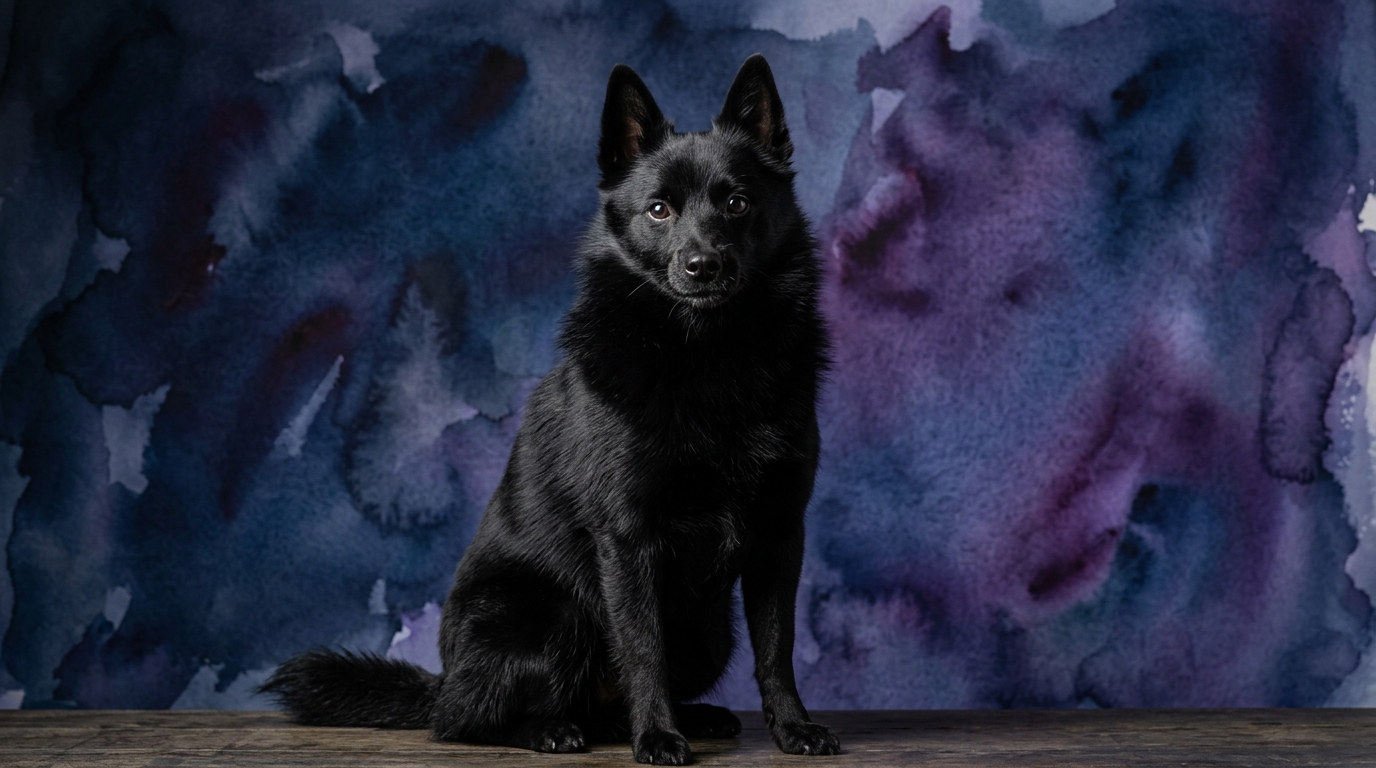
Schipperke at a glance
| IQ Rank / Score | #15 |
|---|---|
| Trainability | ★★★★☆ (4/5) |
| Social Intelligence | ★★★☆☆ (3/5) |
| Lifespan | 12-16 years |
| Shedding | Low to moderate |
| Exercise Needs | Moderate (30-45 min/day) |
| Origin | Belgium |
Decoding the Schipperke Mind: The Autonomous Strategist
The Schipperke, a breed hailing from Belgium, embodies a unique cognitive profile we term the 'Autonomous Strategist.' This isn't just a dog that learns commands quickly; it's a dog that actively processes its environment, identifies opportunities, and devises solutions, often with a mischievous twinkle in its eye. Their intelligence is less about eager obedience and more about independent thought and sophisticated problem-solving.
This strategic mindset is evident in their daily interactions. They don't just react; they anticipate, plan, and execute, whether it's outsmarting a gate latch, orchestrating a play sequence, or meticulously guarding their perceived territory. Understanding this intrinsic drive to strategize is crucial for any owner looking to engage with, rather than merely command, their Schipperke.
Schipperke IQ Profile: A Deeper Dive into Their Cognitive Scores
Our Pet IQ Lab scores reveal the Schipperke's impressive cognitive landscape. With a **Problem Solving** score of 4/5, they demonstrate a keen ability to navigate complex situations, figure out puzzles, and adapt to new challenges, consistently seeking innovative solutions. This is the hallmark of their 'Autonomous Strategist' nature, making them formidable little thinkers.
Their **Training Speed** also ranks high at 4/5, aligning perfectly with Stanley Coren's #15 obedience ranking. Schipperkes grasp new commands and routines with remarkable swiftness, provided the training is engaging, consistent, and respects their independent spirit. The challenge often lies not in their ability to learn, but in motivating them to consistently comply.
In **Social Intelligence**, Schipperkes score a solid 3/5. They are highly observant of their family dynamics and human moods, often discerning intentions and adapting their behavior accordingly. While fiercely loyal to their inner circle, their independence means they may be less overtly people-pleasing and can display aloofness towards strangers, prioritizing vigilance over effusive greetings.
Their **Instinctive Drive** is exceptionally strong, earning a 5/5. This manifests in their relentless watchdog tendencies, high prey drive honed over centuries as ratters, and an unwavering territorial instinct. This powerful drive fuels their alertness and requires appropriate outlets to prevent undesirable behaviors, channeling their natural inclinations constructively.
Finally, **Memory** is strong at 4/5. Schipperkes possess an excellent recall for commands, learned routes, and the intricate workings of their environment, enabling them to remember complex strategies and routines. This robust memory complements their problem-solving skills, allowing them to build upon past experiences and refine their strategic approaches.
A Glimpse into History: The Barge Dog's Brainpower
The Schipperke's unique intelligence is deeply rooted in its fascinating history as the quintessential 'little captain' of Belgian barges. For centuries, these small but mighty dogs were indispensable on the canals, not merely as companions but as working partners. This role demanded a cognitive dexterity far beyond simple obedience, shaping their strategic minds.
A truly surprising historical fact is that Schipperkes were the primary barge dog in Belgium, entrusted with the critical tasks of vermin control and guarding valuable cargo. This wasn't a simple task; it required constant vigilance in a dynamic environment, keen senses to detect intruders (both human and rodent), and remarkable adaptability to the ever-changing landscapes of waterways. Their ability to thrive in such a demanding, independent role speaks volumes about their inherent cognitive flexibility and problem-solving prowess, solidifying their status as true 'Autonomous Strategists'.
Training the Savvy Schipperke: Harnessing Strategic Intelligence
Training a Schipperke requires an understanding of their strategic and independent nature. Traditional rote memorization, without engaging their intellect, can quickly lead to disinterest. Instead, positive reinforcement, consistency, and making training feel like a collaborative game are crucial for success.
Their high problem-solving capacity means they excel at complex tricks and agility, which serves as excellent mental stimulation. Incorporate puzzle toys, scent work, and varied training environments to keep them engaged. Remember, a bored Schipperke is often a mischievous Schipperke, using their strategic mind to find 'entertainment' in less desirable ways.
Early and consistent socialization is vital to channel their strong watchdog instincts and moderate their inherent wariness of strangers. Exposing them to a variety of people, places, and situations from a young age helps them apply their keen observational skills positively, understanding what constitutes a genuine threat versus normal environmental stimuli.
Beyond the Bark: Understanding Schipperke Behavior
The Schipperke's intelligence manifests in a myriad of captivating behaviors. Their intense curiosity drives them to explore every nook and cranny, often leading to discoveries that surprise their owners. This inquisitiveness, combined with their problem-solving skills, means no cupboard or gate latch is truly safe from their ingenious manipulations.
Their strong instinctive drives make them exceptional watchdogs, often alerting to the slightest change in their environment with a distinctive, assertive bark. This vigilance is a core part of their identity, a legacy of their guarding duties on barges. While protective, their social intelligence allows them to distinguish between welcome visitors and potential threats, once properly socialized.
Owners often describe Schipperkes as having a 'sense of humor,' which stems from their strategic playfulness and their ability to 'outsmart' situations or even their human companions. This playful manipulation, combined with their unwavering loyalty to their chosen family, makes them incredibly engaging and endearing companions, albeit ones who require a mentally stimulating challenge.
3 At-Home Tests to Measure Your Schipperke's IQ
These tests are adapted from peer-reviewed ethology research. No equipment is needed beyond items you have at home. Run each test 5–10 times for reliable results.
The Myth: "Schipperkes are stubborn and difficult to train, suggesting lower intelligence."
✅ Schipperkes are highly intelligent and quick learners, ranking high in obedience. Their perceived 'stubbornness' is often a manifestation of their independent problem-solving skills, desire for mental stimulation, and a need for consistent, engaging, positive reinforcement-based training that respects their strategic nature.
Schipperke vs. Similar Breeds
🧠 What's Your Dog's IQ Score?
Our full Pet IQ Lab assessment includes 12+ tests across 5 cognitive dimensions, calibrated for Schipperkes specifically.
Take the Full IQ Test →Frequently Asked Questions
How smart is a Schipperke?
Our Pet IQ Lab framework scores cognition across five dimensions (max 25). The Schipperke totals 19/25 — very high for a domestic dog. The full article breaks down each dimension with at-home tests.
Are Schipperkes easy to train?
Schipperkes are generally easy to train when you use consistent, reward-based sessions. They score 4/5 on Training Speed in our breed profile.
Are Schipperkes good with children and other pets?
Schipperkes can live well with families when socialized early. Their Social Intelligence scores 3/5, so supervise interactions with small children and introduce new pets gradually.
Do Schipperkes need a lot of mental stimulation?
Absolutely. With Problem Solving 4/5 and Instinctive Drive 3/5, Schipperkes need daily mental work — puzzle feeders, scent games, training sessions, or nose-work — to avoid boredom.
How much exercise does a Schipperke need?
Schipperkes do well with 20-40 minutes of daily walks and play plus a few short training moments.
How good is a Schipperke's memory?
Schipperkes score 5/5 on memory. They remember routines, hiding spots, and learned cues for months, sometimes years.
What is the typical lifespan of a Schipperke?
Schipperkes commonly live 12-16 years when kept at a healthy weight.
The Schipperke stands as a testament to intelligence wrapped in a small, spirited package, offering owners a constant source of amusement, challenge, and unwavering loyalty. Understanding their 'Autonomous Strategist' mindset is key to unlocking their full potential and fostering a deep, respectful bond with these remarkable little dogs.