Side-by-Side Cognitive Profiles: Bearded Collie vs. Tibetan Terrier
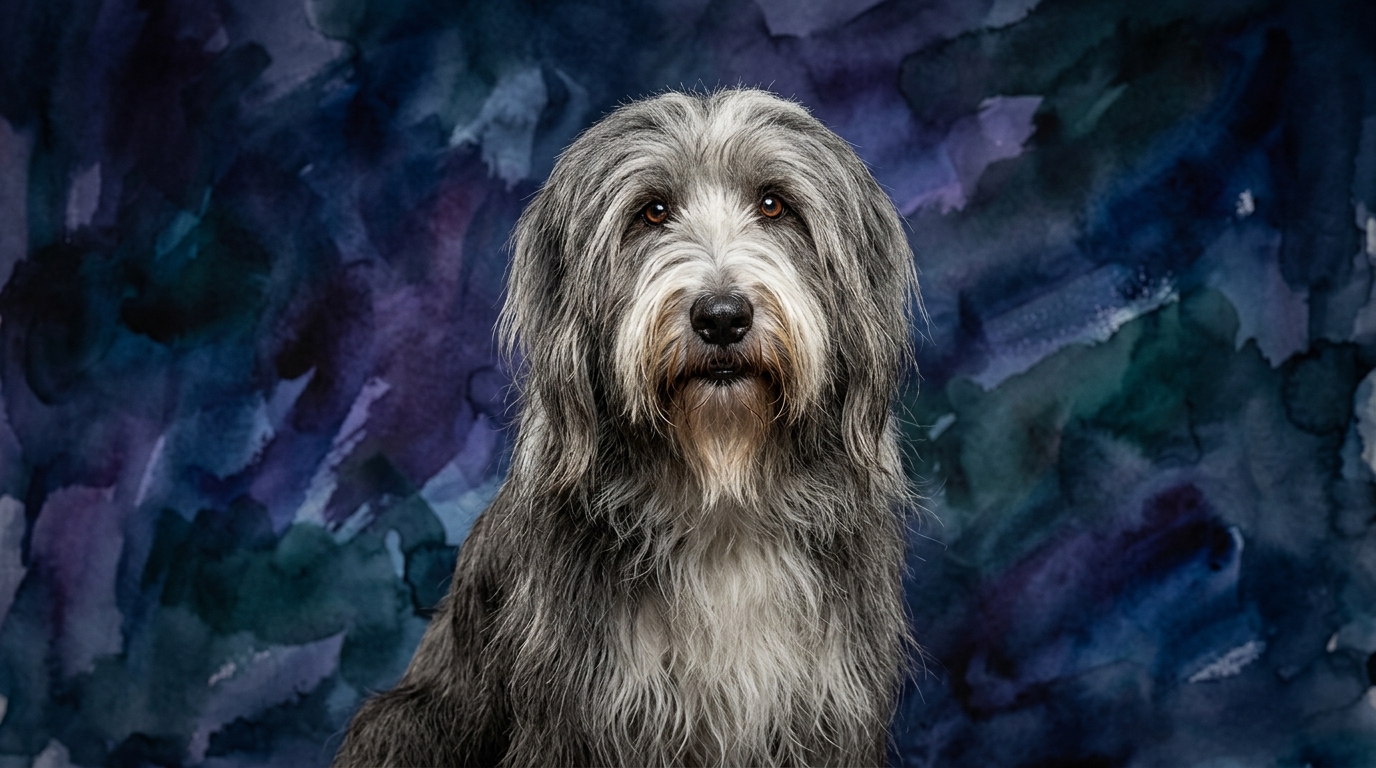
The Cosmic Pet IQ Lab's assessment provides a granular view of intelligence across five key dimensions, offering a clear distinction between these two breeds. The Bearded Collie, ranking #34 on the Coren scale, presents a profile marked by strong working aptitude. Its Problem Solving is rated 4/5, indicating a capacity for navigating complex situations and figuring out solutions to novel challenges. Training Speed also scores 4/5, suggesting a quick grasp of new commands and routines. Social Intelligence is 3/5, reflecting a functional understanding of human cues and interactions without being overly dependent. Instinctive Drive stands at 3/5, a moderate level that supports its herding heritage but isn't overwhelming in a companion setting. Finally, Memory is 4/5, enabling the retention of learned behaviors and experiences over time.
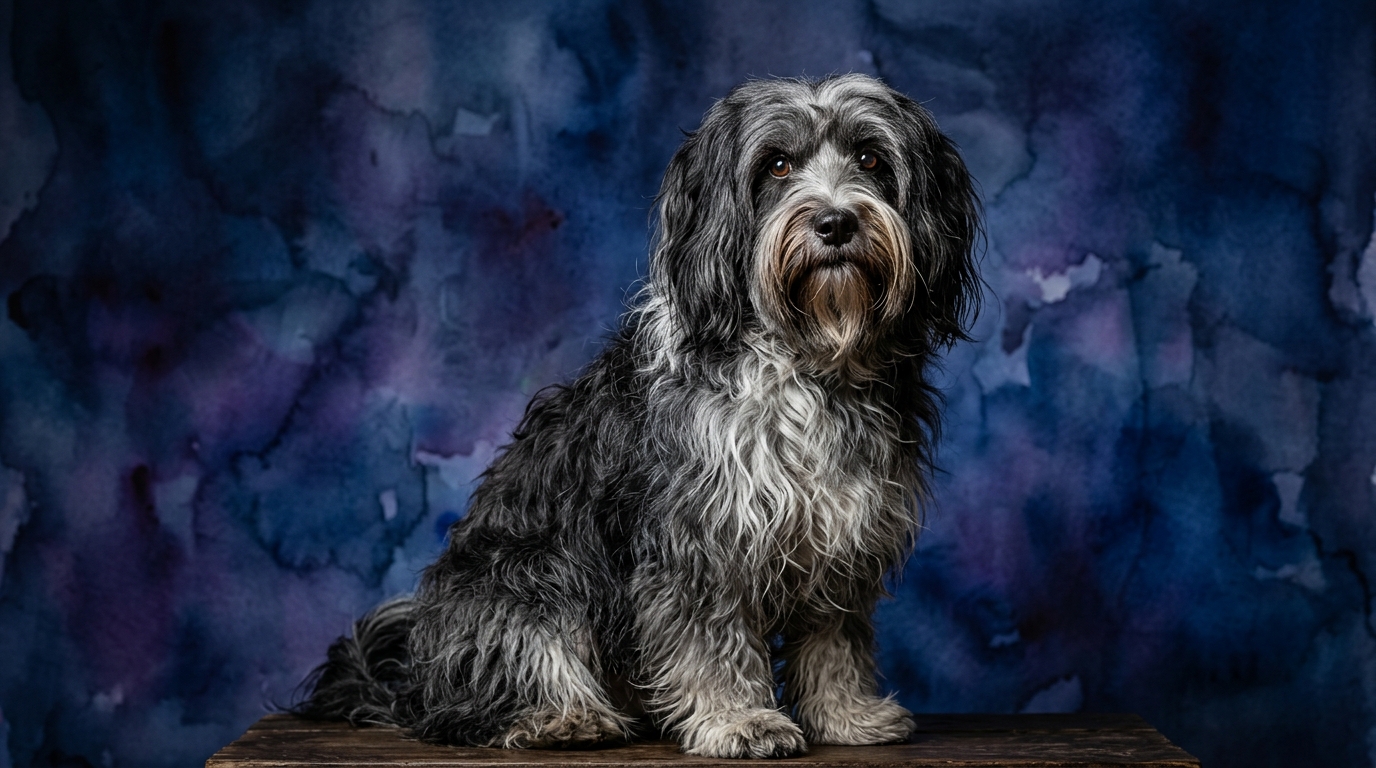
In contrast, the Tibetan Terrier, positioned at #63 on the Coren scale, displays a more balanced, yet slightly less intense, cognitive makeup. Its Problem Solving is 3/5, showing a foundational ability to tackle dilemmas, though perhaps with less initiative than its Collie counterpart. Training Speed is likewise 3/5, meaning it learns at a steady pace, requiring consistent reinforcement. Social Intelligence matches at 3/5, indicating a similar level of connection and responsiveness to human interaction. Instinctive Drive is also 3/5, suggesting a moderate internal motivation that can be directed but isn't as task-oriented. Memory is 3/5, allowing for good recall of important information and routines, but potentially requiring more refreshers than a Bearded Collie.
Where the Bearded Collie Excels Cognitively
The Bearded Collie's cognitive advantages are evident in its higher scores for Problem Solving, Training Speed, and Memory. Its 4/5 in Problem Solving translates into a dog that enjoys mental puzzles and can often independently figure out how to open gates, retrieve hidden toys, or navigate complex obstacle courses. This breed thrives on challenges that engage its mind, making it adept at dog sports like agility or obedience trials where quick thinking and adaptation are paramount. Their herding background instilled a deep-seated ability to assess situations and react dynamically.
The 4/5 Training Speed means Bearded Collies generally pick up new commands and behaviors with fewer repetitions. They form associations quickly between actions and consequences, which streamlines the learning process significantly. This cognitive trait makes them particularly responsive to positive reinforcement methods, allowing owners to build a broad repertoire of commands and tricks relatively efficiently. Their superior Memory (4/5) reinforces this, ensuring that once a lesson is learned, it tends to stick, enabling them to retain complex sequences or long-term behavioral patterns without constant retraining.
Distinct Cognitive Strengths of the Tibetan Terrier
While the Tibetan Terrier's scores are consistently moderate, its cognitive profile represents a unique set of strengths, particularly in adaptability and independent reasoning suited to its historical role. Its 3/5 in Problem Solving, though lower than the Bearded Collie, reflects a robust capacity for practical problem-solving within its environment, such as finding comfortable spots or navigating household routines. They are not necessarily looking for a 'job' to solve, but rather to comfortably integrate into their surroundings, displaying a resourceful rather than overtly ambitious intellectual drive.
The Tibetan Terrier's balanced scores, including 3/5 for Social Intelligence and Instinctive Drive, contribute to a cognitive makeup that prioritizes companionship and watchfulness over intense work. This breed developed as a companion and sentinel in harsh Tibetan monasteries, where independence and resilience were valued. Their cognitive strength lies in their ability to be content and observant without constant human direction, making them excellent, self-possessed companions who are attuned to their family without being overly demanding. Their cognitive resilience allows them to adapt to varying social dynamics and environmental changes with a steady, independent spirit, rather than relying on external cues for validation.
Training Dynamics: Which Breed is More Amenable?
When it comes to ease of training, the Bearded Collie generally holds an advantage due to its higher Training Speed and Problem Solving scores. With a 4/5 in Training Speed, Bearded Collies are typically eager learners who quickly understand what is being asked of them. Their historical role as herding dogs required them to be highly responsive to commands and capable of complex tasks, fostering a cognitive disposition that seeks to cooperate and perform. They often enjoy the process of learning and excel in activities that involve intricate sequences or rapid decision-making, translating into a more straightforward training journey for an owner.
The Tibetan Terrier, with a 3/5 in Training Speed, requires a different approach. While certainly capable of learning, they may take more repetitions to solidify new commands and can exhibit a more independent streak. Their historical role as companions and watchdogs, rather than active workers, means they might not possess the same inherent drive to please or the quick-fire responsiveness of a herding breed. Training a Tibetan Terrier often demands more patience, consistency, and creative motivation, as they might question the 'why' behind a command or simply decide they have better things to do. Owners will find success by making training sessions engaging, positive, and shorter to maintain their interest, recognizing their independent nature rather than fighting against it.
Matching Canine Cognition to Owner Lifestyles
For active owners seeking a canine partner for adventures and mental challenges, the Bearded Collie is often an ideal match. Their elevated Problem Solving and Memory scores, combined with a moderate Instinctive Drive, mean they thrive on consistent mental stimulation and physical activity. Owners who enjoy dog sports, long hikes, or engaging in complex trick training will find the Bearded Collie to be an enthusiastic and capable participant. Their cognitive profile demands an owner who can consistently provide outlets for their sharp minds and energetic bodies, preventing boredom-induced behaviors.
The Tibetan Terrier, while still requiring regular exercise and mental engagement, can be a more suitable companion for owners with a slightly more relaxed lifestyle, provided their needs for companionship and moderate activity are met. Their balanced cognitive scores suggest an adaptability that allows them to be content with a stable routine that includes daily walks, play sessions, and interactive toys, without the intense demand for a 'job' or constant high-level mental work. They are equally happy to curl up on the couch after a good walk, making them versatile companions for those who appreciate their independent yet affectionate nature, and can appreciate their more subtle forms of engagement.
The Verdict: When to Choose Each Companion
The Verdict
Choose the Bearded Collie if you are an active owner eager for a highly trainable, mentally agile partner who thrives on consistent engagement, complex tasks, and dog sports.
Opt for the Tibetan Terrier if you appreciate an independent, resilient companion with a steady learning pace, who offers loyal companionship and moderate cognitive demands for a more relaxed, yet engaged, lifestyle.
🧠 Find Your Pet's IQ Score
Our Pet IQ Lab assessment covers 25+ tests across 5 cognitive dimensions — personalized to your breed.
Take the Full IQ Test →Frequently Asked Questions
Do Bearded Collies require more mental stimulation than Tibetan Terriers?
Yes, Bearded Collies typically require more consistent and varied mental stimulation due to their higher problem-solving and memory scores. Their herding background means they thrive on engaging tasks and can become bored without adequate mental outlets, whereas Tibetan Terriers are content with more moderate cognitive challenges.
Is a Tibetan Terrier difficult to train because of its independence?
While Tibetan Terriers are capable learners (3/5 training speed), their independent nature means training requires more patience, consistency, and creative motivation compared to the more cooperative Bearded Collie. They respond best to positive reinforcement and engaging sessions that respect their self-possessed character.
Which breed is better for a first-time dog owner?
For a first-time owner, the Tibetan Terrier might be slightly more manageable due to its moderate overall cognitive demands and adaptability, provided they are prepared for its independent streak during training. Bearded Collies, with their higher energy and mental needs, may require an owner more experienced in channeling a working breed's drive.