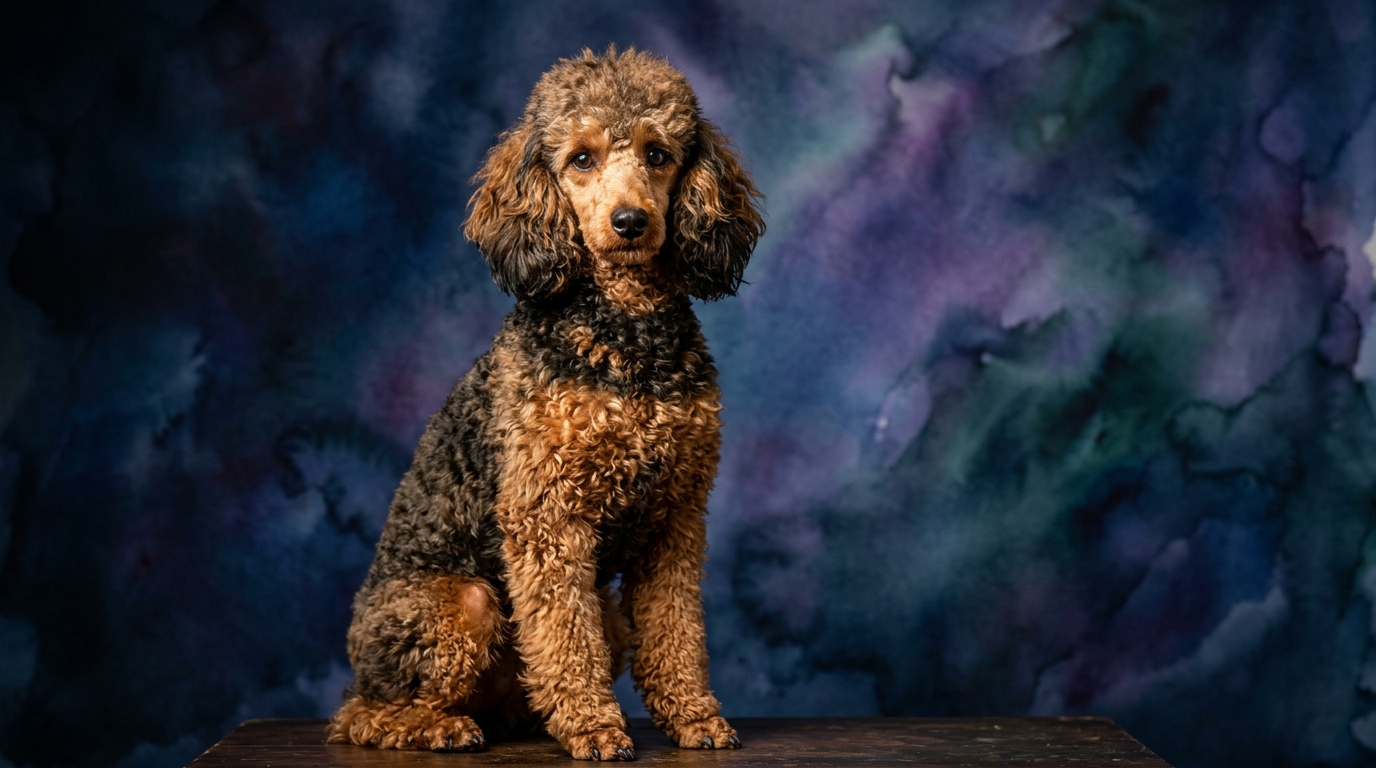
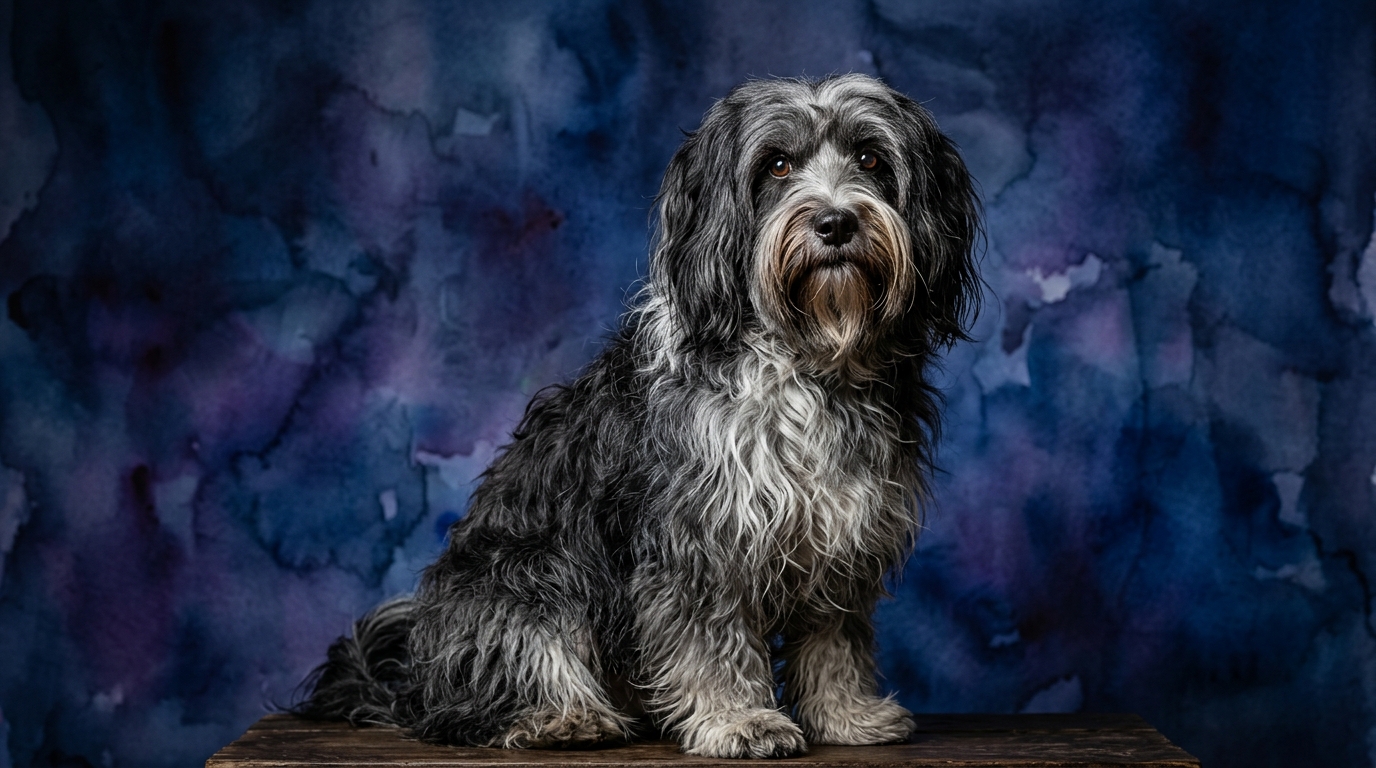
Side-by-Side IQ Profile: Standard Poodle vs. Tibetan Terrier
At The Cosmic Pet Pet IQ Lab, we evaluate canine cognition across five key dimensions, revealing the distinct mental landscapes of each breed. The Standard Poodle holds an impressive Coren Rank of #2, indicating exceptional working intelligence and obedience, while the Tibetan Terrier, with a Coren Rank of #63, presents a more nuanced and independent cognitive profile.
For the Standard Poodle, Problem Solving is rated 5/5, reflecting their exceptional ability to analyze novel situations and devise effective solutions, from complex puzzle toys to navigating intricate environments. Their Training Speed is also 5/5, meaning they form associations between commands and actions with remarkable rapidity, often grasping new concepts in a handful of repetitions. Social Intelligence, at 5/5, highlights their outstanding capacity for reading and responding to human emotions, fostering deep, intuitive bonds. Their Instinctive Drive is 4/5, indicating a robust natural inclination for activities like retrieving or focused work, channeling energy into productive tasks. Finally, their Memory is 5/5, allowing them to retain learned behaviors, routines, and experiences over extended periods.
The Tibetan Terrier presents a different picture. Their Problem Solving is 3/5, meaning they approach challenges with a moderate level of insight, often employing a thoughtful, sometimes independent, strategy. Training Speed is 3/5; learning new commands generally requires consistent repetition and patient reinforcement, as they absorb information steadily but not with immediate grasp. Social Intelligence is 3/5; while affectionate, their social intelligence leans towards an independent nature, recognizing human emotions but not feeling the same innate compulsion to constantly please. Their Instinctive Drive is 3/5, encompassing general curiosity and playfulness rather than intense specialized drives. Memory is 3/5; they retain information adequately, remembering familiar routines, but may benefit from periodic refreshers for less frequently practiced skills.
Where the Standard Poodle Wins Cognitively
The Standard Poodle's cognitive strengths are evident across multiple dimensions, making them particularly adept at complex tasks and deep social engagement. Their Problem Solving score of 5/5 means they are not merely following instructions but actively understanding and manipulating their environment. This manifests in their ability to quickly learn intricate multi-step commands, excel in strategic dog sports like agility, or figure out how to open latches. Paired with a Training Speed of 5/5, they absorb new information with astonishing efficiency, often grasping new concepts in a handful of repetitions. This rapid acquisition allows for an expansive behavioral repertoire, from service dog tasks to advanced trick training. Furthermore, their 5/5 Social Intelligence grants them a profound capacity for empathy and connection. They are exceptionally attuned to human body language, tone, and mood, often responding pre-emptively to their owner's emotional state, making them truly collaborative partners. Their 5/5 Memory ensures that once a concept is learned, it is retained for the long term, building a robust foundation of knowledge.
Where the Tibetan Terrier Wins Cognitively
While the Standard Poodle excels in rapid acquisition and social attunement, the Tibetan Terrier's distinct cognitive profile offers specific advantages for certain lifestyles. Their moderate Problem Solving (3/5) and Social Intelligence (3/5) mean they are less likely to constantly seek to outsmart their environment or demand intricate mental challenges. This can be a 'win' for owners who appreciate a thoughtful companion who isn't perpetually plotting. A Tibetan Terrier's independence, a byproduct of their moderate social intelligence, allows them to be content with self-directed activities and observing their surroundings without constant human intervention. They are capable of entertaining themselves and are generally less prone to separation anxiety stemming from an overwhelming need for human validation. Their moderate Instinctive Drive (3/5) means they aren't driven by intense urges for specific tasks, translating to a more adaptable companion less fixated on a 'job.' This allows them to integrate smoothly into various home environments without the inherent restlessness of intense working breeds. Their cognitive profile fosters a relationship built on mutual respect and understanding, appealing to those who value a dog with a distinct personality and a degree of self-sufficiency.
Which is Easier to Train and Why
When considering ease of training, the Standard Poodle generally presents a more straightforward experience due to their exceptional cognitive attributes. Their 5/5 Training Speed means they form associations between commands and actions with remarkable rapidity. For instance, teaching a Poodle to 'stay' will typically involve fewer repetitions before the concept is internalized, and they are more likely to perform the command reliably in varied environments quickly. This is further enhanced by their 5/5 Social Intelligence, which translates to a strong desire to engage with and please their human companions. They are highly motivated by positive reinforcement and actively seek to understand what is expected, making them eager participants in training sessions. Their 5/5 Problem Solving allows them to generalize learned behaviors to new situations efficiently, so a 'sit' learned in the living room transfers readily to the park.
In contrast, the Tibetan Terrier, with a Training Speed of 3/5 and Social Intelligence of 3/5, requires a more patient and nuanced approach. While capable of learning, they absorb information at a more deliberate pace. Teaching a Tibetan Terrier to 'stay' might necessitate more frequent, shorter training sessions spread out over a longer period, with a strong emphasis on high-value rewards to maintain their interest. Their independent streak, a facet of their moderate social intelligence, means they are less inherently driven to please and more likely to question a command's utility if it doesn't align with their immediate interests. This implies training must be engaging, consistent, and built on trust. Owners need to work *with* their dog's independent spirit rather than forcing compliance. Their moderate Memory (3/5) also means consistent refreshers are often beneficial to keep skills sharp, especially for commands not practiced daily.
Which Suits Active Owners vs. Relaxed Owners
The choice between a Standard Poodle and a Tibetan Terrier often aligns with an owner's lifestyle and preferred daily engagement. Standard Poodles, with their high Problem Solving, Training Speed, and Memory (all 5/5), thrive with active owners who provide consistent mental stimulation and physical activity. These dogs are ideally suited for individuals eager to participate in dog sports like agility, obedience, or rally. Their robust Instinctive Drive (4/5) for retrieving and water work, coupled with their cognitive capacity, means they excel when given a 'job' or complex activity. A relaxed owner unable to meet these significant mental and physical demands might find a Standard Poodle exhibiting boredom-related behaviors, as their sharp minds require an outlet. They need engagement that challenges their intellect and body daily.
Conversely, the Tibetan Terrier's cognitive profile makes them a wonderful fit for owners appreciating a companion that is playful but not constantly demanding an intense workload. Their moderate Instinctive Drive (3/5) and Problem Solving (3/5) mean they enjoy walks, playtime, and exploring, but don't typically require the same level of structured 'work' or high-octane activities. They are content with a good daily walk, interactive play, and quality family time. A Tibetan Terrier adapts well to a more relaxed household, provided they receive regular mental enrichment through puzzle toys or moderate training, and consistent physical exercise. Their independent streak means they are comfortable observing or enjoying quiet time alongside owners, making them suitable for individuals who appreciate a thoughtful, less overtly 'needy' presence. They offer a balanced energy level, suiting both moderately active and more relaxed lifestyles, as long as companionship and basic activity are met.
The Verdict
Choose a Standard Poodle if you seek a highly perceptive, trainable, and deeply collaborative canine partner eager for complex mental and physical engagement in activities like dog sports or advanced training.
Opt for a Tibetan Terrier if you appreciate an independent, thoughtful, and moderately active companion who thrives on mutual respect and offers a balanced presence without constant demands for intense structured work.
🧠 Find Your Pet's IQ Score
Our Pet IQ Lab assessment covers 25+ tests across 5 cognitive dimensions — personalized to your breed.
Take the Full IQ Test →Frequently Asked Questions
Are Tibetan Terriers difficult to train compared to Standard Poodles?
Tibetan Terriers are not difficult to train, but they require more patience, consistency, and engaging methods than Standard Poodles due to their independent nature and moderate training speed. Positive reinforcement and building trust are key.
Do Standard Poodles need a lot of mental stimulation?
Yes, Standard Poodles require significant daily mental stimulation due to their exceptional problem-solving abilities and memory. Without engaging activities, they can become bored and potentially develop undesirable behaviors.
Which breed is better for a first-time dog owner?
For a first-time owner committed to consistent training and mental engagement, a Standard Poodle's trainability can be rewarding. However, a Tibetan Terrier might suit a patient first-time owner who values an independent companion and is prepared for a more gradual training journey.