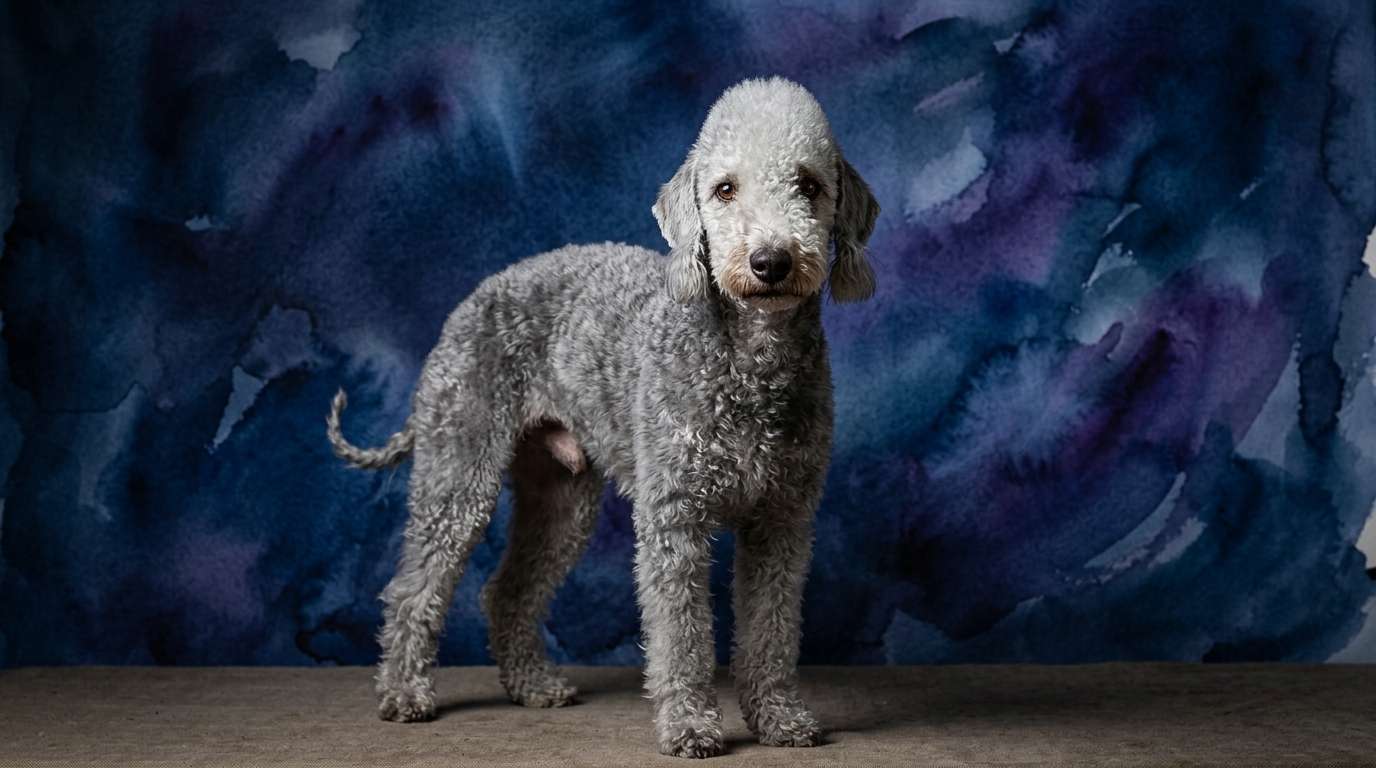

Side-by-Side IQ Profile: Unpacking the 3/5 Scores
In the Pet IQ Lab, both the Bedlington Terrier and the Löwchen register a consistent 3 out of 5 across all assessed cognitive dimensions. This identical numerical outcome, however, belies the unique ways each breed expresses these capacities, deeply influenced by their historical roles and inherent temperaments.
For Problem Solving (3/5), the Bedlington Terrier often demonstrates a resourceful determination when faced with physical obstacles or when trying to access something intriguing, employing a 'think-on-the-paws' approach characteristic of Terriers. This can manifest as clever ways to bypass a gate or retrieve a hidden toy, often driven by their underlying curiosity. The Löwchen, on the other hand, typically applies its 3/5 problem-solving to navigating social dynamics and achieving comfort, perhaps figuring out the best strategy to gain human attention or secure a prime napping spot. Their solutions are often more socially oriented than physically driven.
Regarding Training Speed (3/5), the Bedlington Terrier learns new commands at a moderate pace, but their independent Terrier spirit means that willingness to comply isn't always immediate. They might grasp a concept quickly but require consistent, engaging motivation to perform reliably. The Löwchen also learns at a moderate speed, but their companion nature often translates to a more eager and cooperative attitude during training sessions, especially when positive reinforcement and human interaction are involved. They tend to seek connection through learning.
In Social Intelligence (3/5), the Bedlington Terrier is observant of their environment and can certainly read human moods, though their social interactions might be filtered through their own agenda or a desire for independent exploration. They understand cues but may choose when to act on them. The Löwchen, bred purely for companionship, typically leverages its 3/5 social intelligence to forge strong bonds and maintain harmony within its human family. They are often highly attuned to emotional nuances and adapt their behavior to reciprocate affection and attention.
Instinctive Drive (3/5) is where the breed differences become particularly apparent. For the Bedlington Terrier, this score reflects a moderate but persistent prey drive, manifesting as an enjoyment of chasing, digging, and exploring scents. This drive requires appropriate outlets to prevent boredom or destructive behaviors. The Löwchen's 3/5 instinctive drive is more generalized, encompassing a moderate playfulness and curiosity, but without the intense focus on hunting or working instincts. Their drive is more about engaging with their environment and companions in a playful, less utilitarian manner.
Finally, Memory (3/5) ensures both breeds retain learned commands, routines, and experiences effectively. A Bedlington Terrier will remember past training, the location of hidden treasures, and the consequences of certain actions, which aids their independent problem-solving. The Löwchen's 3/5 memory is crucial for remembering family members, preferred routines, and the social cues that foster close companionship, enabling consistent and comforting interactions within the home.
Where the Bedlington Terrier Wins Cognitively
The Bedlington Terrier's cognitive strengths, even with a 3/5 across the board, truly shine in scenarios requiring independent thought and resourceful physical application. Their problem-solving, though not exceptional, is often coupled with a Terrier's tenacity, allowing them to figure out practical solutions to minor environmental challenges, like opening a cupboard or finding a way into a secure area if motivated enough. This breed excels at tasks that demand a degree of self-reliance and a 'can-do' attitude, often using their memory to recall successful past strategies. Their instinctive drive, even at a moderate level, means they are keenly aware of their surroundings and enjoy engaging with the world through scent and movement, making them adept at activities like scent work or exploring new territories with purpose.
Where the Löwchen Wins Cognitively
The Löwchen's cognitive advantages are most evident in their capacity for nuanced social engagement and their adaptability within a human household. While their social intelligence is rated 3/5, it is specifically geared towards understanding and interacting harmoniously with people, making them exceptionally adept at reading human emotions and responding in ways that strengthen bonds. Their problem-solving often involves clever ways to elicit attention or comfort from their owners, showcasing a social astuteness. This breed's memory supports the retention of complex social routines and preferences, allowing them to integrate seamlessly into family life and anticipate daily rhythms. Their moderate instinctive drive translates into a playful curiosity that makes them engaging companions, always ready for interaction rather than being solely focused on independent pursuits.
Which is Easier to Train and Why?
Despite both breeds scoring 3/5 in training speed, the Löwchen is generally perceived as easier to train due to fundamental differences in motivation and temperament. The Löwchen's social intelligence and strong desire for companionship mean they are typically eager to please their owners, making them more receptive to positive reinforcement and praise-based training. They view training as a shared activity that strengthens their bond with their human. Conversely, the Bedlington Terrier, while capable of learning at the same pace, possesses a more independent and sometimes willful Terrier nature. Their 3/5 instinctive drive means they can be easily distracted by scents or movement, and their problem-solving might be applied to figuring out how to get their own way rather than strictly following commands. Training a Bedlington requires more patience, consistency, and a creative approach to keep them engaged, often turning training into a game or a challenge to appeal to their resourceful minds.
Which Suits Active Owners vs. Relaxed Owners
Choosing between these two breeds depends largely on the owner's lifestyle and how they prefer to engage with a dog's cognitive and physical needs. The Bedlington Terrier, with its moderate instinctive drive and independent problem-solving at 3/5, is better suited for active owners who enjoy providing consistent mental and physical challenges. This doesn't necessarily mean extreme athleticism, but rather an owner who will engage in interactive games, scent work, or agility training that taps into their Terrier resourcefulness and tenacity. They thrive with owners who appreciate a dog with a distinct personality and are prepared to channel their inherent drives constructively. For relaxed owners, the Löwchen is often a more fitting choice. Their 3/5 social intelligence and companion-oriented nature mean they are content with moderate daily walks, followed by ample cuddle time and interactive play. They thrive on consistent human companionship and gentle engagement, finding cognitive satisfaction in being an integral part of family life and learning new tricks for fun. Their curiosity is easily satisfied within a home environment, making them adaptable companions for those seeking a less demanding but equally engaging friend.
The Verdict
Choose the Bedlington Terrier if you appreciate a dog with a unique, independent spirit, enjoy engaging in mentally stimulating activities that challenge their resourceful nature, and are prepared for a companion with moderate but persistent Terrier instincts.
Opt for the Löwchen if you seek a highly sociable, adaptable companion who thrives on close interaction, enjoys learning through positive reinforcement, and whose cognitive strengths are best applied to harmonious coexistence within a loving family.
🧠 Find Your Pet's IQ Score
Our Pet IQ Lab assessment covers 25+ tests across 5 cognitive dimensions — personalized to your breed.
Take the Full IQ Test →Frequently Asked Questions
Do Bedlington Terriers and Löwchens learn at the same pace?
Yes, both breeds exhibit a 3/5 training speed, indicating they can learn new commands at a moderate pace. However, their motivation and focus during training can differ, with Bedlingtons potentially showing more independent thought while Löwchens are often more eager to please their owners.
Which breed is better at understanding human emotions?
Both breeds score 3/5 in social intelligence, indicating a moderate ability to interpret human cues. Löwchens, as dedicated companions, often apply this more directly to maintaining harmonious family dynamics, whereas Bedlingtons might use it to navigate situations to their own advantage or for independent pursuits.
How do their instinctive drives impact their daily life?
With a 3/5 instinctive drive, Bedlington Terriers will show moderate prey drive, enjoying chasing and digging, requiring outlets for these behaviors to prevent boredom. Löwchens, also at 3/5, have a more generalized curiosity and playfulness, less focused on specific working instincts, making them generally adaptable to various home environments and content with interactive play.