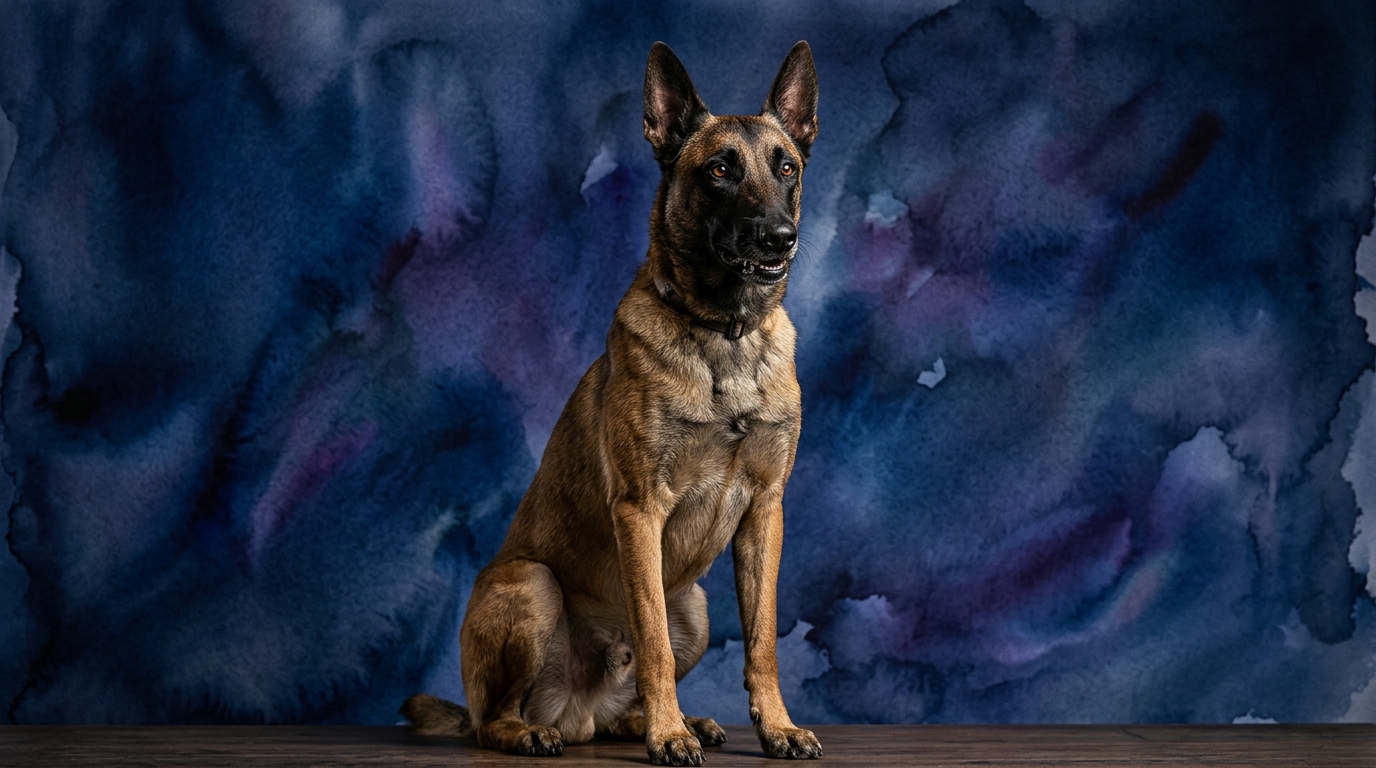

Side-by-Side IQ Profile: Belgian Malinois vs. Basset Hound
The Cosmic Pet Pet IQ Lab's assessment offers a clear distinction between these two breeds. The Belgian Malinois, ranking #22 on the Coren scale, exhibits a cognitive profile geared for complex tasks and rapid learning, while the Basset Hound, at Coren rank #71, displays a specialized intelligence centered on its olfactory capabilities and independent nature.
For the Belgian Malinois, Problem Solving is rated 5/5, indicating an exceptional capacity for strategic thinking, adapting to novel situations, and devising solutions to intricate challenges. Their Training Speed is also 5/5, reflecting an eagerness to learn, quick acquisition of new commands, and a strong desire for structured interaction. Social Intelligence stands at 4/5, showing a strong attunement to human cues, a willingness to cooperate, and an understanding of social dynamics within their pack or family. Instinctive Drive is a powerful 5/5, manifesting as an intense motivation for work, protection, and herding, often channeled into demanding tasks. Their Memory is rated 5/5, signifying an outstanding ability to retain complex sequences, recall past experiences, and remember specific training cues over extended periods.
In contrast, the Basset Hound's cognitive scores are generally lower across the board, reflecting a different set of priorities. Their Problem Solving is 3/5, which, while not indicating a lack of intelligence, points to a more specialized approach, primarily focused on scent-related puzzles rather than abstract or multi-faceted human-directed tasks. Training Speed is 3/5, suggesting that while they can learn, their independent streak and motivation driven by scent often require more patience and repetition. Social Intelligence is 3/5; Basset Hounds are generally amiable but may be less attuned to subtle human commands, often prioritizing a compelling scent over handler directives. Instinctive Drive is 3/5, primarily centered on their powerful urge to track and follow odors, which can override other motivations. Memory is also 3/5, effective for retaining scent trails and familiar routines, but perhaps less robust for complex sequences of human-initiated tasks.
These profiles highlight that intelligence isn't a monolithic trait but a spectrum of abilities tailored to a breed's historical purpose and natural inclinations, with Malinois excelling in generalist cognitive performance and Basset Hounds in specialized olfactory processing.
Where the Belgian Malinois Wins Cognitively
The Belgian Malinois demonstrably excels in areas requiring multi-faceted cognitive application. Their 5/5 Problem Solving score means they can quickly assess and navigate complex environments, such as intricate agility courses or real-world search and rescue scenarios, often improvising solutions when faced with unexpected obstacles. This strategic thinking extends to their ability to understand and execute multi-step commands, demonstrating a sophisticated grasp of sequence and consequence.
Their superior Training Speed (5/5) is a direct win, allowing them to master new skills and commands with minimal repetitions, making them highly adaptable for diverse working roles from law enforcement to competitive dog sports. This rapid learning is fueled by their high Social Intelligence (4/5), which enables them to keenly observe and interpret human body language and vocal cues, fostering a highly cooperative working relationship. Furthermore, their exceptional Memory (5/5) ensures that once a task or command is learned, it is retained with remarkable fidelity, permitting the recall of intricate routines even after long periods.
The Malinois's powerful Instinctive Drive (5/5) is a cognitive asset, as it provides an unwavering internal motivation to engage in demanding mental and physical activities. This drive, combined with their other high scores, translates into a dog that not only can learn but genuinely desires to apply its cognitive abilities to purposeful work, making them unparalleled in tasks requiring sustained focus and intellectual engagement.
Where the Basset Hound Wins Cognitively
While the Basset Hound's general IQ scores might appear lower, their cognitive strengths are profoundly specialized and represent a triumph in olfactory intelligence. Their 3/5 Problem Solving score, when viewed through the lens of scent work, reveals an extraordinary ability to process and interpret a vast array of olfactory information, meticulously following a faint trail through varied and challenging environments. This is a form of highly focused, persistent problem-solving that few other breeds can match, requiring deep concentration and an unwavering commitment to a task dictated by their nose.
Their Instinctive Drive (3/5), though not as broad as a Malinois's, is intensely concentrated on scent. This singular focus allows them to filter out distractions that would overwhelm other breeds, demonstrating a specialized cognitive filtering mechanism. They can maintain an impressive mental map of a scent trail, remembering its nuances and trajectory over considerable distances and time, showcasing a unique application of Memory (3/5) tailored to their primary function.
The Basset Hound's independent nature, which contributes to its lower Training Speed, can also be seen as a cognitive advantage in specific scenarios. When tracking, they are less reliant on constant human direction and more capable of self-directed navigation based purely on scent cues, a testament to their intrinsic confidence in their olfactory processing and decision-making abilities. This allows them to excel in situations where a dog must operate autonomously to achieve its objective.
Which is Easier to Train and Why
Based on their IQ profiles, the Belgian Malinois is significantly easier to train than the Basset Hound. The Malinois's 5/5 Training Speed and 4/5 Social Intelligence mean they are eager students who quickly grasp new concepts and commands, thriving on the structured interaction and positive reinforcement from their handler. Their strong instinctive drives can be readily channeled into specific tasks, making them highly responsive to direction and motivated to perform complex sequences of behaviors. They generally exhibit a keen desire to please and a clear understanding of what is expected of them, which translates into rapid learning and high compliance.
Conversely, the Basset Hound's 3/5 Training Speed and 3/5 Social Intelligence present more challenges for conventional obedience training. Their deep-seated instinctive drive for scent work often means their attention is captured by compelling odors in the environment, leading to selective hearing and a tendency to follow their nose over human commands. This independence requires a trainer to be exceptionally patient, creative with high-value rewards, and consistent, understanding that a Basset Hound's motivation often stems from its own internal desires rather than an inherent eagerness to please its handler. While trainable, their learning curve is typically slower, and their focus more singular.
Which Suits Active Owners vs. Relaxed Owners
The Belgian Malinois is unequivocally suited for highly active and experienced owners who can meet their substantial mental and physical demands. Their 5/5 instinctive drive and high problem-solving abilities mean they require constant engagement, whether through intensive training, dog sports like agility or protection work, or a dedicated working role. An owner must be prepared to invest significant time daily in structured exercise, mental puzzles, and ongoing training to prevent boredom and destructive behaviors. This breed thrives with an owner who views them as a partner in demanding activities and provides consistent leadership and intellectual stimulation.
The Basset Hound, on the other hand, is a better match for more relaxed owners, though they still require regular, moderate activity. While they enjoy leisurely walks, these walks are often characterized by extensive sniffing and scent exploration rather than vigorous exercise. Their 3/5 instinctive drive, primarily focused on scent, means they are generally content with a more laid-back lifestyle, provided they have opportunities to engage their powerful noses. Owners should be prepared for an independent companion who enjoys comfort and companionship but might not always be 'on call' for commands, especially if a captivating scent is nearby. They are well-suited for individuals or families seeking a loyal, amiable dog that doesn't demand constant task-oriented engagement.
The Verdict
Choose the Belgian Malinois if you are an experienced, active owner seeking a driven, highly trainable partner for sports, protection work, or a demanding job, ready to invest significant time in their mental and physical engagement.
Choose the Basset Hound if you appreciate an independent, amiable companion with a keen nose, are prepared for a slower training pace, and seek a dog content with moderate activity and ample scent-exploration opportunities.
🧠 Find Your Pet's IQ Score
Our Pet IQ Lab assessment covers 25+ tests across 5 cognitive dimensions — personalized to your breed.
Take the Full IQ Test →Frequently Asked Questions
Can a Basset Hound learn complex tricks like a Belgian Malinois?
While Basset Hounds can learn tricks, their training speed and motivation differ; they typically require more patience and high-value rewards, and complex multi-step sequences are less naturally aligned with their innate drives compared to a Belgian Malinois.
Do Belgian Malinois make good family pets?
Belgian Malinois can be devoted family members but require extensive socialization, consistent training, and a clear role within the family structure due to their strong drives and need for mental engagement; they are not typically suitable for novice owners.
What are the primary cognitive challenges of owning a Basset Hound?
The main cognitive challenges with Basset Hounds stem from their strong independent scent drive, which can lead to selective hearing when a compelling odor is present, and a slower training response compared to breeds motivated by pleasing their handler.