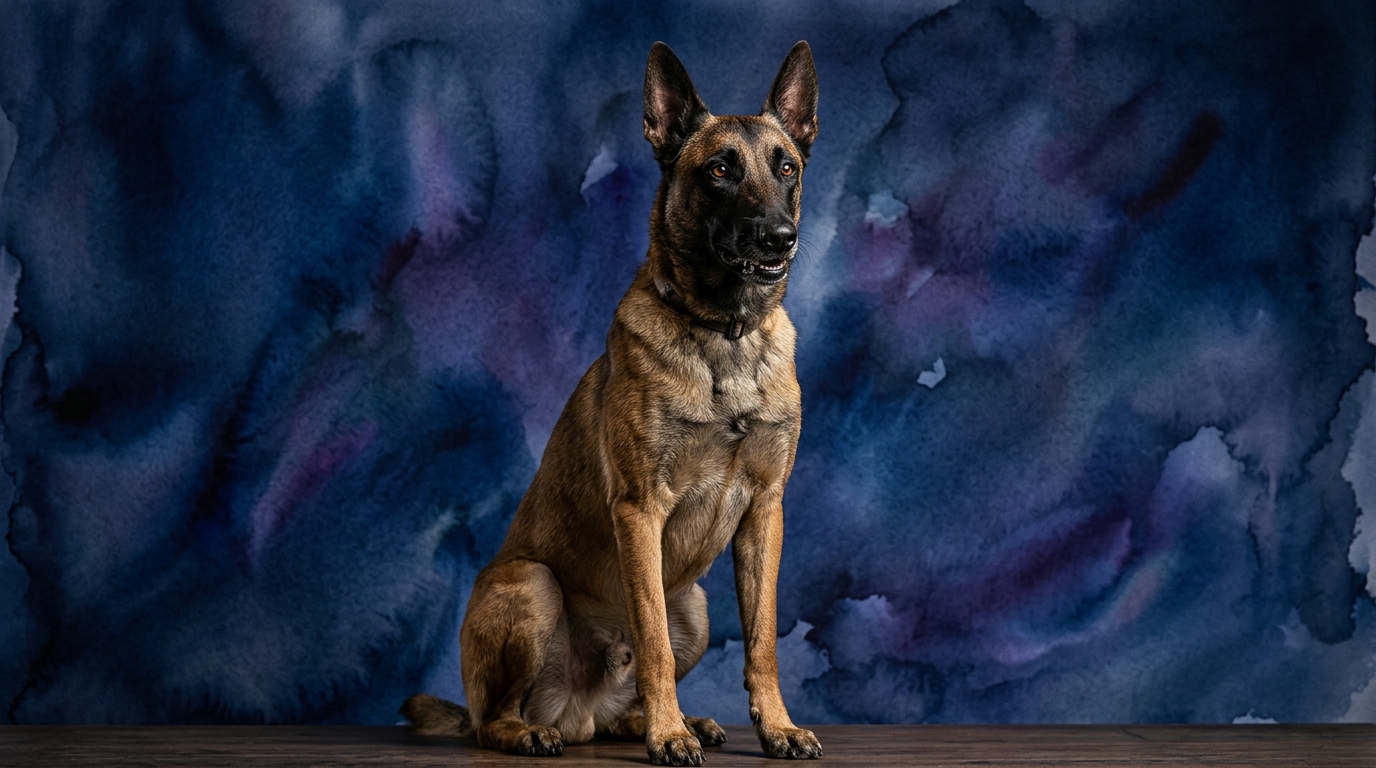
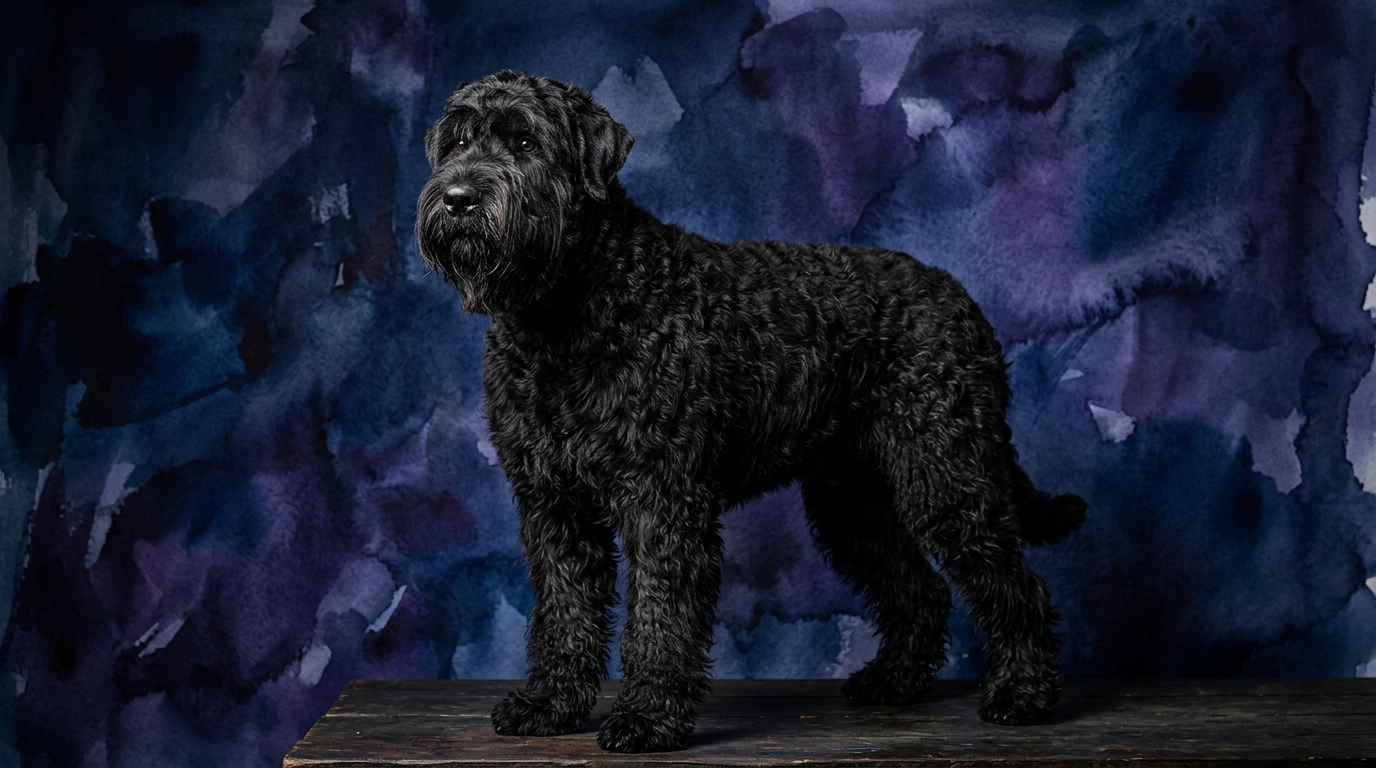
Side-by-Side IQ Profile
The Belgian Malinois, a sleek and driven herding dog, registers an impressive Coren rank of #22, placing it among breeds that demonstrate significant cognitive abilities. Our Pet IQ Lab metrics show its Problem Solving at 5/5, indicating an exceptional capacity to navigate complex scenarios and devise solutions independently. Its Training Speed is also 5/5, reflecting a rapid assimilation of new commands and concepts. Social Intelligence for the Malinois stands at 4/5, suggesting a keen understanding of human cues and social dynamics, though perhaps with a focused intensity rather than broad affability. Instinctive Drive is a perfect 5/5, highlighting an inherent, powerful motivation for work and task completion, while Memory is also 5/5, showcasing an extraordinary ability to retain learned behaviors and information over time.
In contrast, the Black Russian Terrier, a powerful working breed developed for military service, is not included in Coren's ranking, yet possesses a distinct cognitive profile. Its Problem Solving score is 3/5, indicating a solid, practical ability to address challenges, though perhaps with less spontaneous innovation than a Malinois. Training Speed is 3/5, meaning it learns consistently and reliably, but at a more measured pace requiring patient, clear instruction. Social Intelligence also scores 3/5, suggesting a discerning rather than overtly effusive nature, capable of forming strong bonds but often reserved with strangers. Instinctive Drive is 3/5, denoting a robust and steady motivation for work, particularly in guardian roles, without the relentless intensity seen in some herding breeds. Its Memory is 3/5, indicating a dependable recall of learned information, suitable for its intended working purposes.
Where the Belgian Malinois Wins Cognitively
The Belgian Malinois excels in areas demanding rapid cognitive processing and self-initiated action. Its 5/5 Problem Solving means it can assess novel situations and formulate effective responses with remarkable speed, a trait invaluable in complex search and rescue operations or intricate protection work. This isn't just about following commands; it's about interpreting a dynamic environment and making a correct, often critical, decision on its own. For instance, if a trained Malinois encounters an unexpected obstacle during an agility course, its problem-solving acumen allows it to quickly adapt its approach without handler intervention, often finding the most efficient solution.
Furthermore, the Malinois's 5/5 Training Speed allows for an unparalleled rate of skill acquisition. Trainers can introduce multiple new commands or complex sequences in a single session, with the dog demonstrating mastery in fewer repetitions than most breeds. This capacity for quick learning is paired with a 5/5 Memory, enabling it to retain vast repertoires of commands and intricate routines over extended periods, making it a preferred choice for roles requiring an extensive and precise behavioral vocabulary, such as police K9 work or competitive obedience at the highest levels. Its 5/5 Instinctive Drive ensures that once it learns a task, it performs with unwavering focus and intense dedication.
Where the Black Russian Terrier Wins Cognitively
While not matching the Malinois's raw speed of processing, the Black Russian Terrier's cognitive strengths lie in its balanced, robust, and often independent application of its intellect, particularly suited for its role as a formidable guardian. Its 3/5 in Problem Solving, while not top-tier, reflects a steady, deliberate approach to challenges. This means it's less prone to the impulsive, rapid-fire decisions that can sometimes be a byproduct of extremely high problem-solving abilities in other breeds. Instead, the BRT often takes a moment to assess, then acts with a considered effectiveness, which can be highly advantageous in situations requiring a stable, unflappable response rather than a frantic one. For a family protection dog, this deliberate thought process can translate to reliable, measured responses to threats.
The Black Russian Terrier's 3/5 Social Intelligence, coupled with its 3/5 Instinctive Drive, fosters a unique form of cognitive independence. It develops strong, discerning bonds with its chosen family but maintains a natural aloofness toward strangers. This isn't a deficit in intelligence but a specialized form of social processing that prioritizes loyalty and protective instincts over generalized friendliness. Unlike some breeds that might seek constant validation or social engagement, the BRT's cognitive makeup allows it to operate effectively as a guardian without needing constant direction, relying on its own judgment in familiar contexts. Its memory, while 3/5, is reliable and consistent, ensuring that once it learns a boundary or a specific protective protocol, it adheres to it with unwavering consistency, making it a steadfast protector.
Which is Easier to Train and Why
From a purely technical standpoint, the Belgian Malinois is easier to train in terms of speed and complexity of learned behaviors, largely due to its 5/5 Training Speed and 5/5 Memory. This breed rapidly grasps new concepts and retains them with minimal repetition. However, this ease comes with a significant caveat: the Malinois's intense 5/5 Instinctive Drive and high Problem Solving mean it requires a trainer who can match its mental and physical energy. Its behavioral differences include a relentless drive to work, a need for constant mental engagement, and an inclination to 'invent' its own tasks if not appropriately challenged. This means training is fast-paced and demands consistency and expertise to channel its formidable intellect productively, preventing boredom-induced destructive behaviors or unwanted self-employment.
The Black Russian Terrier, with its 3/5 Training Speed, requires a different approach. It is not difficult to train, but it learns at a more moderate pace, necessitating patience and clear, consistent instruction. Its Problem Solving and Instinctive Drive scores of 3/5 suggest a dog that is driven and capable of learning complex tasks, but without the Malinois's frantic urgency. Behaviorally, the BRT often exhibits a more independent streak; it's intelligent and willing to learn, but might require more motivation to perform tasks it doesn't immediately perceive as beneficial or interesting. Trainers must understand its guardian nature and build trust through positive reinforcement, making training a steady, rewarding process rather than a high-speed sprint. Its lower intensity means it is less likely to become frustrated or destructive from a single missed training session, offering a bit more leniency for the dedicated, patient owner.
Which Suits Active Owners vs Relaxed Owners
The Belgian Malinois is unequivocally suited for highly active owners who are prepared for a significant commitment to exercise, mental stimulation, and structured work. Its 5/5 Instinctive Drive and 5/5 Problem Solving mean this breed requires constant engagement. A Malinois is not content with a simple walk around the block; it thrives on intense physical activity such as running, agility, protection sports, or extensive training sessions that challenge its sharp mind. Owners must be ready to integrate their dog into a demanding lifestyle, offering daily outlets for its energy and intellect to prevent behavioral issues stemming from boredom or under-stimulation. A relaxed owner will quickly find themselves overwhelmed by a Malinois's boundless energy and cognitive demands, leading to a frustrated dog and a chaotic household.
The Black Russian Terrier, while a working breed, suits active owners seeking a formidable companion with a more measured, though still substantial, need for activity. Its 3/5 Instinctive Drive suggests it needs regular, vigorous exercise to remain content and healthy, but perhaps not the relentless, high-octane output demanded by a Malinois. Daily walks, playtime, and consistent training are essential, but the intensity can be more manageable for an owner who enjoys active pursuits without necessarily dedicating their life to elite dog sports. A 'relaxed' owner in the sense of someone who provides minimal exercise and mental stimulation would still find the BRT challenging, as it is a powerful dog with protective instincts that require responsible management. However, for an active owner who appreciates a robust, loyal, and somewhat independent companion without the Malinois's extreme cognitive demands, the Black Russian Terrier presents a compelling choice.
The Verdict
Choose the Belgian Malinois if you are an experienced, highly active individual or family seeking a relentless working partner for elite sports, protection, or service roles, ready to commit to intensive daily physical and mental engagement.
Opt for the Black Russian Terrier if you are a dedicated, active owner desiring a formidable, loyal guardian who learns reliably and thrives on consistent activity and purpose, but with a more deliberate pace than the Malinois.
🧠 Find Your Pet's IQ Score
Our Pet IQ Lab assessment covers 25+ tests across 5 cognitive dimensions — personalized to your breed.
Take the Full IQ Test →Frequently Asked Questions
Is the Belgian Malinois truly 'smarter' than the Black Russian Terrier?
Based on Pet IQ Lab metrics, the Belgian Malinois demonstrates faster learning, higher problem-solving aptitude, and more intense drive. While the Malinois excels in raw cognitive speed and task acquisition, the Black Russian Terrier's intelligence is geared towards steadfast reliability and discerning independence, making direct 'smarter' comparisons less useful than understanding their different cognitive strengths.
Can a first-time dog owner manage either of these breeds?
Neither breed is typically recommended for first-time dog owners due to their strong working drives and specific training requirements. The Belgian Malinois's intensity is particularly challenging, while the Black Russian Terrier's size and guardian instincts also demand an owner with experience in handling powerful, intelligent breeds.
Which breed is better for a family with children?
Both breeds can be suitable with careful socialization and consistent training, but their distinct temperaments mean different considerations. The Black Russian Terrier, with its balanced social intelligence and protective instincts, often forms strong, discerning bonds with its family. The Belgian Malinois requires more vigilant management due to its high drive and potential for intense play, which might be overwhelming for younger children.