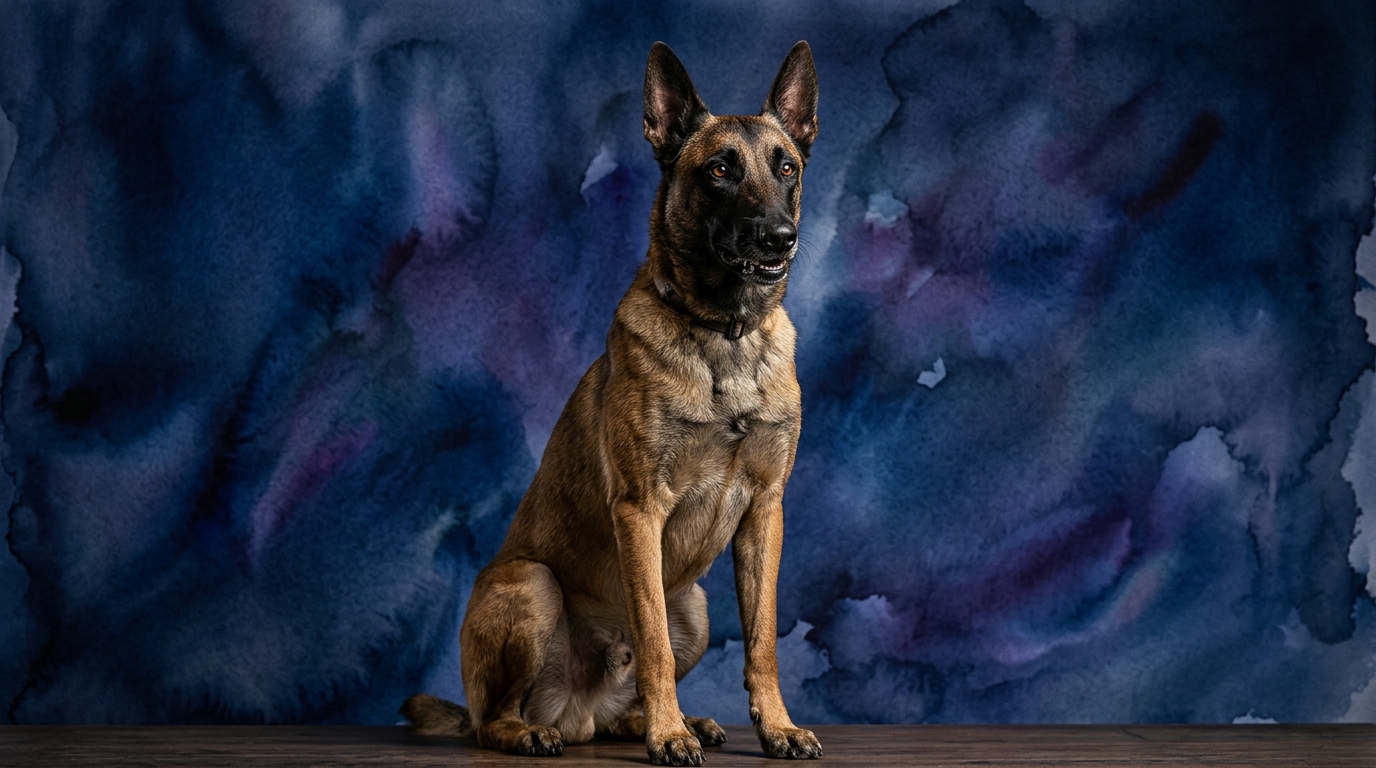

Side-by-Side IQ Profile: Dissecting Canine Cognition
The Cosmic Pet Pet IQ Lab employs a five-dimensional framework to map canine intelligence, offering a nuanced view beyond a single ranking. For the Belgian Malinois, a Herding breed with a Coren rank of #22, its profile is nearly perfect: Problem Solving 5/5, Training Speed 5/5, Social Intelligence 4/5, Instinctive Drive 5/5, and Memory 5/5. This paints a picture of a dog built for complex, cooperative work, demonstrating a remarkable capacity for learning and adaptation within a social structure.
In stark contrast, the Bloodhound, a Hound breed ranked #74 by Coren, presents a profile that underscores its specialized talents: Problem Solving 5/5, Training Speed 1/5, Social Intelligence 2/5, Instinctive Drive 5/5, and Memory 5/5. While sharing the highest marks in Problem Solving, Instinctive Drive, and Memory with the Malinois, its significantly lower scores in Training Speed and Social Intelligence highlight a distinct cognitive approach, one less focused on human-directed obedience and more on independent, self-directed tasks.
Breaking down these dimensions, Problem Solving assesses a dog's ability to navigate novel situations and achieve goals. Both breeds scoring 5/5 here suggests a high capacity for independent thought and strategic action, albeit applied in different contexts. Training Speed measures how quickly a dog grasps and retains new commands, while Social Intelligence reflects their ability to read and respond to human cues and social dynamics. Instinctive Drive quantifies the strength of their innate, breed-specific behaviors, and Memory evaluates their ability to recall learned information and experiences over time.
Where the Belgian Malinois Wins Cognitively
The Belgian Malinois’s cognitive strengths shine brightest in its unparalleled Training Speed (5/5) and robust Social Intelligence (4/5). This combination allows the Malinois to absorb and execute complex multi-step commands with remarkable swiftness, often requiring fewer repetitions than many other breeds. Their high social intelligence means they are acutely attuned to human body language, tone, and intent, making them exceptionally responsive partners in tasks that demand close cooperation and precise communication. This isn't merely about eagerness; it's a deep cognitive processing ability that enables rapid pattern recognition in training scenarios and an adaptive understanding of human expectations.
Furthermore, their perfect scores in Problem Solving and Memory, combined with their training aptitude, mean a Malinois can generalize learned solutions to new, similar problems and recall vast repertoires of commands and experiences. This cognitive flexibility is crucial for roles such as police work, search and rescue, or competitive dog sports, where dogs must quickly assess changing situations and apply learned behaviors effectively. Their cognitive framework is geared towards proactive engagement and mastery of their environment through collaborative effort.
Where the Bloodhound Wins Cognitively
The Bloodhound's cognitive prowess, while different, is no less impressive, particularly in its specialized form of Problem Solving (5/5) and unyielding Instinctive Drive (5/5). For a Bloodhound, problem-solving manifests not in deciphering human commands, but in meticulously untangling intricate scent puzzles. Their exceptional olfactory memory (5/5) allows them to retain and differentiate between countless scent profiles, making them unparalleled in tracking. A Bloodhound's problem-solving is a relentless, independent pursuit of a scent trail, navigating varied terrains and environmental distractions with singular focus, demonstrating a profound cognitive engagement with their primary sense.
Their instinctive drive for scent work is so powerful it often overrides other stimuli, including human directives, which contributes to their lower training speed in conventional obedience. This isn't a deficit in cognitive ability, but rather a profound channeling of their intelligence into a highly specific, evolutionarily refined task. Their memory is equally specialized, allowing them to follow a cold trail for miles, remembering minute scent details over extended periods. This unique cognitive architecture makes them the gold standard for human scent trailing, showcasing a form of intelligence that is deeply embedded in their sensory world rather than a social one.
Which Is Easier to Train and Why
When considering ease of training, the Belgian Malinois stands out dramatically, primarily due to its 5/5 Training Speed and 4/5 Social Intelligence. Malinois possess an inherent desire to work collaboratively with their handlers, quickly forming associations between commands and actions. They thrive on structure, consistency, and positive reinforcement, eagerly anticipating the next instruction. Their high social intelligence means they are highly motivated by praise and connection, making them receptive to guidance and eager to please. This makes them ideal candidates for complex training regimens, where they excel at rapid acquisition of new skills and behaviors, from advanced obedience to specialized tasks.
The Bloodhound, with a Training Speed of 1/5 and Social Intelligence of 2/5, presents a significantly different training challenge. Their powerful instinctive drive to follow scent often takes precedence over human requests. While they possess excellent problem-solving skills, these are typically applied to scent work rather than interpreting and complying with human commands. Bloodhounds can certainly be trained, but it requires immense patience, creativity, and an understanding of their deep-seated motivation. Traditional obedience might feel like a distraction to a Bloodhound whose mind is perpetually 'on the hunt' for interesting smells, leading to what can appear as stubbornness but is actually an intense dedication to their primary cognitive function.
Which Suits Active Owners vs. Relaxed Owners
For owners leading an active, engaged lifestyle, particularly those interested in competitive dog sports, protection work, or demanding outdoor activities, the Belgian Malinois is an exceptional match. Their relentless energy, combined with their cognitive need for purpose and structure, means they require substantial physical exercise and consistent mental stimulation. A Malinois thrives when given a 'job' to do, whether it's agility, obedience, or protection training. A relaxed owner who cannot commit to daily rigorous activity and cognitive challenges will quickly find themselves with a bored, potentially destructive, and certainly unfulfilled companion.
The Bloodhound, while possessing a profound instinctive drive, suits a different type of active owner. Their activity is often less about high-speed running and more about focused, prolonged scent work. Owners who are prepared to engage in regular, dedicated tracking sessions, allowing their Bloodhound to utilize its extraordinary nose, will find a content companion. While not requiring the same intense, constant physical output as a Malinois, a Bloodhound still needs engagement that satisfies its primary cognitive drive. A truly relaxed owner who isn't prepared to facilitate these specialized activities might find the Bloodhound's independent nature and strong scent focus challenging, as their drive needs a productive outlet rather than being simply suppressed.
The Verdict
Choose the Belgian Malinois if you seek an intensely collaborative, highly trainable partner for demanding sports, work, or an active lifestyle requiring quick learning and social responsiveness. Their cognitive makeup thrives on structured tasks and constant mental engagement.
Opt for the Bloodhound if you appreciate profound specialization, are prepared to facilitate extensive scent work, and value a dog whose intelligence is deeply rooted in independent, persistent tracking. They are best for owners who can channel their unique, powerful instinctive drive.
🧠 Find Your Pet's IQ Score
Our Pet IQ Lab assessment covers 25+ tests across 5 cognitive dimensions — personalized to your breed.
Take the Full IQ Test →Frequently Asked Questions
Do Bloodhounds lack problem-solving ability because they are difficult to train?
No, Bloodhounds actually score 5/5 in problem-solving. Their problem-solving ability is primarily directed towards intricate scent discrimination and following complex trails, which is distinct from solving human-oriented obedience problems. Their difficulty in traditional training stems from their intense focus on scent rather than a lack of cognitive capacity.
How does the Malinois's social intelligence impact its role as a working dog?
The Malinois's high social intelligence (4/5) makes them exceptionally perceptive to handler cues, body language, and intent. This cognitive trait is crucial for their success in roles requiring close partnership, such as police, military, or search and rescue work, where precise communication and responsiveness are paramount for mission success.
Can a Bloodhound be a good family pet despite its low training speed?
Yes, a Bloodhound can be a loyal and gentle family pet, but their low training speed and high instinctive drive mean they require a dedicated owner. They need consistent, patient training and regular opportunities to engage their powerful sense of smell to be fulfilled. Their independent nature means they might not always be the most obedient, but their affectionate demeanor can make them wonderful companions for the right family.