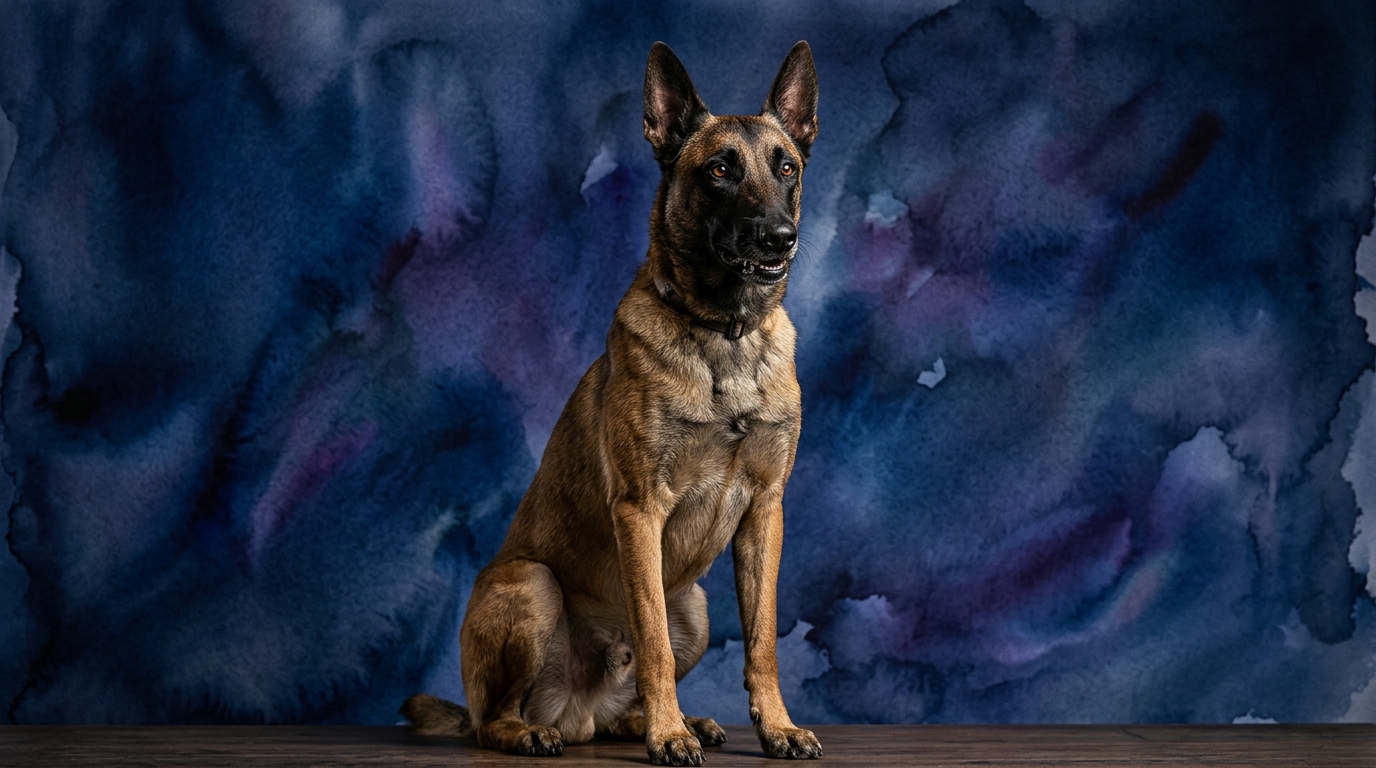

Side-by-Side IQ Profile: Belgian Malinois vs. Dandie Dinmont Terrier
The Belgian Malinois showcases a formidable cognitive toolkit, with a perfect 5/5 in Problem Solving, indicating an exceptional capacity to analyze situations and devise solutions, whether it’s navigating an obstacle course or understanding complex commands. Their Training Speed is also 5/5, meaning they grasp new concepts and behaviors with remarkable alacrity, often requiring fewer repetitions than other breeds. Social Intelligence stands at 4/5, suggesting a strong awareness of human cues and emotional states, vital for their collaborative work. An Instinctive Drive of 5/5 highlights their profound internal motivation to work and achieve, while their Memory, also 5/5, allows them to retain a vast repertoire of learned behaviors and experiences over time.
In contrast, the Dandie Dinmont Terrier presents a more moderately paced cognitive profile, consistently scoring 3/5 across all five dimensions. Their Problem Solving at 3/5 means they are capable of figuring out everyday challenges, but perhaps less inclined towards intricate, multi-step tasks without significant guidance. A Training Speed of 3/5 suggests they will learn, but at a more deliberate pace, requiring consistent and patient instruction. Their Social Intelligence at 3/5 indicates they are generally aware of their human companions, though they might display a more independent streak compared to highly co-dependent breeds. An Instinctive Drive of 3/5 reflects their foundational terrier tenacity for hunting, yet it's not the all-consuming drive seen in working breeds. Finally, their Memory at 3/5 ensures they retain important lessons, but perhaps not the sheer volume or precision of a breed built for complex sequential tasks.
Where Belgian Malinois Wins Cognitively
The Belgian Malinois demonstrably excels in areas demanding rapid assimilation of information and intricate task execution. Their 5/5 Problem Solving allows them to quickly assess novel situations, such as navigating a complex agility course or deciphering a new training command, often finding efficient solutions with minimal trial and error. This is coupled with a 5/5 Training Speed, which means they can master advanced obedience routines or specialized detection work in a fraction of the time many other breeds would require, making them exceptionally efficient learners. Furthermore, their superior 5/5 Memory ensures that once a skill is learned, it is deeply ingrained and reliably recalled, even after long periods or under pressure. This combination of swift learning, deep retention, and proactive problem-solving makes the Malinois unparalleled for roles requiring precision, speed, and adaptability. Their 5/5 Instinctive Drive fuels these cognitive strengths, providing an unwavering focus and motivation to engage with and conquer mentally demanding tasks, transforming challenges into opportunities for engagement.
Where Dandie Dinmont Terrier Wins Cognitively
While the Dandie Dinmont Terrier’s cognitive scores are more moderate, their strengths lie in a different spectrum of canine intelligence, perfectly suiting their historical role and companion lifestyle. Their 3/5 Instinctive Drive, for example, is a 'win' for owners seeking a dog with a manageable internal motor; they possess enough drive for engaging play and exploration but are less likely to become anxious or destructive if not constantly "working." Their 3/5 Problem Solving, while not geared for complex multi-stage tasks, translates into a practical, self-sufficient approach to daily life, often involving clever ways to achieve their own simple goals, like finding the sunniest spot or coaxing a treat. This independence, rooted in their terrier heritage, can be a cognitive advantage for owners who appreciate a dog with a distinct personality and less reliance on constant human direction for mental stimulation. Their moderate Social Intelligence means they are affectionate and connected to their family, but often with a charming self-possession, offering a less intense emotional bond that can be a welcome trait for certain households. The Dandie's cognitive profile fosters a balanced, adaptable companion who thrives in a home environment without the demanding mental workload of a high-drive breed.
Which is Easier to Train and Why
Determining "easier to train" depends entirely on the owner's goals and definition of ease. The Belgian Malinois, with its 5/5 Training Speed and Memory, will learn complex commands and sequences at an astonishing pace. For an owner seeking to teach advanced obedience, protection work, or intricate detection tasks, the Malinois is demonstrably "easier" because it absorbs and retains information so quickly and with such precision. However, this ease comes with a significant caveat: their 5/5 Instinctive Drive and 5/5 Problem Solving mean they *require* constant, challenging mental engagement. If their cognitive capacity isn't consistently stimulated through structured training and "jobs," their brilliance can manifest as inventive mischief or anxiety, which some owners might find incredibly difficult to manage.
The Dandie Dinmont Terrier, scoring 3/5 in Training Speed and Memory, will learn at a more leisurely pace. Basic obedience might take more repetitions and patience compared to a Malinois. Their terrier nature, characterized by a 3/5 Instinctive Drive, means they possess an independent streak; they might question commands or pursue intriguing scents rather than offering immediate compliance. For an owner who desires a dog that integrates into family life without the need for daily, rigorous training sessions or complex tasks, the Dandie can be "easier" because their moderate drive doesn't create the same intense pressure for constant mental work. Training a Dandie is about consistent, positive reinforcement and understanding their self-directed nature, not about achieving high-level competitive obedience. Their "difficulty" lies in their independence, whereas the Malinois's "difficulty" stems from their immense cognitive capacity needing an outlet.
Which Suits Active Owners vs. Relaxed Owners
The choice between these two breeds hinges significantly on an owner's lifestyle and their capacity to meet a dog's cognitive and physical demands. The Belgian Malinois is unequivocally suited for highly active owners who are prepared to be fully immersed in their dog's daily life, acting as a constant director and provider of purpose. Their 5/5 Instinctive Drive and 5/5 Problem Solving mean they require extensive physical exercise coupled with consistent, challenging mental stimulation, such as advanced obedience, dog sports like agility or protection work, or even real-world working roles. An owner who cannot dedicate several hours daily to structured engagement will find a Malinois's needs overwhelming, potentially leading to behavioral issues stemming from boredom and under-stimulation.
In contrast, the Dandie Dinmont Terrier makes an excellent companion for more relaxed owners. While they certainly enjoy regular walks and playtime, their 3/5 Instinctive Drive and 3/5 Problem Solving indicate a dog whose mental and physical needs are met with less intensity. They appreciate a comfortable routine, a secure yard for sniffing and exploring, and quality time with their family, but they don't demand a "job" in the same vein as a Malinois. Owners who prefer a charming, independent companion for walks around the neighborhood and cozy evenings at home, rather than intense athletic endeavors or complex training regimens, will find the Dandie Dinmont Terrier a suitable and rewarding match.
The Verdict
Choose a Belgian Malinois if you are an experienced, dedicated owner seeking a highly driven, intelligent working partner for demanding sports, protection work, or a lifestyle that provides intense daily mental and physical challenges. Be prepared to invest significant time and effort into their rigorous training and ongoing stimulation to channel their immense cognitive power productively.
Choose a Dandie Dinmont Terrier if you appreciate an independent, charming companion with a moderate activity level, who thrives in a relaxed home environment and doesn't require constant, complex mental tasks or high-intensity exercise. They are best suited for owners who value personality over precision obedience and enjoy a dog with a self-sufficient streak.
🧠 Find Your Pet's IQ Score
Our Pet IQ Lab assessment covers 25+ tests across 5 cognitive dimensions — personalized to your breed.
Take the Full IQ Test →Frequently Asked Questions
Does a Dandie Dinmont Terrier's lower IQ score mean it's not a good companion?
Absolutely not. The IQ scores reflect a breed's aptitude for specific types of cognitive tasks, often related to traditional working roles. A Dandie Dinmont Terrier's moderate scores indicate a different type of intelligence, one well-suited for companionship, offering independence and a charming personality without the intense demands of a working breed.
Can a Belgian Malinois be a good family dog?
A Belgian Malinois can be an excellent family dog for the right family, provided their significant cognitive and physical needs are consistently met. They thrive in active households that can provide structured training, ample exercise, and mental challenges daily, ensuring their powerful drive is channeled positively rather than becoming destructive.
How much mental stimulation does a Dandie Dinmont Terrier need?
Dandie Dinmont Terriers require moderate mental stimulation. This can be satisfied with regular walks, engaging play, puzzle toys, and consistent, positive reinforcement for basic obedience. They don't typically demand the intense, structured "work" that a high-drive breed like a Malinois thrives on, making them suitable for less demanding cognitive environments.