Side-by-Side Cognitive Profile
To truly understand the mental architecture of these two remarkable breeds, we must look beyond a singular 'intelligence' score and examine their individual cognitive dimensions, as assessed by The Cosmic Pet Pet IQ Lab.
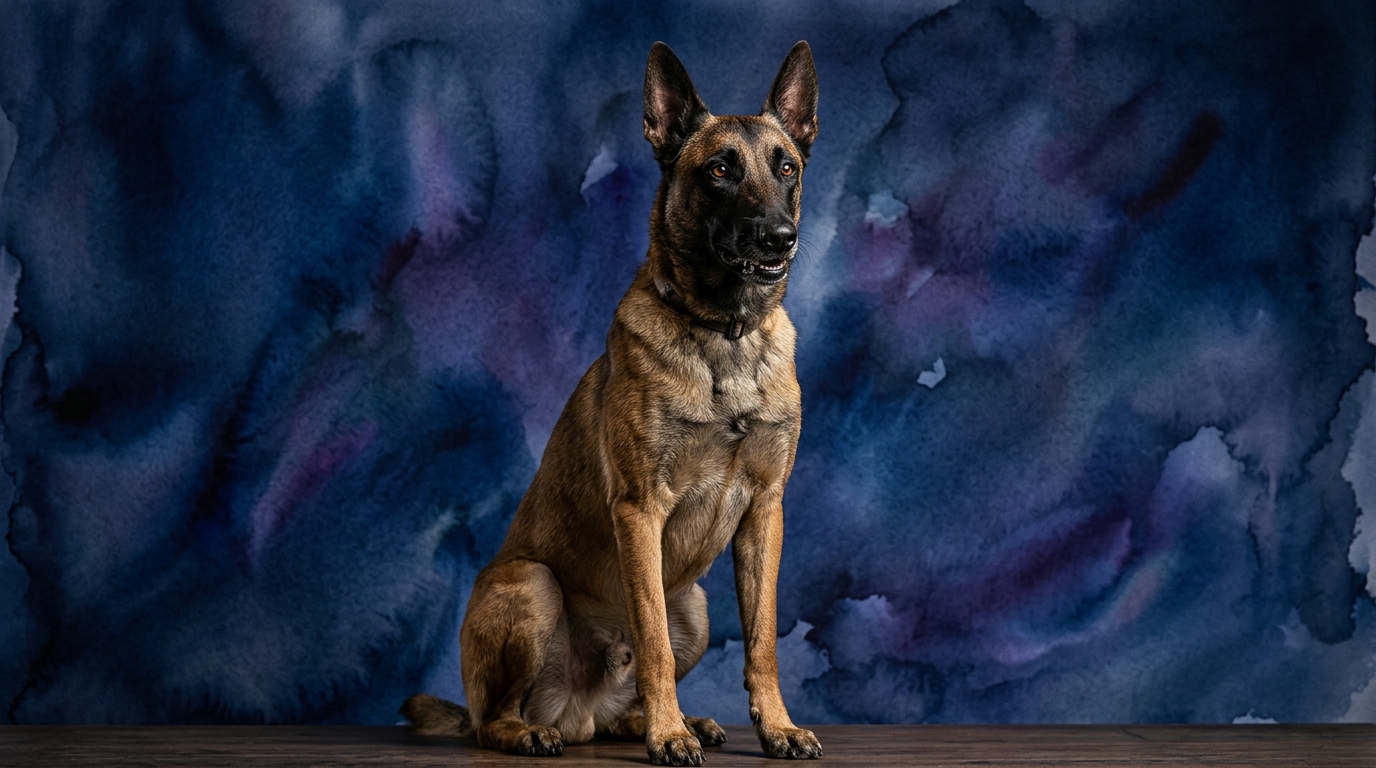
The **Belgian Malinois**, a Herding breed, scores consistently at the top of the scale across most metrics, reflecting its demanding roles in police, military, and protection work. Its Problem Solving is rated 5/5, indicating an exceptional capacity for navigating complex, novel situations and devising effective, often innovative, solutions under pressure. Training Speed is also 5/5, highlighting their rapid acquisition of new commands and intricate sequences, often solidifying behaviors in very few repetitions. Social Intelligence, at 4/5, suggests a keen awareness of human cues and a strong understanding of handler intent, crucial for their close working partnerships. Their Instinctive Drive is an unparalleled 5/5, channeling intense natural urges like prey drive and territoriality into focused, persistent work. Finally, their Memory is 5/5, demonstrating a robust ability to recall vast amounts of information, learned tasks, and environmental details over extended periods.
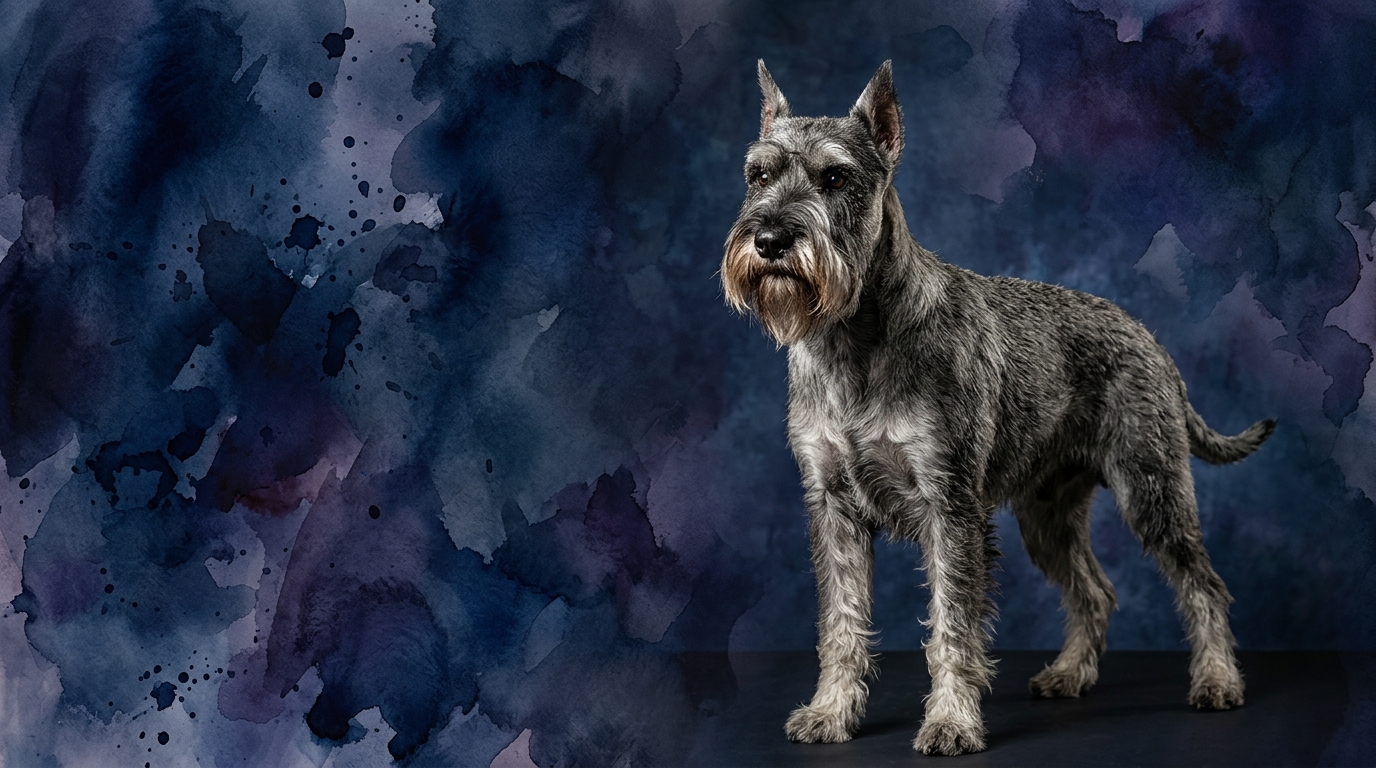
The **Standard Schnauzer**, a Working breed, while sharing the Malinois's Coren rank, presents a slightly different cognitive emphasis, reflecting its history as a versatile farm dog and guardian. Its Problem Solving is rated 4/5, indicating strong practical abilities to overcome physical challenges and learn through experience, though perhaps with a more methodical approach than the Malinois. Training Speed is 4/5, meaning they learn new tasks efficiently and reliably, but may require a few more repetitions or a longer reinforcement schedule to achieve the same level of fluency as a Malinois. Social Intelligence sits at 3/5, suggesting they understand clear human communication but are less likely to be swayed by subtle emotional nuances, often displaying a more independent and discerning nature. Their Instinctive Drive is 3/5, manifesting as a solid watchfulness, moderate prey drive, and a desire to patrol, which is present but typically less overwhelming than the Malinois. Their Memory is 4/5, providing a reliable capacity to retain training and recall past experiences, making them consistent companions.
Where the Belgian Malinois Excels Cognitively
The Malinois's cognitive strengths truly shine in scenarios demanding peak mental performance and unwavering focus. Their 5/5 Problem Solving means they don't just follow instructions; they adapt them. For instance, in a search and rescue operation, a Malinois might independently navigate a partially collapsed structure, identifying the safest route and prioritizing areas based on subtle environmental cues, rather than simply following a pre-set path. This cognitive flexibility allows them to excel in dynamic, unpredictable environments where quick, independent decision-making is paramount.
Their 5/5 Training Speed is not just about learning basic commands quickly; it's about mastering complex, multi-stage tasks with precision. Consider a protection dog learning a bite work routine: the Malinois will not only learn the physical actions but also the nuanced triggers, the timing, and the specific sequence required, often needing only a handful of repetitions to ingrain the entire protocol. This rapid assimilation of intricate information, coupled with their 5/5 Memory, means they retain vast operational knowledge, making them exceptionally reliable in high-stakes roles where forgetting a step could have serious consequences. Their 5/5 Instinctive Drive fuels this learning and application, providing an internal engine that ensures relentless effort and focus, turning abstract training into powerful, purposeful action.
Where the Standard Schnauzer Excels Cognitively
While the Malinois thrives on intensity, the Standard Schnauzer's cognitive profile offers a different, yet equally valuable, set of strengths, particularly suited for a dedicated companion and versatile working partner. Their 4/5 Problem Solving, while not as explosive as the Malinois, is characterized by a practical, grounded approach. A Schnauzer might excel at figuring out how to open a child-proof gate or systematically search a yard for a lost toy, demonstrating persistent, logical trial-and-error rather than lightning-fast, intuitive leaps. This can lead to a dog that is resourceful and self-sufficient within its environment.
The Schnauzer's 3/5 Social Intelligence, coupled with its 3/5 Instinctive Drive, means it often processes social cues and environmental stimuli with a certain level of discerning independence. They are less likely to become overly anxious or reactive to subtle handler stress or ambiguous situations, preferring clear, consistent communication. This can translate into a more emotionally stable companion in a busy household, less prone to overthinking social dynamics. Their 4/5 Memory is robust enough for excellent retention of family routines, house rules, and obedience commands, making them reliably predictable and well-mannered once trained, without the potential for obsessive recall of every past stimulus that a higher-drive breed might exhibit.
Which is Easier to Train, and Why?
The question of 'easier to train' is nuanced when comparing these two breeds, largely depending on the handler's experience and the desired outcome. The Belgian Malinois, with its 5/5 Training Speed and 5/5 Instinctive Drive, learns new behaviors at an astonishing pace. However, this rapid learning applies equally to both desired and undesired behaviors. A Malinois requires an exceptionally skilled, consistent, and proactive handler who can channel its immense drives into productive outlets. Any inconsistency, lapse in leadership, or failure to provide sufficient mental and physical engagement can quickly result in a Malinois that trains its owner, developing complex, sometimes destructive, problem-solving strategies to meet its own needs. Their intense focus and memory mean that once a behavior is learned, good or bad, it is deeply ingrained, making error correction a significant undertaking. Therefore, while they learn quickly, they are not 'easier' for a novice.
The Standard Schnauzer, with its 4/5 Training Speed and 3/5 Instinctive Drive, learns reliably but at a more manageable pace. Their independent streak means they require clear motivation and consistent reinforcement, but they are generally more forgiving of minor handler errors or inconsistencies than a Malinois. They might take a few more repetitions to master a command, but their lower overall intensity means a missed training session or a slightly imperfect cue is less likely to derail their entire behavioral foundation. Their moderate drive is easier for a dedicated, consistent, but not necessarily expert, owner to manage, making them more accessible for individuals willing to invest time in positive reinforcement and clear communication without needing the specialized handling required by a Malinois. They are 'easier' in the sense that their cognitive demands are less overwhelming for a typical, engaged owner.
Which Suits Active Owners vs. Engaged Owners
The distinction between 'active' and 'engaged' owners becomes critical when considering these breeds. The Belgian Malinois is unequivocally suited for truly active owners — those who are not just physically active but are prepared to commit to an extremely high level of mental and physical engagement daily. Their 5/5 Instinctive Drive and 5/5 Problem Solving demand a constant 'job,' whether it's advanced obedience, protection sports, agility, scent detection, or competitive bite work. An owner who can't provide multiple hours of structured, challenging activity and consistent training will find themselves with a frustrated, potentially destructive, and certainly overwhelming dog. This breed thrives with an owner who views dog ownership as a full-time, demanding partnership.
The Standard Schnauzer, while still requiring an active lifestyle, is better suited for 'engaged' owners. These are individuals who enjoy daily walks, structured playtime, and consistent training, but perhaps don't need to dedicate their entire lives to canine sports or working endeavors. Their 3/5 Instinctive Drive means they appreciate having a role, such as guarding the home or participating in moderate-level dog sports like obedience or barn hunt, but they are less likely to unravel if they don't have a 'job' every single day. They are content with being an integral part of an active family, thriving on companionship and consistent routine, without the relentless, non-negotiable mental and physical demands of a Malinois. They are alert and robust companions who enjoy participation but don't require total immersion in a working lifestyle.
The Verdict
Choose the Belgian Malinois if you are an experienced, highly dedicated handler seeking an intense, driven working partner for specialized tasks, prepared to meet their extreme mental and physical demands daily.
Opt for the Standard Schnauzer if you desire an alert, robust, and versatile companion with a strong personality, capable of an active family life and various dog sports, without the overwhelming intensity of a Malinois.
🧠 Find Your Pet's IQ Score
Our Pet IQ Lab assessment covers 25+ tests across 5 cognitive dimensions — personalized to your breed.
Take the Full IQ Test →Frequently Asked Questions
Are Malinois and Schnauzers equally suitable for first-time dog owners?
Generally, neither breed is ideal for a first-time dog owner due to their significant needs for training and socialization. However, the Standard Schnauzer, with its more moderate drives and slightly more forgiving nature, might be a more manageable choice for a highly committed and educated novice than the Belgian Malinois, which demands expert handling from day one.
How do their different instinctive drives impact daily life?
The Malinois's 5/5 instinctive drive means an almost constant need for mental and physical stimulation, manifesting as intense prey drive, territoriality, and a relentless desire to work; this requires constant management and channeling. The Schnauzer's 3/5 drive translates to a strong sense of alertness and moderate prey drive, making them excellent watchdogs and active companions, but generally easier to integrate into a typical family routine without overwhelming demands for specialized work.
Can a Standard Schnauzer excel in protection sports like a Malinois?
While a Standard Schnauzer can certainly be trained in protection work and excel in various dog sports, its 3/5 instinctive drive and 3/5 social intelligence mean it typically won't reach the same elite level of intensity, focus, and natural aptitude for high-stakes protection work as a Belgian Malinois (5/5 in both). Schnauzers are more versatile generalists, whereas Malinois are specialists bred for extreme working performance.