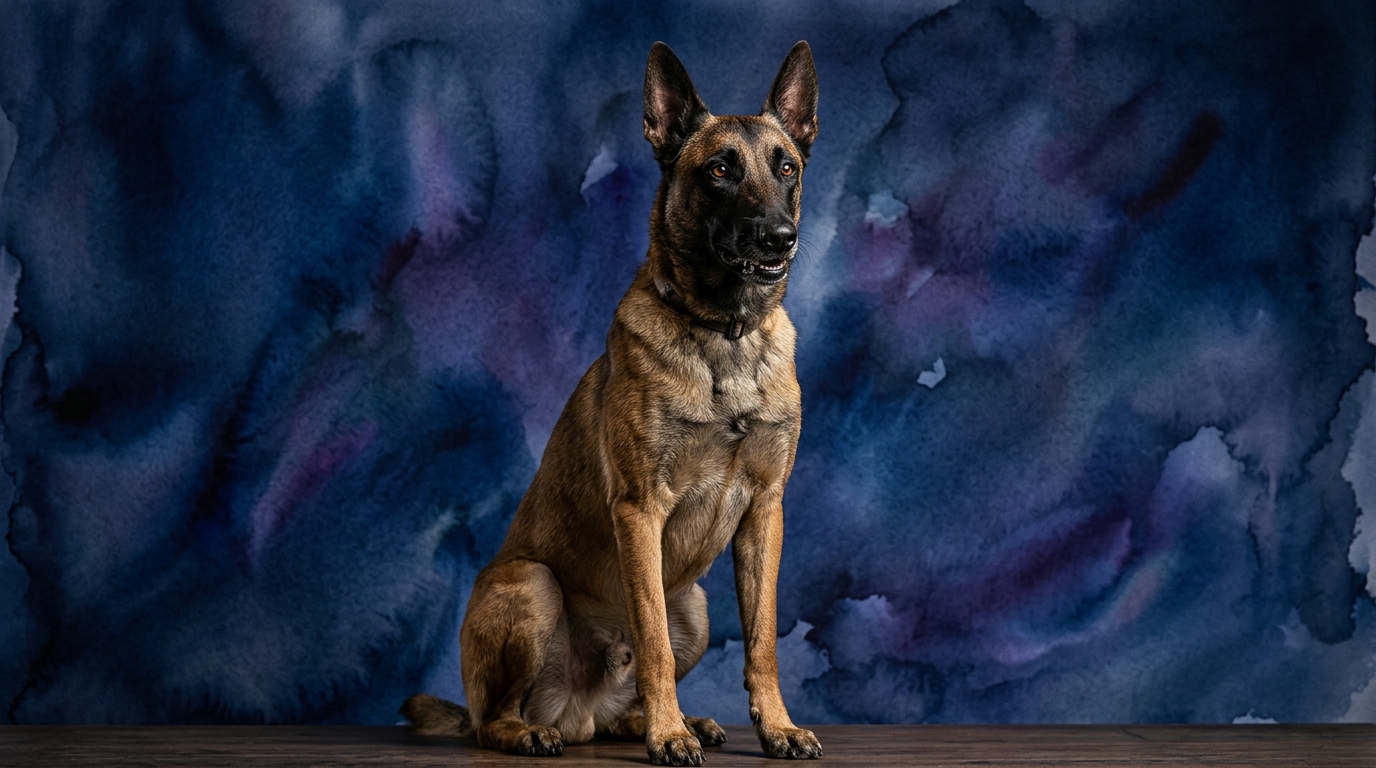
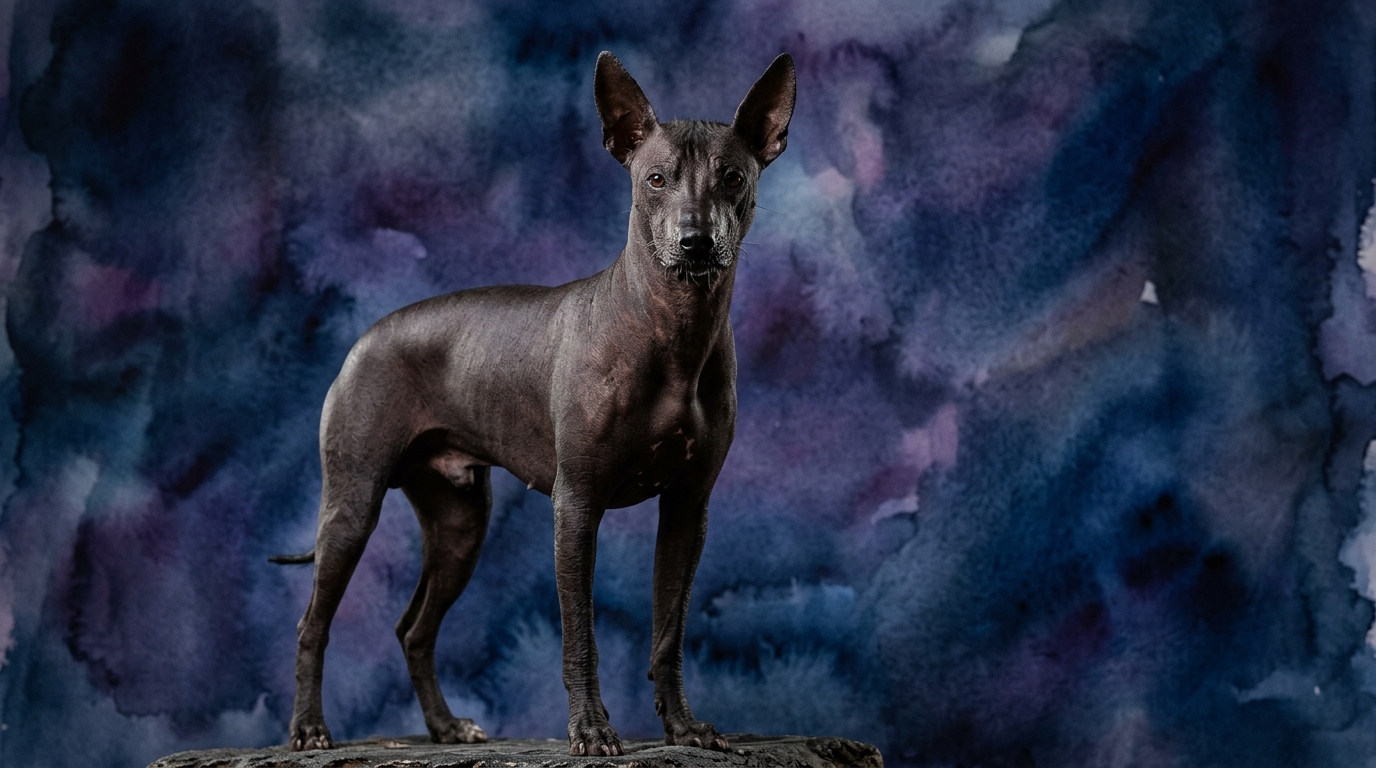
Side-by-Side Cognitive Profiles
At The Cosmic Pet Pet IQ Lab, we evaluate cognitive abilities across five key dimensions, providing a detailed understanding of how each breed processes information and interacts with its environment.
The Belgian Malinois, a breed forged for demanding work, exhibits a profile of exceptional mental agility and drive. Their Problem Solving is rated 5/5, indicating a profound capacity to decipher complex environmental challenges and strategize effective solutions with remarkable speed. Training Speed also stands at 5/5; these dogs absorb new commands and routines with astonishing rapidity, often requiring minimal repetition. Social Intelligence is assessed at 4/5, reflecting their keen awareness of human cues and pack dynamics, primarily channeled into understanding handler expectations and partnership. Their Instinctive Drive is a formidable 5/5, rooted in an unwavering need for purposeful activity and a potent prey drive. Finally, Memory scores 5/5, demonstrating robust and enduring recall for learned behaviors and environmental details, crucial for their reliability in intricate working roles.
In contrast, the Xoloitzcuintli, with its ancient lineage, presents a more nuanced and independent cognitive landscape. Their Problem Solving is rated 3/5; they approach novel situations with a measured, often cautious thought process, capable of practical solutions but taking more time to process and experiment. Training Speed is 3/5, meaning new commands require greater patience and repetition, as their independent nature might not always prioritize human directives. Social Intelligence is 3/5, characterized by deep bonds with immediate family but often a reserved or aloof demeanor towards strangers, attuned to their inner circle's emotional states. Instinctive Drive is 3/5, manifesting as a moderate prey drive and strong protective instinct rather than a relentless pursuit of work. Their Memory scores 3/5, adequate for daily routines and learned behaviors, serving them well in maintaining a stable home life without the exhaustive recall of some working breeds.
Where the Belgian Malinois Excels Cognitively
The Malinois's cognitive prowess is most evident in scenarios demanding swift information processing and the precise application of learned behaviors under pressure. Their exceptional problem-solving capacity (5/5) allows them to quickly assess dynamic situations, such as navigating an agility course or tracking a scent through varied terrain, adapting their strategy on the fly with impressive fluidity. This breed demonstrates an unparalleled ability to generalize training, applying a concept learned in one context to a novel situation with minimal guidance, a hallmark of advanced cognitive flexibility.
Their profound memory (5/5) combined with instantaneous training speed (5/5) means they can master complex sequences of commands and retain them with enduring precision, making them invaluable in roles requiring accuracy and reliability, like police work or search and rescue. A Malinois isn't merely learning a trick; they are internalizing a system of responses that can be deployed with incredible accuracy and speed, even years after initial training, fostering a dog that understands not just *what* is asked but *why* it is important within a task-oriented framework.
Where the Xoloitzcuintli Excels Cognitively
The Xoloitzcuintli's cognitive strengths lie in their nuanced social discernment and independent thought, particularly within their chosen social sphere. While not driven by external validation in the same way as a Malinois, Xolos display a subtle yet profound social intelligence (3/5) towards their family, often anticipating needs or reacting sensitively to emotional shifts within their human pack. This manifests as a quiet companionship, where mutual understanding often transcends explicit commands, fostering a deep, intuitive bond.
Their problem-solving (3/5), though not rapid-fire, allows for a more considered, sometimes creative, approach to environmental challenges that might involve patience or a unique perspective rather than brute force or immediate learned response. For instance, a Xolo might find an unconventional way to retrieve a dropped toy, not through speed, but through observation and a less direct path. Their memory (3/5), while not exhaustive, is reliable for maintaining the routines and social structures that provide comfort and security in their daily lives, demonstrating a cognitive preference for stability and deep personal connection over broad task application.
Training Dynamics: Malinois vs. Xoloitzcuintli
In terms of command acquisition and task performance, the Belgian Malinois is undeniably the more straightforward breed to train, primarily due to their intrinsic motivations and cognitive makeup. Their exceptional training speed (5/5) means they grasp new concepts with startling rapidity, often requiring only a few repetitions before a behavior is internalized. This is coupled with an intense instinctive drive (5/5) and a profound desire to work and engage with their handler, creating a highly eager and responsive student. A Malinois thrives on structure, clear directives, and the mental engagement that training provides, viewing it as a rewarding partnership. Their superior memory (5/5) ensures that once a command is learned, it is retained with precision over time, making advanced training and complex sequences readily achievable.
The Xoloitzcuintli, conversely, requires a different pedagogical approach. While certainly capable of learning, their independent nature and discerning social intelligence (3/5) mean they are less inclined to offer automatic compliance. Their training speed (3/5) is more moderate, necessitating greater patience, consistent positive reinforcement, and a focus on building a strong, trusting relationship. Xolos are often described as 'thinking dogs' who might question the purpose of a command or choose to comply based on their own assessment of the situation, rather than immediate, unquestioning obedience. This isn't a lack of capacity, but a difference in cognitive priority; they value autonomy and connection over constant instruction, making motivational rewards and consistency paramount for successful training.
Matching Breeds to Lifestyles: Active vs. Relaxed Owners
The Belgian Malinois is unequivocally suited for highly active owners who can meet their substantial physical and mental demands. Their 5/5 instinctive drive translates into an almost boundless energy reservoir and a profound need for purpose. An owner must be prepared for daily strenuous exercise, such as running, biking, or advanced canine sports like agility, protection work, or scent detection. Critically, their high problem-solving (5/5) and memory (5/5) scores mean they also require continuous, complex mental stimulation through advanced training, puzzle toys, and engaging activities to prevent boredom and potential destructive behaviors. This breed thrives with an owner who views dog ownership as an active, demanding partnership.
The Xoloitzcuintli, while not a couch potato, is far better suited for owners who appreciate a more relaxed, yet still engaged, lifestyle. Their moderate instinctive drive (3/5) means they enjoy regular walks, playtime in a secure yard, and perhaps some casual hiking, but do not demand the intense, marathon-level activity of a Malinois. Mentally, they appreciate companionship and routine, with moderate training sessions focused on manners and basic obedience rather than advanced tasks. Their discerning social intelligence (3/5) means they value quiet evenings at home with their family, forming deep, loyal bonds, and are generally content with a more predictable and calm environment. They are a good fit for individuals or families who want a devoted companion without the relentless demands of a working breed.
The Verdict
Choose a Belgian Malinois if you are an experienced, highly active individual or family committed to providing rigorous daily mental and physical challenges, seeking a driven, capable partner for demanding tasks or competitive canine sports.
Opt for a Xoloitzcuintli if you desire a devoted, discerning companion who thrives on deep family bonds and a predictable, calmer lifestyle, valuing quiet companionship over constant activity and complex training.
🧠 Find Your Pet's IQ Score
Our Pet IQ Lab assessment covers 25+ tests across 5 cognitive dimensions — personalized to your breed.
Take the Full IQ Test →Frequently Asked Questions
Do Malinois require more exercise than Xolos?
Absolutely. Belgian Malinois possess an exceptionally high instinctive drive, demanding several hours of vigorous physical activity and intense mental engagement daily, far surpassing the moderate exercise needs of a Xoloitzcuintli, who are content with regular walks and playtime.
Can a Xoloitzcuintli perform complex tasks like a Malinois?
While Xoloitzcuintli can learn commands and solve practical problems, their problem-solving and training speed are not geared towards the rapid acquisition and execution of complex, multi-step tasks that a Belgian Malinois excels at, preferring independent thought over intricate obedience.
Which breed is better for a first-time dog owner?
The Xoloitzcuintli is generally a more suitable choice for a first-time dog owner due to their moderate exercise needs and more independent, less demanding training requirements compared to the Belgian Malinois, who needs an experienced handler to manage their intense drive and cognitive capacity.