
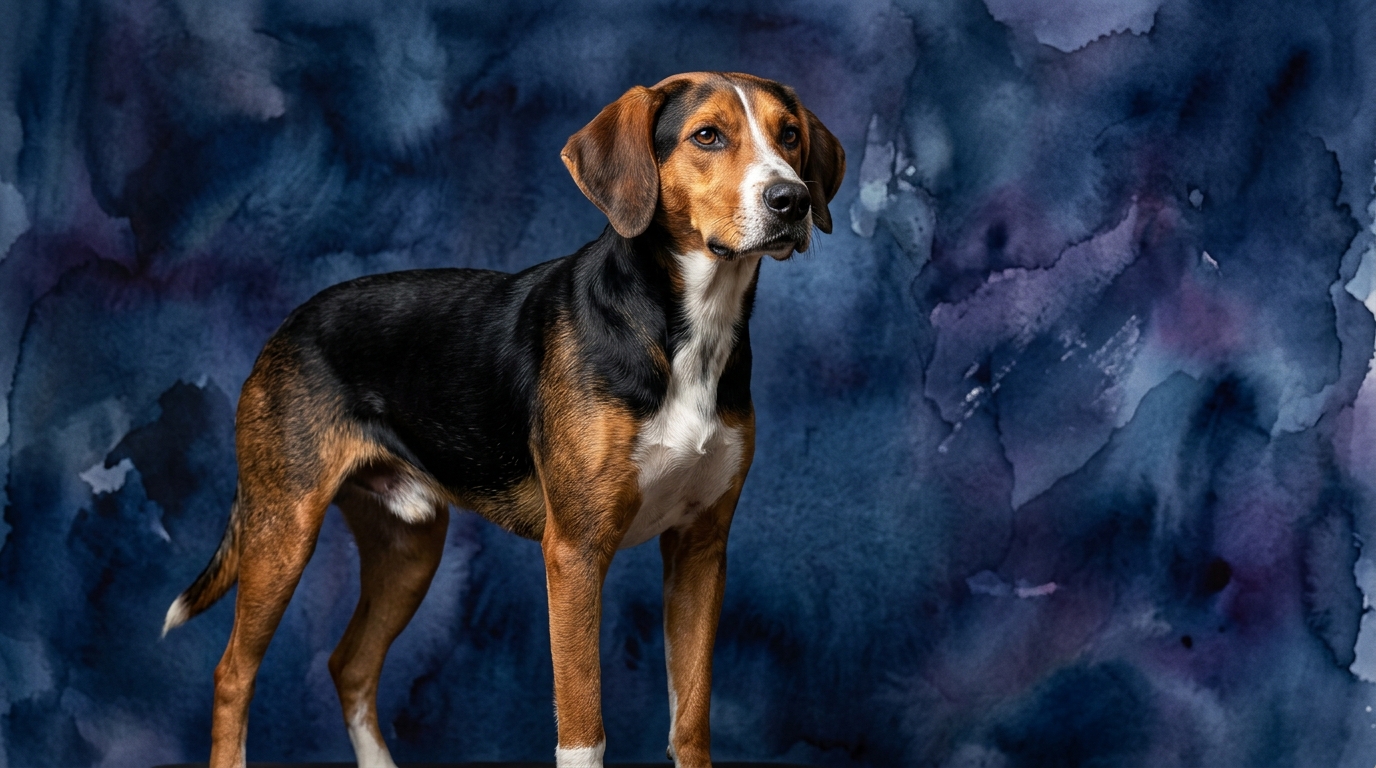
Side-by-Side IQ Profile: Groenendael vs. Foxhound
The Cosmic Pet Pet IQ Lab employs five key dimensions to evaluate canine intelligence, offering a granular view beyond traditional rankings. For the Belgian Sheepdog (Groenendael), a breed rooted in herding, its profile reflects a highly responsive and adaptable intellect: Problem Solving 5/5, Training Speed 5/5, Social Intelligence 3/5, Instinctive Drive 3/5, and Memory 5/5. This breed also holds a notable Coren rank of #15, indicating its strong capacity for obedience and working roles.
In contrast, the American Foxhound, a scent-driven hunting dog, presents a different cognitive blueprint, tailored for endurance and independent pursuit. Its IQ scores are uniformly balanced: Problem Solving 3/5, Training Speed 3/5, Social Intelligence 3/5, Instinctive Drive 3/5, and Memory 3/5. This breed is not traditionally Coren-ranked, which underscores a cognitive focus less on human-directed obedience and more on its intrinsic hunting purpose and self-reliance in the field.
Where the Belgian Sheepdog (Groenendael) Excels Cognitively
The Groenendael's cognitive strengths are evident in its exceptional Problem Solving (5/5) and Training Speed (5/5). This breed processes new information rapidly and applies learned solutions to novel situations with impressive efficiency. Its heritage as a herding dog demanded quick thinking and precise execution, skills that translate into an eagerness to learn complex sequences and respond to intricate commands with minimal repetition. This high capacity for learning makes them adept at advanced obedience, agility, and protection sports.
Furthermore, its perfect Memory (5/5) allows the Groenendael to retain extensive repertoires of commands, routines, and experiences over long periods, making multi-step tasks or complex competitive routines second nature. While its Social Intelligence is rated 3/5, this often manifests as a deep, focused bond with its primary handler, making it highly attuned to their cues and intentions within a working context, rather than a broad sociability with all strangers. This singular focus aids in precise, handler-directed work.
Where the American Foxhound Shines Cognitively
The American Foxhound's cognitive strengths, though different, are perfectly adapted to its original purpose. Its 3/5 Problem Solving isn't about solving puzzle toys for human amusement, but about independently navigating complex terrain and deciphering intricate scent trails to locate quarry. This involves a sophisticated form of environmental problem-solving, requiring sustained focus, adaptability, and decision-making without constant human direction.
Its Instinctive Drive (3/5) is a refined, persistent motivation for scent work, allowing it to maintain focus on a trail for hours, overcoming distractions and physical challenges. This isn't a chaotic, unfocused drive, but a highly specialized cognitive engine. The 3/5 Memory allows it to recall specific scent profiles and successful hunting routes, contributing to its effectiveness in the field, while its 3/5 Social Intelligence often translates to strong pack cohesion and a laid-back, amiable demeanor with its human family, rather than intense handler focus.
Training Dynamics: Groenendael's Responsiveness vs. Foxhound's Independence
When it comes to ease of training, the Belgian Sheepdog (Groenendael) holds a distinct advantage due to its 5/5 Training Speed and Problem Solving. These dogs typically display an eager-to-please attitude and a strong desire to work collaboratively with their handlers. Their herding background ingrained a need for clear communication and quick, precise responses, meaning they absorb new commands rapidly and perform them consistently. This makes them highly rewarding for owners who enjoy structured training and dog sports, as they thrive on mental engagement and clear direction.
The American Foxhound, with its 3/5 Training Speed and Problem Solving, presents a different training challenge. This breed's independent nature and potent scent drive mean that external stimuli, particularly enticing smells, can often override human commands. Training requires immense patience, consistency, and positive reinforcement, often in environments carefully managed to minimize olfactory distractions. Their cognitive priority is often on the environment and its scents rather than direct human instruction, demanding an understanding trainer who can channel their natural drives effectively rather than trying to suppress them. This isn't a lack of cognitive capacity, but a different focus on what constitutes 'important' information.
Matching Breeds to Lifestyles: Active Engagement vs. Outdoor Pursuit
The Belgian Sheepdog (Groenendael) is ideally suited for active owners who are prepared to provide significant mental and physical engagement. Their high Problem Solving and Training Speed mean they require structured activities that challenge their intellect, such as obedience training, agility, or even complex trick learning. Without sufficient mental stimulation and physical exercise, their sharp minds can lead to boredom and potentially destructive behaviors. They thrive in homes where they are active participants in daily life and given a 'job' to do.
The American Foxhound, while also requiring an active lifestyle, suits owners whose activity preferences lean towards extensive outdoor exploration rather than structured mental work. These dogs need ample opportunity to run, explore, and follow scents, ideally in secure, large areas. While they appreciate companionship, their cognitive fulfillment comes more from physical freedom and engaging their powerful scenting abilities than from learning intricate commands. They are not a match for truly 'relaxed' owners; rather, they fit those who enjoy long walks, hikes, or runs, and understand the need to manage a strong, independent prey drive.
The Verdict
Choose the Belgian Sheepdog (Groenendael) if you desire a highly trainable, responsive companion eager for structured learning and collaborative activities like dog sports or advanced obedience.
Opt for the American Foxhound if you seek an amiable, independent outdoor companion whose fulfillment comes from extensive physical exercise and engaging its powerful scenting instincts.
🧠 Find Your Pet's IQ Score
Our Pet IQ Lab assessment covers 25+ tests across 5 cognitive dimensions — personalized to your breed.
Take the Full IQ Test →Frequently Asked Questions
Is the Belgian Sheepdog (Groenendael) suitable for first-time dog owners?
The Groenendael's high intelligence and drive mean it can be challenging for inexperienced owners. They require consistent training, early socialization, and a commitment to providing ample mental and physical stimulation to thrive, making them better suited for owners with some dog experience.
Do American Foxhounds make good family pets, despite their independence?
Yes, American Foxhounds can be affectionate and tolerant family pets, often getting along well with children and other dogs. Their independent nature means they may not be as 'velcro' as some breeds, but they are generally good-natured and enjoy being part of the family, especially if their exercise needs are met.
How much exercise does each breed require daily?
The Belgian Sheepdog (Groenendael) needs at least an hour of vigorous exercise daily, combined with mental challenges like training sessions or puzzle toys. The American Foxhound requires even more, ideally several hours of strenuous activity, including opportunities for long runs or scent tracking in a secure area, to prevent boredom and restlessness.