
Side-by-Side Cognitive Profiles
To truly understand the cognitive landscape of these two distinct breeds, we turn to The Cosmic Pet Pet IQ Lab's detailed dimensions. The Belgian Sheepdog (Groenendael), a Herding group member with a Coren rank of #15, presents a profile marked by exceptional mental acuity. Its Problem Solving is rated a perfect 5/5, indicating an outstanding capacity to analyze novel situations and devise effective solutions. Complementing this is a Training Speed of 5/5, meaning it absorbs new commands and routines with remarkable quickness, requiring minimal repetition. Its Social Intelligence stands at 3/5, demonstrating adequate social awareness, capable of understanding human cues but sometimes reserved with strangers. The Groenendael's Instinctive Drive is also 3/5, exhibiting a moderate level of inherent drives, primarily related to their herding legacy, which can be channeled productively. Finally, its Memory is a stellar 5/5, enabling it to retain learned information and experiences over long periods, contributing to consistent performance.
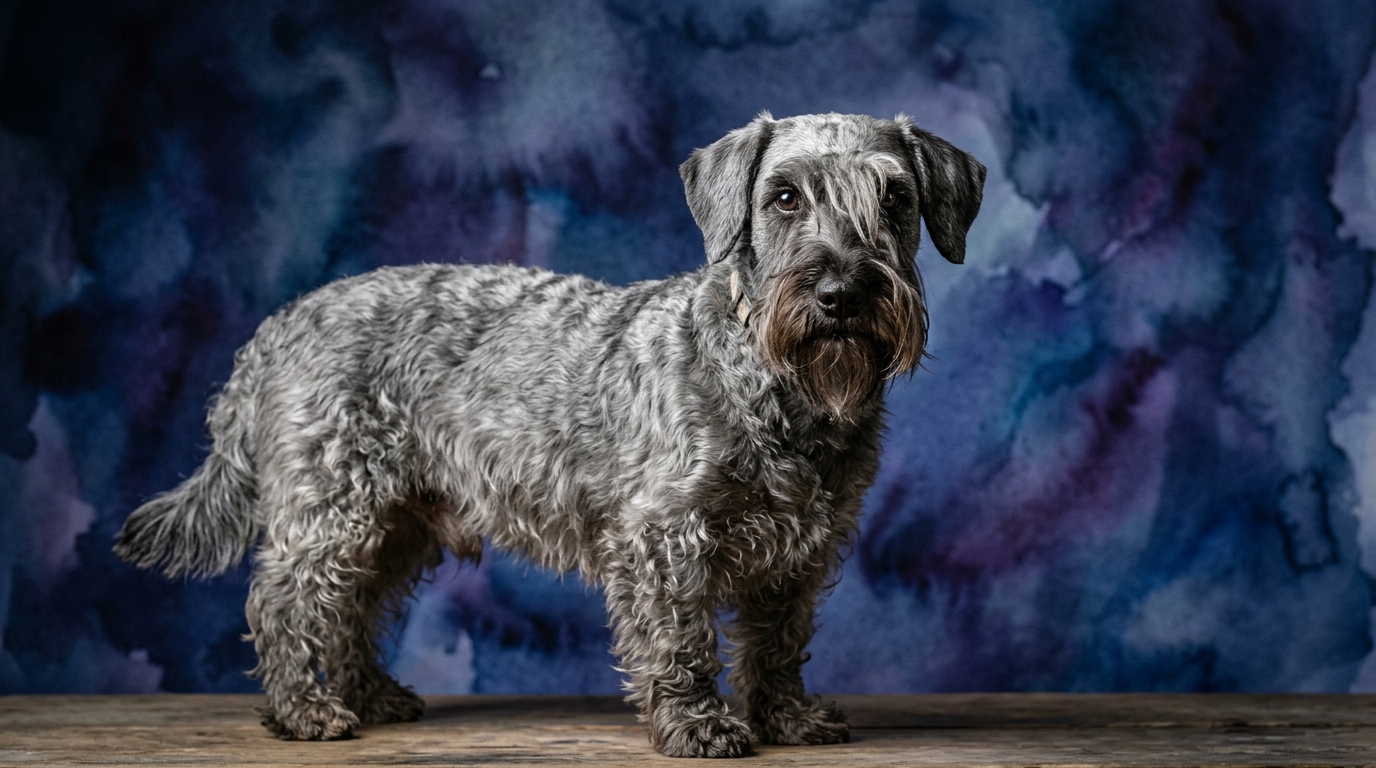
In contrast, the Cesky Terrier, belonging to the Terrier group and not Coren-ranked, showcases a more uniform, balanced cognitive profile. Its Problem Solving is rated 3/5, indicating it approaches challenges with a practical, often direct method, capable of solving moderate puzzles but less inclined towards abstract thought. Training Speed also sits at 3/5, meaning it learns at a steady pace, requiring consistent, positive reinforcement, and often benefits from shorter, engaging sessions. Mirroring the Groenendael, its Social Intelligence is 3/5, showing a similar level of social understanding, typically friendly with their family but can be reserved or discerning with new acquaintances. The Cesky's Instinctive Drive is 3/5, possessing typical terrier drives, including a moderate prey drive and a desire to explore, which can be managed with appropriate outlets. Its Memory is 3/5, retaining information sufficiently for daily routines and learned commands, though perhaps not with the same depth or longevity as a breed with higher memory scores. This side-by-side view immediately highlights significant differences in their cognitive strengths and approaches to learning and interaction.
Where the Belgian Sheepdog (Groenendael) Excels Cognitively
The Belgian Sheepdog (Groenendael) stands out dramatically in its cognitive prowess, particularly in areas demanding complex mental processing and learning efficiency. Its perfect 5/5 scores in Problem Solving and Memory highlight an exceptional capacity for analytical thought and retention. This breed doesn't just learn; it comprehends and stores information with remarkable fidelity, allowing it to apply past lessons to new scenarios. For instance, a Groenendael can quickly grasp multi-step commands, anticipate handler intentions during agility courses, or even learn to differentiate between various objects or people with nuanced cues based on subtle environmental changes. Their training speed, also a 5/5, means they assimilate new behaviors and concepts with minimal repetition, making them highly responsive to advanced training regimens and intricate tasks. This combination of superior problem-solving, rapid learning, and robust memory makes them adept at activities requiring sustained mental engagement, such as competitive obedience, protection work, or complex herding patterns where adapting to livestock movement and handler signals is crucial. They are thinkers and doers, capable of processing and executing sophisticated sequences of actions with precision and consistency, making them a formidable partner in any mentally demanding pursuit.
Where the Cesky Terrier Finds Its Cognitive Niche
While the Cesky Terrier's individual cognitive scores might appear modest compared to the Groenendael, its unique blend of attributes creates distinct advantages in specific contexts. With a 3/5 in Problem Solving, the Cesky is not prone to overthinking; instead, it approaches challenges with pragmatic determination, often relying on its innate terrier tenacity and physical prowess. This directness can be a strength when quick, decisive action is needed without excessive deliberation, for example, navigating a novel scent trail or flushing out a small pest. Their 3/5 in Social Intelligence, identical to the Groenendael, suggests a balanced ability to navigate social interactions, being neither overly dependent nor entirely aloof, which can be ideal for owners seeking a companionable yet independent dog. The Cesky's moderate instinctive drives (3/5) are channeled into focused activities like scent work or digging, providing natural outlets that satisfy their breed-specific inclinations without the intensity seen in some higher-drive breeds. This balance means they can be surprisingly adaptable to various home environments, provided their core terrier needs for exploration and engagement are met. Their consistent 3/5 across the board points to a well-rounded, stable cognitive profile that, while not reaching the peaks of a working breed like the Groenendael, ensures reliability and a manageable temperament for a range of domestic situations, making them less prone to the anxieties or frustrations that can sometimes accompany higher-strung, more mentally demanding breeds if not adequately stimulated.
Training Dynamics: Groenendael vs. Cesky Terrier
Evaluating ease of training between these two breeds reveals a clear distinction rooted in their cognitive profiles and inherent behavioral tendencies. The Belgian Sheepdog (Groenendael) is undeniably easier to train for complex tasks and formal obedience, largely due to its perfect 5/5 scores in Training Speed and Memory, coupled with a 5/5 in Problem Solving. This breed actively seeks to understand and comply, absorbing new commands and sequences almost effortlessly. They thrive on mental challenges and intricate learning, making them highly responsive to positive reinforcement and capable of mastering advanced obedience, agility, and protection work with relative speed. Their strong memory ensures that once a behavior is learned, it is retained consistently, allowing for reliable performance even after periods of inactivity. This biddability and eagerness to work with their handler make the Groenendael a dream for dedicated trainers.
In contrast, the Cesky Terrier, with 3/5 scores across the board for Problem Solving, Training Speed, and Memory, presents a different training dynamic. While capable of learning, the Cesky requires more patience, consistency, and engaging training methods. They possess a typical terrier independence and a tendency towards self-directed thinking, meaning they might question the 'why' or prefer to solve problems their own way rather than simply complying. Training sessions need to be kept short, fun, and varied to maintain their interest, as repetition can lead to boredom and stubbornness. For example, a Groenendael might learn a new trick in a few repetitions, while a Cesky might require more sessions over a longer period, often needing creative motivation to bypass their independent streak and focus their attention. Therefore, for an owner seeking a highly biddable and rapidly trainable dog for diverse activities, the Groenendael is the more straightforward choice, whereas the Cesky demands a more understanding, patient, and persistent approach to training, rewarding owners with a clever, if sometimes willful, companion.
Matching Breeds to Lifestyles: Active vs. Relaxed Owners
The cognitive profiles of the Belgian Sheepdog (Groenendael) and the Cesky Terrier strongly dictate their suitability for different owner lifestyles. The Groenendael, with its exceptional problem-solving, memory, and training speed, paired with a moderate instinctive drive, thrives with active, engaged owners. This breed requires significant mental and physical stimulation to prevent boredom and channeling its sharp intellect into constructive activities. Owners who enjoy dog sports like agility, obedience, flyball, or even protection work will find the Groenendael an enthusiastic and capable partner. Their strong cognitive abilities mean they need jobs to do, whether it's learning new tricks, participating in advanced training, or engaging in extensive interactive play. A relaxed owner who cannot provide consistent mental challenges and physical exercise might find a Groenendael becomes restless, potentially developing undesirable behaviors stemming from understimulation, such as excessive barking or destructive chewing, as it seeks outlets for its considerable energy and intellect.
Conversely, the Cesky Terrier, with its balanced 3/5 scores across all cognitive dimensions and a moderate instinctive drive, is better suited for owners seeking a companion with a more manageable energy level and cognitive demand. While still needing daily walks and engaging playtime to satisfy their terrier instincts for exploration and moderate activity, they are generally less demanding in terms of requiring constant, high-level mental challenges. They are content with a good romp in the yard, regular walks, and interactive toys, without necessarily needing to master complex routines or participate in competitive dog sports. A Cesky can adapt well to a family that enjoys regular, but not necessarily intense, outdoor activities and appreciates a dog that can also settle calmly indoors. While they still require consistent training and mental engagement to prevent boredom, their needs are less intense than the Groenendael's, making them a good fit for owners who are active but perhaps not seeking a full-time training project or a canine athlete. They offer a delightful balance of energy and calm, fitting well into a moderately active home environment.
The Verdict
Choose the Belgian Sheepdog (Groenendael) if you are an experienced, active owner dedicated to providing consistent, high-level mental and physical stimulation, thriving on a partner for dog sports, advanced training, or working roles where exceptional problem-solving and rapid learning are paramount.
Opt for the Cesky Terrier if you appreciate a charmingly independent, moderately active companion that thrives on consistent, positive training and enjoys regular engagement without demanding the intense cognitive challenges or athletic rigor of a high-drive working breed.
🧠 Find Your Pet's IQ Score
Our Pet IQ Lab assessment covers 25+ tests across 5 cognitive dimensions — personalized to your breed.
Take the Full IQ Test →Frequently Asked Questions
Is the Groenendael too smart for a first-time dog owner?
While not 'too smart,' their exceptional problem-solving and training speed mean they require an owner who understands how to channel their mental energy productively. A first-time owner must be committed to consistent training and providing ample mental stimulation, as an under-stimulated Groenendael can develop behavioral issues.
Do Cesky Terriers get along well with other pets or children?
Cesky Terriers, with their 3/5 social intelligence, can get along well with other pets and children, especially if socialized early. However, their terrier instincts mean supervision is always wise, particularly with smaller animals, and children should be taught how to interact respectfully with dogs.
How much exercise does each breed truly need daily?
The Belgian Sheepdog (Groenendael) requires substantial daily exercise, including vigorous walks, runs, and dedicated training sessions, often totaling 1-2 hours or more of active engagement. The Cesky Terrier needs moderate daily exercise, typically 30-60 minutes of walks and playtime, sufficient to satisfy their curiosity and physical needs without being overly demanding.