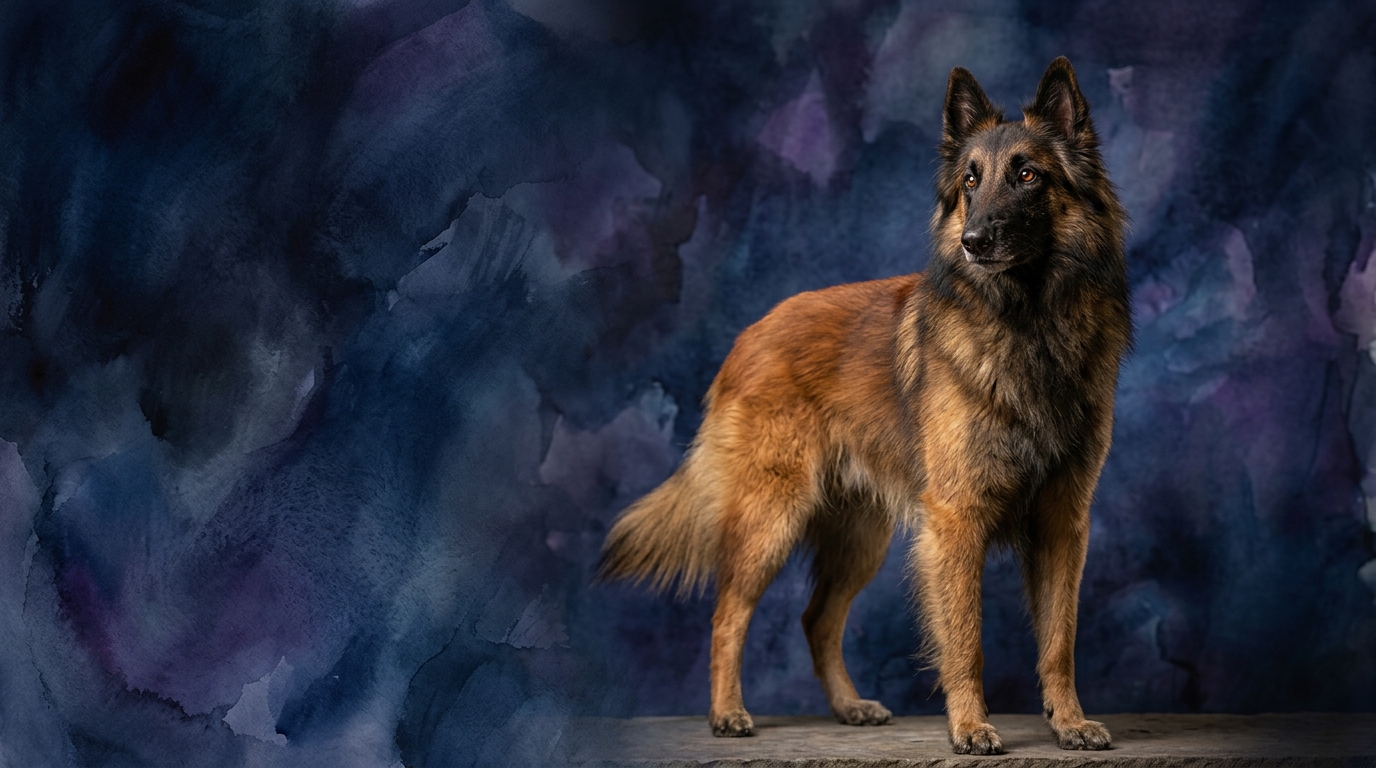

Side-by-Side IQ Profile: Tervuren vs. Basset
**Belgian Tervuren (Herding, Coren rank #14):** This breed’s cognitive architecture is geared for complex, responsive work. Their **Problem Solving (5/5)** demonstrates exceptional aptitude for analyzing novel situations and devising effective solutions, adapting quickly to complex tasks. **Training Speed (5/5)** is rapid; they grasp new behaviors with minimal repetitions, eager to engage in structured learning. **Social Intelligence (3/5)** is average, forming deep bonds with primary caregivers but often reserved with strangers, focusing interactions within their trusted circle. Their **Instinctive Drive (3/5)**, though average, is primarily channeled towards herding and protection, manifesting as a strong desire to work. **Memory (5/5)** is outstanding, retaining complex sequences and experiences with remarkable accuracy over extended periods, contributing to their reliability.
**Basset Hound (Hound, Coren rank #71):** The Basset's cognitive profile reflects its ancient role as a scent tracker. Their **Problem Solving (3/5)** is moderate and often deliberate, with strengths in persistent, sequential investigation, particularly guided by scent, rather than rapid, broad analysis. **Training Speed (3/5)** requires more patience and consistency; they learn but may need more repetitions, especially with distractions. **Social Intelligence (3/5)** is average, generally amiable and tolerant, forming relaxed attachments to family, yet often independent in interactions. Their **Instinctive Drive (3/5)**, though numerically average, is profoundly specialized in scent trailing, making olfactory input paramount. **Memory (3/5)** is moderate; they recall learned behaviors, but consistent reinforcement helps maintain proficiency, with immediate sensory input often taking precedence.
Where the Belgian Tervuren Wins Cognitively
The Belgian Tervuren's cognitive strengths position them as exceptional partners for dynamic and intricate tasks. Their **Problem Solving (5/5)** is a clear advantage; a Tervuren will methodically assess a novel situation, such as navigating an agility course or deciphering a new training exercise, and quickly formulate a strategy. This adaptability and analytical approach contrast sharply with the Basset's more linear, scent-driven problem-solving.
Furthermore, their **Training Speed (5/5)** means they absorb new commands and multi-stage behaviors with remarkable efficiency, often requiring only a handful of repetitions before mastery. This rapid acquisition of skills makes them highly adaptable to varied disciplines, from advanced obedience to search and rescue. Coupled with an exemplary **Memory (5/5)**, Tervurens retain vast repertoires of learned behaviors and routines, making them consistently reliable performers over time and across different environments. This robust memory ensures that once a skill is learned, it is not easily forgotten, allowing for progressive and intricate training programs.
Where the Basset Hound Wins Cognitively
While the Basset Hound's universal scores are moderate, their cognitive strengths are profoundly specialized and valuable within their specific context. Their **Instinctive Drive (3/5)**, though numerically equal to the Tervuren's, is acutely focused on olfaction. This means a Basset possesses an unparalleled cognitive ability to filter out visual and auditory distractions, dedicating immense mental resources to processing scent information. This singular focus allows them to solve complex 'scent puzzles,' such as following a faint trail over varied terrain for hours, a feat of sustained cognitive effort that few breeds can match. This specialized problem-solving through scent is a unique cognitive victory.
Additionally, their **Social Intelligence (3/5)**, while numerically average, often manifests as a more universally relaxed and tolerant disposition compared to the Tervuren's occasional wariness of strangers. Bassets typically approach new people and situations with a calm, amiable curiosity, requiring less intense social management and offering a distinctly mellow companionship style, which can be a preferred trait for many owners.
Which Is Easier to Train and Why
The Belgian Tervuren is unequivocally easier to train for a broad range of tasks and commands. Their exceptional **Training Speed (5/5)** means they pick up new concepts with minimal repetition, eager to engage with their handler and the learning process. This is bolstered by their high **Problem Solving (5/5)**, allowing them to quickly understand the nuances of an exercise and generalize learned behaviors to new contexts. Their strong desire to work in partnership with their human and their excellent **Memory (5/5)** ensure that once a skill is acquired, it is retained and can be recalled reliably.
In contrast, the Basset Hound, with its **Training Speed (3/5)** and **Memory (3/5)**, requires significantly more patience and consistency. Their training is often complicated by their powerful **Instinctive Drive (3/5)** for scent; a Basset's nose can easily override any command, making off-leash reliability a considerable challenge. While they are capable of learning, their independent nature and preference for following their nose mean that training requires a different approach, often relying on high-value rewards and short, engaging sessions to maintain focus.
Matching Breeds to Owner Lifestyles
The Belgian Tervuren is an ideal match for active owners who relish engaging in a variety of dog sports, working roles, or outdoor adventures. These dogs thrive on consistent mental and physical stimulation, excelling in activities like agility, obedience, protection sports, or hiking. An owner who can provide structured training, challenging puzzles, and ample exercise will find the Tervuren to be an incredibly rewarding and tireless partner. Their cognitive makeup demands a lifestyle that supports their need for purpose and activity.
Conversely, the Basset Hound suits owners who appreciate a more relaxed pace, though 'relaxed' does not equate to 'sedentary.' While Bassets are content with long naps on the sofa, they still require daily opportunities for sniff-based exploration. Owners who enjoy leisurely walks, allowing their Basset to follow interesting scents at their own pace, and who are patient with their independent streak, will find a devoted companion. They are not built for high-impact sports but find immense satisfaction in a good trail.
The Verdict
Opt for a Belgian Tervuren if you seek a highly engaged, adaptable, and trainable canine partner for performance sports, demanding work, or an active, mentally stimulating lifestyle. They thrive with owners who can provide consistent training, complex challenges, and ample physical outlets.
Select a Basset Hound if you desire a calm, independent, and amiable companion who finds profound joy in scent exploration and a relaxed home environment. They are best suited for patient owners who appreciate their specialized olfactory talents and do not require intense, high-speed obedience.
🧠 Find Your Pet's IQ Score
Our Pet IQ Lab assessment covers 25+ tests across 5 cognitive dimensions — personalized to your breed.
Take the Full IQ Test →Frequently Asked Questions
How does Coren's ranking relate to these IQ scores?
Coren's ranking primarily assesses "working intelligence" or "obedience intelligence," reflecting how quickly a breed learns and obeys commands. The IQ Lab scores offer a more granular view, breaking down intelligence into specific dimensions like problem-solving and memory, which collectively contribute to, but are more detailed than, a single obedience rank.
Can a Basset Hound excel in dog sports?
While Basset Hounds may not typically excel in high-speed agility or obedience due to their build and independent nature, they can shine in scent-based sports like tracking, nose work, or barn hunt. These activities leverage their profound instinctive drive and specialized olfactory problem-solving abilities.
What are the key differences in communication styles?
Belgian Tervurens often communicate with focused attention and readiness for commands, showing clear engagement and eagerness to work with their handler. Basset Hounds, while affectionate, tend to communicate through a more independent demeanor, using vocalizations like baying to express themselves, particularly when on a scent, and relying less on direct eye contact for continuous instruction.